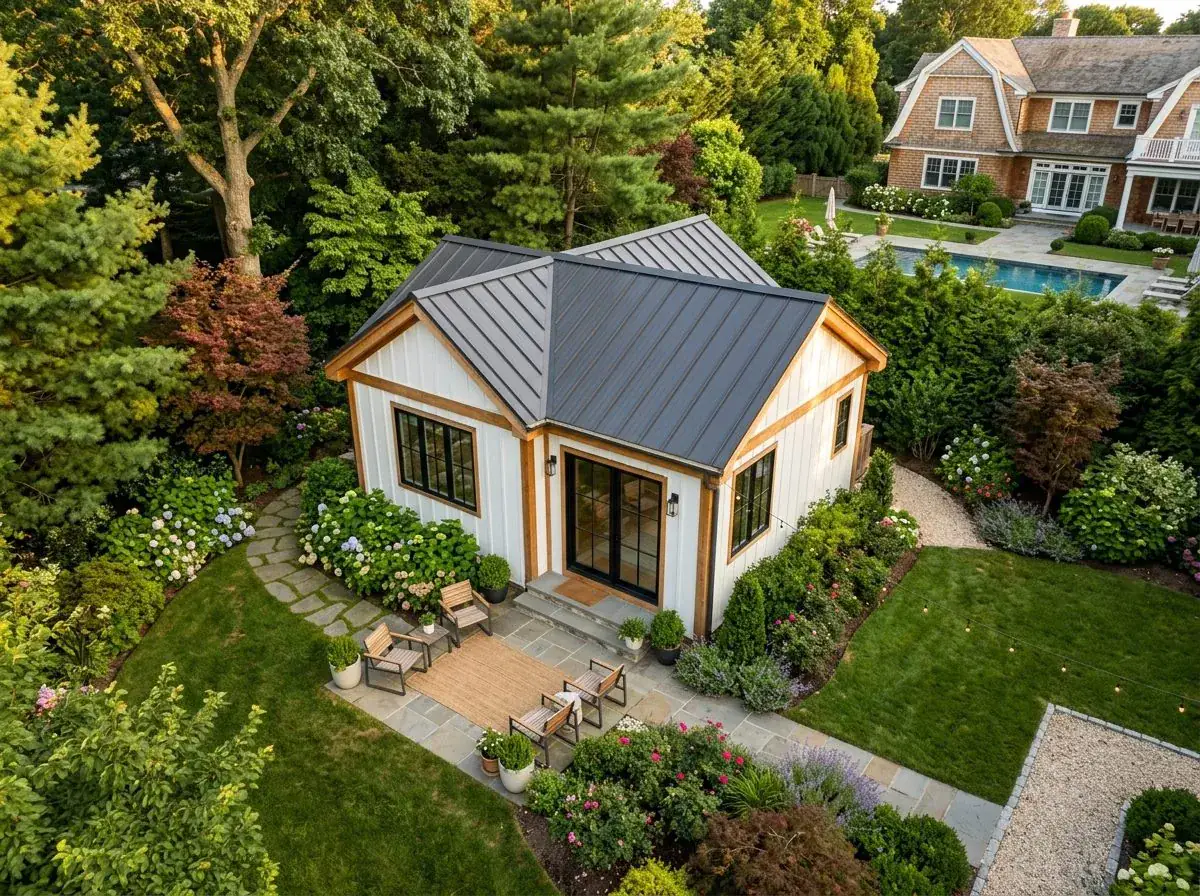
Bridgehampton sits at the heart of the Hamptons, a community defined by sweeping agricultural landscapes, world-class equestrian facilities, and some of the most valuable residential estates on the East Coast. The hamlet straddles the Town of Southampton, surrounded by vineyards, potato fields, and properties measured in acres rather than square feet. It is a landscape of abundance — except when it comes to housing for the people who make Bridgehampton function every day.
The median home price in Bridgehampton regularly exceeds $3 million. Rental inventory is scarce, seasonal, and priced well beyond the reach of the vineyard workers, farm laborers, stable hands, restaurant staff, and tradespeople who sustain the community's economy. Accessory dwelling units offer a practical, property-appropriate solution that creates workforce housing without disrupting the pastoral character that defines Bridgehampton. With the Plus One ADU Program now providing grants of up to $125,000, estate owners have a powerful financial incentive to build.
Program status — verified September 2026
Plus One ADU is a New York State program (an $85 million allocation through the Housing Trust Fund Corporation) but it is run town by town, and each town's intake opens and closes on its own schedule. As of September 2026 on Long Island: Huntington and Riverhead are accepting applications; Brookhaven, Islip and Southold are closed. Babylon, East Hampton, Shelter Island and Southampton run their programs through Community Development Long Island rather than the Long Island Housing Partnership.
The $125,000 is a cap, not an amount every applicant receives, and it is awarded as a grant. Huntington's published guidelines cap household income at 100% of Nassau/Suffolk area median income (2023 HUD limits: $109,400 for a one-person household, $156,300 for four) and require that you have owned and lived in the home for at least one year. Applications go on a first-come waitlist and are then re-ranked on priority points, including whether the unit will be affordable at or below 80% AMI and whether it can be permitted without a zoning variance. Municipal code always overrides the program guidelines. Verify your town's status before you budget around a grant: LIHP (631) 435-4710. We also check it for you on the walkthrough — see our Plus One ADU grant page for the eligibility checklist and what the build costs if your town's round is closed.
Why Bridgehampton Needs ADUs
Bridgehampton's economy depends on industries that require a local, year-round labor force. The disconnect between the cost of living and the wages these industries pay has created a crisis that affects every sector:
- Vineyard and farm workers. Bridgehampton is surrounded by working vineyards and agricultural operations — Wölffer Estate, Channing Daughters, and numerous smaller farms. These operations require skilled workers for planting, harvesting, pruning, and cellar work. Most vineyard employees cannot afford housing within 30 miles of their workplace. On-property or nearby ADUs provide the proximity these jobs demand, especially during harvest season when early mornings and long hours make commuting impractical.
- Equestrian staff. Bridgehampton is one of the premier equestrian communities on the East Coast. The Hampton Classic Horse Show draws international attention each summer, but the stables, training facilities, and boarding operations require year-round care. Grooms, trainers, and barn managers need housing near the horses they tend. A well-designed ADU on an equestrian property solves this problem elegantly.
- Hospitality workers. The restaurants, hotels, and event venues that serve Bridgehampton's seasonal population depend on staff who increasingly commute from Riverhead, Central Islip, or farther west. Long commutes lead to high turnover, which degrades the quality of service the community expects.
- Tradespeople and property maintenance. Landscapers, pool technicians, housekeepers, and general contractors maintain Bridgehampton's estates. These workers form the invisible backbone of the community, and most face housing costs that consume an unsustainable share of their income.
Building an ADU on a Bridgehampton property is not charity — it is an investment in the labor force that maintains property values, sustains local businesses, and preserves the community's character.
The Plus One ADU Program: $125,000 Grants for Bridgehampton Homeowners
The Plus One Accessory Dwelling Unit Program provides grants of up to $125,000 toward the cost of building or converting an ADU. For Bridgehampton estate owners, this grant meaningfully reduces the already-manageable cost of adding a secondary dwelling to a large property.
- Grant amount. Up to $125,000 toward construction costs, applicable to new detached ADUs, garage conversions, barn conversions, and interior apartment buildouts.
- Income targeting. The completed ADU must be rented to tenants earning at or below 80% of the Area Median Income. In practice, this means the housing serves exactly the workforce population Bridgehampton needs — vineyard workers, farm laborers, restaurant staff, and tradespeople.
- Rental commitment period. Grant recipients agree to maintain affordable rental rates for a specified period, typically 10 years. The unit must serve as long-term housing, not a seasonal or vacation rental.
- Application support. Alec's Construction prepares detailed construction estimates and project plans that accompany grant applications. A well-documented proposal with realistic cost projections strengthens every application.
On a Bridgehampton estate with ample land, the construction of a detached ADU is often straightforward. The $125,000 grant can cover 30 to 60 percent of the total project cost depending on the scope and finish level, making this one of the best-supported housing construction programs available to Hamptons property owners.
Own an estate in Bridgehampton? The $125K ADU grant is available now.
We help Bridgehampton homeowners apply — free consultation.
Bridgehampton Zoning and Large-Lot Considerations
Bridgehampton falls within the Town of Southampton's jurisdiction, and its zoning reflects the agricultural and estate character of the area. Most residential properties sit on lots ranging from one to five acres or more, which creates favorable conditions for ADU construction in several ways:
- Generous setback compliance. Large lots make it straightforward to meet setback requirements for accessory structures. Where a homeowner in a denser community might struggle to fit a detached ADU, a Bridgehampton estate typically has multiple viable building locations that comply with all required setbacks from property lines, the primary residence, and other structures.
- Lot coverage ratios. Even with a primary residence, pool, tennis court, and outbuildings, most Bridgehampton properties remain well under maximum lot coverage percentages. Adding an 800 to 1,200 square foot ADU rarely approaches the coverage limit.
- Agricultural overlay zones. Some Bridgehampton properties fall within agricultural overlay districts that may have specific provisions for farm worker housing. If your property is actively farmed or supports agricultural operations, additional housing allowances may apply. These provisions can work in tandem with standard ADU regulations to broaden what is permissible.
- Community Preservation Fund (CPF) land. Bridgehampton has significant acreage protected under the Community Preservation Fund. Properties adjacent to CPF land may face additional design and siting considerations to maintain visual compatibility with preserved open space.
- Height and design standards. Southampton Town requires that ADUs remain visually subordinate to the primary residence. This is rarely a constraint on large estates where the main house is substantial, but the ADU's roofline, massing, and materials must complement the existing architecture.
Bridgehampton's large-lot zoning actually makes ADU construction simpler than in many other Hamptons communities. The challenge is not fitting the unit — it is designing one that honors the aesthetic standards of the area.
ADU Designs for Estate and Equestrian Properties
An ADU on a Bridgehampton estate is not a prefab box in the backyard. These are carefully designed structures that complement the architectural language of the property while providing comfortable, functional housing. The most common configurations we build include:
- Detached estate cottages. A standalone 700 to 1,200 square foot cottage positioned to take advantage of natural screening, mature landscaping, or existing treelines. These cottages typically feature one or two bedrooms, a full kitchen, and covered outdoor living space. Cedar shingle siding, standing-seam metal roofing, or board-and-batten cladding ensures the cottage reads as a natural extension of the property.
- Barn and stable conversions. Many Bridgehampton properties have existing agricultural structures — barns, stables, equipment sheds — that can be converted into beautiful living spaces. These conversions preserve the property's agrarian character while repurposing underutilized structures. Exposed timber framing, original hardware, and barn-door details create interiors with genuine character.
- Above-stable apartments. For working equestrian properties, a second-story apartment above an existing stable provides housing directly adjacent to the horses. This is the preferred arrangement for live-on-site grooms and barn managers who need to respond to equine emergencies at any hour.
- Carriage house apartments. The classic Hamptons carriage house — a two-story structure with vehicle or equipment storage below and living quarters above — translates perfectly into an ADU. New construction in this style sits comfortably on any estate property.
- Pool house conversions. A seasonal pool house can be winterized and expanded into a year-round ADU with a full kitchen, bedroom, and bathroom. The existing foundation, roof, and utility connections reduce construction costs significantly.
Every design we produce for Bridgehampton properties considers sight lines, privacy for both the main residence and the ADU, vehicular access, and the overall landscape composition. The goal is an ADU that looks like it has always been part of the property.
Licensed & Insured
Full coverage on every project
36+ Cities Served
Suffolk County & Long Island
Free Walkthrough
No obligation, no pressure
Get a Free Estimate
Tell us about your project — we respond within 24 hours.
No spam. No obligation.
Construction Costs in Bridgehampton
Bridgehampton construction costs sit at the top end of the Hamptons range. The combination of high labor rates, premium material expectations, extended delivery logistics, and design review requirements means that building here costs 25 to 40 percent more than in central Suffolk County. Here are realistic 2026 ranges:
- Barn or stable conversion: $90,000 to $175,000. Depends on structural condition, extent of required upgrades, and finish level. Historic barns with good bones convert beautifully but may need significant structural reinforcement.
- Garage conversion: $75,000 to $140,000. Bridgehampton garages tend to be well-built and spacious, making them excellent conversion candidates. Design review may require exterior modifications to maintain property aesthetics.
- Above-stable apartment: $120,000 to $200,000. Structural reinforcement of the existing stable, plus full buildout of the second-story living space with proper insulation, utilities, and code-compliant egress.
- Detached estate cottage (new construction): $200,000 to $400,000+. A purpose-built cottage with Hamptons-quality materials and finishes. The range reflects differences in size (600 to 1,200 square feet), foundation type, and finish level.
- Pool house conversion: $80,000 to $160,000. Converting an existing seasonal structure into year-round housing. Scope depends on existing plumbing, electrical, and insulation.
The Plus One grant's $125,000 covers a substantial share of conversion projects and a meaningful portion of new construction. A barn conversion that might cost $150,000 becomes a $25,000 out-of-pocket investment with the grant — an extraordinary value proposition for creating workforce housing on your property.
The Permit Process in Bridgehampton
Bridgehampton falls under the Town of Southampton's building and zoning jurisdiction. The permit process for an ADU involves several coordinated steps:
- Site evaluation. We visit your property to assess existing structures, identify the best location for a new ADU or the best candidate for conversion, and evaluate zoning constraints specific to your parcel.
- Conceptual design. Working with your input and the property's architectural context, we develop a design that meets Southampton Town requirements and complements the estate aesthetic.
- Architectural plans. Licensed plans are prepared that address zoning compliance, building code, energy code, and any applicable design review standards.
- Southampton Town Building Department submission. Plans are filed for zoning compliance review and building permit issuance. For properties in agricultural overlay zones, additional documentation regarding land use compatibility may be required.
- Suffolk County Health Department approval. For properties on septic systems — which includes nearly all of Bridgehampton — the Health Department must approve the additional wastewater load. This may require a septic system upgrade or expansion.
- Architectural review (if applicable). Properties within scenic overlay districts or subject to deed restrictions may require design review approval before construction can begin.
- Construction. With all permits secured, construction proceeds with scheduled inspections at each critical phase — foundation, framing, rough-in, insulation, and final.
- Certificate of occupancy. The Town of Southampton issues a CO upon successful final inspection, authorizing the ADU for occupancy.
The timeline from initial consultation to move-in typically runs 6 to 12 months for Bridgehampton projects, depending on the complexity of the design and the permitting path. Conversions of existing structures tend to move faster than new construction. Alec's Construction manages the entire process — every submission, every inspection, every revision — so you are not navigating municipal bureaucracy on your own.
Your estate has room. Your community has need.
Let us show you what is possible on your Bridgehampton property.
Septic System Considerations for Bridgehampton ADUs
Nearly every property in Bridgehampton relies on a private septic system rather than municipal sewer. Adding an ADU creates additional wastewater load that the Suffolk County Health Department must approve. In some cases, the existing septic system has capacity to support the additional unit. In other cases, an upgrade is required.
Modern nitrogen-reducing septic systems, now required in many Hamptons areas to protect groundwater and the Peconic Estuary, can cost $20,000 to $40,000 or more. However, several grant and rebate programs exist to offset septic upgrade costs, and these can be combined with the Plus One ADU grant. We evaluate your septic situation during our initial site visit and factor any necessary upgrades into the project estimate from the start — no surprises mid-construction.
Rental Income and Long-Term Value
A workforce-rate ADU in Bridgehampton typically rents for $1,800 to $2,800 per month, depending on size and amenities. Even at affordable rates required by the Plus One grant, the rental income is significant. Over a 10-year grant commitment period, a unit renting at $2,200 per month generates $264,000 in gross rental income — more than enough to recoup your net construction costs and generate meaningful positive cash flow.
Beyond rental income, a well-designed ADU adds permanent value to your property. When the grant commitment period concludes, you have a fully permitted, code-compliant dwelling on your property that can serve any purpose — continued rental, guest housing, home office, or caretaker quarters. The investment appreciates along with the property itself.
Frequently Asked Questions
Can I build an ADU on an equestrian property in Bridgehampton?+
Do agricultural overlay zones affect ADU construction in Bridgehampton?+
Why do ADUs cost more in Bridgehampton than other parts of Long Island?+
Can I convert an existing barn into an ADU on my Bridgehampton property?+
Work With Alec's Construction
This guide is written by the crew that does the work. See Alec's ADUs service — accessory apartments, garage conversions and grant paperwork. Licensed and insured on Long Island, one crew start to finish, free walkthrough and a written estimate inside 48 hours.
Booking the cold months now: we also handle Additions & New Construction and Bathroom Remodeling.
We pull the permits on our own jobs — if you need the building department for your town, we keep a current directory of all 23 Long Island permit offices.
Ready to Build an ADU in Bridgehampton?
Contact Alec's Construction for a free consultation. We will evaluate your Bridgehampton estate, discuss design options that complement your property, guide you through the Plus One grant application, and provide a detailed construction estimate.
Get a Free Consultation