Cold Spring Harbor is one of Long Island's most exclusive communities. Nestled along the North Shore in the Town of Huntington, this hamlet carries a legacy rooted in the Gold Coast era, when industrial magnates and banking families built sprawling estates overlooking the harbor and the rolling hills of Lloyd Neck. Today, Cold Spring Harbor remains one of the wealthiest zip codes on Long Island, with a median home price well above $1 million and properties that routinely sell for $2 million to $10 million or more.
Despite its affluence, Cold Spring Harbor faces the same housing pressures affecting communities across Long Island. Adult children who grew up in the area cannot afford to buy homes near their families. Aging parents need accessible living arrangements on properties they have owned for decades. And the workforce that sustains Cold Spring Harbor's households, schools, and businesses struggles to find housing within a reasonable commute. Accessory dwelling units address all three of these challenges, and the regulatory landscape for ADUs in the Town of Huntington has never been more favorable.
Why Cold Spring Harbor Is Ideal for ADU Construction
Cold Spring Harbor possesses several characteristics that make it exceptionally well-suited for accessory dwelling units. The combination of large lot sizes, existing outbuildings, strong property values, and family-centered demographics creates a natural environment for ADU development.
First, the lots are large. Many residential parcels in Cold Spring Harbor range from half an acre to several acres, particularly in the estate sections along Snake Hill Road, Cove Road, and the areas bordering Cold Spring Harbor State Park. This means there is ample room for detached ADUs without encroaching on the character of the primary residence or triggering setback concerns. Where a homeowner in a denser suburb might struggle to fit an accessory unit, Cold Spring Harbor properties often have obvious locations for a new cottage or converted outbuilding.
Second, many properties already have structures that lend themselves to conversion. Carriage houses, guest cottages, detached garages, pool houses, and gardener's quarters are common on older Gold Coast-era properties. Converting these existing structures into code-compliant dwelling units is often faster and less expensive than new construction, and it preserves the historic character that makes Cold Spring Harbor distinctive.
Third, the Cold Spring Harbor School District is consistently ranked among the top school districts in New York State. This drives extraordinary demand for housing in the area. Families who want their children in this district but cannot afford a primary home at $1.5 million or more represent a potential tenant pool for well-built ADUs. Teachers and staff who work in the district but cannot afford to live nearby also benefit from accessory housing options.
Town of Huntington ADU Regulations
Cold Spring Harbor falls under the jurisdiction of the Town of Huntington, which governs zoning, building permits, and land use for the hamlet. Understanding Huntington's regulatory framework is essential before planning any ADU project.
The Town of Huntington has recognized the need for additional housing options and has been moving toward more accommodating ADU policies. Accessory apartments are permitted in several residential zoning districts, though the specific requirements vary depending on the zone and the type of ADU proposed. Key regulatory considerations include:
- Zoning district requirements. Each residential zone in Huntington has its own set of regulations governing accessory structures. The R-40, R-80, and larger residential zones that cover most of Cold Spring Harbor generally allow accessory buildings, but the specific use as a dwelling unit must comply with the town's accessory apartment provisions.
- Owner occupancy. Huntington typically requires that the property owner reside in either the primary dwelling or the accessory unit. This ensures that ADUs function as part of a homeowner-occupied property rather than as investment rental properties on absentee-owned land.
- Size limitations. Accessory apartments are generally limited in size relative to the primary dwelling. Common limits cap the ADU at 33% to 50% of the primary home's living area or a fixed square footage maximum, whichever is less.
- Parking requirements. The town requires additional off-street parking for ADU occupants, typically one to two dedicated spaces beyond what is required for the primary residence.
- Septic and water. Properties on private septic systems must demonstrate that the system can handle the additional wastewater load from an ADU. Suffolk County Health Department approval is required for any project that adds dwelling capacity to a septic system.
- Building permits and inspections. All ADU construction requires a building permit from the Town of Huntington Building Department, with inspections at standard milestones including foundation, framing, electrical, plumbing, and final occupancy.
Alec's Construction has experience working within Huntington's permitting framework and can guide you through every step, from initial zoning verification to final certificate of occupancy.
Planning an ADU in Cold Spring Harbor?
Free site evaluation and zoning review for North Shore homeowners.
The Plus One ADU Program: Up to $125,000 in Grant Funding
Long Island homeowners building ADUs may be eligible for the Plus One Accessory Dwelling Unit Program, which provides grants of up to $125,000 to offset construction costs. This program, funded through a combination of state and county resources, is designed to increase the supply of affordable housing by helping homeowners build accessory units on their existing properties.
Program status — verified September 2026
Plus One ADU is a New York State program (an $85 million allocation through the Housing Trust Fund Corporation) but it is run town by town, and each town's intake opens and closes on its own schedule. As of September 2026 on Long Island: Huntington and Riverhead are accepting applications; Brookhaven, Islip and Southold are closed. Babylon, East Hampton, Shelter Island and Southampton run their programs through Community Development Long Island rather than the Long Island Housing Partnership.
The $125,000 is a cap, not an amount every applicant receives, and it is awarded as a grant. Huntington's published guidelines cap household income at 100% of Nassau/Suffolk area median income (2023 HUD limits: $109,400 for a one-person household, $156,300 for four) and require that you have owned and lived in the home for at least one year. Applications go on a first-come waitlist and are then re-ranked on priority points, including whether the unit will be affordable at or below 80% AMI and whether it can be permitted without a zoning variance. Municipal code always overrides the program guidelines. Verify your town's status before you budget around a grant: LIHP (631) 435-4710. We also check it for you on the walkthrough — see our Plus One ADU grant page for the eligibility checklist and what the build costs if your town's round is closed.
- Grant amount. Up to $125,000 toward eligible construction costs, which can cover the majority of a conversion project or a substantial portion of new construction.
- Affordability requirement. The completed ADU must be rented to tenants earning at or below 80% of the Area Median Income (AMI) for the Nassau-Suffolk metropolitan area. For Cold Spring Harbor, this means renting to working professionals, young adults starting their careers, or essential service workers.
- Rental commitment period. Grant recipients agree to maintain the unit as an affordable rental for a specified period, typically 10 years. The unit must be a year-round, long-term rental rather than a seasonal or short-term arrangement.
- Eligible project types. New detached ADUs, garage conversions, basement apartments, above-garage units, and conversions of existing outbuildings all qualify for grant funding.
For a Cold Spring Harbor homeowner converting an existing carriage house or detached garage, a $125,000 grant can cover most or all of the construction cost. Even for new detached construction, the grant dramatically reduces out-of-pocket investment. We assist clients with preparing the construction estimates and project documentation needed for a strong grant application.
ADU Types for Gold Coast Properties
Cold Spring Harbor's diverse housing stock and generous lot sizes support a wide range of ADU configurations. The best approach depends on your property's existing structures, lot layout, and personal goals for the unit.
- Carriage house and guest house conversions. Many Gold Coast-era properties in Cold Spring Harbor have carriage houses, chauffeur's quarters, or guest cottages that were built alongside the main house. These structures often have solid bones — thick walls, quality framing, and attractive architectural details. Converting them into modern, code-compliant dwelling units preserves their historic character while creating functional living space with a kitchen, bathroom, bedroom, and dedicated entrance.
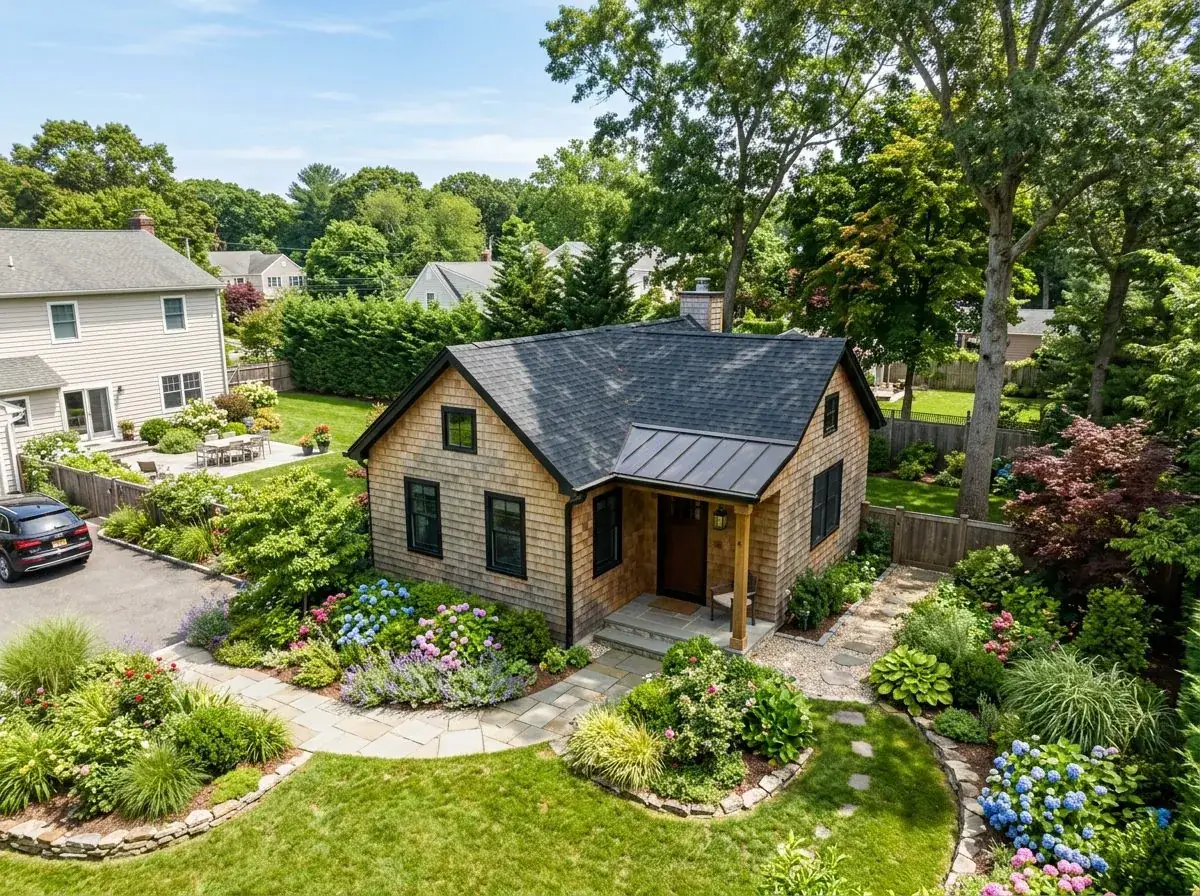
- Detached backyard cottages. On lots of half an acre or more, a new detached cottage can be positioned to provide privacy for both the homeowner and the ADU occupant. These cottages typically range from 500 to 900 square feet and can be designed to complement the architectural style of the primary home, whether that is Colonial, Tudor, Shingle-style, or contemporary.
- Above-garage apartments. Adding a second story above an existing detached garage creates a separate living space without consuming additional yard area. This configuration works well on properties where ground-level building space is limited but the garage footprint is substantial enough to support a comfortable apartment above.
- Garage conversions. Converting a detached garage into a studio or one-bedroom apartment is one of the most cost-effective ADU approaches. The existing structure provides the shell, and the work focuses on insulation, interior finishing, plumbing, electrical, and HVAC systems.
- Pool house conversions. Cold Spring Harbor properties with existing pool houses have a ready-made starting point. Adding a bedroom, full kitchen, and proper year-round insulation transforms a seasonal entertainment structure into a comfortable apartment.
Architectural Character and Design Considerations
Cold Spring Harbor has a distinctive North Shore aesthetic that blends historic architecture with natural landscapes. Properties range from colonial-era farmhouses to Gilded Age estates to mid-century moderns, and the community takes its visual identity seriously. An ADU that looks like a generic prefab box dropped into a Cold Spring Harbor backyard will face resistance from neighbors and potentially from the building department.
Successful ADU design in Cold Spring Harbor means matching materials, proportions, and architectural details to the primary residence and the surrounding neighborhood. Cedar shingle siding, standing-seam metal roofs, divided-light windows, covered porches, and natural stone foundations are all elements that help a new structure feel like it belongs on a North Shore property. The investment in quality design and materials pays dividends in both property value and community acceptance.
We work with architects who understand North Shore vernacular and can design ADUs that enhance your property rather than detract from it. Whether you are building a shingled cottage that echoes a 1920s original or a clean contemporary structure that complements a modernized estate, the design should feel intentional and appropriate.
Licensed & Insured
Full coverage on every project
36+ Cities Served
Suffolk County & Long Island
Free Walkthrough
No obligation, no pressure
Get a Free Estimate
Tell us about your project — we respond within 24 hours.
No spam. No obligation.
Construction Costs in Cold Spring Harbor
Cold Spring Harbor sits in one of the highest-cost construction markets on Long Island. North Shore properties command premium labor rates, and the expectation for quality materials and finishes is higher than in most Suffolk County communities. Here are realistic cost ranges for ADU projects in Cold Spring Harbor in 2026:
- Garage conversion: $60,000 to $120,000. Converting an existing detached garage into a studio or one-bedroom apartment, including insulation, plumbing, electrical, HVAC, kitchen, and bathroom.
- Carriage house or guest house renovation: $80,000 to $175,000. Bringing an existing historic outbuilding up to modern code while preserving architectural character. Cost varies widely depending on the structure's current condition.
- Above-garage apartment: $95,000 to $180,000. Adding a full second story with living space above an existing garage. Structural reinforcement of the existing garage is often required.
- Detached new construction: $175,000 to $350,000+. A purpose-built cottage with design and materials appropriate to Cold Spring Harbor's North Shore aesthetic. Size, finishes, and site conditions drive the range.
- Basement conversion: $70,000 to $140,000. Converting an existing basement into a legal accessory apartment with proper egress, ceiling height, and separate entrance.
With the Plus One grant covering up to $125,000 of these costs, many Cold Spring Harbor homeowners can build an ADU with minimal out-of-pocket expense. A carriage house conversion that might cost $110,000 becomes a $0 to $15,000 net investment after the grant. That math makes ADU construction one of the smartest property investments available in the current market.
Multi-Generational Living on the North Shore
One of the strongest drivers of ADU construction in Cold Spring Harbor is multi-generational family needs. The demographics of this community make it a natural fit for accessory dwelling units designed around family use rather than rental income.
Many Cold Spring Harbor homeowners are at a stage of life where aging parents need nearby housing with some independence. Building an ADU for a parent or in-law allows the family to remain close for daily support and medical needs while preserving everyone's privacy and autonomy. A purpose-built accessible unit with single-floor living, wide doorways, grab bars, and a walk-in shower costs little more than a standard build and can prevent the enormous expense and emotional burden of institutional care.
On the other end of the generational spectrum, adult children returning to Long Island after college or early career years often cannot afford to rent in Cold Spring Harbor or surrounding North Shore communities. An ADU provides them with independent living space on the family property while they save for their own home. Given that entry-level homes in the Cold Spring Harbor School District start well above $700,000, this transitional housing can last several years.
Both scenarios keep families together on properties that have the space to support multiple generations comfortably, and they do so without the compromises of sharing a single-family home.
The Permit and Approval Process
Building an ADU in Cold Spring Harbor requires navigating the Town of Huntington's building department and, depending on your property's specifics, potentially other review bodies. Here is the typical process:
- Site assessment and feasibility review. We visit your property to evaluate existing structures, lot dimensions, setback distances, septic capacity, and potential ADU locations. This determines what is buildable and at what cost.
- Design and architectural plans. Licensed architectural plans are prepared in compliance with Huntington's zoning requirements and building code. For Cold Spring Harbor, we pay particular attention to design compatibility with surrounding properties.
- Zoning compliance review. Plans are reviewed against the applicable zoning district regulations, including setbacks, lot coverage, height limits, and accessory apartment provisions.
- Building permit application. Complete plans and applications are submitted to the Town of Huntington Building Department. We include all required documentation and respond promptly to any department questions or revision requests.
- Health Department review. If the property uses a private septic system, the Suffolk County Health Department must review and approve the additional dwelling load.
- Construction. Once permits are issued, construction proceeds according to the approved plans with inspections at required milestones.
- Final inspection and certificate of occupancy. The building department conducts a final inspection to confirm code compliance, and a certificate of occupancy is issued for the ADU.
We handle every permit application, plan submission, and inspection coordination. Our clients focus on their goals for the space while we manage the regulatory process from start to finish.
Gold Coast property with ADU potential?
We specialize in North Shore ADU construction — free consultation.
Cold Spring Harbor Neighborhoods We Serve
Alec's Construction builds ADUs throughout Cold Spring Harbor and the surrounding North Shore communities, including:
- Cold Spring Harbor Village — the historic core with a mix of Colonial, Victorian, and early 20th-century homes near the harbor and Main Street
- Lloyd Neck — large estate properties on this peninsula offer exceptional ADU potential with generous lots and existing outbuildings
- Laurel Hollow — incorporated village within the Cold Spring Harbor area with substantial properties and wooded settings
- Huntington Bay — waterfront and near-waterfront properties with North Shore character and ADU-friendly lot sizes
- Lloyd Harbor — exclusive community with estate-scale properties and a strong tradition of guest houses and accessory structures
- West Hills — residential area with larger lots transitioning from the more densely settled parts of Huntington
Frequently Asked Questions
Can I build an ADU on a Gold Coast estate property in Cold Spring Harbor?+
How does the Plus One $125K ADU grant work in Huntington?+
Does the ADU need to match the architectural style of my main house?+
Can I build an ADU for my aging parents to live in?+
How long does it take to build an ADU in Cold Spring Harbor?+
Work With Alec's Construction
This guide is written by the crew that does the work. See Alec's ADUs service — accessory apartments, garage conversions and grant paperwork. Licensed and insured on Long Island, one crew start to finish, free walkthrough and a written estimate inside 48 hours.
Booking the cold months now: we also handle Additions & New Construction and Bathroom Remodeling.
We pull the permits on our own jobs — if you need the building department for your town, we keep a current directory of all 23 Long Island permit offices.
Ready to Build an ADU in Cold Spring Harbor?
Contact Alec's Construction for a free property evaluation. We will assess your Cold Spring Harbor property, review Town of Huntington zoning requirements, walk you through the Plus One grant, and provide a detailed construction estimate.
Get a Free Consultation