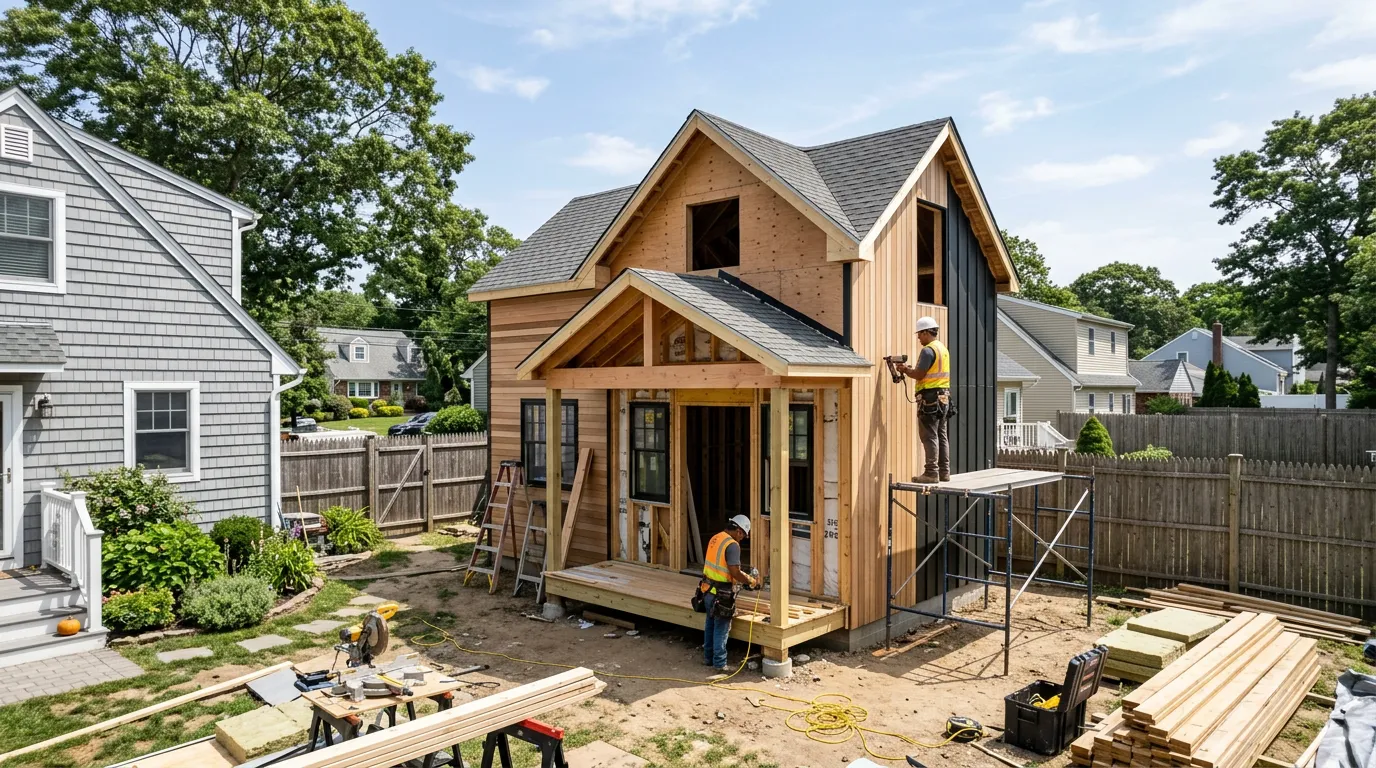
An accessory dwelling unit is only as good as its design. You can meet every code requirement, secure every permit, and stay under budget, but if the finished ADU looks like an afterthought bolted onto your property, you have missed the point. On Long Island, where neighborhoods range from cedar-shingled Hamptons estates to vinyl-sided ranch communities to brick-faced North Shore colonials, ADU design is not a one-size-fits-all conversation. The right design integrates seamlessly with your existing home, fits the character of your neighborhood, and maximizes every square foot of livable space.
At Alec's Construction, we have built ADUs across more than 20 Long Island towns over the past eight years. Every property presents a different design challenge. A garage-top loft in Sayville looks nothing like a detached garden suite in East Hampton, and it should not. This guide covers ten distinct ADU design approaches that work on Long Island properties, complete with dimensions, layout suggestions, finish recommendations, and realistic cost ranges for 2026.
1. Modern Farmhouse ADU
The modern farmhouse aesthetic has become one of the most requested ADU styles across Long Island, and it works particularly well in South Shore communities like Babylon, Lindenhurst, and West Islip where the mix of older homes and new construction allows for flexible architectural expression. This design combines board-and-batten siding or painted horizontal lap siding with black-framed windows, a standing-seam metal accent roof, and a covered entry porch.
- Typical dimensions: 24 x 30 feet (720 sq ft) for a one-bedroom, or 28 x 32 feet (896 sq ft) for a two-bedroom layout.
- Layout: Open-concept kitchen and living area with a vaulted ceiling, one or two bedrooms separated by a central bathroom, mudroom entry with built-in storage. Pocket doors save space in hallways.
- Finishes: Shaker cabinetry in white or sage, butcher block or quartz countertops, wide-plank luxury vinyl flooring, subway tile backsplash, matte black hardware throughout.
- Best neighborhoods: South Shore communities, Patchogue, Sayville, Bay Shore, and newer developments in central Suffolk where farmhouse aesthetics blend with existing streetscapes.
- Cost range: $175,000 to $280,000 for new detached construction, depending on finishes and site conditions.
2. Coastal Cottage ADU
For properties near the water or in beach communities like Montauk, Fire Island-adjacent areas, and the barrier island towns, a coastal cottage ADU captures the relaxed character that defines those neighborhoods. Think cedar shingle siding left to weather naturally, white trim, wide plank flooring, and large windows that bring in natural light and breezes.
- Typical dimensions: 22 x 28 feet (616 sq ft) for a compact one-bedroom, or 26 x 30 feet (780 sq ft) for a more spacious layout with a reading nook or home office alcove.
- Layout: Living and kitchen area oriented toward the primary view or garden, bedroom with an adjacent full bathroom, built-in window seat or daybed for additional sleeping, outdoor shower if close to the beach.
- Finishes: Natural cedar shingle exterior, painted beadboard interior walls, rope or brushed nickel hardware, stone or porcelain tile floors in wet areas, tongue-and-groove ceiling in the main living space.
- Best neighborhoods: Montauk, Amagansett, East Quogue, Westhampton Beach, coastal sections of Islip and Brookhaven towns.
- Cost range: $195,000 to $320,000. Cedar siding and coastal-rated materials add to the base cost.
3. Traditional Colonial Match ADU
The North Shore of Long Island is defined by Colonial and Tudor-style homes, particularly in towns like Huntington, Cold Spring Harbor, Oyster Bay, and Port Jefferson. When building an ADU on these properties, the design must match the architectural language of the primary residence. That means clapboard or shake siding, multi-pane windows, symmetrical facades, and pitched rooflines that mirror the main house.
- Typical dimensions: 24 x 32 feet (768 sq ft) for a one-bedroom with a study, or 26 x 34 feet (884 sq ft) for a full two-bedroom.
- Layout: Formal entry into a central hall, living room with a fireplace or decorative mantel, galley or L-shaped kitchen, one or two bedrooms, full bathroom with period-appropriate fixtures. The floor plan emphasizes defined rooms rather than open-concept living.
- Finishes: Crown molding, raised-panel doors, hardwood or engineered hardwood floors, granite or marble countertops, classic white or cream cabinetry with traditional hardware, chair rail in the dining area.
- Best neighborhoods: Huntington, Northport, Cold Spring Harbor, Setauket, Stony Brook, Port Jefferson, and other North Shore communities with Colonial-era or Colonial-revival housing stock.
- Cost range: $200,000 to $340,000. Period-appropriate detailing and higher-end finishes push costs above simpler designs.
Not sure which ADU design fits your property?
We visit your property and recommend the best approach — free, no obligation.
4. Contemporary Studio ADU
A contemporary studio ADU works well on smaller lots where maximizing function in a compact footprint is the priority. This design favors clean lines, flat or low-slope rooflines, large glass panels, and a minimalist material palette. It is especially popular among homeowners building ADUs for aging parents or adult children who want a private, modern living space without excess square footage.
- Typical dimensions: 20 x 24 feet (480 sq ft) for an open studio, or 22 x 26 feet (572 sq ft) with a partitioned sleeping area.
- Layout: Single open-plan room combining living, sleeping, and kitchen zones. A partial wall or sliding barn door separates the sleeping area. Compact but full kitchen along one wall, full bathroom with walk-in shower, built-in storage throughout to avoid the need for freestanding furniture.
- Finishes: Fiber cement panel or smooth stucco exterior, polished concrete or large-format tile floors, flat-panel cabinetry, integrated appliances, continuous countertop with undermount sink.
- Best neighborhoods: Newer developments in any Long Island town, properties with mid-century or contemporary primary homes, areas where design review is flexible.
- Cost range: $140,000 to $230,000. Smaller footprint reduces cost, but high-end materials and custom millwork can push the upper range.
5. Garage-Top Loft ADU
Building above an existing detached garage is one of the most cost-effective ways to add an ADU because you skip the foundation work entirely. The existing garage structure provides the base, and the ADU goes on top as a second story. This design preserves your garage space while creating a fully independent apartment above it.
- Typical dimensions: Matches the garage footprint, commonly 20 x 22 feet (440 sq ft) for a single-car garage or 22 x 24 feet (528 sq ft) for a two-car garage.
- Layout: External staircase leading to a private entrance, open living and kitchen area, separate bedroom or sleeping loft with dormer windows, full bathroom. Storage built into the eaves where ceiling height drops.
- Finishes: Exterior matches the primary house siding and roof materials. Interior finishes can range from basic durable materials to higher-end selections depending on budget and intended use.
- Best neighborhoods: Any Long Island community with detached garages. Particularly popular in Medford, Centereach, Ronkonkoma, East Patchogue, and other central Suffolk towns with standard residential lots.
- Cost range: $110,000 to $195,000. Structural reinforcement of the existing garage may be needed, which is the primary variable cost.
6. Carriage House ADU
Carriage house-style ADUs are designed to look like traditional outbuildings that have been part of the property for decades. This style is particularly effective in the Hamptons and on North Shore estates where the visual language of the property includes detached structures. The design features barn-style doors (functional or decorative), cupolas, weather vanes, and stone or brick foundation detailing.
- Typical dimensions: 26 x 32 feet (832 sq ft) ground floor with an optional loft, providing up to 1,100 sq ft total on two levels.
- Layout: Ground floor with kitchen, living area, and full bathroom. Optional second-floor loft bedroom accessed by an internal staircase. Some clients include a ground-floor flex space that doubles as a workshop, studio, or additional storage.
- Finishes: Cedar shingle or clapboard exterior, exposed beam ceilings, wide-plank hardwood or reclaimed wood floors, farmhouse sink, paneled interior doors, stone or brick accent wall.
- Best neighborhoods: East Hampton, Southampton, Shelter Island, Sag Harbor, Huntington, Cold Spring Harbor, and other areas with estate-style properties.
- Cost range: $220,000 to $375,000. The architectural detailing and premium materials drive costs higher than simpler designs.
Licensed & Insured
Full coverage on every project
36+ Cities Served
Suffolk County & Long Island
Free Walkthrough
No obligation, no pressure
7. Garden Suite ADU
A garden suite is a single-story detached ADU positioned at the rear of the property, typically surrounded by landscaping that screens it from the primary residence and neighboring properties. This design emphasizes indoor-outdoor connection with large sliding or folding glass doors opening to a private patio. It is an excellent choice for aging parents who need accessible, single-level living without stairs.
- Typical dimensions: 28 x 30 feet (840 sq ft) for a generous one-bedroom, or 30 x 32 feet (960 sq ft) for two bedrooms with universal design features.
- Layout: Wide doorways and hallways (36 inches minimum) for wheelchair accessibility, step-free entry, open kitchen with lowered countertop sections, walk-in shower with grab bars, bedroom adjacent to the bathroom, living area with direct patio access.
- Finishes: Low-maintenance composite or fiber cement siding, slip-resistant tile or LVP flooring, lever-style door handles, comfort-height toilets, curbless shower with linear drain, under-cabinet lighting.
- Best neighborhoods: Any Long Island community with sufficient rear yard space. Particularly well-suited to the larger lots found in Brookhaven, Islip, and Smithtown towns.
- Cost range: $190,000 to $310,000. Accessibility features and single-story footprint requirements can increase foundation and site work costs.
8. Basement Walkout ADU
Many Long Island homes sit on sloped lots that create walkout or partially exposed basements on one side. Converting this below-grade space into an ADU is one of the most affordable paths to creating a second dwelling unit because the structure already exists. The key design challenge is making a basement feel like a genuine home rather than a finished basement.
- Typical dimensions: Matches the home footprint, commonly 800 to 1,200 sq ft of usable space after accounting for mechanical rooms and stairways.
- Layout: Private exterior entrance on the walkout side, open living and kitchen area positioned where natural light enters, bedroom(s) with egress windows meeting code requirements, full bathroom, laundry closet, and dedicated mechanical space separated from living areas.
- Finishes: Waterproof luxury vinyl plank flooring, moisture-resistant drywall, recessed LED lighting to maximize headroom, light-colored cabinetry and walls to brighten the space, dehumidification system integrated into the HVAC.
- Best neighborhoods: North Shore communities with naturally hilly terrain — Huntington, Northport, Smithtown, Kings Park, and Port Jefferson — where walkout basements are common.
- Cost range: $80,000 to $165,000. Significantly less expensive than new construction because the shell exists. Waterproofing and egress window installation are the primary cost drivers.
Get a Free Estimate
Tell us about your project — we respond within 24 hours.
No spam. No obligation.
9. Attached In-Law Suite ADU
An attached ADU connects directly to the primary residence but has its own separate entrance, kitchen, bathroom, and living space. This design is ideal for multigenerational families who want proximity without sacrificing privacy. It is also the simplest ADU type from a permitting standpoint because it does not require a separate utility connection in many jurisdictions.
- Typical dimensions: 400 to 700 sq ft added as a wing or extension to the existing home, or converted from an existing attached garage.
- Layout: Private exterior entrance with a small covered porch, kitchenette or full kitchen depending on size, combined living and dining area, bedroom, full bathroom, shared wall with the primary home that can include a connecting door (lockable from both sides) for convenience.
- Finishes: Exterior materials match the primary home exactly — same siding, roofing, trim, and window style. Interior finishes can be customized to the occupant's preferences while maintaining continuity with the main house.
- Best neighborhoods: Works across all Long Island communities. Especially practical on standard quarter-acre lots in Islip, Brookhaven, and Babylon towns where yard space may not accommodate a detached structure.
- Cost range: $120,000 to $240,000 for a bump-out addition, or $70,000 to $145,000 for a garage conversion into an attached suite.
10. Detached Two-Story ADU
For properties with enough lot coverage allowance, a detached two-story ADU maximizes living space on a smaller footprint. The ground floor typically holds the kitchen, living area, and a half bathroom, while the second floor contains bedrooms and a full bathroom. This configuration works well for rental units where the landlord wants to offer a two-bedroom layout without a sprawling single-story footprint.
- Typical dimensions: 20 x 24 feet per floor (480 sq ft per level, 960 sq ft total) or 22 x 26 feet per floor (572 sq ft per level, 1,144 sq ft total).
- Layout: Ground floor: entry, open kitchen and living space, half bath, coat closet. Second floor: two bedrooms, full bathroom, linen closet. Internal staircase positioned to minimize wasted hallway space.
- Finishes: Exterior design matches or complements the primary home. Interior finishes vary based on budget — rental-grade durable materials start around $35 per square foot for finishes, while premium selections can reach $65 or more.
- Best neighborhoods: Properties with generous lot sizes throughout Long Island. Height restrictions vary by zoning district, so two-story designs require zoning confirmation before proceeding.
- Cost range: $210,000 to $360,000. Two stories add structural complexity, a staircase, and additional plumbing runs compared to single-story designs.
Design Considerations by Long Island Region
Long Island is not monolithic. The design that wins approval and looks right in one area may be entirely wrong for another. Here is how we think about ADU design by region:
- The Hamptons (Southampton and East Hampton Towns). Architectural review boards scrutinize every detail. Cedar shingle, traditional massing, and Hamptons-vernacular design are expected. Contemporary designs can work on modern properties but require careful handling. The Plus One ADU Program provides grants up to $125,000 for ADUs that serve workforce housing, which can significantly offset the higher construction costs in this area.
- North Shore (Huntington, Smithtown, Brookhaven north). Colonial and Tudor styles dominate. ADU designs should match the period architecture of the primary home. Sloped lots create opportunities for walkout basement conversions.
- South Shore (Babylon, Islip, Brookhaven south). More diverse architectural styles and generally more flexible design review. Ranch-style homes are common, making single-story garden suites and garage conversions natural fits.
- Central Suffolk (Medford, Centereach, Ronkonkoma, Patchogue). Standard residential lots with fewer architectural restrictions. Practical, cost-effective designs work well here. Garage-top lofts and attached in-law suites are popular choices.
- East End (Riverhead, Southold, Greenport). Mix of agricultural and residential properties with larger lots. Barn-style and carriage house ADUs complement the rural character. Emerging wine country tourism creates rental income opportunities.
How the Plus One ADU Grant Affects Design Choices
The Plus One Accessory Dwelling Unit Program offers grants up to $125,000 toward ADU construction. This grant changes the design calculus in important ways. With $125,000 in grant funding available, homeowners who might have settled for a basic garage conversion can consider a higher-quality detached unit with better finishes and more square footage. The grant does require the completed ADU to be rented at affordable rates to tenants earning at or below 80% of Area Median Income for a period of at least 10 years, so the design should prioritize durability and low maintenance costs over luxury finishes that increase long-term upkeep.
Program status — verified September 2026
Plus One ADU is a New York State program (an $85 million allocation through the Housing Trust Fund Corporation) but it is run town by town, and each town's intake opens and closes on its own schedule. As of September 2026 on Long Island: Huntington and Riverhead are accepting applications; Brookhaven, Islip and Southold are closed. Babylon, East Hampton, Shelter Island and Southampton run their programs through Community Development Long Island rather than the Long Island Housing Partnership.
The $125,000 is a cap, not an amount every applicant receives, and it is awarded as a grant. Huntington's published guidelines cap household income at 100% of Nassau/Suffolk area median income (2023 HUD limits: $109,400 for a one-person household, $156,300 for four) and require that you have owned and lived in the home for at least one year. Applications go on a first-come waitlist and are then re-ranked on priority points, including whether the unit will be affordable at or below 80% AMI and whether it can be permitted without a zoning variance. Municipal code always overrides the program guidelines. Verify your town's status before you budget around a grant: LIHP (631) 435-4710. We also check it for you on the walkthrough — see our Plus One ADU grant page for the eligibility checklist and what the build costs if your town's round is closed.
We recommend designing grant-funded ADUs with commercial-grade flooring, solid-surface countertops, and durable cabinet construction that can withstand tenant turnover without requiring frequent replacement. Energy-efficient windows, insulation above code minimums, and high-efficiency HVAC systems reduce utility costs for both the owner and tenant over the 10-year commitment period.
Ready to explore ADU designs for your property?
125+ projects completed. We bring design ideas tailored to your lot.
Cost Summary by ADU Design Type
Here is a consolidated view of realistic 2026 cost ranges for each ADU design type on Long Island:
- Basement walkout conversion: $80,000 – $165,000
- Attached in-law suite (garage conversion): $70,000 – $145,000
- Garage-top loft: $110,000 – $195,000
- Attached in-law suite (addition): $120,000 – $240,000
- Contemporary studio: $140,000 – $230,000
- Modern farmhouse: $175,000 – $280,000
- Garden suite: $190,000 – $310,000
- Coastal cottage: $195,000 – $320,000
- Colonial match: $200,000 – $340,000
- Detached two-story: $210,000 – $360,000
- Carriage house: $220,000 – $375,000
These ranges reflect total construction costs including design, permitting, site work, construction, and finishes. They do not include the Plus One grant, which can reduce out-of-pocket costs by up to $125,000. Actual costs vary based on site conditions, material selections, and local labor rates at the time of construction.
Frequently Asked Questions
Does my ADU have to match the style of my primary home?+
What is the most affordable ADU design for Long Island?+
Can I design my ADU for aging parents with mobility needs?+
How do I know if a two-story ADU is allowed on my property?+
How long does it take to design and build an ADU on Long Island?+
What is the Plus One ADU grant and can it be used for any design?+
Work With Alec's Construction
This guide is written by the crew that does the work. See Alec's ADUs service — accessory apartments, garage conversions and grant paperwork. Licensed and insured on Long Island, one crew start to finish, free walkthrough and a written estimate inside 48 hours.
Booking the cold months now: we also handle Additions & New Construction and Bathroom Remodeling.
Every town here has villages inside it running their own building department. Our directory sorts out which counter your address actually files at.
Ready to Design Your Long Island ADU?
Contact Alec's Construction for a free property walkthrough. We will assess your lot, discuss design options that fit your neighborhood and budget, and provide a detailed estimate.
Get a Free Consultation