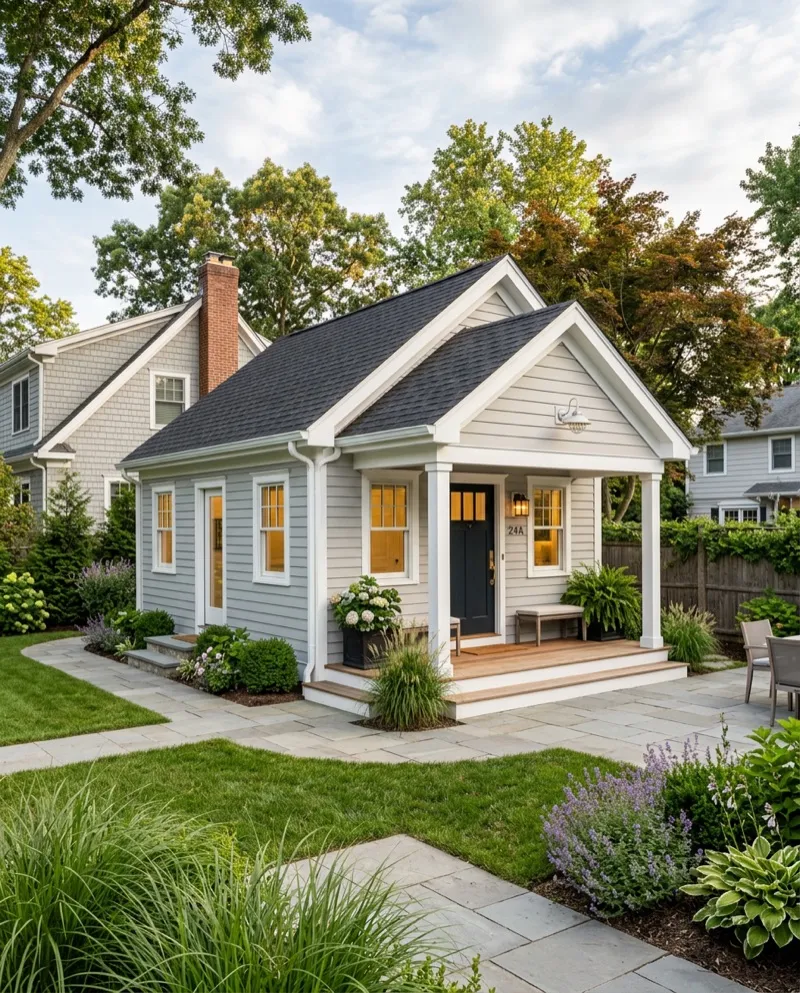
Quogue occupies a unique position among the Hamptons communities. As an incorporated village with its own municipal government, zoning authority, and building department, Quogue controls construction and land use decisions independently of the Town of Southampton. Founded as a summer colony in the mid-1800s, it ranks among the oldest seasonal communities on Long Island, with a tradition of understated elegance, environmental stewardship, and conservative architectural standards that shape every building project within village limits.
For homeowners considering accessory dwelling unit construction, Quogue presents both exceptional opportunities and distinct regulatory considerations. The village's estate-scale properties, many with existing outbuildings and generous lot sizes, provide excellent foundations for ADU development. At the same time, Quogue's village-level zoning, proximity to the Quogue Wildlife Refuge, and conservative design expectations require a contractor who understands the specific landscape of this community — both its natural environment and its regulatory framework.
Quogue's Incorporated Village Zoning: What Makes It Different
Unlike most Hamptons communities that fall under Town of Southampton jurisdiction, Quogue governs itself through its own Board of Trustees and administers its own zoning code. This is a critical distinction for ADU construction. When you build in Quogue, you work with the Village of Quogue Building Department, the Village Planning Board, and the Village Zoning Board of Appeals — not the Town of Southampton equivalents that handle construction in neighboring unincorporated areas.
Quogue's village zoning reflects its identity as a low-density, environmentally sensitive residential community. The code prioritizes preservation of the village's historic character, protection of natural resources, and maintenance of the spacious, estate-like quality that defines Quogue's neighborhoods. For ADU projects, this means navigating regulations that may differ from what applies in nearby Southampton or Westhampton Beach.
- Village-specific regulations. Quogue's zoning code contains its own provisions for accessory structures and dwelling units. Setback requirements, lot coverage ratios, height limits, and permitted uses are defined at the village level and may differ from Southampton Town standards.
- Conservative approval culture. The village boards take a careful, deliberate approach to new construction. Applications must be thorough, and projects that respect the village's established character move through the process more smoothly than those that push boundaries.
- Character preservation emphasis. Quogue values architectural continuity with its historic appearance. ADU designs that employ traditional materials, muted colors, and proportions consistent with the surrounding neighborhood receive the most favorable reception.
- Low-density maintenance. The village's zoning framework is built to maintain Quogue's spacious, estate-like character. ADU projects must demonstrate that they preserve the property's open feel and do not create a crowded or overdeveloped appearance.
The Plus One ADU Program: Up to $125,000 in Grant Funding
The Plus One Accessory Dwelling Unit Program provides grants of up to $125,000 toward ADU construction costs for homeowners who commit to renting the completed unit as workforce housing. For Quogue property owners, this program aligns particularly well with the village's existing tradition of caretaker and staff housing on estate properties.
Program status — verified September 2026
Plus One ADU is a New York State program (an $85 million allocation through the Housing Trust Fund Corporation) but it is run town by town, and each town's intake opens and closes on its own schedule. As of September 2026 on Long Island: Huntington and Riverhead are accepting applications; Brookhaven, Islip and Southold are closed. Babylon, East Hampton, Shelter Island and Southampton run their programs through Community Development Long Island rather than the Long Island Housing Partnership.
The $125,000 is a cap, not an amount every applicant receives, and it is awarded as a grant. Huntington's published guidelines cap household income at 100% of Nassau/Suffolk area median income (2023 HUD limits: $109,400 for a one-person household, $156,300 for four) and require that you have owned and lived in the home for at least one year. Applications go on a first-come waitlist and are then re-ranked on priority points, including whether the unit will be affordable at or below 80% AMI and whether it can be permitted without a zoning variance. Municipal code always overrides the program guidelines. Verify your town's status before you budget around a grant: LIHP (631) 435-4710. We also check it for you on the walkthrough — see our Plus One ADU grant page for the eligibility checklist and what the build costs if your town's round is closed.
- Grant amount. Up to $125,000 toward eligible construction costs. For many Quogue conversion projects, this can cover half or more of the total budget.
- Income targeting. The completed ADU must be rented to tenants earning at or below 80% of the Area Median Income (AMI). This targets the workers Quogue depends on: caretakers, landscapers, teachers, tradespeople, and service workers.
- Rental commitment. Grant recipients commit to affordable rental rates for a specified period, typically 10 years. The unit must serve as a year-round, long-term rental — not a seasonal or vacation rental.
- Eligible project types. New detached ADUs, outbuilding conversions, garage conversions, and interior apartment conversions all qualify. Quogue's inventory of secondary structures on estate properties makes conversions particularly viable.
- Application support. Alec's Construction prepares detailed construction estimates and project plans that strengthen Plus One applications for our Quogue clients.
The grant math works well in Quogue. A carriage house conversion that costs $180,000 becomes a $55,000 net investment with a $125,000 grant. The homeowner gains a permanent staff housing unit, reliable rental income, and a property improvement that adds value to the estate.
Interested in the $125K ADU grant?
We help Quogue homeowners apply — free consultation.
Environmental Sensitivity: Building Near the Quogue Wildlife Refuge
The Quogue Wildlife Refuge is a 305-acre nature preserve in the heart of the village, protecting pine barrens, wetlands, and diverse wildlife habitat. Properties adjacent to or near the refuge face additional environmental considerations that directly affect ADU construction planning. Beyond the refuge itself, Quogue is bordered by Shinnecock Bay to the north and the Atlantic Ocean to the south, with tidal marshes and barrier beach systems that create layers of environmental protection throughout the village.
- Wetland setbacks. Properties near wetlands, tidal areas, or the Quogue Wildlife Refuge boundary may have mandated buffer zones where construction is prohibited. ADU placement must account for these setbacks, which can significantly limit buildable area on some lots.
- Stormwater management. The village's low-lying topography and coastal proximity require careful stormwater planning. New construction must demonstrate that it will not increase runoff or exceed impervious surface limits.
- Vegetation preservation. Native plantings and mature trees near the refuge and wetlands may be protected. Site clearing must be minimized, and replacement plantings may be required to offset any removal.
- Nitrogen reduction requirements. Additional wastewater from a new ADU contributes to nitrogen loading in Quogue's sensitive coastal and bay ecosystem. The Suffolk County Health Department may require nitrogen-reducing I/A (Innovative/Alternative) septic systems for new dwelling units near sensitive water bodies.
- State and federal review. Depending on property location, ADU projects may require review from the New York State Department of Environmental Conservation or the U.S. Army Corps of Engineers, particularly for properties near tidal wetlands or regulated coastal areas.
These environmental requirements can add weeks to the approval timeline and potentially $20,000 to $40,000 to project costs for advanced septic systems and environmental compliance. But they are navigable with proper planning, and they protect the natural environment that makes Quogue a desirable place to own property.
The Caretaker Housing Tradition
Quogue's caretaker housing tradition runs deeper than in most Hamptons communities. For over a century, estate owners have relied on year-round caretakers to manage their properties through the off-season. These caretakers have historically lived in secondary structures on the property: converted carriage houses, gatekeepers' cottages, and purpose-built staff quarters. ADU construction formalizes and modernizes this longstanding practice.
The practical need for on-site caretakers is real. Quogue properties can sit vacant for eight or nine months of the year. Winter storms bring downed trees, power outages, and frozen pipes. An occupied ADU provides year-round property oversight that no amount of security technology can replace. A caretaker who lives on the estate can respond to emergencies in minutes, manage contractor visits, receive deliveries, and ensure the property is maintained through every season.
The Plus One grant makes formalizing this arrangement financially attractive. Instead of informal housing arrangements in structures that may not meet building code, a properly permitted and constructed ADU provides safe, legal, comfortable housing that also qualifies for $125,000 in grant funding.
Conservative Architectural Standards
Quogue's architectural character is defined by restraint. The village favors traditional shingle-style homes, white-trimmed colonials, and understated elegance. ADU construction must respect this aesthetic framework. A design that might work in a more contemporary community would feel jarring in Quogue if it departs too far from traditional forms.
- Traditional materials. Cedar shingle siding (natural or painted), wood trim, and roofing materials that match or complement the primary residence. Authenticity in materials is valued over cost savings from synthetics.
- Restrained proportions. ADUs should clearly read as subordinate structures — smaller and simpler than the primary home. Single-story designs are generally preferred; one-and-a-half story designs may work on larger properties where scale supports it.
- Muted color palette. Whites, grays, natural cedar tones, and dark greens align with Quogue's traditional aesthetic. Bold or contemporary color choices are discouraged.
- Landscape integration. The ADU should blend into the property's existing landscape with mature plantings, natural screening, and site work that makes the structure feel like it has always been part of the estate.
- Minimal site disturbance. Preserving existing trees, hedgerows, stone walls, and landscape features is essential. The village values properties that show respect for the established landscape.
Licensed & Insured
Full coverage on every project
36+ Cities Served
Suffolk County & Long Island
Free Walkthrough
No obligation, no pressure
Get a Free Estimate
Tell us about your project — we respond within 24 hours.
No spam. No obligation.
ADU Construction Costs in Quogue
Construction costs in Quogue reflect its Hamptons location, conservative quality standards, and the additional expenses that environmental compliance can generate. Labor and material costs run 20 to 35 percent above central Suffolk County. Here are realistic 2026 cost ranges for Quogue ADU projects:
- Outbuilding or carriage house conversion: $100,000 to $250,000. Depends on the structure's condition, renovation scope, and finish level. Many Quogue properties have outbuildings that provide an excellent conversion starting point.
- Garage conversion: $75,000 to $155,000. Converting a detached garage into a studio or one-bedroom apartment. Quogue garages tend to be well-built with adequate ceiling height for comfortable living space.
- Detached new construction: $200,000 to $400,000+. A purpose-built cottage meeting Quogue's architectural standards with traditional materials, quality finishes, and thoughtful site integration.
- Above-garage apartment: $115,000 to $210,000. Adding a second story over an existing garage with independent entry. Design must complement the primary residence and meet village height restrictions.
- Advanced septic system (if required): $20,000 to $40,000 additional. Nitrogen-reducing I/A systems are increasingly required near sensitive environmental areas and add to the overall project budget.
The Plus One grant's $125,000 meaningfully offsets these costs. A $180,000 outbuilding conversion becomes $55,000 net. Even at Quogue's premium pricing, ADU construction makes financial sense when grant funding is available and the resulting unit generates reliable rental income.
The Quogue Permit Process
Because Quogue is an incorporated village, the permit process runs through village government rather than the Town of Southampton. This has advantages — the village is small, the staff are accessible, and decisions are made locally — but requires specific familiarity with Quogue's code and approval culture.
- Property assessment. We evaluate your lot size, zoning district, existing structures, septic capacity, environmental constraints, and the most appropriate ADU approach for your specific property.
- Design development. Architectural plans are prepared that comply with Village of Quogue zoning code, building code, and the community's conservative architectural expectations.
- Village Building Department application. Plans are submitted to the Quogue Building Department. The building inspector reviews for code compliance and may refer the application to the Planning Board or Zoning Board of Appeals if variances are needed.
- Planning Board review (if applicable). Depending on project scope and any site plan review requirements, the Village Planning Board may need to approve the project before a permit can be issued.
- Suffolk County Health Department. Septic approval from the county Health Department is required for the additional dwelling load. Advanced nitrogen-reducing treatment systems may be mandated for properties in sensitive areas.
- Environmental review (if applicable). Properties near the Quogue Wildlife Refuge, wetlands, or coastal areas may require review from DEC or other environmental agencies.
- Permit issuance and construction. With all approvals in hand, the building permit is issued and construction begins.
- Inspections and certificate of occupancy. The village building inspector conducts inspections at required stages and issues a CO upon completion, authorizing the ADU for habitation.
Alec's Construction has experience working within Quogue's village approval process. We understand the expectations, prepare thorough applications, and maintain the professional relationships that help projects move through review efficiently. The permitting timeline in Quogue typically runs 3 to 6 months, depending on whether variances or environmental reviews are required.
Build a caretaker cottage on your Quogue estate.
Free property evaluation — we navigate the village process for you.
Types of ADUs for Quogue Properties
Quogue's estate-scale properties support a range of ADU configurations, each suited to different property conditions and homeowner objectives:
- Caretaker cottages. The quintessential Quogue ADU. A small, traditionally styled cottage positioned discreetly on the property, providing independent living quarters for a year-round caretaker. These are the most common and most naturally accepted ADU form in the village.
- Carriage house and outbuilding conversions. Many Quogue estates retain secondary structures — carriage houses, potting sheds, workshops — that can be converted to residential use. These conversions preserve the estate's built heritage while creating functional workforce housing.
- Garage conversions. Converting an underused detached garage into a studio or one-bedroom apartment. The existing footprint and structure reduce both cost and visual impact on the property.
- Above-garage apartments. Adding living space above an existing garage provides good separation from the primary home while utilizing existing infrastructure and minimizing new impervious surface area.
- Attached accessory apartments. Converting interior space within the primary home — a wing, a lower level, or above-garage space — into a separate apartment with its own entrance. This works well where detached construction is constrained by environmental setbacks or lot coverage limits.
Frequently Asked Questions
Does Quogue have different ADU rules than the Town of Southampton?+
Will proximity to the Quogue Wildlife Refuge affect my project?+
What architectural style should a Quogue ADU follow?+
Can I use the Plus One grant for a caretaker apartment in Quogue?+
Work With Alec's Construction
This guide is written by the crew that does the work. See Alec's ADUs service — accessory apartments, garage conversions and grant paperwork. Licensed and insured on Long Island, one crew start to finish, free walkthrough and a written estimate inside 48 hours.
Booking the cold months now: we also handle Additions & New Construction and Bathroom Remodeling.
We keep a permit office directory for Nassau and Suffolk, checked against each jurisdiction's own site, because we file in these counters constantly.
Ready to Build an ADU in Quogue?
Contact Alec's Construction for a free consultation. We will evaluate your Quogue property, navigate the village approval process, and provide a detailed estimate that accounts for environmental and architectural requirements.
Get a Free Consultation