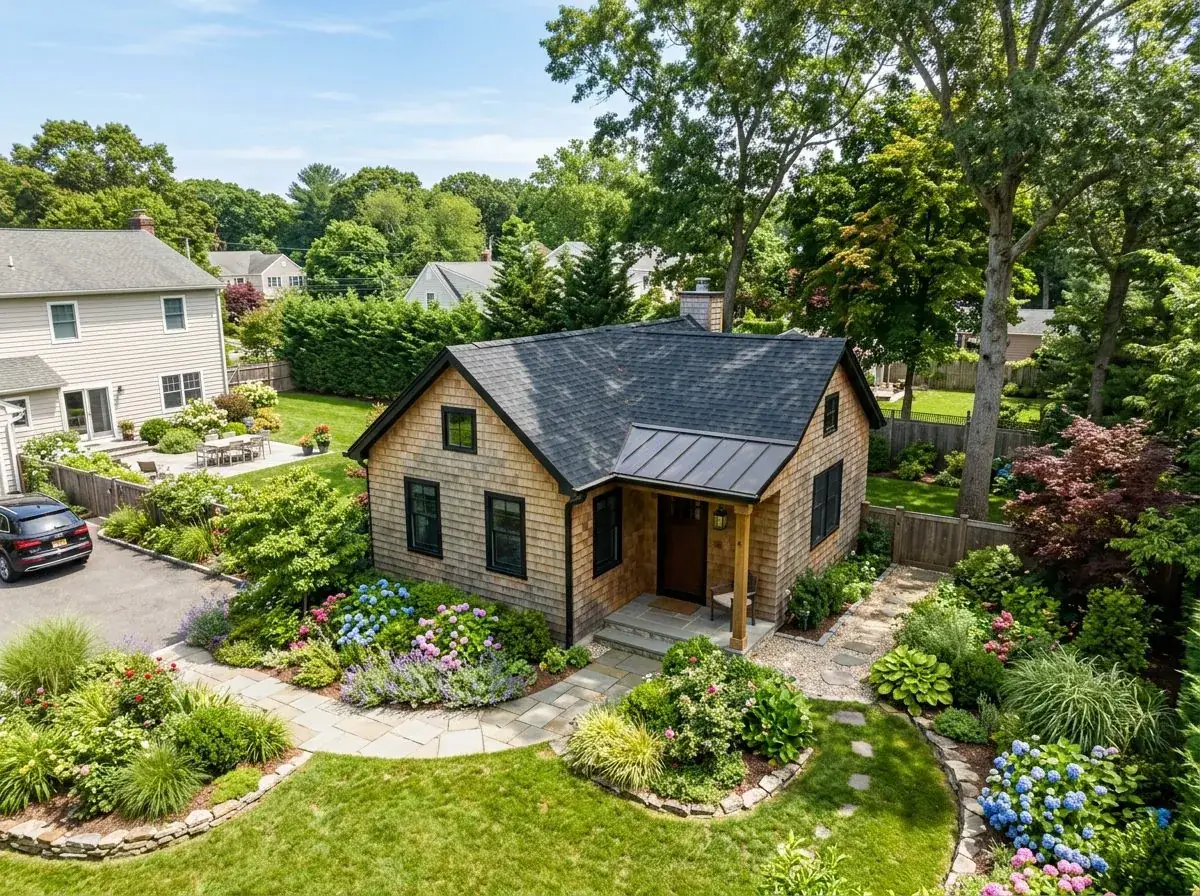
If you are a Long Island homeowner considering an accessory dwelling unit, the first question on your mind is almost certainly about money. How much will it cost to build? How much value will it add to my property? What kind of rental income can I expect? These are not casual curiosities — they are the financial foundation of a decision that involves $80,000 to $375,000 in construction costs. You need real numbers, not vague promises.
An ADU — also called an accessory dwelling unit, in-law apartment, granny flat, or secondary suite — is a self-contained living space on a single-family property with its own kitchen, bathroom, sleeping area, and entrance. In real estate terms, an ADU transforms a single-income property into a dual-income property. That transformation has measurable effects on property value, rental revenue, appraisal outcomes, and resale appeal. On Long Island, where housing demand consistently outpaces supply and median home prices remain among the highest in the country, those effects are substantial.
What Is an ADU in Real Estate Terms?
In real estate, an ADU is a legally permitted secondary dwelling unit on a residential property. The key word is "legally permitted." An unpermitted basement apartment or an illegal conversion does not carry the same real estate value — and can actually decrease your property's value by creating legal liability and complicating future sales. A properly permitted ADU, complete with a certificate of occupancy, becomes a documented asset that appraisers can value, lenders can finance, and buyers can rely on.
ADU homes are properties that include both a primary residence and a permitted accessory dwelling unit. In the Long Island real estate market, ADU homes are increasingly sought after by buyers who recognize the income potential and flexibility these properties offer. Whether the ADU is a detached backyard cottage, a converted garage, a basement apartment, or an above-garage loft, the presence of a legal secondary unit fundamentally changes how the property is valued and marketed.
How Much Value Does an ADU Add to a Long Island Property?
The value an ADU adds to your property depends on several factors: the type of ADU, its size and quality, the local rental market, and how the appraiser values the improvement. Based on construction and real estate data across Long Island, here are the realistic value-add ranges:
- Overall property value increase: ADUs on Long Island typically add 20 to 30 percent to total property value. A $500,000 home with a well-built, permitted ADU can appraise at $600,000 to $650,000 — an increase of $100,000 to $150,000.
- Value add relative to construction cost: Most ADU projects on Long Island return 60 to 80 cents for every dollar spent in immediate property value increase. A $200,000 detached ADU might add $120,000 to $160,000 in appraised value upon completion. The remaining return comes through rental income over time.
- Total ROI including rental income: When you factor in rental income, the total return on investment typically exceeds the construction cost within 5 to 8 years. After that, the ADU generates pure positive cash flow while continuing to appreciate as part of your property.
These numbers are not hypothetical. They reflect the realities of the Long Island real estate market where housing inventory is chronically low, demand is high, and rental rates have climbed steadily year over year.
Want to know what an ADU could add to your property?
Free property walkthrough with a detailed cost and value estimate.
Rental Income Potential by Location
Rental income is the engine that drives ADU returns on Long Island. The rental market here is exceptionally strong due to limited housing supply, high demand from young professionals and families priced out of homeownership, and a large workforce population serving the Hamptons and East End communities. Here is what you can realistically expect in monthly rental income from an ADU by area:
- The Hamptons (East Hampton, Southampton, Montauk): $2,500 to $4,000 per month for a year-round rental. The extreme housing shortage on the East End pushes rental rates well above the Long Island average. A one-bedroom ADU in East Hampton rented to a workforce housing tenant can command $2,500 to $3,000 monthly. A two-bedroom unit in a desirable location can reach $3,500 to $4,000.
- North Shore (Huntington, Northport, Port Jefferson): $2,000 to $3,200 per month. The North Shore commands premium rents due to excellent school districts, waterfront proximity, and desirable town centers. A studio or one-bedroom ADU in Huntington Village or Cold Spring Harbor can achieve the upper end of this range.
- South Shore (Bay Shore, Sayville, Babylon): $1,800 to $2,800 per month. The South Shore offers strong rental demand from commuters who work in New York City and prefer the suburban lifestyle. LIRR access drives demand in towns with convenient train stations.
- Central Suffolk (Patchogue, Medford, Ronkonkoma): $1,500 to $2,400 per month. Central Suffolk represents the most affordable ADU rental market on Long Island, but demand remains strong. At $1,800 per month average, a central Suffolk ADU generates $21,600 per year in gross rental income.
- East End (Riverhead, Greenport, Southold): $1,800 to $3,000 per month. The growing wine country and tourism economy on the North Fork creates year-round rental demand, particularly for housing service industry workers.
These rental rates are for year-round, long-term tenancies. Short-term vacation rentals can generate higher nightly rates in summer months but are restricted in many Long Island communities and are not permitted for ADUs receiving Plus One grant funding.
Program status — verified September 2026
Plus One ADU is a New York State program (an $85 million allocation through the Housing Trust Fund Corporation) but it is run town by town, and each town's intake opens and closes on its own schedule. As of September 2026 on Long Island: Huntington and Riverhead are accepting applications; Brookhaven, Islip and Southold are closed. Babylon, East Hampton, Shelter Island and Southampton run their programs through Community Development Long Island rather than the Long Island Housing Partnership.
The $125,000 is a cap, not an amount every applicant receives, and it is awarded as a grant. Huntington's published guidelines cap household income at 100% of Nassau/Suffolk area median income (2023 HUD limits: $109,400 for a one-person household, $156,300 for four) and require that you have owned and lived in the home for at least one year. Applications go on a first-come waitlist and are then re-ranked on priority points, including whether the unit will be affordable at or below 80% AMI and whether it can be permitted without a zoning variance. Municipal code always overrides the program guidelines. Verify your town's status before you budget around a grant: LIHP (631) 435-4710. We also check it for you on the walkthrough — see our Plus One ADU grant page for the eligibility checklist and what the build costs if your town's round is closed.
How Appraisers Value ADUs
Understanding how appraisers value ADUs is critical because the appraised value directly affects your home equity, refinancing options, and eventual sale price. Appraisers use three primary approaches, and for ADU properties, they typically rely on a combination:
- Sales comparison approach. The appraiser looks at recent sales of comparable properties — ideally other homes with permitted ADUs in the same area. On Long Island, ADU comparables are becoming more available as more homeowners build permitted units, but in some markets the appraiser may need to look at a wider geographic area to find relevant comparisons.
- Income approach. For properties with rental ADUs, the appraiser may use an income capitalization approach that values the property based on its income-generating potential. This method considers the actual or market-rate rent, vacancy rates, operating expenses, and a capitalization rate appropriate for the local market. The income approach typically produces a higher valuation than the sales comparison approach alone.
- Cost approach. The appraiser estimates the replacement cost of the ADU and adds it to the value of the primary property. This approach sets a floor value but may not capture the full income premium that a rental ADU provides.
To maximize your ADU's appraised value, ensure the following:
- Full permitting and certificate of occupancy. An unpermitted ADU will not be valued as a legal dwelling unit. It may even be flagged as a code violation that reduces property value. Always build with permits and obtain a CO.
- Separate utility metering. If the ADU has its own electric meter and, where applicable, water meter, it is easier for the appraiser to treat it as an independent income-producing unit.
- Quality construction and finishes. An ADU that looks and functions like a real apartment — not a converted closet — appraises higher. Proper kitchens, full bathrooms, adequate ceiling heights, and quality finishes all matter.
- Documentation of rental income. If you are renting the ADU, maintain records of lease agreements and rental payments. This documentation supports the income approach to valuation.
Licensed & Insured
Full coverage on every project
36+ Cities Served
Suffolk County & Long Island
Free Walkthrough
No obligation, no pressure
Value Add by ADU Type
Not all ADUs add the same amount of value. The type of ADU, its independence from the primary structure, and the quality of the build all influence how much property value it creates. Here is a comparison of value added by ADU type on Long Island:
- Detached ADU (backyard cottage, carriage house). Adds the most value — typically 25 to 30 percent of total property value. Detached units are the most desirable in the real estate market because they offer complete privacy and independence for the tenant. Buyers view detached ADUs as the most flexible option, suitable for rental income, family housing, or home office use. Construction cost: $150,000 to $375,000.
- Above-garage apartment. Adds 20 to 25 percent of property value. These units offer good privacy and a natural separation from the primary home. The existing garage structure reduces construction costs compared to a fully detached build. Construction cost: $100,000 to $195,000.
- Garage conversion. Adds 15 to 22 percent of property value. Garage conversions are cost-effective but sacrifice parking space, which can be a drawback in the resale market. The value add depends on whether the area has street parking alternatives and how well the conversion is executed. Construction cost: $55,000 to $130,000.
- Basement conversion (walkout). Adds 15 to 20 percent of property value. Walkout basements with grade-level access and natural light appraise more favorably than fully below-grade units. The private exterior entrance is a key value driver. Construction cost: $65,000 to $155,000.
- Basement conversion (standard). Adds 10 to 15 percent of property value. Standard basement conversions without walkout access add less value because the below-grade living space is less appealing to renters and buyers. However, they remain highly cost-effective investments. Construction cost: $55,000 to $120,000.
- Attached in-law suite. Adds 12 to 18 percent of property value. Attached units share a wall with the primary home, which reduces privacy and makes them less desirable as rental units. However, they are highly valued by buyers seeking multigenerational living arrangements. Construction cost: $70,000 to $240,000.
The Plus One ADU Grant and Real Estate Value
The Plus One Accessory Dwelling Unit Program provides grants of up to $125,000 toward ADU construction costs. From a real estate perspective, this grant dramatically improves the investment math. Here is how:
- Reduced construction cost. A $200,000 detached ADU with a $125,000 grant costs the homeowner $75,000 out of pocket. If that ADU adds $130,000 in property value, the homeowner has an immediate paper gain of $55,000 on the first day.
- Faster ROI. With lower out-of-pocket costs, the rental income from the ADU pays back the investment much faster. At $2,000 per month in rent, a $75,000 net investment is recovered in just over three years of rental income before expenses.
- The rental commitment does not reduce value. The Plus One grant requires the ADU to be rented at affordable rates for typically 10 years. Some homeowners worry this reduces resale value. In practice, the restriction has minimal impact because buyers recognize the income stream and the grant significantly reduces the owner's cost basis. After the commitment period ends, the owner has full flexibility to rent at market rates.
Homeowners who qualify for the Plus One grant should view it as a subsidy that turns a good investment into an excellent one. We help clients prepare their grant applications with detailed construction estimates and project plans.
Get a Free Estimate
Tell us about your project — we respond within 24 hours.
No spam. No obligation.
Impact on Resale: What Buyers Are Looking For
The Long Island real estate market in 2026 has a growing buyer segment specifically searching for properties with ADUs or ADU potential. Here is why:
- Multigenerational living demand. Long Island has one of the highest rates of multigenerational households in the Northeast. Adult children returning home, aging parents needing nearby housing, and extended family arrangements all drive demand for properties with independent secondary units. Buyers searching for "ADU homes" are often multigenerational families willing to pay a premium for the right property.
- Investment-minded buyers. First-time homebuyers on Long Island increasingly view ADU rental income as a way to afford homeownership. A buyer can qualify for a larger mortgage if the property generates documented rental income from a permitted ADU. This "house hacking" approach is becoming mainstream, and properties with existing ADUs are highly attractive to this buyer segment.
- Remote work flexibility. The rise of permanent remote work has created demand for detached home office spaces. An ADU that doubles as a home office and potential rental unit appeals to buyers who work from home and want a dedicated, separate workspace.
- Resale speed. Properties with ADUs tend to sell faster on Long Island because they appeal to a broader buyer pool. A single-family home appeals to families. A single-family home with an ADU appeals to families, investors, multigenerational households, and remote workers.
Real estate agents across Long Island report that permitted ADUs are one of the most marketable property features in the current market. Listings that highlight a legal ADU with a certificate of occupancy generate more showings and higher offers than comparable homes without secondary units.
Long Island-Specific Market Data
Long Island's housing market dynamics make ADUs particularly valuable compared to other regions:
- Median home price. The median home sale price across Long Island exceeds $600,000 as of early 2026, with significant variation by area. Nassau County trends above $700,000, while Suffolk County ranges from $450,000 in central areas to over $1 million on the East End and North Shore.
- Inventory shortage. Housing inventory on Long Island remains near historic lows. Limited available homes mean higher competition among buyers and sustained upward pressure on prices — including properties with ADUs.
- Rental vacancy rates. Rental vacancy rates on Long Island are below 3 percent in most areas and below 2 percent in high-demand communities. This means ADU owners face minimal vacancy risk, and finding tenants is not a significant concern.
- Property tax considerations. Adding an ADU will increase your assessed property value and, consequently, your property taxes. However, the rental income from the ADU typically exceeds the tax increase by a wide margin. A $200 monthly property tax increase is easily offset by $1,500 to $4,000 in monthly rental income.
- Insurance impact. Your homeowner's insurance will need to be updated to cover the ADU. If the ADU is a rental, you may need a landlord policy rider or a separate landlord policy for the unit. The additional insurance cost is typically $500 to $1,500 per year — a fraction of the rental income the ADU generates.
ROI Scenarios: Three Real Examples
To make the financial case concrete, here are three realistic ADU investment scenarios on Long Island:
Scenario 1: Garage Conversion in Patchogue
- Construction cost: $95,000
- Plus One grant: $125,000 (covers full cost, homeowner pays $0 net)
- Property value increase: $80,000 to $100,000
- Monthly rental income: $1,800
- Annual gross rental income: $21,600
- Annual expenses (taxes, insurance, maintenance): approximately $4,500
- Annual net rental income: approximately $17,100
- ROI: Immediate — grant covers construction, and every dollar of rental income is profit after expenses
Scenario 2: Detached Cottage in Huntington
- Construction cost: $245,000
- Plus One grant: $125,000
- Out-of-pocket cost: $120,000
- Property value increase: $160,000 to $190,000
- Monthly rental income: $2,600
- Annual gross rental income: $31,200
- Annual expenses: approximately $6,200
- Annual net rental income: approximately $25,000
- Payback period: approximately 4.8 years on out-of-pocket cost
Scenario 3: Basement Walkout Conversion in East Hampton
- Construction cost: $140,000
- Plus One grant: $125,000
- Out-of-pocket cost: $15,000
- Property value increase: $120,000 to $150,000
- Monthly rental income: $2,800
- Annual gross rental income: $33,600
- Annual expenses: approximately $5,800
- Annual net rental income: approximately $27,800
- Payback period: approximately 6 months on out-of-pocket cost
These scenarios demonstrate why ADUs are among the highest-returning home improvements available to Long Island homeowners. The combination of strong rental demand, high property values, and available grant funding creates investment conditions that are difficult to match with any other residential improvement.
Build equity. Earn income. Increase your home's value.
125+ projects completed across Long Island — let us show you the numbers.
Common Mistakes That Reduce ADU Real Estate Value
Not every ADU adds value. Poorly planned or improperly built ADUs can actually hurt your property's real estate position. Avoid these mistakes:
- Building without permits. An unpermitted ADU is a liability, not an asset. It cannot be legally rented, will not be recognized by appraisers, creates disclosure obligations when you sell, and may need to be removed at your expense if discovered by the building department.
- Sacrificing too much yard space. On standard Long Island lots, placing a large detached ADU can eliminate most of the usable backyard. Buyers with children or outdoor-oriented lifestyles may view this as a negative that offsets the ADU's value. Balance the ADU footprint with the remaining outdoor living space.
- Poor quality construction. A cheaply built ADU that looks like a shed or requires constant maintenance reduces curb appeal and property perception. Invest in quality materials, proper insulation, and finishes that match or complement the primary home.
- Inadequate sound separation. For attached ADUs and basement conversions, inadequate soundproofing between the primary home and the ADU is a common complaint that reduces both livability and value. Proper insulation, resilient channel, and sound-rated drywall are modest investments that make a significant difference.
- No separate entrance. An ADU without its own private entrance is less valuable than one with independent access. Tenants want privacy, and buyers evaluating the rental potential of an ADU look for a separate door.
Frequently Asked Questions
How much does an ADU increase property value on Long Island?+
What is the rental income potential for an ADU on Long Island?+
Does an unpermitted ADU add value to my property?+
Will an ADU increase my property taxes?+
How does the Plus One $125K grant affect my ADU's ROI?+
Which ADU type adds the most value to a Long Island home?+
Work With Alec's Construction
This guide is written by the crew that does the work. See Alec's ADUs service — accessory apartments, garage conversions and grant paperwork. Licensed and insured on Long Island, one crew start to finish, free walkthrough and a written estimate inside 48 hours.
Booking the cold months now: we also handle Additions & New Construction and Bathroom Remodeling.
We pull the permits on our own jobs — if you need the building department for your town, we keep a current directory of all 23 Long Island permit offices.
Ready to Increase Your Property's Value with an ADU?
Contact Alec's Construction for a free property walkthrough. We will assess your property, estimate the value an ADU would add, and provide a detailed construction estimate including Plus One grant eligibility.
Get a Free Consultation