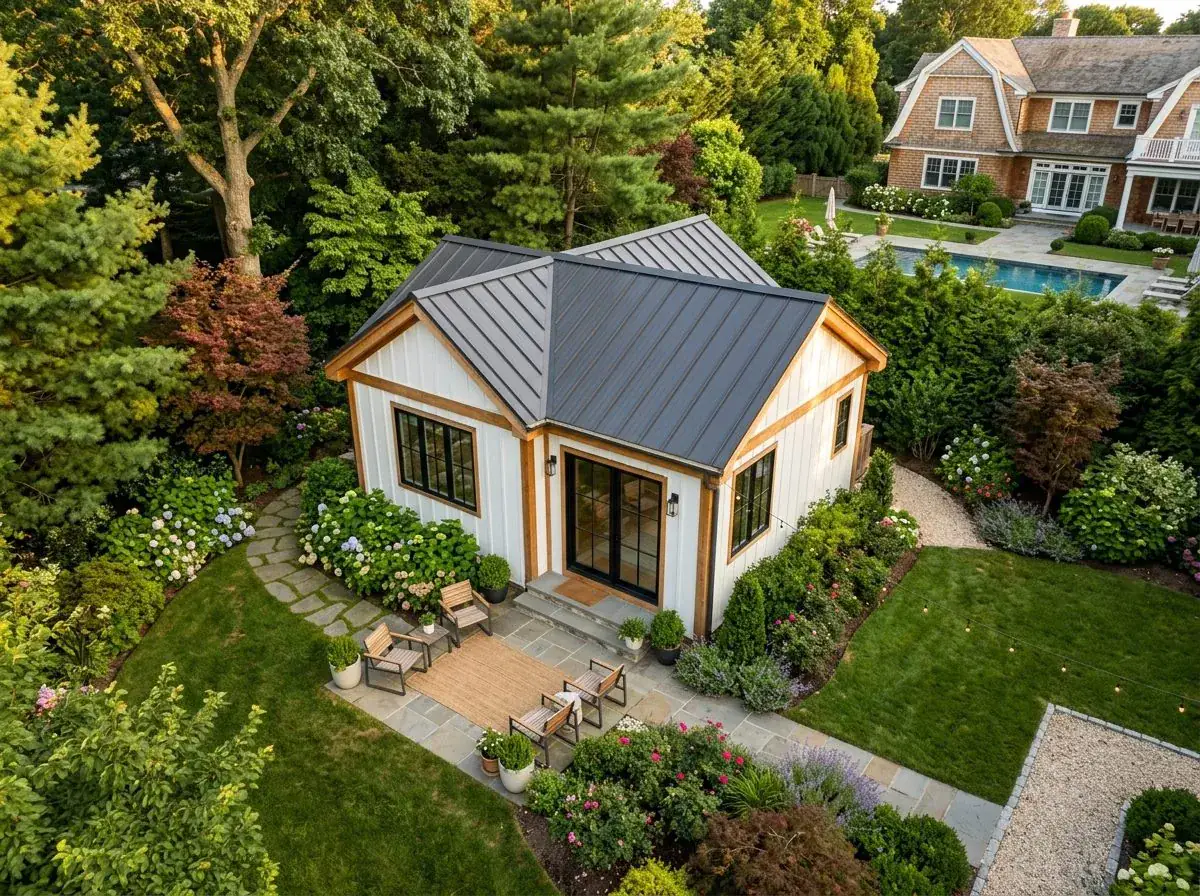
The Town of Riverhead sits at the fork where Long Island splits into its North and South branches. It is the county seat of Suffolk County and a community that has been growing steadily as homebuyers, families, and investors look east for value and opportunity. Riverhead's mix of suburban neighborhoods, agricultural land, wine country estates, and downtown revitalization makes it one of the most dynamic markets on the East End — and one where accessory dwelling units are increasingly in demand.
Riverhead has established its own framework for accessory apartments, including an Accessory Apartment Committee that reviews applications. The town also participates in the Plus One ADU Program, making grants of up to $125,000 available to qualifying homeowners. This guide covers the rules, the process, and what it costs to build an ADU in Riverhead.
Program status — verified September 2026
As of September 2026, Riverhead is accepting Plus One ADU applications through the Long Island Housing Partnership. Intakes open and close town by town — Brookhaven, Islip and Southold are closed right now — so Riverhead being open is worth acting on rather than sitting on.
The $125,000 is a cap, not an amount every applicant receives, and it is awarded as a grant. Huntington's published guidelines cap household income at 100% of Nassau/Suffolk area median income (2023 HUD limits: $109,400 for a one-person household, $156,300 for four) and require that you have owned and lived in the home for at least one year. Applications go on a first-come waitlist and are then re-ranked on priority points, including whether the unit will be affordable at or below 80% AMI and whether it can be permitted without a zoning variance. Municipal code always overrides the program guidelines. Verify your town's status before you budget around a grant: LIHP (631) 435-4710. We also check it for you on the walkthrough — see our Plus One ADU grant page for the eligibility checklist and what the build costs if your town's round is closed.
Riverhead's Accessory Apartment Rules
Riverhead takes a structured approach to accessory apartments. The town's zoning code establishes clear rules that homeowners must follow:
- One accessory apartment per property owner. This is the fundamental rule in Riverhead. A property owner may have one accessory apartment in the entire town — not one per property, but one per owner. If you own multiple properties in Riverhead, you can only have an accessory apartment on one of them.
- Owner-occupancy required. The property owner must live in either the primary residence or the accessory apartment. The unit cannot be created on a property that the owner does not personally occupy.
- Size limitations. The accessory apartment must be subordinate to the primary dwelling. It cannot exceed a specified percentage of the primary home's floor area or a maximum square footage, whichever is less.
- Committee approval required. Unlike towns where ADUs are approved purely through the building department, Riverhead requires review and approval from its Accessory Apartment Committee before a permit can be issued.
- Parking. At least one additional off-street parking space is required for the accessory apartment.
The one-per-owner rule is unique and important. If you are considering building an accessory apartment in Riverhead, you need to confirm that you do not already have one on another property in the town. We verify this as part of our initial consultation.
Wondering if your Riverhead property qualifies?
Free walkthrough — we check your zoning and eligibility.
The Accessory Apartment Committee
Riverhead's Accessory Apartment Committee is a review body that evaluates applications for new accessory apartments. This committee adds an extra layer of oversight beyond the standard building department review that most Suffolk County towns require.
- Application review. The committee reviews your application for compliance with the town's accessory apartment regulations, including lot size, zoning district eligibility, owner-occupancy, and the one-per-owner rule.
- Site considerations. The committee evaluates how the proposed ADU fits the property, including its relationship to neighboring homes, access, and impact on the surrounding area.
- Recommendation to the Town Board. The committee makes a recommendation to approve, modify, or deny the application. The Town Board typically follows the committee's recommendation.
- Timeline. Committee review adds time to the approval process compared to towns that handle ADUs purely through the building department. Plan for an additional 4 to 8 weeks for the committee process on top of standard building permit timelines.
We prepare all committee application materials for our Riverhead clients, including detailed project descriptions, site plans, and supporting documentation. A well-prepared application moves through the committee process more quickly and with fewer revision requests.
Plus One ADU Program
Riverhead participates in the Plus One Accessory Dwelling Unit Program, which provides grants of up to $125,000 for ADU construction projects that serve workforce housing. The program is particularly valuable in Riverhead, where construction costs are more moderate than the Hamptons but the need for affordable housing is equally real.
- Grant amount: Up to $125,000 toward ADU construction or conversion costs.
- Income requirements: The ADU must be rented to tenants earning at or below 80% of the Area Median Income.
- Rental commitment: Long-term rental at affordable rates for a specified period, typically 10 years.
- Eligible projects: New detached ADUs, garage conversions, basement conversions, and interior conversions all qualify.
In Riverhead, where a garage conversion might cost $50,000 to $90,000, a $125,000 grant can cover the entire project and then some. Even new construction projects become remarkably affordable with this level of grant support. We help clients prepare grant applications with accurate construction estimates and project documentation.
Zoning Considerations in Riverhead
Riverhead's zoning is more diverse than most Suffolk County towns. The town includes standard residential zones, agricultural-residential zones, commercial districts, and special-purpose zones that reflect its unique position as both a farming community and a growing suburban market.
- Residential zones. Standard residential districts (R-40, R-80, etc.) are the most straightforward for ADU construction. The number in the zone designation refers to minimum lot size in thousands of square feet — R-40 requires a 40,000 square foot lot, R-80 requires 80,000 square feet (roughly two acres).
- Agricultural-residential zones. Riverhead's agricultural zones, common in Calverton, Aquebogue, and Jamesport, often have large minimum lot sizes. These properties frequently have existing barns, outbuildings, or structures that could be converted into ADUs, subject to committee approval.
- Downtown and hamlet zones. Riverhead's downtown revitalization area and hamlet center zones have their own regulations. ADU rules in these areas may differ from standard residential zones.
- Conforming vs. nonconforming lots. If your lot does not meet the minimum size for your zone, you may need a variance in addition to committee approval. We assess this during our initial evaluation.
Licensed & Insured
Full coverage on every project
36+ Cities Served
Suffolk County & Long Island
Free Walkthrough
No obligation, no pressure
Get a Free Estimate
Tell us about your project — we respond within 24 hours.
No spam. No obligation.
Types of ADUs for Riverhead Properties
Riverhead's diverse property landscape supports a wide range of ADU configurations:
- Garage conversion. The most popular and cost-effective option for suburban Riverhead properties. Many homes in Wading River and Calverton have detached garages that convert into comfortable studio or one-bedroom apartments.
- Basement conversion. Full basements with adequate ceiling height are common in Riverhead homes. A separate entrance, egress windows, and proper mechanical systems transform a basement into a legal accessory apartment.
- Detached backyard cottage. On larger residential and agricultural-residential lots, a standalone 500 to 800 square foot cottage provides full independence for the occupant. These are particularly feasible on Riverhead's larger parcels.
- Barn or outbuilding conversion. Agricultural properties in Calverton, Aquebogue, and Jamesport sometimes have barns, workshops, or other outbuildings that can be converted into living space. These conversions preserve the rural character of the property while creating modern accommodations.
- Above-garage apartment. Adding a second story over an existing detached garage preserves ground-level use while creating new living space. This option works well on properties where yard space is limited.
Permit Process in Riverhead
The Riverhead permit process involves more steps than most Suffolk County towns due to the Accessory Apartment Committee. Here is the complete sequence:
- Property evaluation. We visit your property to assess lot size, zoning, structures, septic, and the best ADU approach for your situation and goals.
- Architectural plans. Licensed plans are prepared showing the ADU design, site plan, floor plan, elevations, and utility connections.
- Accessory Apartment Committee application. A complete application package is submitted to the committee, including the project description, plans, owner-occupancy documentation, and confirmation of one-per-owner compliance.
- Committee review and hearing. The committee reviews the application and may hold a hearing. They evaluate the project for compliance with all accessory apartment regulations and make a recommendation.
- Town Board approval. The Town Board reviews the committee's recommendation and votes on the application.
- Health Department review. For septic-served properties, the Suffolk County Health Department reviews and approves the additional dwelling load.
- Building permit issuance. With committee approval, Town Board authorization, and health department clearance, the building permit is issued.
- Construction, inspections, and CO. Construction proceeds with inspections at key stages. A certificate of occupancy is issued upon final approval.
The committee process adds time, but it is manageable with proper preparation. We have guided clients through the Riverhead process and know how to prepare applications that move efficiently through committee review.
We handle the committee process for you.
From application to approval — free consultation to start.
ADU Construction Costs in Riverhead
One of Riverhead's advantages over the Hamptons is cost. Construction in Riverhead is priced in line with central Suffolk County, making ADUs significantly more affordable than equivalent projects 20 miles to the east. Here are realistic ranges for 2026:
- Garage conversion: $50,000 to $95,000. The most affordable path to a legal accessory apartment.
- Basement conversion: $55,000 to $115,000. Costs depend on ceiling height, waterproofing needs, and the scope of mechanical work.
- Above-garage apartment: $75,000 to $140,000. Structural reinforcement and stair access are the primary cost drivers.
- Detached new construction: $140,000 to $280,000+. A standalone cottage with foundation, utilities, and complete finishes.
- Barn or outbuilding conversion: $80,000 to $200,000. Costs vary widely depending on the condition of the existing structure and the extent of work needed to bring it to residential code.
With the Plus One grant covering up to $125,000, many Riverhead ADU projects can be completed with minimal or zero out-of-pocket cost to the homeowner. A $90,000 garage conversion fully funded by a Plus One grant leaves you with a cash-flowing asset at no personal expense.
Wine Country ADUs: A Unique Opportunity
Riverhead is the heart of Long Island's wine country, with dozens of vineyards and tasting rooms stretching along Route 25 and Sound Avenue through Aquebogue and Jamesport. Properties in this area have a unique advantage when it comes to ADU rental income.
- Year-round demand. Wine country attracts visitors in every season — harvest festivals in fall, wine dinners in winter, barrel tastings in spring, and summer tourism. An ADU on a property near the vineyards has strong long-term rental appeal.
- Agricultural property conversions. Many wine country properties have outbuildings, barns, or workshops that can be converted into charming accessory apartments with agricultural character.
- Property value boost. A legal ADU on a wine country property adds both income potential and resale value. Buyers in this area increasingly seek properties with secondary living spaces.
Note that if you receive a Plus One grant, the ADU must serve as workforce housing at affordable rates — it cannot be used as a vacation rental. But for homeowners building ADUs without grant funding, the wine country location adds rental value that other Riverhead neighborhoods may not match.
Riverhead Communities We Serve
Alec's Construction serves homeowners throughout the Town of Riverhead, including:
- Calverton — large suburban and semi-rural lots with excellent ADU potential, including former agricultural properties with outbuildings
- Wading River — established residential community on the North Shore with family-oriented neighborhoods and growing ADU interest
- Aquebogue — wine country hamlet with agricultural-residential properties ideal for cottage and outbuilding ADUs
- Jamesport — the easternmost hamlet in Riverhead, with vineyard-adjacent properties and a mix of lot sizes
- Riverhead downtown — the revitalized town center with a growing residential base and unique zoning opportunities
Frequently Asked Questions
What is the Accessory Apartment Committee?+
Can I have ADUs on two different properties in Riverhead?+
Can I convert a barn into an ADU in Riverhead?+
How long does the full Riverhead ADU process take?+
Work With Alec's Construction
This guide is written by the crew that does the work. See Alec's ADUs service — accessory apartments, garage conversions and grant paperwork. Licensed and insured on Long Island, one crew start to finish, free walkthrough and a written estimate inside 48 hours.
Booking the cold months now: we also handle Additions & New Construction and Bathroom Remodeling.
We pull the permits on our own jobs — if you need the building department for your town, we keep a current directory of all 23 Long Island permit offices.
Also Serving Riverhead
- Attic Insulation in Riverhead — air sealing, baffles and R-49 depth
- Basement Finishing in Riverhead — egress, ceiling height and moisture
- Bathroom Remodeling in Riverhead — full gut renovations
- Fallen Tree Removal & Roof Repair in Riverhead — tree off the house, roof supported and repaired
- Flood & Water Damage Cleanup in Riverhead — wet material out, drying metered
- Gutter Installation in Riverhead — seamless gutters, fascia and drainage
- Hurricane & Storm Damage Repair in Riverhead — trees, flooding, cleanup and repairs
- Interior Painting in Riverhead — the right work for the cold months
- Kitchen Remodeling in Riverhead — cabinets, counters and layout
- Roofing in Riverhead — tear-offs, repairs and storm damage
- Storm Debris Removal & Cleanup in Riverhead — trees, building debris and hauling
- Storm Roof & Siding Repair in Riverhead — wind damage, tarped and rebuilt
Ready to Build Your ADU in Riverhead?
Contact Alec's Construction for a free consultation. We will evaluate your Riverhead property, explain the committee process, and help you explore Plus One grant eligibility.
Get a Free Consultation