Shelter Island is unlike any other community on Long Island. Accessible only by ferry — from Greenport on the North Fork or North Haven on the South Fork — this 8,000-acre island sits between Peconic Bay and Gardiner's Bay with a year-round population of fewer than 2,500 people. There are no bridges. There is no municipal sewer system. Roughly one-third of the island's land area is permanently protected as nature preserves, including the 2,039-acre Mashomack Preserve managed by The Nature Conservancy. Every construction project on Shelter Island exists within these constraints.
These same constraints make Shelter Island's workforce housing crisis perhaps the most acute in all of Suffolk County. Workers who cannot afford to live on the island must ferry in every day — a process that adds significant time, cost, and uncertainty to their commutes. During summer months, when ferry lines can stretch for hours, commuting workers face a daily logistical nightmare. Accessory dwelling units offer the most practical path to keeping essential workers housed on the island where they are needed.
The Ferry Factor: Why On-Island Housing Is Critical
To understand why ADUs matter more on Shelter Island than almost anywhere else on Long Island, you need to understand the ferry. Two private ferry services connect Shelter Island to the rest of Long Island: the North Ferry from Greenport and the South Ferry from North Haven. Both operate on schedules that vary by season, both have limited capacity, and both can be disrupted by weather, mechanical issues, or sheer volume of traffic during peak periods.
For a worker commuting to Shelter Island from the mainland, the ferry adds 20 to 45 minutes each way to their commute — and that assumes no wait. During summer weekends and holidays, ferry waits can exceed an hour in each direction. A landscaper, plumber, or restaurant worker who lives in Riverhead or further west might spend three to four hours a day just getting to and from work. Ferry fares add up as well: a round trip for a vehicle currently costs over $25, which amounts to more than $500 per month in commuting costs alone for a daily worker.
The ferry's limitations also create reliability problems. A worker who misses the last ferry is stranded. A summer storm that disrupts ferry service can leave businesses short-staffed. Emergency workers who live off-island face response time delays that can be measured in the time it takes to cross Shelter Island Sound. Every one of these problems is solved when workers can live on the island, and ADUs are the most feasible way to create that housing without large-scale development on an environmentally sensitive island.
The Plus One ADU Program: $125,000 Grants
The Plus One Accessory Dwelling Unit Program provides grants of up to $125,000 toward ADU construction costs for homeowners who commit to renting the unit as workforce housing. On Shelter Island, where the need for on-island workforce housing is extreme, this program has particular significance.
Program status — verified September 2026
Shelter Island runs its Plus One ADU program through Community Development Long Island, not the Long Island Housing Partnership, so its intake calendar is its own. As of September 2026 the LIHP-administered towns stand as follows: Huntington and Riverhead open; Brookhaven, Islip and Southold closed. Confirm the current round with Community Development Long Island before you budget around a grant.
The $125,000 is a cap, not an amount every applicant receives, and it is awarded as a grant. Huntington's published guidelines cap household income at 100% of Nassau/Suffolk area median income (2023 HUD limits: $109,400 for a one-person household, $156,300 for four) and require that you have owned and lived in the home for at least one year. Applications go on a first-come waitlist and are then re-ranked on priority points, including whether the unit will be affordable at or below 80% AMI and whether it can be permitted without a zoning variance. Municipal code always overrides the program guidelines. Verify your town's status before you budget around a grant: LIHP (631) 435-4710. We also check it for you on the walkthrough — see our Plus One ADU grant page for the eligibility checklist and what the build costs if your town's round is closed.
- Grant amount. Up to $125,000 toward construction costs. Given that Shelter Island construction carries a premium due to ferry logistics, this grant provides critical financial support for island homeowners.
- Income targeting. The completed ADU must be rented to tenants earning at or below 80% of the Area Median Income (AMI). On Shelter Island, this targets the workers who keep the island functioning: restaurant staff, landscapers, tradespeople, teachers at the Shelter Island School, healthcare workers, and municipal employees.
- Rental commitment. Grant recipients commit to affordable rental rates for a specified period, typically 10 years. The unit must be a year-round, long-term rental — not a seasonal or vacation rental.
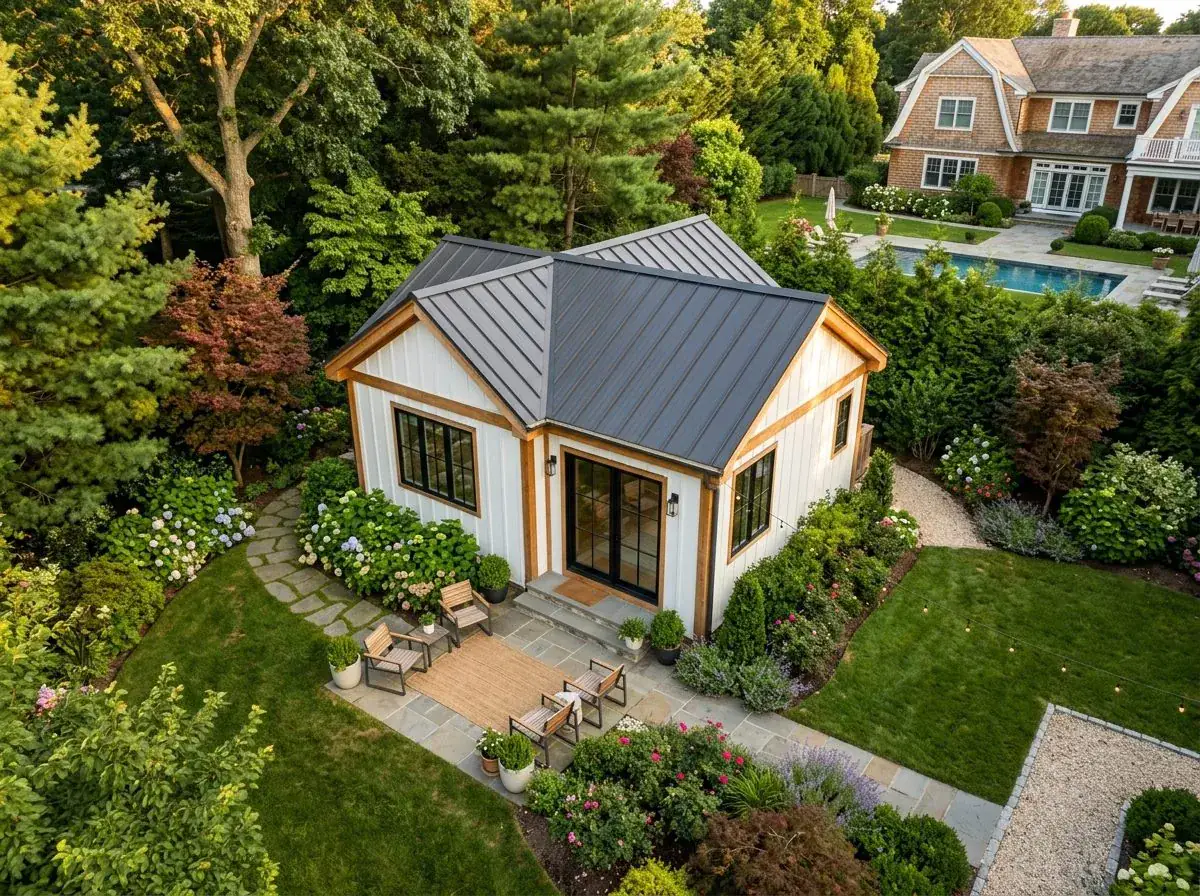
- Eligible projects. New detached ADUs, garage conversions, outbuilding conversions, and interior apartment conversions all qualify. Shelter Island's diverse housing stock, including many properties with existing secondary structures, provides ample conversion opportunities.
- Application assistance. We help Shelter Island homeowners prepare construction estimates and project documentation that strengthen their Plus One applications.
The Plus One grant is even more impactful on Shelter Island than on the mainland. Construction costs on the island are higher due to ferry logistics, and the community's housing need is more urgent. A $125,000 grant that helps create one more on-island housing unit has an outsized positive effect on a community of fewer than 2,500 year-round residents.
Interested in the $125K ADU grant?
We help Shelter Island homeowners apply — free consultation.
Environmental Protections: Building on a Preserved Island
Shelter Island's environmental character is not just a feature — it is a defining constraint. Approximately one-third of the island's land area is permanently protected as nature preserves. The Mashomack Preserve alone covers over 2,000 acres of the island's southeastern portion, protecting one of the finest examples of coastal oak woodland on the Atlantic seaboard. Beyond Mashomack, numerous smaller preserves, conservation easements, and protected wetlands limit the island's developable area.
For ADU construction, this environmental context means several things:
- Limited developable land. With so much land in conservation, the remaining buildable parcels are precious. ADUs represent an efficient way to create housing within the existing built footprint without consuming additional open space.
- Wetland protections. Shelter Island's shoreline is ringed with tidal wetlands and freshwater wetlands that trigger strict buffer zone requirements. ADU placement must account for wetland setbacks, which can be 100 feet or more from the wetland boundary.
- Groundwater sensitivity. With no municipal sewer system, all wastewater on Shelter Island flows through septic systems into the groundwater. The island's aquifer is relatively shallow and vulnerable to contamination. This makes septic system design and nitrogen loading critical considerations for any new dwelling unit.
- Tree preservation. Shelter Island's wooded character is a community value. Clearing trees for construction is closely scrutinized, and projects that minimize tree removal are viewed more favorably.
- Coastal erosion and flooding. Properties near the shoreline may be subject to flood zone regulations and coastal erosion setbacks that affect where structures can be placed.
These protections exist for good reason — they preserve the natural environment that makes Shelter Island irreplaceable. ADU construction that works within these constraints rather than fighting against them is both more likely to be approved and more appropriate for the island's character.
Septic-Only Construction: A Critical Consideration
There is no municipal sewer system on Shelter Island. Every dwelling unit, from the grandest estate to the smallest cottage, relies on an on-site septic system for wastewater treatment. This is the single most important technical consideration for ADU construction on the island, and it can be the factor that determines whether a project is feasible.
When you add an ADU to a Shelter Island property, you are adding bedrooms, bathrooms, and a kitchen — all of which generate wastewater. The Suffolk County Health Department must approve the additional septic load, and meeting their requirements often involves one or more of the following:
- Septic system evaluation. The existing system must be assessed for capacity. If the current system has surplus capacity beyond what the primary residence requires, the ADU may be able to connect to it. If not, modifications or a new system will be needed.
- Perc test and soil analysis. A percolation test evaluates how quickly the soil absorbs water, which determines the leaching field design. Shelter Island's soils vary significantly — some areas drain well, others do not.
- Nitrogen-reducing systems. Given Shelter Island's groundwater sensitivity, the Health Department may require an I/A (Innovative/Alternative) nitrogen-reducing septic system for new dwelling units. These systems provide enhanced wastewater treatment but cost $15,000 to $30,000 more than a conventional system.
- System sizing. The septic system must be sized for the total dwelling load on the property — primary residence plus ADU. This determines the leaching area required, which in turn affects how much of your lot is committed to the septic system.
- Setback requirements. Septic systems must maintain minimum distances from wells, property lines, wetlands, and water bodies. On smaller lots, meeting all setback requirements for both the ADU structure and the expanded septic system can be challenging.
We address septic feasibility early in the planning process for every Shelter Island project. There is no point designing an ADU if the septic situation will not support it. Our initial site evaluation includes an assessment of existing septic capacity and a preliminary determination of what will be needed.
Construction Logistics: Building on an Island
Every nail, board, shingle, and appliance used in a Shelter Island construction project arrives by ferry. This logistical reality affects both cost and scheduling in ways that mainland projects do not experience.
- Material delivery costs. Ferry fees for delivery trucks, trailers, and heavy equipment add to material costs. A concrete delivery that costs $X in Patchogue costs $X plus ferry fees and the time overhead of ferry scheduling on Shelter Island.
- Scheduling complexity. Deliveries must be coordinated with ferry schedules. Oversized loads may require special ferry arrangements. Summer traffic can delay deliveries by hours during peak season.
- Subcontractor availability. Some specialized trades have limited availability on the island. Electricians, plumbers, and HVAC technicians may need to ferry in, which adds to their costs and can create scheduling challenges.
- Equipment mobilization. Heavy equipment — excavators, concrete trucks, crane services — must be ferried to the island and ferried back when the work is complete. This logistics overhead is built into every project budget.
- Weather delays. Ferry service can be disrupted by high winds, heavy seas, or severe weather. A storm that might cause a one-day delay on the mainland can extend to several days on Shelter Island if ferry service is interrupted.
These logistics add approximately 15 to 25 percent to construction costs compared to an equivalent project on the mainland. They also make advance planning and efficient project management even more critical. Alec's Construction has experience managing the ferry logistics of island construction, coordinating deliveries, and scheduling trades to minimize unnecessary crossings and delays.
Licensed & Insured
Full coverage on every project
36+ Cities Served
Suffolk County & Long Island
Free Walkthrough
No obligation, no pressure
Get a Free Estimate
Tell us about your project — we respond within 24 hours.
No spam. No obligation.
ADU Construction Costs on Shelter Island
Shelter Island construction costs are among the highest in Suffolk County, driven by ferry logistics, limited trade availability, and the environmental compliance costs that island projects often require. Realistic 2026 cost ranges for Shelter Island ADU projects:
- Garage conversion: $80,000 to $165,000. Converting an existing detached garage into a studio or one-bedroom unit. The existing structure reduces material needs, helping offset island logistics costs.
- Outbuilding conversion: $100,000 to $240,000. Converting a barn, shed, or workshop into livable space. Condition of the existing structure is the primary cost driver.
- Detached new construction: $210,000 to $420,000+. A purpose-built cottage with full kitchen, bathroom, and living space. Ferry logistics for material delivery and the potential need for an advanced septic system push costs toward the higher end.
- Above-garage apartment: $120,000 to $225,000. Adding a second story over an existing garage. Structural upgrades to the existing building may be required.
- Nitrogen-reducing septic system (if required): $15,000 to $30,000 additional. Often necessary on Shelter Island given groundwater sensitivity.
The Plus One grant's $125,000 contribution is particularly impactful on Shelter Island given these elevated costs. A garage conversion at $140,000 with a $125,000 grant becomes a $15,000 net investment for the homeowner — an extraordinary value for creating permanent on-island housing.
Zoning and the Shelter Island Permit Process
Shelter Island is an incorporated town with its own zoning code and building department. The Town of Shelter Island controls all land use decisions on the island, and the permitting process reflects the community's values of environmental protection, neighborhood character, and measured growth.
- Property evaluation. We assess your lot size, zoning district, existing structures, septic system, environmental constraints, and the most feasible ADU approach for your specific property.
- Septic feasibility analysis. Before design work begins, we determine what the septic situation will require. This often involves consulting with a licensed engineer and the Suffolk County Health Department.
- Design development. Architectural plans are prepared that comply with Shelter Island's zoning code, building code, environmental regulations, and the community's architectural expectations.
- Town Building Department submission. Plans are submitted for review. The Shelter Island Building Department evaluates zoning compliance and building code conformity.
- Planning Board or ZBA review (if needed). Depending on the project, review by the Planning Board or Zoning Board of Appeals may be required, particularly if variances are needed.
- Suffolk County Health Department. Septic system approval is required for the additional dwelling load. This is often the most involved step for Shelter Island ADU projects.
- Environmental review. Properties near wetlands, shoreline, or conservation areas may require DEC permits or other environmental approvals.
- Permit issuance and construction. With all approvals secured, the permit is issued. Construction scheduling accounts for ferry logistics and material delivery coordination.
- Inspections and CO. The building department inspects at required stages and issues a certificate of occupancy upon completion.
The permit process on Shelter Island can take longer than on the mainland due to the septic and environmental review layers. We plan for this timeline upfront and begin the approval process as early as possible to keep projects moving forward. Alec's Construction handles every step, from initial site assessment through final CO.
Keep workers on the island. Build an ADU.
Free site evaluation for Shelter Island homeowners.
Who Needs Housing on Shelter Island?
The workforce housing need on Shelter Island is broad and deep. With a year-round population under 2,500, every worker matters, and every housing unit that keeps a worker on-island has a measurable impact on the community:
- Shelter Island School staff. The island's school district serves a small but vital student population. Teachers, aides, and support staff need affordable on-island housing to serve the community without enduring ferry commutes.
- Emergency responders. Volunteer firefighters, EMS workers, and police officers who live on the island can respond in minutes. Those who must ferry in face unacceptable response delays.
- Restaurant and hospitality workers. Shelter Island's restaurants and inns depend on staff who increasingly cannot afford island rents. During summer season, staffing shortages directly affect service quality and business viability.
- Tradespeople and contractors. Plumbers, electricians, carpenters, and other tradespeople who work on the island but live on the mainland face the ferry twice daily. On-island housing means faster response times and lower costs for homeowners who need service.
- Marine industry workers. Shelter Island's marinas and marine-related businesses employ workers who need to be on-island during boating season, often at hours when ferry service is limited.
- Healthcare workers. Home health aides, nurses, and caregivers serving the island's aging population need reliable, affordable housing within minutes of their patients, not a ferry ride away.
When a Shelter Island homeowner builds an ADU and rents it to one of these workers, the ripple effect extends across the entire community. That teacher stays on-island. That firefighter can respond at 2 AM. That plumber can be at your house in 15 minutes instead of two hours. The impact of a single workforce housing unit on Shelter Island is proportionally far greater than the same unit anywhere on the mainland.
Frequently Asked Questions
How does the ferry affect ADU construction costs on Shelter Island?+
Will I need a new septic system for my Shelter Island ADU?+
Can I build an ADU near the Mashomack Preserve?+
How long does an ADU project take on Shelter Island?+
Work With Alec's Construction
This guide is written by the crew that does the work. See Alec's ADUs service — accessory apartments, garage conversions and grant paperwork. Licensed and insured on Long Island, one crew start to finish, free walkthrough and a written estimate inside 48 hours.
Booking the cold months now: we also handle Additions & New Construction and Bathroom Remodeling.
We keep a permit office directory for Nassau and Suffolk, checked against each jurisdiction's own site, because we file in these counters constantly.
Ready to Build an ADU on Shelter Island?
Contact Alec's Construction for a free consultation. We will evaluate your Shelter Island property, assess septic feasibility, navigate the town approval process, and provide a detailed estimate that accounts for island construction logistics.
Get a Free Consultation