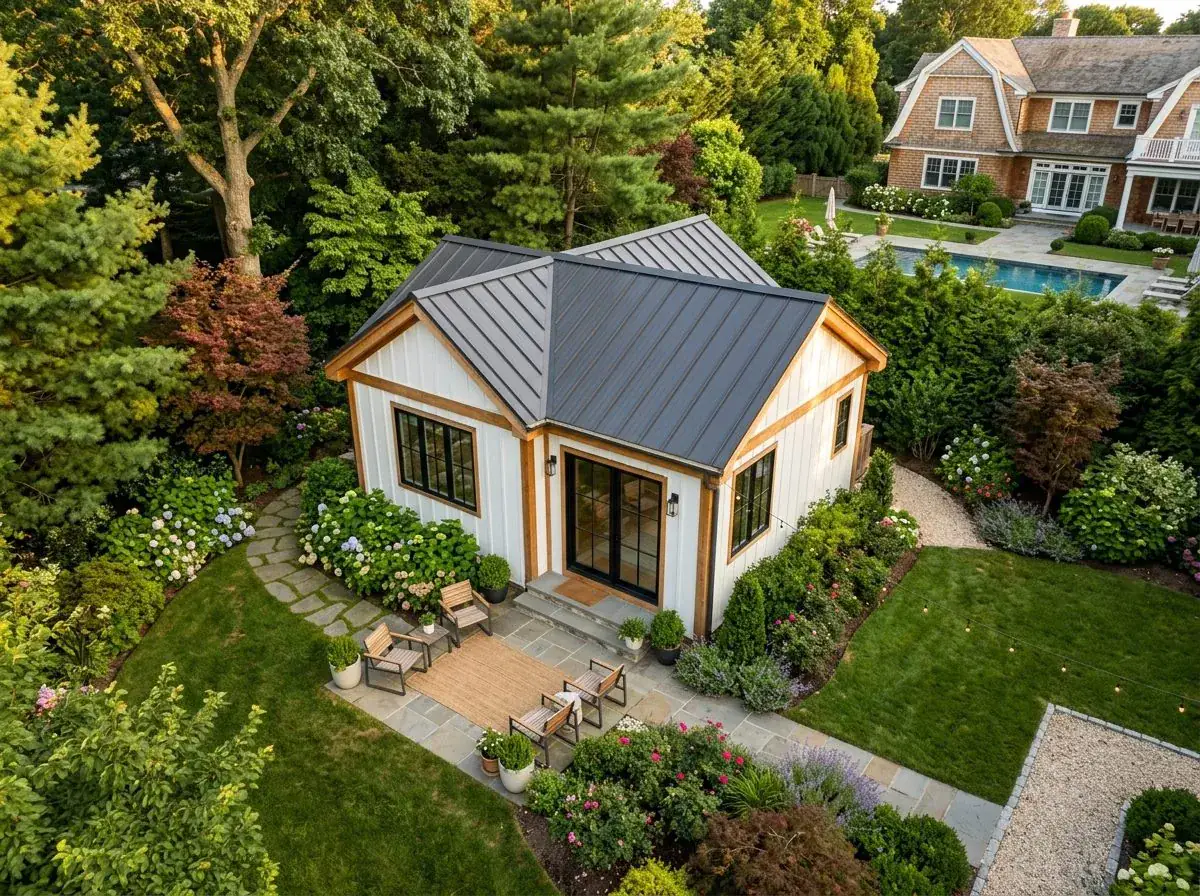
Water Mill is one of the most exclusive communities in the Hamptons and arguably on all of Long Island. With a median home price exceeding $3 million and estate properties routinely trading in the $10 million to $50 million range, this hamlet within the Town of Southampton represents the pinnacle of East End luxury. But beneath that wealth lies a paradox that threatens the community's livelihood: the people who maintain these estates, staff the restaurants, care for the gardens, and teach in the schools cannot afford to live anywhere near where they work.
Accessory dwelling units offer Water Mill property owners a practical, elegant solution to this workforce housing crisis. With lot sizes that frequently exceed two acres and a tradition of agricultural outbuildings on many properties, Water Mill is uniquely positioned for ADU construction. The Plus One ADU Program, offering grants up to $125,000, makes these projects financially attractive even on properties where every construction detail must meet the highest standards.
Program status — verified September 2026
Plus One ADU is a New York State program (an $85 million allocation through the Housing Trust Fund Corporation) but it is run town by town, and each town's intake opens and closes on its own schedule. As of September 2026 on Long Island: Huntington and Riverhead are accepting applications; Brookhaven, Islip and Southold are closed. Babylon, East Hampton, Shelter Island and Southampton run their programs through Community Development Long Island rather than the Long Island Housing Partnership.
The $125,000 is a cap, not an amount every applicant receives, and it is awarded as a grant. Huntington's published guidelines cap household income at 100% of Nassau/Suffolk area median income (2023 HUD limits: $109,400 for a one-person household, $156,300 for four) and require that you have owned and lived in the home for at least one year. Applications go on a first-come waitlist and are then re-ranked on priority points, including whether the unit will be affordable at or below 80% AMI and whether it can be permitted without a zoning variance. Municipal code always overrides the program guidelines. Verify your town's status before you budget around a grant: LIHP (631) 435-4710. We also check it for you on the walkthrough — see our Plus One ADU grant page for the eligibility checklist and what the build costs if your town's round is closed.
Why Water Mill Is Ideal for ADU Construction
Water Mill's character is defined by large lots, agricultural heritage, and architectural elegance. These same qualities make it one of the best locations on Long Island for accessory dwelling unit construction. Unlike denser suburban communities where lot size and setback restrictions limit options, Water Mill properties typically provide ample space for detached ADUs that maintain complete privacy for both the primary residence and the accessory unit.
The hamlet takes its name from a water-powered grist mill built in 1644, making it one of the oldest English settlements in New York State. That agricultural heritage persists in the landscape today. Many Water Mill properties retain barns, stables, farmhouses, and outbuildings from earlier eras. These structures represent outstanding opportunities for conversion into modern accessory dwelling units that preserve historical character while creating needed housing.
Water Mill's residential lots commonly range from one to five acres, with many estate properties exceeding ten acres. On properties of this scale, a detached ADU can be positioned with generous setbacks from both the primary residence and property lines, creating a self-contained living environment that does not compromise the estate's character or the owner's privacy.
The Plus One ADU Program: $125,000 Grants for Water Mill Homeowners
The Plus One Accessory Dwelling Unit Program provides grants of up to $125,000 to homeowners who build ADUs for workforce housing. For Water Mill property owners accustomed to investing significantly in their estates, this grant represents a meaningful incentive to create housing that serves the community while generating reliable rental income.
- Grant amount. Up to $125,000 toward construction costs. While Water Mill ADU projects often involve higher-end finishes and larger budgets, this grant still offsets a substantial portion of the total investment.
- Income targeting. The completed ADU must be rented to tenants earning at or below 80% of the Area Median Income (AMI). This targets exactly the workforce population that Water Mill depends upon: estate caretakers, landscapers, tradespeople, teachers, and healthcare workers.
- Rental period. Grant recipients commit to affordable rental rates for a specified period, typically 10 years. The unit must remain a long-term rental, not a seasonal or short-term vacation rental.
- Eligible projects. New detached ADUs, barn and outbuilding conversions, garage conversions, and interior conversions all qualify. Water Mill's existing agricultural structures make conversion projects particularly attractive.
- Application support. We help Water Mill homeowners prepare construction estimates and project documentation that strengthen their Plus One applications.
For an estate owner converting an existing barn into a caretaker apartment, a $125,000 grant can cover half or more of the total project cost. For a new detached cottage, the grant meaningfully reduces the net investment while creating a permanent asset on the property.
Interested in the $125K ADU grant?
We help Water Mill homeowners apply — free consultation.
Barn and Farmhouse Conversions: Water Mill's Signature ADU Opportunity
Water Mill's agricultural past left behind a wealth of outbuildings that are ripe for conversion into accessory dwelling units. Barns, stables, carriage houses, and secondary farmhouses dot the landscape, many with the structural bones to support a high-quality residential conversion. These conversions are among the most rewarding ADU projects we undertake because they honor the property's history while creating something immediately useful.
A barn conversion in Water Mill typically involves preserving the exterior character — the roofline, siding materials, and proportions — while creating a fully modern interior. Exposed post-and-beam framing, reclaimed wood finishes, and open floor plans take advantage of the generous volumes that agricultural buildings provide. The result is a living space with character and warmth that new construction simply cannot replicate.
Key considerations for barn and outbuilding conversions in Water Mill include:
- Structural assessment. Historic timber frames must be evaluated for load-bearing capacity. Many are remarkably sound; some require selective reinforcement. We conduct thorough structural evaluations before committing to a conversion approach.
- Foundation work. Older barns may sit on stone foundations or post foundations that need upgrading to meet current building code for residential occupancy. This is typically the most significant structural expense in a conversion.
- Insulation and weatherproofing. Agricultural buildings were not designed for year-round comfort. Spray foam insulation, new windows, and weatherproofing bring these structures up to residential energy standards while preserving their visual character from the outside.
- Utilities. Running water, sewer or septic connections, electrical service, and HVAC must be extended to the converted structure. On large Water Mill properties, utility runs can be substantial but are straightforward to plan.
- Preservation considerations. While Water Mill does not have a formal historic district, many property owners and the community at large value preservation of agricultural character. Conversions that respect the original architecture are better received during any review process.
Workforce Housing for Estate Staff
Water Mill estates employ significant numbers of workers. A large property may have a full-time caretaker, a landscaping team, housekeeping staff, a pool maintenance technician, and seasonal workers for events and entertaining. These employees face some of the longest commutes on Long Island, often driving from communities an hour or more west because nothing closer is affordable.
An on-site or nearby ADU changes the equation entirely. A caretaker apartment allows your property manager to live where they work, providing round-the-clock presence and eliminating the burnout of a two-hour daily commute. For estate owners who spend part of the year elsewhere, having a trusted caretaker on-site provides security, immediate response to maintenance issues, and continuity of property care.
The economics make sense from every angle. The property owner gains a permanent improvement to the estate, a reliable income stream from the ADU rental, better property oversight, and reduced staff turnover. The worker gains stable, affordable housing in the community where they work. The community gains a year-round resident who contributes to local businesses and civic life.
Zoning and Regulations in Water Mill
Water Mill falls within the Town of Southampton's zoning jurisdiction. The town has been increasingly supportive of ADU construction as part of its broader housing strategy, but the approval process requires careful attention to local regulations:
- Zoning district requirements. Water Mill properties are predominantly zoned residential with large minimum lot sizes. ADUs must comply with the applicable zoning district's setback, lot coverage, and height restrictions. The generous lot sizes in Water Mill typically provide ample room to meet these requirements.
- Southampton Town ADU provisions. The Town of Southampton has adopted provisions that facilitate ADU construction, including pathways for both attached and detached units. Understanding which pathway applies to your property is the first step in planning.
- Architectural review. While not as formal as East Hampton Village's review process, Water Mill ADU projects benefit from designs that respect the community's agricultural and residential character. Cedar shingle siding, gabled roofs, and traditional proportions align with local expectations.
- Suffolk County Health Department. Properties on septic systems, which includes most of Water Mill, must receive Health Department approval for the additional dwelling load. This may require a septic system upgrade or expansion.
- Environmental considerations. Properties near wetlands, ponds, or the Mecox Bay shoreline may trigger additional environmental review. Water Mill's landscape includes several sensitive areas that require careful site planning.
Licensed & Insured
Full coverage on every project
36+ Cities Served
Suffolk County & Long Island
Free Walkthrough
No obligation, no pressure
Get a Free Estimate
Tell us about your project — we respond within 24 hours.
No spam. No obligation.
ADU Construction Costs in Water Mill
Water Mill is at the top of the Hamptons cost spectrum. Clients here expect materials, finishes, and craftsmanship that match the quality of their primary residences. Construction costs reflect that standard, along with the Hamptons premium for labor, material delivery, and extended design processes. Realistic 2026 cost ranges for Water Mill ADU projects:
- Barn or outbuilding conversion: $120,000 to $280,000. The range depends heavily on the condition of the existing structure and the level of finish. A structurally sound barn with good bones can convert more affordably; a structure needing foundation work and full systems will land higher.
- Garage conversion: $80,000 to $160,000. Converting a detached garage into a studio or one-bedroom unit. Water Mill garages are often well-built and spacious, making conversions efficient.
- Above-garage apartment: $120,000 to $220,000. Adding a second story over an existing garage. Architectural compatibility with the estate's primary structures is essential.
- Detached new construction cottage: $225,000 to $450,000+. A purpose-built accessory dwelling with finishes that meet Water Mill standards. Cedar shingles, custom millwork, premium fixtures, and high-efficiency systems are standard expectations.
- Pool house conversion: $90,000 to $200,000. Transforming a seasonal pool house into a year-round dwelling with kitchen, bathroom, insulation, and heating systems.
The Plus One grant's $125,000 contribution makes a meaningful dent in any of these project types. A barn conversion at $200,000 becomes a $75,000 net investment. A garage conversion at $130,000 becomes a $5,000 out-of-pocket project. The math is compelling.
High-End Finishes and Design Standards
In Water Mill, an ADU is not just a secondary dwelling — it is an extension of the estate. The design and finishes must reflect the property's overall character and meet the expectations of a community where architectural quality is a baseline assumption, not a luxury.
Common finish standards for Water Mill ADU projects include:
- Exterior materials. Cedar shingle siding, standing seam metal roofing or architectural shingles, natural stone accents, and mahogany or composite decking. The exterior should read as a natural extension of the estate.
- Kitchen. Custom or semi-custom cabinetry, stone countertops, professional-grade appliances scaled for the unit size, and quality hardware. Even a compact ADU kitchen should feel intentional, not economy.
- Bathroom. Heated floors, frameless glass shower enclosures, quality tile work, and fixtures from established manufacturers. Water Mill bathrooms do not cut corners.
- Flooring. Wide-plank hardwood, reclaimed barn wood, or premium engineered flooring throughout. In barn conversions, original floor planking can sometimes be refinished and reused.
- HVAC. Ductless mini-split systems for heating and cooling provide quiet, efficient climate control without the ductwork that barn and cottage structures may not easily accommodate.
- Landscaping. The ADU's surroundings should be thoughtfully landscaped to integrate with the property. Privacy screening, foundation plantings, and pathway lighting complete the picture.
The Permit Process in Water Mill
Building an ADU in Water Mill follows the Town of Southampton's permitting process, with additional considerations unique to the community:
- Property evaluation. We visit your property to assess existing structures, lot dimensions, setbacks, septic capacity, and the best location for the ADU.
- Design development. Architectural plans are prepared that comply with Southampton Town zoning, building code, and the aesthetic expectations of the Water Mill community.
- Town Building Department submission. Plans are submitted for zoning compliance review and building code approval. The Town of Southampton's building department reviews for conformity with all applicable regulations.
- Health Department review. Suffolk County Health Department approval is required for the additional septic load. This may involve a perc test and septic system design or modification.
- Environmental review (if applicable). Properties near Mecox Bay, wetlands, or other sensitive areas may require additional environmental assessment.
- Permit issuance and construction. With all approvals secured, construction begins. We manage the entire build process, coordinating trades and scheduling inspections.
- Final inspections and certificate of occupancy. The building department conducts final inspections and issues a CO, at which point the ADU is ready for occupancy.
Alec's Construction handles every step of this process for Water Mill homeowners. From the initial site evaluation through final CO, we manage the approvals, paperwork, and construction so you can focus on the outcome rather than the process.
Build workforce housing on your Water Mill estate.
Free site evaluation — let us show you what is possible.
Seasonal Properties and Year-Round ADU Tenants
Many Water Mill properties are occupied seasonally, with owners spending summer months on the East End and the remainder of the year elsewhere. An ADU with a year-round tenant provides meaningful benefits for seasonal owners beyond rental income. A reliable, on-site presence deters property crime, catches maintenance issues early, manages deliveries and service appointments, and ensures that the property is monitored through winter storms and off-season weather events.
This arrangement creates a natural symbiosis. The tenant gains affordable, high-quality housing in an otherwise inaccessible market. The property owner gains a trusted presence on the estate, steady rental income, and the satisfaction of contributing to the community's workforce housing supply. It is a model that has worked informally in the Hamptons for generations — the Plus One program and modern ADU regulations simply formalize and incentivize it.
Frequently Asked Questions
Can I convert an existing barn on my Water Mill property into an ADU?+
Will an ADU affect my Water Mill property value?+
Do I need to upgrade my septic system for an ADU in Water Mill?+
How long does it take to build an ADU in Water Mill?+
Work With Alec's Construction
This guide is written by the crew that does the work. See Alec's ADUs service — accessory apartments, garage conversions and grant paperwork. Licensed and insured on Long Island, one crew start to finish, free walkthrough and a written estimate inside 48 hours.
Booking the cold months now: we also handle Additions & New Construction and Bathroom Remodeling.
We keep a permit office directory for Nassau and Suffolk, checked against each jurisdiction's own site, because we file in these counters constantly.
Ready to Build an ADU in Water Mill?
Contact Alec's Construction for a free consultation. We will evaluate your Water Mill property, discuss barn conversions and new construction options, walk you through the Plus One grant process, and provide a detailed estimate.
Get a Free Consultation