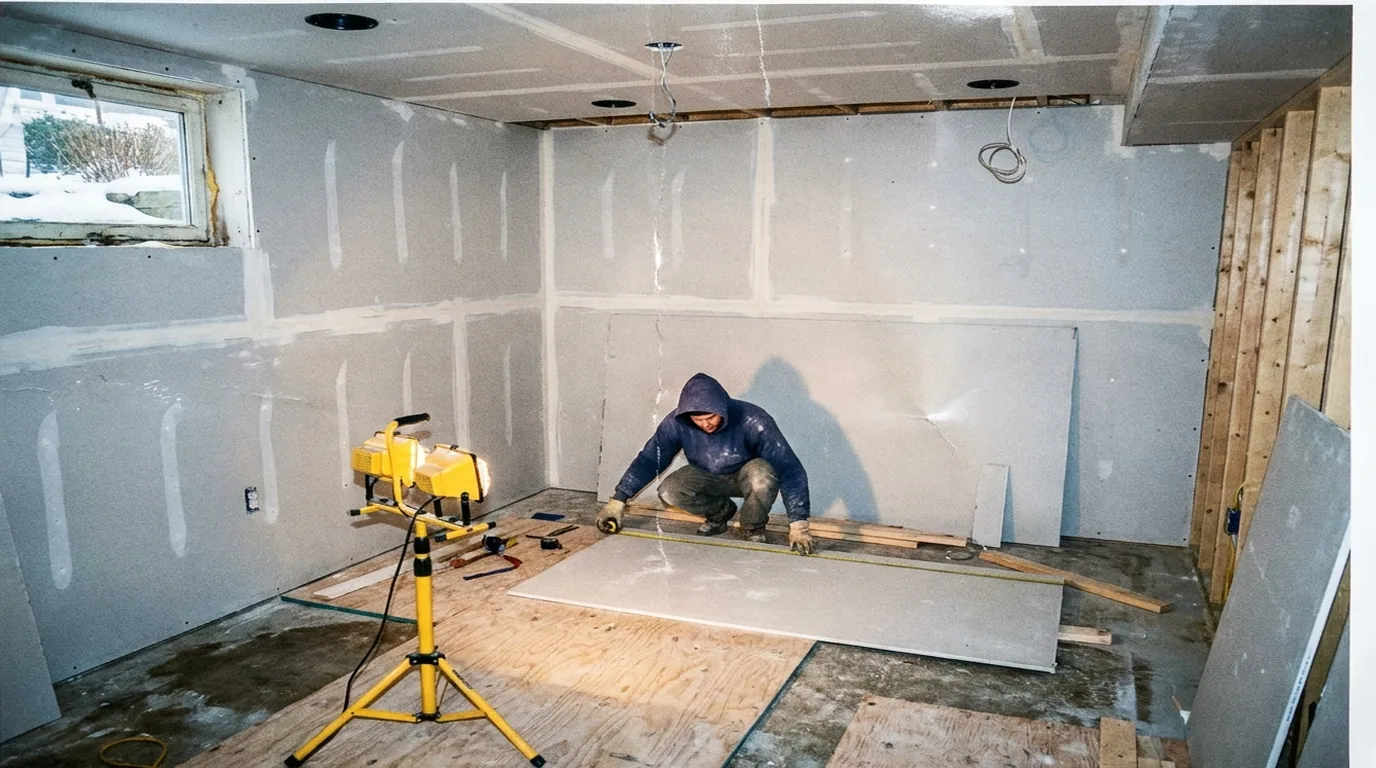
You went down to check on the basement after last week's nor'easter and found an inch of water across the slab, maybe more pooled near the stairs. Now you're standing there with a wet-dry vac wondering if this was a one-time fluke or the first sign of something you'll be dealing with all winter. On Long Island, with roughly 40 to 50 freeze-thaw cycles a year working at concrete and soil, and salt air on three sides accelerating corrosion on anything metal, a wet basement after a fall storm is rarely a fluke.
The honest answer is that basement water almost always comes from one of three places: the grading and drainage around your foundation, your gutter and downspout system, or an actual crack or failure point in the foundation wall. Most jobs I walk into are a combination of the first two, made worse by sandy soil that drains fast in some spots on a lot and sits like a bathtub in others. The fix is diagnosis first, work second. Spend money on the wrong fix and you're back in the same spot after the next storm.
Fall is the right time to deal with this, not spring. Oak and pine leaf load clogs gutters right when the heaviest rain of the year shows up, and whatever water gets into your foundation now will freeze and expand all winter, turning a hairline crack into a real one by March. If you're planning to finish that basement, fixing the water problem first isn't optional. Drywall and flooring over an unresolved leak just hides it until it's worse.
Start Outside: Where the Water Is Actually Coming From
Before anyone touches the foundation, I walk the perimeter of the house in the rain if I can, or right after. I'm looking at where water sheets off the roof, where the soil slopes toward the house instead of away from it, and where downspouts dump water three or four feet from the foundation instead of carrying it out ten or more. On a lot of older capes and ranches in Brookhaven, Islip, and Smithtown, the grading settled over decades and now tilts back toward the house. That's often the real source, not a cracked wall, and you can't fix it from inside the basement.
Grading and Drainage: The Cheapest Fix to Rule Out First
Regrading soil away from the foundation, extending downspout runs, and adding a dry well or French drain to catch runoff before it reaches the wall is the least invasive fix and the first thing I check. Sandy soil across most of the Island drains fast once water is actually moving away from the house, which is why this step works as well as it does when it's done right.
- Water enters along one wall only, usually the one facing the yard's low point
- The problem started or got worse after new patio, driveway, or landscaping work changed the slope
- You see standing water near the foundation for hours after the rain stops
Gutters and Downspouts: The Most Common Culprit on Long Island
I'd put money on clogged or undersized gutters being the single most common cause of fall basement water out here. Oak and pine both drop heavy leaf load right as nor'easter season starts, and a gutter that overflows at the roofline sends a sheet of water straight down the foundation wall instead of away from the house. If your basement water shows up during or right after a heavy rain and dries up within a day or two, check your gutters and downspouts before you call anyone about the foundation. Our gutter guide covers sizing and leaf protection, and it's worth handling before winter locks everything in ice.
When It's Actually the Foundation
If water is coming in through a visible crack, through the cove joint where the wall meets the slab, or seeping through the block itself in more than one spot, you're past grading and gutters. Poured concrete cracks from hydrostatic pressure and from 40 to 50 freeze-thaw cycles working at any existing weak point every winter. Block foundations, common in older Long Island homes, let water through the porous block itself or through mortar joints that have been wicking moisture for years. This is the point where waterproofing becomes the real fix, not a patch of hydraulic cement that holds for one season and fails the next.
Interior vs Exterior Waterproofing, and the South Shore Water Table
Exterior waterproofing means excavating down to the footing, sealing the wall, and installing or repairing footing drains that carry water away before it ever reaches the concrete. It's the more disruptive fix, and it's the right call when you've got active seepage through the wall itself. Interior systems, a perimeter drain inside the slab tied to a sump pump, manage water that's already gotten through rather than stopping it at the source. They're faster and less invasive, and they work, but they're treating the symptom. On the South Shore, where the water table runs high in towns like Babylon and parts of Southampton, you often need both: control at the source where you can reach it, and a sump pump as backup for groundwater pressure that no amount of exterior sealing fully stops on its own. Get a battery backup on that pump. The same nor'easters that dump the most rain also knock out power, and a sump pump that can't run during the hours it's needed most isn't doing its job.
Before You Finish the Basement
If this storm caused real damage, not just a wet floor you squeegeed out, talk to your insurance company before you assume either way. Coverage for storm-related water is different from coverage for groundwater seepage, and our insurance restoration guide walks through how that claims process actually works. Separately, exterior excavation and sump discharge lines can require a permit depending on your town. Nassau and Suffolk towns handle this differently, so confirm with your local building department before work starts rather than assuming your project is exempt. Once the water problem is actually solved, let the foundation dry through at least one full season before you frame, insulate, or finish anything. I get calls every fall from homeowners who want water handled as an afterthought to a finishing project. Don't. Finishing over a wall that still takes on water just buries the evidence until there's mold behind drywall you can't see. Our basement finishing guide covers what that space can become once it's actually dry.
What We Do
We diagnose before we dig. That means walking your property and checking grading, gutters, and the foundation itself before we tell you what's actually wrong, then handling the grading, drainage, gutter work, waterproofing, and sump pump installation as one job instead of guesswork.
Call (631) 312-7441 or book a free walkthrough before the next storm finds the same spot.
Frequently Asked Questions
How do I know if my basement water is from grading or the foundation itself?
Water that only shows up near one wall facing a low point in the yard, and that appears during or right after rain, usually points to grading or gutters. Water seeping through multiple spots on the wall or coming through a visible crack points to the foundation itself. The fastest way to know for sure is to watch exactly where the water enters during or right after the next rain.
Can I fix a wet basement myself before winter?
Clearing gutters, extending downspouts, and regrading soil away from the house are all things a homeowner can do, and they solve a real share of fall basement water. Cracks in the foundation wall, seepage through block, or standing groundwater need an actual waterproofing system, not a DIY patch. If water keeps coming back after you've handled gutters and grading, the problem is below grade.
Do I need a permit for basement waterproofing on Long Island?
Exterior excavation and sump pump discharge lines can require a permit depending on your town, and Nassau and Suffolk towns handle this differently. Confirm with your local building department before work starts rather than assuming your project is exempt. A licensed contractor pulling the permit on your behalf is generally the safer route.
Will a sump pump alone fix my basement flooding?
A sump pump manages water that's already found its way in, it doesn't stop water from entering in the first place. On the South Shore and other high water table areas it's necessary as a backup even after exterior fixes, but on its own it's treating the symptom. Pair it with grading, gutter, or waterproofing fixes at the source for an actual solution.
How long should I wait after fixing a leak before finishing my basement?
Let the foundation dry through at least one full season, ideally through a complete freeze-thaw cycle, before framing or insulating. Finishing over a wall that's still drying traps moisture behind the new materials. If you're not sure it's fully dry, a contractor can check moisture levels in the concrete before you start.
Does homeowners insurance cover basement flooding from a storm?
Coverage depends on your specific policy and whether the water came from storm damage like a roof or window failure versus groundwater seepage or surface flooding, which many standard policies exclude. Review your policy and talk to your insurer before assuming either way. Document the damage with photos as soon as you find it regardless of coverage.
Related Guides
Get a Free Estimate from Alec's Construction
Licensed and insured, working across Nassau and Suffolk County since 2018. We come out, look at the actual job, and put a written number in your hand — no pressure, no obligation.
Or call (631) 312-7441