You go downstairs the day after a hard rain and it hits you before you're even halfway down the stairs. Damp, earthy, a little sour. Maybe it's worse in one corner, near a window well or the sump pit. You spray some bleach, run a fan for a day, and it fades until the next storm brings it right back.
That smell is not a cleaning problem. It is moisture getting into your foundation or your slab from somewhere, and mold spray does nothing to the source. I've walked into hundreds of Long Island basements over the years, from East Patchogue to Huntington, and the musty smell after rain is almost always one of three things: bad grading around the house, a gutter system that isn't moving water away from the foundation, or a crack or joint letting groundwater in under hydrostatic pressure. Sometimes it's two of those at once.
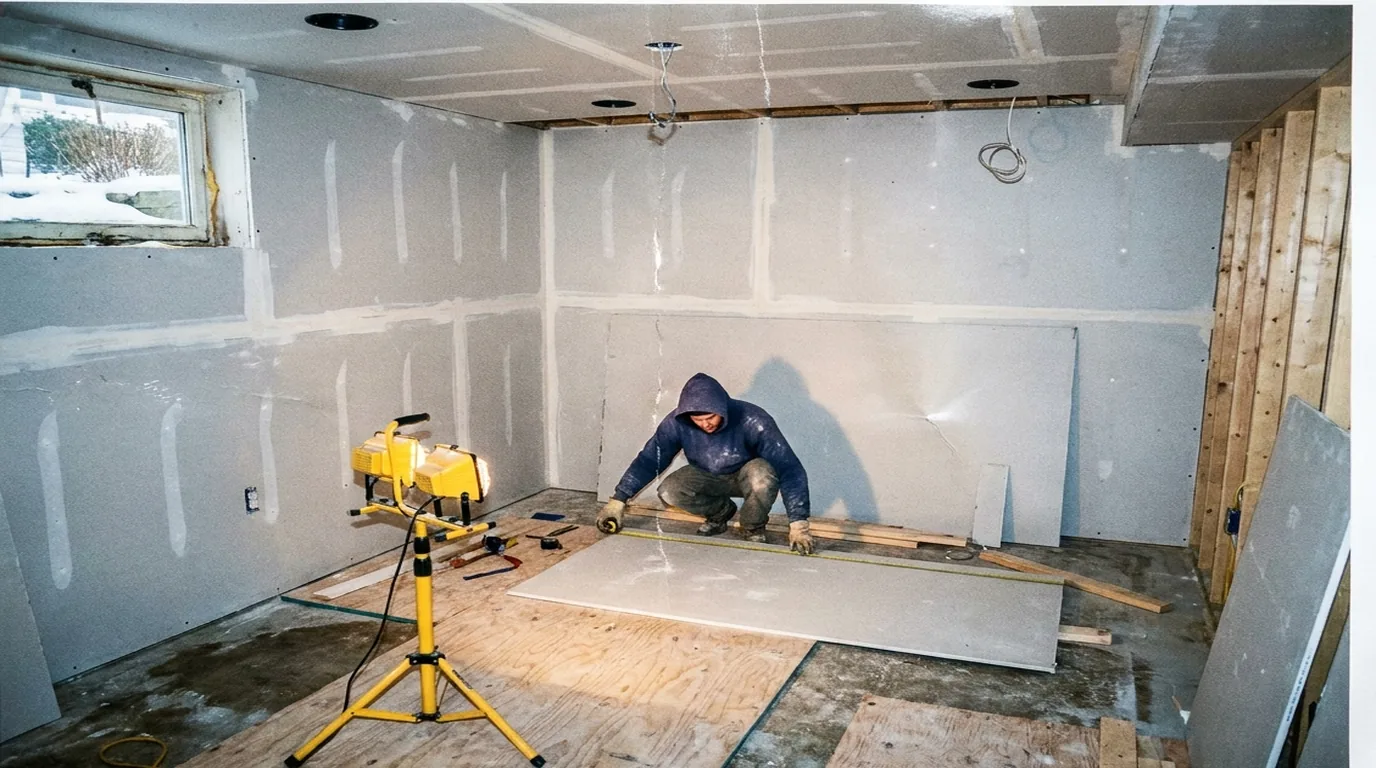
If you're thinking about finishing the basement before winter, this is the thing to settle first. Drywall, flooring, and insulation over a damp foundation wall doesn't fix the smell, it hides it, and it gives mold somewhere dark and warm to grow behind the wall where you can't see it.
Where That Smell Actually Comes From
Musty odor after rain specifically, not all the time, tells me water is getting in during or right after a storm and then slowly drying out between events. If the smell were constant, I'd be more worried about a high water table sitting against the foundation year-round. The rain-triggered pattern usually means surface water or roof runoff is reaching the foundation faster than the soil around it can absorb or shed it.
Concrete block and poured foundations are not waterproof on their own. They're damp-proofed, which is a thin coating meant to resist moisture, not standing water. Once soil against the wall gets saturated, water finds every hairline crack, every tie rod hole, every spot where the slab meets the wall, and pushes through.
Grading Is the First Thing I Check
On a lot of Long Island properties, especially older homes in Brookhaven, Islip, and Smithtown, the grading has settled or was never right to begin with. Soil should slope away from the foundation for at least several feet. When mulch beds get built up over the years, or a patio or walkway gets added without regrading, water ends up pooling right against the wall instead of running off.
I walk the perimeter after a rain whenever I can, not on a dry day. You want to see where water is actually sitting. Low spots next to the foundation, especially near corners or window wells, are the giveaway. This is often the cheapest fix in the whole list and it gets skipped constantly because nobody thinks about dirt as a waterproofing system.
Gutters, Downspouts, and Oak Leaf Load
A huge share of the musty-basement calls I get trace back to the roof, not the foundation. If your gutters are clogged with oak and pine debris, which is standard on Long Island by mid-fall, water sheets off the roof edge and lands right at the foundation instead of getting carried away through a downspout. A downspout that dumps six inches from the house is barely better than no gutter at all.
Extensions should carry water at least four to six feet from the foundation, more if your yard is flat. If you haven't had gutters cleaned since spring, that's worth doing before the next nor'easter, not after. We cover this in more detail on our gutters page, and it's the first thing I'd rule out before spending money on anything underground.
Sandy Soil and the South Shore Water Table
Long Island soil is sandy and drains fast compared to clay-heavy regions, which sounds like it should help. It does, until the water table gets involved. On the South Shore, in towns like Babylon, Southampton, and parts of Islip near the bays, the water table can sit close enough to the surface that a sump pump isn't optional, it's infrastructure. After a few inches of rain, that table rises and pushes up against the foundation from below as well as from the sides.
In those areas, grading and gutters help but they don't solve everything. If your basement has never had a sump pump and perimeter drain, and you're in a low-lying South Shore zip code, that's a conversation worth having before you commit to finishing the space.
Window Wells, Cracks, and Hydrostatic Pressure
Window wells without gravel beds or proper drainage fill up like little bathtubs during a storm and leak straight into the basement at the sill. Hairline foundation cracks, especially the diagonal ones that run from a corner, are usually settlement cracks that let water weep through under pressure rather than structural failures, but they still need to be sealed properly, not just caulked from the inside.
I look for efflorescence, that white chalky residue on block walls, because it's a sign water has been coming through for a while even if nobody noticed a puddle. If you see it, the wall has been wet more than once.
What Happens If You Finish Over This
I've torn out plenty of finished basements that were drywalled over an active moisture problem. The mold grows on the back of the drywall where you can't see it until the smell gets bad enough that someone finally opens the wall. Insulation traps moisture against the foundation instead of letting it dry. If you're planning a finished basement, this inspection has to come first, not after the framing goes in. We talk through sequencing on our basement finishing page, and grading, gutters, and interior drainage always come before drywall in that order, never after.
Why Fall Is the Window to Fix It
Long Island gets roughly 40 to 50 freeze-thaw cycles a season, and every one of them expands existing cracks a little more. A hairline crack that weeps slightly in October can be a real leak by February once water inside it freezes and pushes the concrete apart repeatedly. Grading work and exterior drainage fixes also get a lot harder, sometimes impossible, once the ground freezes. If gutter extensions or regrading are on the list, do it now while the ground is still workable and before a nor'easter puts a few inches of rain on it overnight.
Salt air off the water accelerates corrosion on exposed sump pump hardware and metal fittings too, which is one more reason South Shore basements see more pump failures than inland ones. If your sump pump is more than seven or eight years old, I'd test it under load before the season gets going, not during the first big storm.
What We Do
We start with a wet-weather walk of the exterior and the basement interior, figure out whether you're dealing with grading, gutters, a foundation crack, or a water table issue, and give you a straight answer on what actually needs fixing before any finishing work starts.
Call (631) 312-7441 or book a free walkthrough.
Frequently Asked Questions
Does a musty basement smell always mean mold?
Not necessarily. The smell itself is often just damp concrete and trapped moisture, but if it's been happening after rain for more than one season, mold is very likely growing somewhere you can't see it, usually behind a wall or under flooring. The smell is a warning sign worth acting on either way.
Can I fix this myself with a dehumidifier?
A dehumidifier manages humidity in the air, it doesn't stop water from entering through the foundation or a poorly graded yard. It can mask the smell between rain events while you deal with the actual source, but it's not a fix on its own.
How do I know if it's grading or a foundation crack?
Walk the perimeter during or right after a rain and look for water pooling against the foundation versus water visibly coming through a wall or window well inside. Standing water outside points to grading or gutters, visible seepage or efflorescence on the interior wall points to a crack or joint.
Do I need a sump pump if I've never had one?
If you're on the South Shore or in a low-lying area with a high water table, and you're planning to finish the basement, a sump pump and perimeter drain are worth having even if you've never flooded. It's much easier to install before drywall and flooring go in than after.
Will my town require a permit for grading or drainage work?
That depends on the scope and your specific town, so check with your local building department before starting. Some grading and gutter work falls outside permit requirements while drainage systems and larger regrading jobs generally do not, but confirm it locally rather than assuming.
Is it too late in the fall to fix this before winter?
Grading and gutter work can usually still get done into November on Long Island as long as the ground isn't frozen, and interior drainage or crack sealing can happen any time. The soil work is what gets harder once hard frost sets in, so that's the piece to prioritize now.
Related Guides
- Gutters & Downspout Service
- Basement Finishing Guide
- Siding Service for Water Intrusion
- Attic Insulation Guide: Brookhaven, NY
Get a Free Estimate from Alec's Construction
Licensed and insured, working across Suffolk County since 2018. We come out, look at the actual job, and put a written number in your hand — no pressure, no obligation.
Or call (631) 312-7441