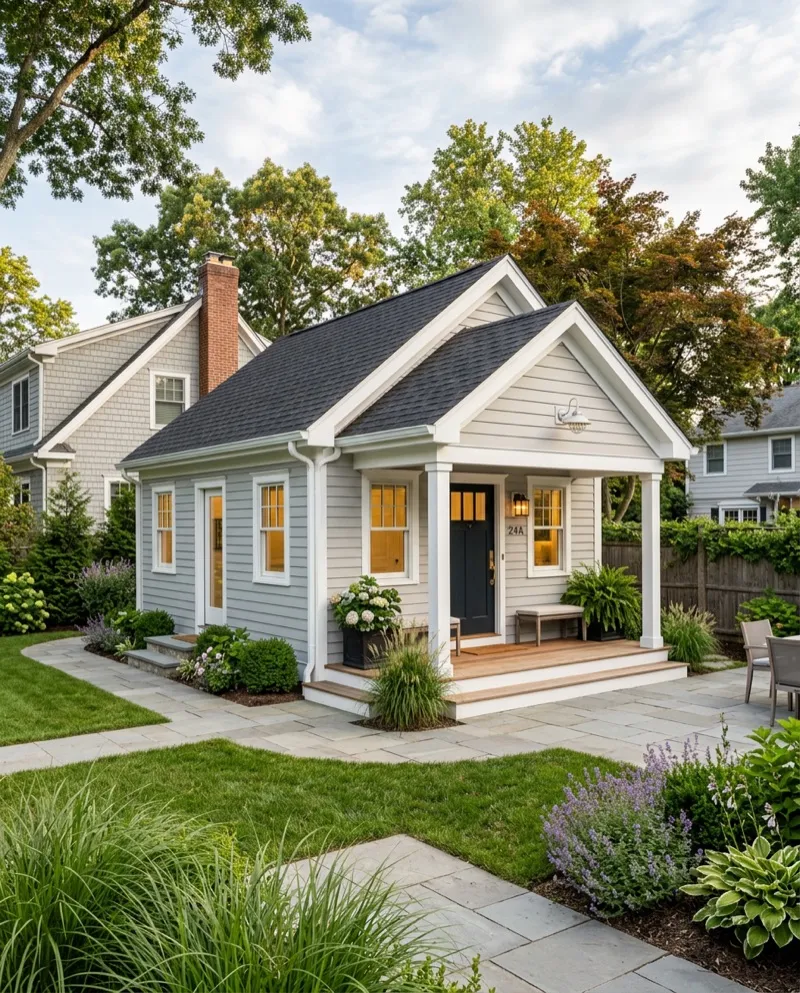
You're standing in your driveway after the first hard frost of the season, looking at a crack that wasn't there in August, and wondering if it's worth fixing now or waiting until spring. Across the yard, the paver walk to your side door has sunk an inch where it meets the stoop, and a few units near the gas meter have popped loose from last year's plow. Both problems are real. Neither one gets better by waiting.
The decision in front of you isn't really "driveway or walkway." It's asphalt versus pavers, two materials that fail in completely different ways out here, and two project types competing for the same narrow fall calendar before the ground locks up. I've poured driveways and set paver patios from Babylon to Southampton for eight years, and the homeowners who end up unhappy almost always picked on looks alone and never asked how the material handles our freeze-thaw cycle, our salt air, or our water table.
Here's what I actually tell clients who call in the fall trying to decide which one to tackle first.
Two Different Jobs, Two Different Failure Modes An asphalt driveway is a monolithic structural job. Base, compaction, binder course, top coat, poured and rolled as one continuous sheet. When it fails, it fails as a sheet: alligator cracking, potholes, heaving where water got trapped under the slab and froze. A paver walkway or patio is a modular system, units sitting on bedding sand over a compacted base, locked together with polymer joint sand. When it fails, it fails unit by unit. A section settles, a border shifts, but you can lift and reset that one area without tearing out the whole job. That difference matters more than color or pattern when you're deciding where to spend money first.
What Actually Drives Driveway Cost The base is everything. On the sandy soil we have across most of Suffolk, a driveway that skips proper excavation and compaction will crown and crack within a few seasons no matter how thick the top coat is. What drives the number is how much of the old surface and subgrade has to come out, how many inches of processed gravel go back in and get compacted in lifts, the pitch needed to carry water away from the garage slab and foundation, total square footage, and equipment access. A long wooded driveway in Smithtown or Huntington that needs trucks threading between trees costs more to build than a straight shot on an open lot, and if the job includes a new curb cut or apron tying into the town right-of-way, that's its own layer of work.
What Actually Drives Paver Walkway and Patio Cost Same principle, different levers. Excavation depth for the base, the paver material and pattern you pick, the amount of cutting around curves or planting beds, edge restraint to keep the whole field from spreading, and how many elevation changes or steps are involved. Mature oak and pine roots are a real cost driver too. If a walkway runs near an established tree and the base isn't excavated deep enough to get past the active root zone, those roots will lift sections again within a couple of years. Utility lines, irrigation heads, and drainage channels built into the design add labor the homeowner rarely sees until the proposal breaks it down.
Durability on Long Island: Freeze-Thaw, Salt, and Roots We get roughly 40 to 50 freeze-thaw cycles a season here, not a handful like inland climates see. Water that gets into the base expands every time it freezes, and that repeated pumping action is what turns a small asphalt crack into alligatoring or a heave by February. Pavers handle that cycle better individually since each unit can move slightly without cracking, but polymer jointing sand degrades faster under heavy rock salt use, so I tell clients to switch to calcium chloride or a paver-safe deicer near any hardscape. Add in salt air coming off three sides of the Island, which accelerates asphalt oxidation and makes the surface brittle sooner, plus a steady fall of oak and pine debris that stains surfaces and clogs paver joints if it's not cleared before the first freeze.
Drainage and the High Water Table on the South Shore If you're in Babylon, Islip, or anywhere else close to the South Shore, the water table sits closer to the surface than most homeowners realize, especially after a wet fall. A driveway base that traps water instead of shedding it will heave from underneath regardless of how good the top coat looks. The same goes for a patio set too close to grade. Pitch away from the house, a trench drain at the low point, and a permeable base under pavers all help, but none of it works if your gutters are dumping straight onto the edge of the slab. If your downspouts discharge onto the driveway or walkway instead of away from it, that's worth fixing at the same time, see our gutter guide. A high water table under a slab-on-grade addition can also show up as moisture issues indoors, which is worth knowing about if you're also dealing with a damp basement.
Permits, Setbacks, and Suffolk County Reality Most Suffolk towns generally want a permit for driveway work that changes grade, width, or the amount of impervious surface on the lot, and a new curb cut almost always needs sign-off from the town highway department. Paver patios can sometimes fall under a size threshold that doesn't require a permit, but that threshold varies and isn't something to assume. Whether you're in Brookhaven, Islip, Smithtown, Huntington, Babylon, or Southampton, confirm the current rule with that town's building department before you sign a contract, not after. If storm damage is part of what's pushing this project, it's also worth checking whether any of it falls under an insurance claim before you pay out of pocket.
Which One Should You Do Before Winter If your driveway has active potholes or heaving near the garage threshold where water can track into the slab or the wall behind it, that's the one to prioritize before the ground locks up. A paver walkway with a few sunken units can often be lifted and reset even in late fall during a mild stretch, since it's a small, localized repair. New asphalt paving and new paver base work both need unfrozen, workable soil and asphalt needs enough ambient temperature to compact properly, so once we hit a hard freeze, both jobs are done for the season. Whichever one is actively letting water in or creating a trip hazard goes first. The other one can usually wait for a spring start without getting worse.
What We Do We walk the property, dig a test pit if the base condition is in question, check drainage patterns and water table behavior for your specific lot, and give you a straight answer on what order to tackle this in and why, no guessing.
Call (631) 312-7441 or book a free walkthrough.
Frequently Asked Questions
Which lasts longer on Long Island, asphalt or pavers?
Both can last many years if the base is built right for our soil and freeze-thaw cycle, but they age differently. Asphalt tends to need resurfacing as a whole surface once cracking sets in, while pavers let you replace individual sections as they settle, which often stretches their usable life further with less disruptive repair work.
Can I repair just the cracked section of my driveway instead of replacing it?
Sometimes, if the cracking is isolated and the base underneath is still sound. Once cracks turn into alligatoring or the base has been compromised by trapped water, patching usually fails again within a season or two and a full-depth repair or replacement is the better long-term move.
Do paver patios need to be resealed every year?
No, sealing is optional and more about color retention and joint sand stability than structural need. What matters more for longevity is keeping joints filled and avoiding heavy rock salt use near the edges each winter.
What causes pavers to sink near my walkway?
Usually an inadequate base depth, poor compaction at install, or water collecting and washing out the base material underneath over time. Root growth from nearby trees can also push sections up or create voids as roots die back.
Is fall too late to pour a new driveway?
It depends on how late and how cold it's been. Asphalt needs workable ground and enough ambient temperature to compact properly, so early to mid fall is usually fine, but once overnight freezes become consistent, it's safer to wait for spring than risk a poor install.
Do I need a permit to replace my driveway apron?
Generally yes, since apron work ties into the town right-of-way and often involves the highway department, not just the building department. Requirements vary by town, so confirm directly with your town before starting any apron or curb cut work.
Related Guides
- Gutter Repair and Replacement
- Basement Finishing and Moisture Control
- Storm Damage and Insurance Restoration
- Siding Repair and Replacement
Get a Free Estimate from Alec's Construction
Licensed and insured, working across Nassau and Suffolk County since 2018. We come out, look at the actual job, and put a written number in your hand — no pressure, no obligation.
Or call (631) 312-7441