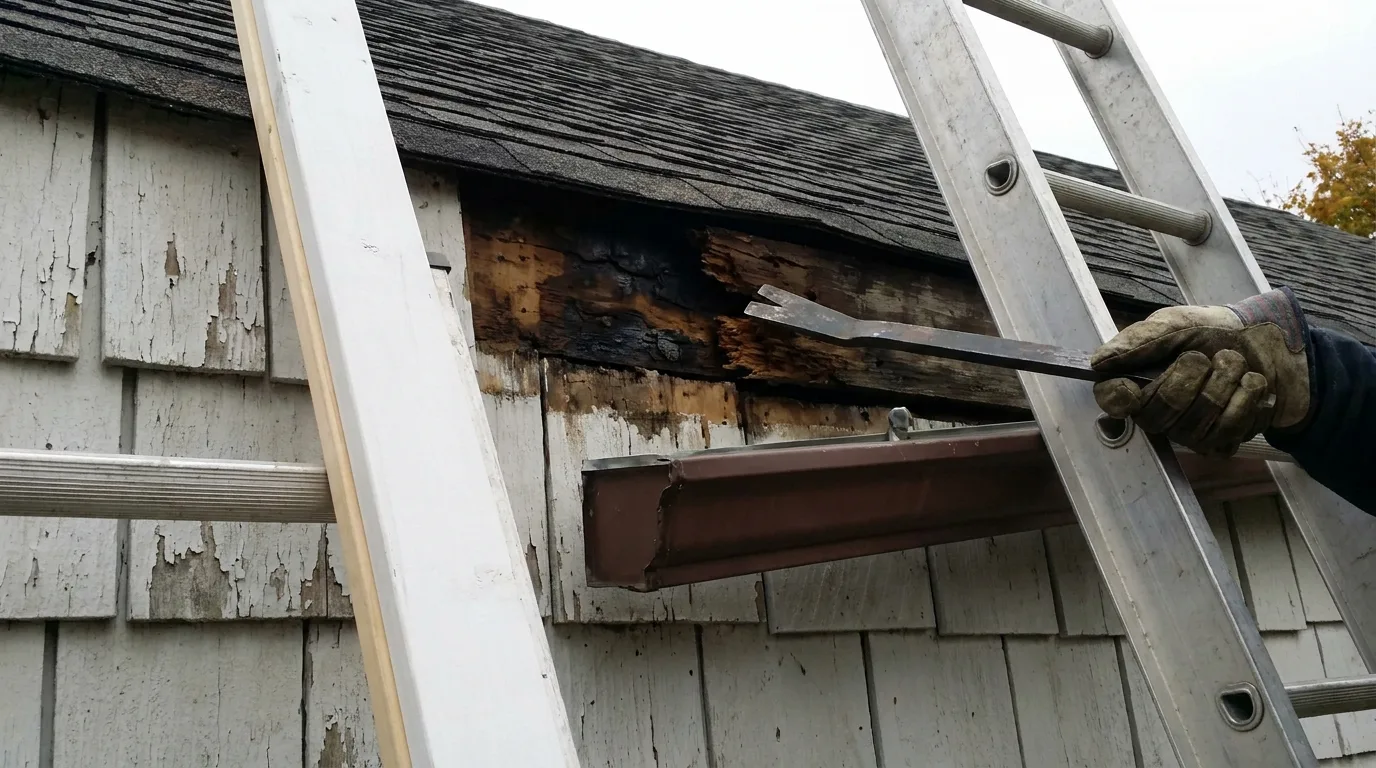
You walked the yard after the last nor'easter and found water sitting against the foundation, maybe pooling by a basement window well, maybe just soaking the mulch bed where it shouldn't. Your first thought was foundation crack. Your second thought was a bigger bill than you wanted to think about before Thanksgiving. In most of the calls I get from Brookhaven to Huntington this time of year, the foundation is fine. The gutters aren't doing their job, and the water has nowhere else to go but down against your wall.
I've been doing this since 2018, all over Nassau and Suffolk, and fall is when this problem shows up because it's the only season that stacks every stressor at once. Oak and pine are dumping leaf load into the troughs, nor'easters are dropping an inch or two of rain in a few hours instead of spread over a week, and the ground is still soft enough to pool instead of freezing solid. By January the same water that pooled in November is working its way into freeze-thaw cycles that will open hairline cracks wider every week.
So before you spend money on anything, you need to know which of three things is actually broken: the gutters don't have the capacity for your roof and your trees, the gutters are pitched wrong and holding water instead of moving it, or the downspouts and leaders are dumping water right back at the foundation instead of away from it. They look identical from the ground. They are not the same fix.
The Three Failure Modes That Look the Same From the Window
Standing water at the foundation has exactly three upstream causes worth checking before you touch anything structural. First, undersized or clogged gutters that overflow the face of the trough during heavy rain instead of carrying water to the downspout. Second, gutters pitched flat or pitched the wrong direction, so water sits in the trough, overflows behind the fascia, and runs down the siding instead of through the system. Third, downspouts and leaders that discharge too close to the house, often right at grade, so even a perfectly functioning gutter just relocates roof water six inches from your foundation instead of six feet.
I check all three on every call, in that order, because fixing the wrong one wastes your money. A homeowner in East Islip once had me quote new leaders before we'd even looked at the gutter pitch. The gutters were dead level for twelve feet, holding standing water you could see from a ladder. New leaders wouldn't have fixed a thing.
Capacity: Oak and Pine Canopy Overloads a 5-Inch Gutter
A standard 5-inch K-style gutter is sized for open sky, not a mature oak and white pine canopy, which is what most Suffolk County lots have had for fifty years. Needles and leaves don't just clog the downspout opening, they build a mat across the trough bottom that cuts usable capacity by half before you even get a hard rain. Add a roof over 2,000 square feet and a single downspout trying to handle it, and overflow during a nor'easter isn't a maintenance failure, it's a math problem.
The fix isn't always more gutter guard. Sometimes it's 6-inch gutter on the long runs, an added downspout so no single run exceeds the length it can actually drain, or in heavy-canopy lots, oversized outlets that won't choke on a wet leaf mat the way a standard 2x3 outlet will. We cover sizing and guard options on the gutters and leaders page if you want the longer breakdown.
Pitch: The Quarter-Inch Rule and What Throws It Off
Gutters need roughly a quarter inch of drop for every ten feet of run toward the downspout. That's a small number, which is exactly why it gets ignored on a lot of installs, including ones done by whoever built the house originally. Over years, ice dams, ladder work, and fascia that's warped from moisture all nudge a gutter back toward level or even backward. A gutter holding an inch of standing water after the rain stops isn't a clog problem, it's a pitch problem, and no amount of cleaning fixes it.
You can check this yourself with a level on a dry day, a few days after rain. If water is still sitting in the trough, it's not draining, and that standing water is what eventually overflows the back edge against the fascia and runs down behind the siding to the foundation, which is a different and often worse path than overflowing the front.
Downspouts and Leaders: Where the Water Actually Goes
This is the one people skip because the gutter itself looks fine. A downspout that dumps at grade, six inches from the foundation, is doing exactly what it was built to do, moving roof water off the roof, and then handing you a foundation problem anyway. On sandy Long Island soil this is worse than it would be on clay, because sandy soil drains fast near the surface but can still saturate and compact right at the foundation wall if that's the only place the water's allowed to go.
Leaders need to carry water at least four to six feet from the foundation, further on a South Shore lot with a high water table, using splash blocks, extensions, or a buried solid pipe to daylight or a dry well. If your yard slopes back toward the house, which happens more than people expect on older Babylon and Islip lots that were graded decades ago, extensions alone won't solve it and you're looking at regrading or a drain line, which is a bigger fall project but a cheaper one than repairing a foundation wall later.
Sandy Soil, High Water Table, and Why Pooling Doesn't Drain Itself
South Shore towns from Babylon down through Islip and into the Hamptons sit on a high water table, especially after a wet fall. Sandy soil is forgiving in a lot of ways, it percolates faster than clay, but when the water table is already up and you add a nor'easter's worth of roof runoff concentrated at one corner of the house, the ground around the footing saturates and stays that way longer than it looks like it should. That saturation is what pushes water through hairline cracks and cold joints in a foundation wall that would otherwise be dry.
If you're already seeing dampness or efflorescence on a basement wall below a known gutter problem, it's worth having us look at the basement itself while we're diagnosing the exterior drainage, since fixing the gutter won't undo existing interior moisture. We handle both sides of that through basement finishing and waterproofing.
Freeze-Thaw: How This Becomes a Foundation Problem by January
Long Island runs somewhere around 40 to 50 freeze-thaw cycles a season, and that number is the whole reason fall gutter problems turn into winter foundation problems. Water that pools against the foundation in November doesn't just sit there, it gets into the top few inches of soil and into any existing hairline crack in the wall. Every freeze expands it, every thaw lets it creep deeper, and by February a crack that started hairline can be wide enough to let bulk water through during a thaw.
Salt air compounds this on homes within a few miles of the water, since it accelerates corrosion on hangers, fasteners, and exposed metal flashing, which is often what fails first and lets water behind the gutter system altogether rather than through it. If your roof flashing or gutter hangers are original to a build from the 90s or earlier, that's worth a look at the same time, and it ties into roof-edge work we cover on the roofing page.
What to Fix Before the Ground Freezes
You have a real window here, and it's not huge. Once the ground freezes solid, which on Long Island is usually sometime in December depending on the year, regrading and dry well work get a lot harder and more expensive to do right. Gutter and leader work can happen right up until a hard freeze, but the drainage work at the foundation itself wants to happen while the ground is still workable.
If you end up with actual water intrusion from this and need to file a claim, document the pooling and any interior moisture now, with dates and photos, before you do any repair work. We walk clients through that process on the insurance restoration page, and having that documentation matters more than people expect if a claim gets questioned later.
What We Do
We come out, put a level on the gutter, run a hose if we need to confirm pitch or an overflow point, check every downspout discharge point, and tell you straight which of the three problems you actually have before we talk about fixing anything.
Call (631) 312-7441 or book a free walkthrough before the ground freezes.
Frequently Asked Questions
How do I tell if it's a gutter problem or an actual foundation crack?
Check the gutters first on a dry day, a few days after rain. If water is still sitting in the trough or you can see staining below a seam or overflow point on the fascia, the gutter is the source. If the foundation is damp or showing a crack with no gutter issue above it, that's a separate problem worth having looked at directly.
Will gutter guards fix an overflow problem by themselves?
Not if the gutter is undersized for your roof and tree canopy, or pitched wrong. Guards stop leaf and needle buildup, which helps, but they don't add capacity and they don't fix a flat run. We check sizing and pitch before recommending guards so you're not paying for a fix that doesn't address the real cause.
Why does this seem worse this year than in past falls?
Mature oak and pine canopies get heavier every year, and gutter hangers, fascia, and seams age and sag over time even without a dramatic failure. A system that handled runoff fine five years ago can be under-capacity now simply from gradual wear and more leaf load, with no single thing having visibly broken.
Does my sandy soil actually make this worse or better?
Both. Sandy soil drains faster than clay once water is away from the house, but it also means water from an undersized or badly aimed downspout saturates the ground right at the footing quickly, since there's less resistance to it pooling exactly where the leader discharges.
Do I need a permit to add a downspout extension or regrade near my foundation?
Simple downspout extensions generally don't require a permit, but regrading or installing a buried drain line can depending on the town and how close you are to a wetland or setback line. Confirm with your town's building department, since Brookhaven, Islip, and the others each handle this a little differently.
What happens if I just wait until spring to deal with this?
You're letting the gutter and pitch problem keep feeding water against the foundation through the entire freeze-thaw season, which is when existing hairline cracks actually widen. Fixing the gutter and drainage now costs the same either way, but waiting means the foundation itself may need more work by spring.
Related Guides
- Gutter Systems & Leaders
- Basement Finishing & Waterproofing
- Roof Repair & Replacement
- Insurance Restoration
Get a Free Estimate from Alec's Construction
Licensed and insured, working across Suffolk County since 2018. We come out, look at the actual job, and put a written number in your hand — no pressure, no obligation.
Or call (631) 312-7441