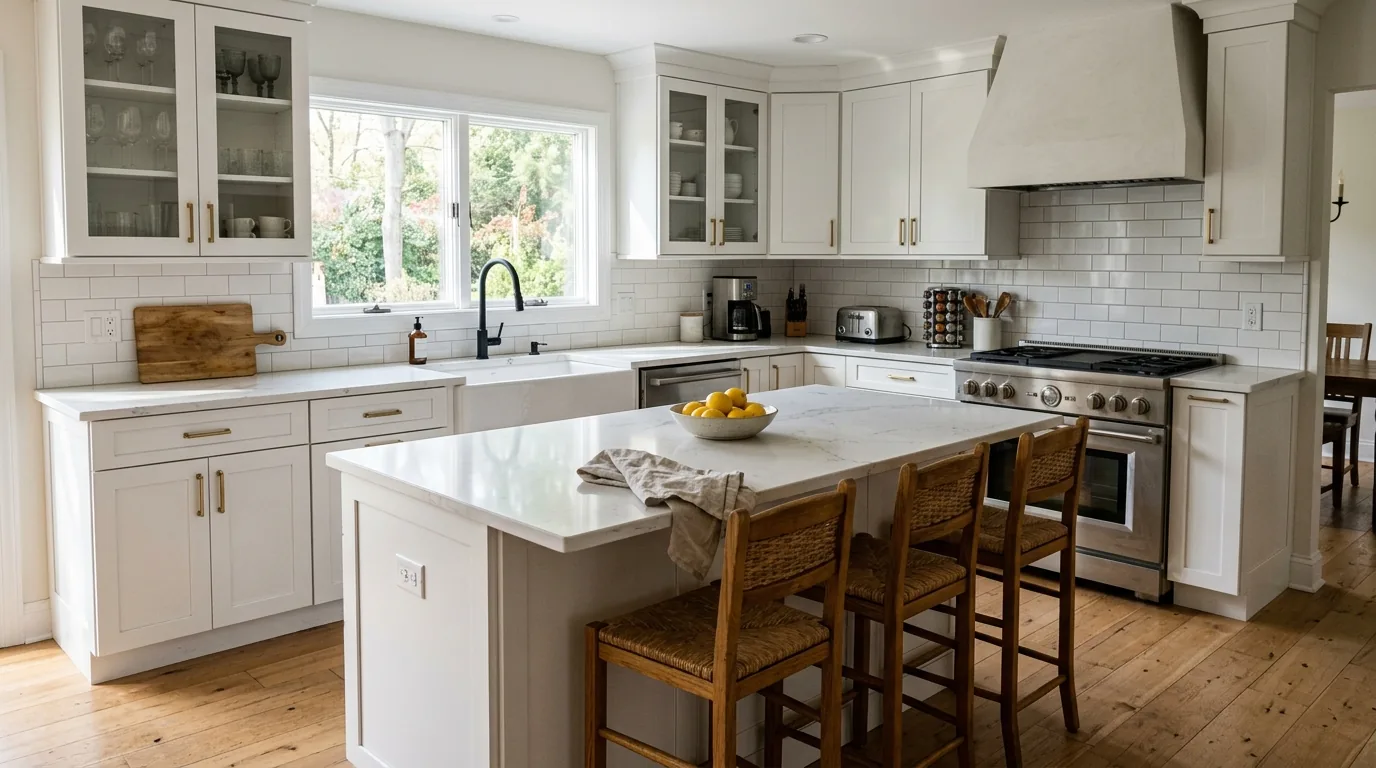
You're staring at a dated kitchen, a listing date or a refinance appraisal coming up, and a pile of national remodeling reports telling you what a kitchen project is supposed to recoup. None of those reports were written about a 1962 split-level in Islip with a crawl space and cast iron drain lines. None of them account for what three sides of salt air do to a cheap cabinet finish, or what 40 to 50 freeze-thaw cycles a winter do to a slab that wasn't properly insulated before the last owner tiled over it.
I've pulled cabinets off walls in Brookhaven and found rot nobody disclosed. I've opened a wall in Smithtown expecting a simple reroute and found knob-and-tube wiring from a renovation nobody permitted. The number that matters to you isn't a national average, it's whether the money you put into this kitchen survives an inspector's flashlight and a buyer's second walkthrough, and whether it holds up through a Suffolk County winter before you ever get to closing.
Here's what I tell clients who are trying to decide if this is the year to do it, and what actually drives value back out of a Long Island kitchen.
Why National Remodeling Numbers Don't Hold Up Here
Most of the recoup data floating around online blends markets where homes are newer, foundations are poured on stable soil, and buyers aren't factoring in salt exposure or a high water table. Long Island is a different animal. A big share of our inventory on the South Shore, from Babylon through Southampton, sits on sandy soil with groundwater close enough to the surface that basements and slab edges deal with moisture most inland markets never see. That moisture finds its way into kitchen subfloors on exterior walls, especially in older homes where nobody ever addressed it.
Buyers here, and the appraisers who follow them through, aren't comparing your kitchen to a glossy magazine spread. They're comparing it to the house next door in the same town, built the same decade, dealing with the same climate. A kitchen that looks good but was built without regard for what this coastline does to materials over time is a kitchen that starts losing value again within a few years, right around the time you're trying to sell.
What Appraisers and Buyers Actually Notice
Appraisers care about functional layout, usable square footage, and whether the kitchen matches the rest of the home's condition. A beautiful kitchen next to an unaddressed roof or failing gutters doesn't pull the value you'd expect, because the overall condition score drags it back down. If you're weighing a kitchen project against other deferred items, get the exterior envelope right first. Water intrusion around a roofline or clogged gutters dumping water against a foundation wall will undercut a kitchen investment faster than outdated cabinets ever will. Our roofing and gutters pages cover what we check before we'll sign off on an interior job moving forward.
Buyers walk in and notice light, flow, and whether the room feels like it works, not whether you spent on a waterfall edge. Cabinet refacing with updated hardware, a layout that opens sightlines to the rest of the main floor, and counters that read as current all move perception more than a full gut renovation with the same finishes.
The Systems Behind the Cabinets Matter More Than You Think
Every kitchen remodel I've done on this island eventually runs into what's behind the walls. Electrical panels in homes built before the 1980s often can't handle an induction range or a second dishwasher circuit without an upgrade. Plumbing on an exterior wall in an older Huntington or Centereach home is sometimes one hard freeze away from a split pipe if it wasn't insulated correctly the first time. If your kitchen sits on an exterior wall that's never had proper insulation addressed, you're not just risking comfort, you're risking a pipe failure the first deep freeze of the season. We cover what that looks like on our attic insulation page for East Patchogue, and the same principle applies to any exterior wall behind cabinetry.
If your remodel plan includes moving a sink or adding square footage by opening into a basement or crawl space, get that area assessed before you touch the kitchen. A damp or unfinished space under a remodeled kitchen is a red flag buyers will ask about, and it's often easier to finish properly than to explain away at an inspection. See our basement finishing page for what that involves on homes with a high water table.
Permits, Inspections, and the Suffolk County Reality
Any kitchen remodel that touches electrical, plumbing, or a load-bearing wall generally requires a permit in Suffolk County towns, and that includes Brookhaven, Islip, Smithtown, Huntington, Babylon, and Southampton. Requirements, fees, and inspection timelines vary by town and can change, so confirm the specifics with that town's building department before you start demo, not after. What I will tell you flatly is that unpermitted electrical or plumbing work is one of the most common things that kills or delays a closing on Long Island. Attorneys and lenders flag it, and buyers walk or renegotiate when they find it. If you're remodeling specifically to sell or refinance, permitted work with a final sign-off is part of the return, not a formality you can skip.
Minor Remodel vs Major Remodel: Which Recoups More
A minor remodel, cabinet refacing or replacement, new counters, updated backsplash, new fixtures and lighting, fresh paint, tends to return a higher share of what you put in than a full gut job that moves walls and relocates plumbing. The major remodel can still be the right call if your layout is genuinely broken, but if the layout already works and the kitchen just looks tired, you're usually better served putting money into finishes and systems than into structural changes. Pair that interior work with attention to what buyers see from the street. A dated kitchen inside a home with worn siding sends a mixed signal, and curb condition is often what gets a buyer through the door to see the kitchen in the first place.
Timing It Before Winter
If you're doing this before a spring listing or a refinance appraisal, fall is workable but tight. Cabinet lead times run long this time of year, and any work that opens an exterior wall needs to be closed back up before a nor'easter catches it mid-project. Oak and pine leaf debris clogging gutters during a remodel adds water risk to a house that already has its guard down from construction. If your project involves any exterior penetration, lock your schedule now so you're not racing weather in December. Interior-only work, cabinets, counters, flooring, has more flexibility and can run through the winter without exposure risk.
What We Do
We handle kitchen remodels across Suffolk County from East Patchogue, with the same crew doing the electrical, plumbing coordination, and finish work so nothing gets lost between trades, and we won't sign off on a kitchen project until we've confirmed the systems behind it, the permits for it, and the exterior condition around it are sound.
Call (631) 312-7441 or book a free walkthrough and we'll tell you straight whether this is the year to do it.
Frequently Asked Questions
Will a kitchen remodel actually help my home sell faster on Long Island?
It can, especially if your current kitchen is visibly dated compared to similar homes in your town. Buyers and their inspectors weigh overall condition heavily, and a kitchen that looks current with a layout that functions well removes one of the biggest objections a buyer can raise. It helps most when the rest of the home's major systems and exterior are also in decent shape.
Should I do a full gut remodel or just update finishes before selling?
If your layout already works and the bones of the kitchen are sound, updating cabinets, counters, and fixtures usually makes more sense than a full gut job. A major remodel is worth considering only if the layout itself is broken, such as a cramped galley kitchen that's turning buyers away during showings.
Do I need a permit for a kitchen remodel in Suffolk County?
Generally yes, if the work touches electrical, plumbing, or a load-bearing wall. Exact requirements and timelines vary by town, so confirm with your local building department, whether that's Brookhaven, Islip, Smithtown, Huntington, Babylon, or Southampton, before starting demo.
How does the high water table on the South Shore affect a kitchen remodel?
Homes closer to the South Shore often deal with moisture at the foundation and crawl space level, which can affect subfloors and cabinetry on exterior walls over time. If your kitchen sits above a damp crawl space or unfinished basement area, that needs to be addressed as part of the project, not after the fact.
Is it too late in the fall to start a kitchen remodel before winter?
Interior-only work like cabinets, counters, and flooring can run through the winter without much added risk. Anything that opens an exterior wall, like relocating a window or adding ductwork, needs tighter scheduling so it's closed up before the first nor'easter, so start that conversation now rather than in December.
What's the biggest mistake homeowners make with a kitchen remodel meant to boost resale value?
Spending on visible finishes while ignoring what's behind the walls, outdated electrical panels, uninsulated exterior walls, or unpermitted work from a previous owner. Buyers' inspectors find these issues, and they cost you more in negotiation than it would have cost to address them during the remodel.
Related Guides
Get a Free Estimate from Alec's Construction
Licensed and insured, working across Nassau and Suffolk County since 2018. We come out, look at the actual job, and put a written number in your hand — no pressure, no obligation.
Or call (631) 312-7441