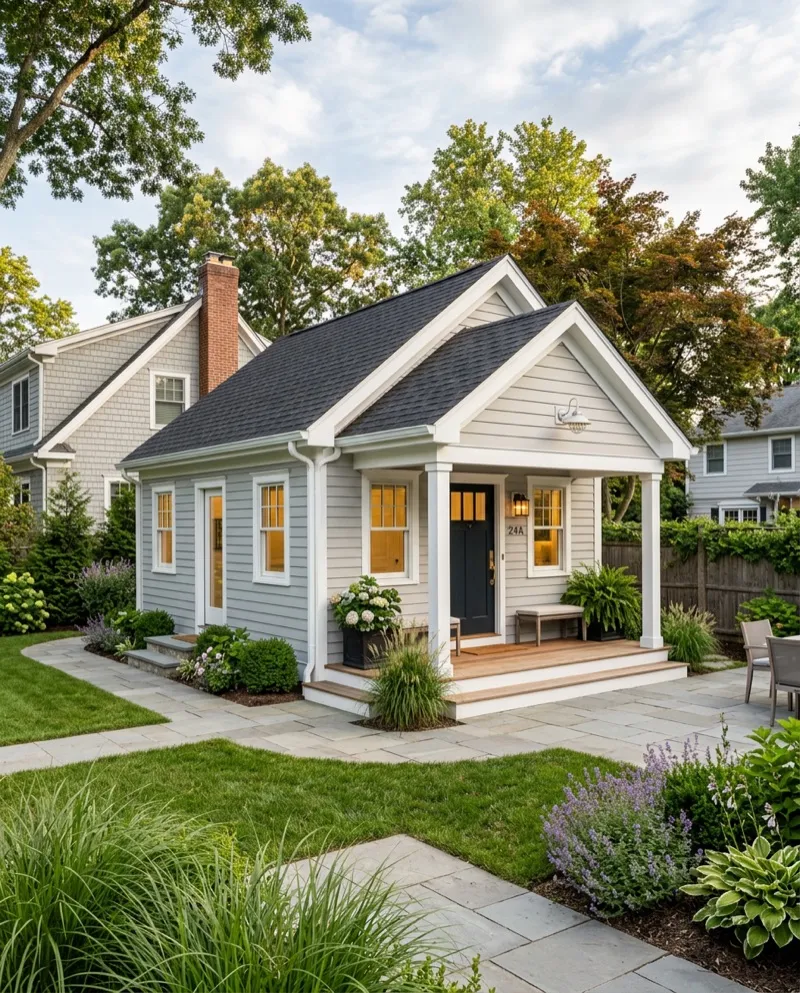
You've got a house on a Long Island lot that's past saving, maybe storm damage, maybe fifty years of freeze-thaw finally won the fight with the foundation, and you're trying to decide how to rebuild before another winter sets in. Somewhere in that research you've hit modular construction, and the sales pitch sounds great: faster, cleaner, fewer surprises. What you don't hear enough is how modular and stick-built actually perform once a nor'easter is rattling the windows and the ground underneath has already gone through its fortieth or fiftieth freeze-thaw cycle of the season.
I've built both ways on this island since 2018, from Babylon to Southampton, and the honest answer is neither method is universally better. The right call depends on your lot, your timeline, your town's building department, and how you plan to use the house. Here's what actually separates them once you get past the brochure.
What "Modular" Actually Means Here
Modular means large sections of your home get built in a factory off Long Island, trucked here on flatbeds, and craned onto a foundation your site crew pours ahead of time. It's not the same as a manufactured or mobile home, a modular home meets the same New York State building code as a stick-built house and gets inspected the same way once it's set. Stick-built means every stud, sheet of plywood, and run of wire gets assembled on your lot, in the weather, by a crew that adjusts as they go. Factory tolerances are tight because the modules have to travel down a highway and through floor systems without flexing, which gives you real structural rigidity, but it also means your design options are more boxed in than a stick-built job where the crew can frame around whatever you dream up mid-project.
What Actually Drives the Cost Gap
Modular shaves labor cost because factory crews work indoors on a fixed line, not fighting rain delays or juggling six subcontractors around each other. You give some of that back in crane rental, permits for oversized loads on local roads, and site prep that has to be dead-on accurate before the modules show up, there's no "we'll fix it on site" once a module is already built. Stick-built gives you more room to change your mind mid-project, which sounds nice until you realize every change order on a stick-built job adds cost that a modular build simply can't absorb once the factory line has started. If your lot has tricky access, think narrow shared driveways in older sections of Babylon or Islip, crane staging alone can erase the labor savings modular is supposed to deliver.
Timeline: The Real Reason People Choose Modular Before Winter
This is where modular earns its reputation. Framing and most interior rough-in happen in the factory while your site crew is still pouring foundation and running utilities, so the two timelines overlap instead of stacking one after the other. A stick-built home sits exposed to the elements for months during framing, and here that means open walls taking on wind-driven rain from a nor'easter, not just ordinary rain. I've seen stick-built jobs lose two or three weeks of schedule to a single October storm system because sheathing and insulation can't go in wet. Modular compresses the weather-exposed window down to the days it takes to set and seam the modules, which matters a lot if you're racing the first hard freeze.
Foundation and Soil: Neither Method Skips This
Here's the part people get wrong: modular doesn't make your soil problems disappear. You still need a foundation engineered for Long Island conditions, sandy soil that doesn't hold a footing the way clay does, and on the South Shore, a high water table that can sit a few feet under slab grade in parts of Bay Shore, Babylon, and Islip. A module set day gets canceled just as fast as a stick-built pour when the crew hits groundwater they didn't expect. If your rebuild touches a basement, read up on basement finishing before you finalize foundation depth, because the waterproofing decisions you make now are much harder to undo once a modular home is already sitting on top of them.
Salt Air and Material Choices Matter More Than the Build Method
Long Island takes salt air off the Sound and the Atlantic from three sides, and it eats cheap trim, fasteners, and exterior assemblies no matter whether the walls came from a factory or got built on your lot. Modular wall panels usually ship with house wrap and sheathing already in place, which is good protection as long as the seams get taped correctly on set day, that seam work is the one spot a rushed modular crew can let moisture in behind the wall. Stick-built gives your crew more control over flashing details at every window and transition, which matters on oak and pine-heavy lots where leaf litter and gutter overflow send water where it doesn't belong. Whichever method you choose, don't cheap out on exterior fasteners and flashing tape rated for coastal exposure, and keep gutters clear going into leaf season so water isn't backing up against either wall assembly.
Code and Permit Reality
Both methods go through your town's building department, but the sequence differs. Modular homes typically carry a state insignia showing the factory sections already passed a third-party inspection, which can speed up your local plan review, but every town handles site inspections, setbacks, and final sign-off a little differently, and some departments are simply more familiar with modular submissions than others. Brookhaven, Smithtown, Huntington, and the Nassau towns generally require their own site plan review regardless of construction method, so don't assume modular skips a step. Confirm the specific sequence and timeline with your town's building department before you commit to either method, because what sped up a neighbor's project in one town won't automatically apply in yours.
Financing Differences You'll Actually Run Into
Construction loans for stick-built homes are familiar territory for most local banks, draws release in stages as your crew hits framing, rough-in, and finish milestones. Modular financing can get complicated because a big chunk of the home's value gets created in a factory you can't drive by and inspect, and some lenders want extra documentation, a factory completion certificate, or a different draw schedule before they'll release funds for the module build itself. Talk to your lender early and specifically about modular before you sign a contract with a manufacturer, because not every mortgage product on Long Island handles this the same way.
Resale Perception on Long Island
Buyers here still ask "is this a trailer" when they hear modular, even though a code-built modular home has nothing in common with a manufactured home. That perception is fading but it hasn't disappeared, and appraisers sometimes need extra comps to value a modular home fairly in neighborhoods full of older stick-built housing stock. I've also seen modular resell faster in newer developments where most of the street is already modular or similar-vintage construction, because comps are easy to find and buyers aren't comparing it against a block of 1960s stick-built capes. If resale in five or ten years matters to you, talk to a local real estate agent about how modular sales have actually performed in your specific town before you decide.
What We Do
We've framed stick-built rebuilds and set modular homes on foundations we poured ourselves, from East Patchogue out to Southampton, and we'll walk your specific lot, soil, and town's requirements with you before you sign anything, including what it'll take to get roofing and siding buttoned up before winter either way.
Call (631) 312-7441 or book a free walkthrough.
Frequently Asked Questions
Is modular construction legal everywhere on Long Island?
Modular construction is legal across Long Island because modular homes have to meet the same New York State building code as a stick-built house. What changes town to town is how the local building department reviews your site plan and schedules inspections, so confirm the process with your specific town before you commit to a builder.
How much faster is modular than stick-built, really?
Modular saves the most time by letting factory framing happen while your site crew pours the foundation and runs utilities, so the two schedules overlap instead of stacking end to end. The time you save depends heavily on how fast your town turns around plan review and how accessible your lot is for a crane, so a tight driveway or a corner lot with utility conflicts can eat into that advantage.
Will my bank finance a modular home the same way as a stick-built rebuild?
Not always. Some lenders want extra paperwork like a factory completion certificate and may use a different draw schedule since a large part of the home's value gets created off-site. Talk to your lender specifically about modular financing before you sign a contract with a manufacturer.
Does modular hold up to Long Island winters as well as stick-built?
A properly built and sealed modular home holds up fine to our freeze-thaw cycles and nor'easter wind, the structure meets the same code either way. The weak point is the seam where modules join on set day, if that flashing and sealing work isn't done right, that's where water finds its way in during a wet winter.
Will a modular home hurt my resale value compared to stick-built?
It depends more on your specific street and town than on the construction method itself. In neighborhoods with mostly older stick-built housing stock, appraisers sometimes need extra comps to value a modular home fairly, while modular sells easily in newer developments where comparable homes already exist nearby.
Can I build modular on a South Shore lot with a high water table?
Yes, but the foundation design has to account for groundwater just as carefully as it would for a stick-built home, sometimes more carefully since a module set date is hard to reschedule once trucks and cranes are booked. Get your soil and water table tested before you finalize foundation depth with either method.
Related Guides
Get a Free Estimate from Alec's Construction
Licensed and insured, working across Nassau and Suffolk County since 2018. We come out, look at the actual job, and put a written number in your hand — no pressure, no obligation.
Or call (631) 312-7441