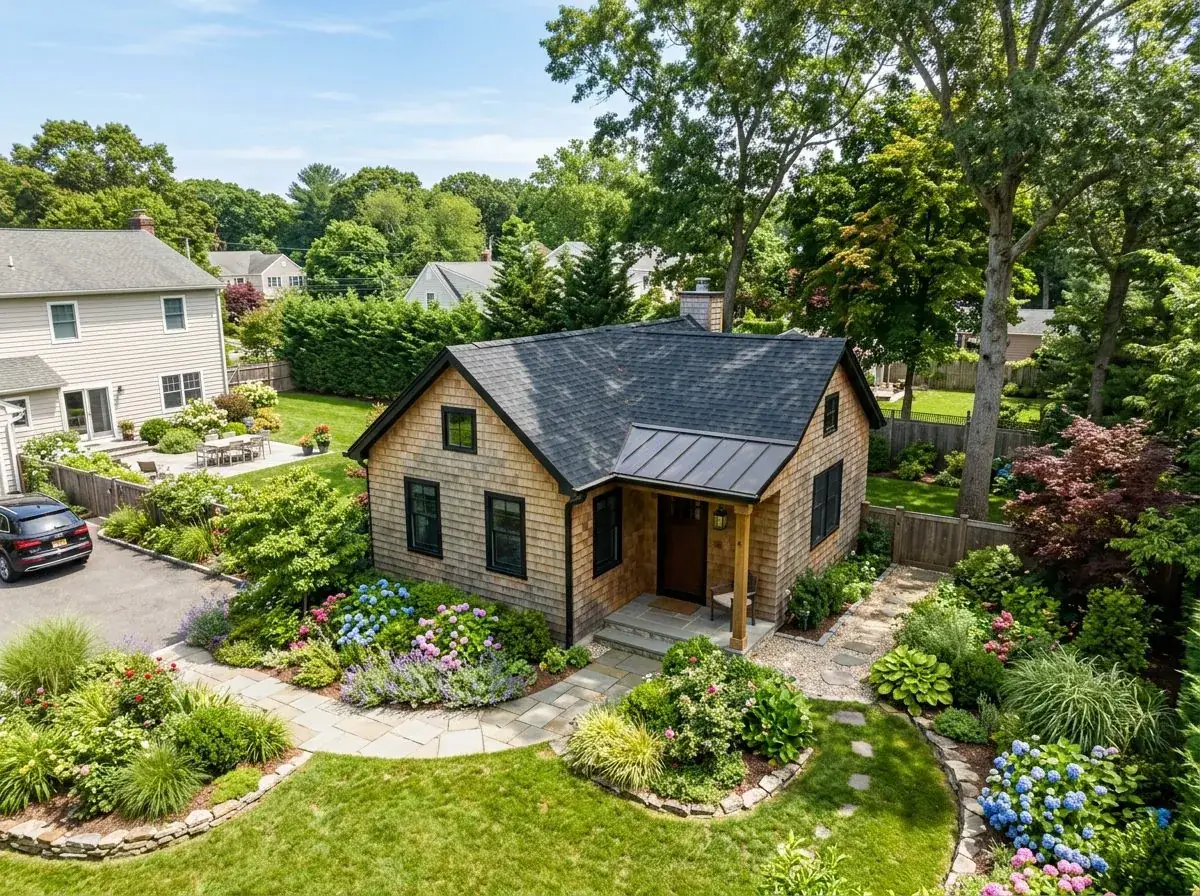
In 2024, New York City took a historic step by legalizing accessory dwelling units across all five boroughs. The NYC ADU program allows homeowners with one- to two-family homes to build new ADUs or legalize existing basement and garage apartments that had previously operated in a regulatory gray area. The program represents the largest single expansion of ADU rights in the New York metropolitan region's history.
For Long Island homeowners, NYC's ADU legalization is not just a city story. It is the leading edge of a regional shift that is reshaping how New York thinks about housing density, property rights, and the role of homeowners in addressing the housing shortage. Understanding what NYC did, how it differs from Long Island's current ADU landscape, and what it means for the future of ADU policy in Suffolk and Nassau counties will help you make informed decisions about building on your own property.
What NYC's ADU Program Actually Does
New York City's ADU legalization, which went into effect in 2024, made several significant changes to the city's building and zoning codes:
- Legalized new ADU construction. Homeowners with one-family and two-family homes in NYC can now build new accessory dwelling units on their properties, including detached backyard units, garage conversions, and additions.
- Created a pathway to legalize existing units. Tens of thousands of basement and garage apartments in NYC operated illegally for decades. The program creates a process for homeowners to bring these units up to code and obtain legal status, including reduced fire safety and egress standards that are still protective but more achievable than previous requirements.
- Eliminated certain zoning barriers. The program overrides some zoning restrictions that previously prevented ADU construction, such as floor area ratio (FAR) limits and lot coverage caps, making it possible to build on properties where the math previously did not work.
- Established safety standards. Legal ADUs must meet specific health and safety requirements including ceiling height, egress, ventilation, fire separation, and utility standards. These are calibrated to be achievable for existing structures while still protecting occupant safety.
- Provided financial assistance. NYC has allocated funding for low-interest loans and grants to help homeowners, particularly lower-income homeowners, cover the cost of building or legalizing ADUs.
The scale of the impact is significant. NYC estimates that the program could create more than 100,000 new legal housing units over the next decade, making it one of the largest housing production initiatives in the city's history — without a single new apartment building.
How NYC ADU Rules Differ from Long Island
Long Island homeowners searching for "NYC ADU" often assume that the city's rules apply to them or that a similar blanket legalization has occurred on the Island. That is not the case. Here are the key differences between how ADUs work in NYC versus Long Island:
- Citywide vs. town-by-town. NYC's program applies uniformly across all five boroughs under a single set of rules. Long Island has no equivalent. Each of the ten towns in Suffolk County and the three towns and two cities in Nassau County sets its own ADU policies independently. What is allowed in Brookhaven may not be allowed in Smithtown. What East Hampton promotes, Babylon may restrict.
- Legalization of existing units. NYC's program explicitly creates a process for legalizing the thousands of unpermitted basement and garage apartments that already exist. Most Long Island towns do not have a comparable amnesty or legalization pathway. On Long Island, an unpermitted apartment remains illegal until the homeowner goes through the standard permitting process, which can require significant construction to bring the unit up to code.
- Zoning overrides. NYC's program overrides certain zoning restrictions to make ADUs feasible on properties where they were previously impossible. Long Island ADUs must comply with existing zoning codes without such overrides, which means lot coverage limits, FAR restrictions, and setback requirements can prevent construction on properties that would be eligible under NYC's more permissive framework.
- Owner occupancy. Most Long Island towns require the property owner to live on the premises. NYC's program also generally requires owner occupancy for properties participating in the program, so this is a shared feature.
- Septic considerations. NYC properties connect to municipal sewer systems, eliminating one of the biggest hurdles for Long Island ADU construction. Many Long Island properties rely on private septic systems, and adding a dwelling unit requires Suffolk County Health Department approval for the additional waste load. This can require septic system upgrades that add tens of thousands of dollars to a project.
Want to know what ADU rules apply to your LI property?
Free zoning check and site evaluation — we know every town's rules.
How NYC's Program Influences Long Island Policy
While NYC's rules do not directly apply to Long Island, the city's ADU legalization has created political and policy momentum that is accelerating ADU adoption in Suffolk and Nassau counties. Here is how:
- State-level pressure. New York State has been considering legislation that would require all municipalities, including Long Island towns, to permit ADUs in residential zones. NYC's successful implementation of its program gives the state a working model to point to when pushing suburban communities to adopt similar policies. The political argument — "if it works in the city, it should work everywhere" — carries weight in Albany.
- Public awareness. NYC's ADU program has generated enormous media coverage, educating homeowners across the metro area about what ADUs are and why they matter. Long Island homeowners who see the coverage are asking their town officials why they cannot do the same thing on their properties. This grassroots pressure pushes local officials to develop ADU-friendly policies.
- Housing crisis urgency. Long Island's housing shortage is well documented — high home prices, limited rental inventory, young people unable to afford to stay, essential workers commuting from distant locations. NYC's program demonstrates that ADUs are a viable, politically palatable tool for addressing housing shortages without controversial large-scale development.
- Contractor and industry readiness. The surge in ADU interest across the metro area has expanded the pool of contractors, architects, and manufacturers who understand ADU construction. This infrastructure benefits Long Island homeowners by increasing competition and expertise in the market.
- Grant and funding programs. NYC's investment in ADU financial assistance has prompted Long Island leaders to ensure comparable resources are available locally. The Plus One ADU grant program, offering up to $125,000 per project, is Long Island's answer to the city's financial incentives.
Long Island's Own ADU Program: Plus One
Long Island has its own ADU incentive program that in some ways is even more generous than NYC's offerings. The Plus One Accessory Dwelling Unit Program provides grants of up to $125,000 to Long Island homeowners who build ADUs that serve affordable housing needs.
Program status — verified September 2026
Plus One ADU is a New York State program (an $85 million allocation through the Housing Trust Fund Corporation) but it is run town by town, and each town's intake opens and closes on its own schedule. As of September 2026 on Long Island: Huntington and Riverhead are accepting applications; Brookhaven, Islip and Southold are closed. Babylon, East Hampton, Shelter Island and Southampton run their programs through Community Development Long Island rather than the Long Island Housing Partnership.
The $125,000 is a cap, not an amount every applicant receives, and it is awarded as a grant. Huntington's published guidelines cap household income at 100% of Nassau/Suffolk area median income (2023 HUD limits: $109,400 for a one-person household, $156,300 for four) and require that you have owned and lived in the home for at least one year. Applications go on a first-come waitlist and are then re-ranked on priority points, including whether the unit will be affordable at or below 80% AMI and whether it can be permitted without a zoning variance. Municipal code always overrides the program guidelines. Verify your town's status before you budget around a grant: LIHP (631) 435-4710. We also check it for you on the walkthrough — see our Plus One ADU grant page for the eligibility checklist and what the build costs if your town's round is closed.
- Grant amount: Up to $125,000 toward construction costs — a substantial sum that can cover the entire cost of a conversion project or a significant portion of new construction.
- Affordability commitment: The completed ADU must be rented to tenants earning at or below 80% of the Area Median Income for a specified period, typically 10 years.
- No repayment required: This is a grant, not a loan. The homeowner does not repay the funds as long as they comply with the program's affordability requirements.
- Broad eligibility: New construction, garage conversions, basement apartments, above-garage units, and conversions of existing structures all qualify.
- Professional support: We help clients prepare construction estimates and project documentation for strong grant applications.
The Plus One program is Long Island's equivalent of NYC's ADU financial assistance — and for homeowners who qualify, it makes ADU construction one of the most financially attractive home improvement projects available.
Why Long Island Homeowners Should Act Now
The current moment represents a unique convergence of factors that favor ADU construction on Long Island. Here is why waiting could mean missing the best window of opportunity:
- Grant funding is available today. The Plus One program provides up to $125,000 per project. Grant programs have limited funding pools, and as awareness grows, competition for these dollars will increase. Homeowners who apply now face less competition than those who wait.
- Regulations may tighten before they loosen. While the long-term trend favors ADU legalization, the short-term path is unpredictable. Some towns may add restrictions, increase fees, or impose design requirements before eventually settling into more permissive frameworks. Building under current rules avoids potential future complications.
- Construction costs continue to rise. Labor and material costs on Long Island have increased steadily year over year. A project that costs $100,000 today may cost $115,000 or more in two years. Locking in current pricing with a signed contract protects your budget.
- Rental demand is at historic highs. Long Island's rental market is extremely tight, with vacancy rates near historic lows. This means your completed ADU will find a tenant quickly and command strong rent. Market conditions this favorable may not persist indefinitely.
- Property values benefit from early adoption. Being among the first in your neighborhood with a legal ADU adds novelty value. As ADUs become more common, the individual value-add per property normalizes. Early movers capture the greatest property value increase.
Licensed & Insured
Full coverage on every project
36+ Cities Served
Suffolk County & Long Island
Free Walkthrough
No obligation, no pressure
Get a Free Estimate
Tell us about your project — we respond within 24 hours.
No spam. No obligation.
What NYC Got Right That Long Island Can Learn From
NYC's ADU program is not perfect, but it got several things right that Long Island communities can and should adopt:
- Simplicity. NYC created a single, clear set of rules that applies across the city. Long Island's patchwork of town-by-town regulations creates confusion and inconsistency. A county-level or state-mandated ADU framework would make it easier for homeowners to understand their options.
- Legalization pathways. Acknowledging that thousands of unpermitted units already exist and creating a process to bring them into compliance is pragmatic and safety-focused. Long Island has a significant number of illegal apartments — offering a legalization pathway would improve safety and bring units into the tax base.
- Financial support. Making grants and low-interest loans available recognizes that many homeowners want to build ADUs but lack the capital. Long Island's Plus One program addresses this, but broader awareness and additional funding would expand access.
- Safety over prohibition. NYC's approach of setting achievable safety standards rather than prohibiting ADUs entirely results in safer housing. When ADUs are illegal, they get built anyway — just without permits, inspections, or safety standards. Legalization does not create ADUs; it makes them safe.
The State-Level Push for ADU Legalization
New York State has been advancing legislation that would require municipalities across the state, including Long Island towns, to permit ADUs in residential zones. While the specifics have evolved through several legislative sessions, the direction is unmistakable: Albany wants more ADUs built, and it is willing to override local resistance to make it happen.
Key elements of the state-level push include:
- Mandatory ADU permissions. Proposed legislation would require all municipalities to allow at least one ADU per single-family residential lot, with reasonable but not prohibitive standards for size, setbacks, and design.
- Preemption of local bans. The state legislation would override local zoning codes that prohibit ADUs entirely, establishing a floor of ADU rights that no municipality can undercut.
- Streamlined permitting. Requirements for expedited permitting timelines would prevent towns from using bureaucratic delay as a de facto ban on ADU construction.
- Parking reform. Some proposals would limit or eliminate mandatory additional parking requirements for ADUs, removing a common barrier that makes ADU construction impractical on smaller lots.
For Long Island homeowners, the state-level push means that ADU construction is going to become easier over time, not harder. Building now — while grant funding is available and before a potential surge in ADU construction drives up contractor demand — positions you ahead of the curve.
What You Can Build Today on Long Island
You do not need to wait for state legislation or a NYC-style program to build an ADU on Long Island. Many Long Island towns already permit accessory apartments, and the Plus One grant program is accepting applications now. Here is what is currently possible:
- Garage conversions — converting a detached garage into a studio or one-bedroom apartment ($50,000 to $130,000)
- Basement apartments — converting an existing basement into a legal dwelling unit ($55,000 to $150,000)
- Above-garage apartments — adding a second story above an existing garage ($85,000 to $185,000)
- Detached backyard cottages — building a new standalone unit ($150,000 to $350,000+)
- Attached in-law suites — adding a wing with a separate entrance ($120,000 to $250,000)
All of these project types are eligible for the Plus One grant of up to $125,000. The grant can cover most or all of a conversion project's cost, making ADU construction essentially free for qualifying homeowners.
Build your ADU before the rush.
$125K grant available now — free consultation for LI homeowners.
Frequently Asked Questions
Does NYC's ADU program apply to Long Island?+
Can I legalize an existing basement apartment on Long Island?+
What is the Plus One ADU grant?+
Will New York State force Long Island towns to allow ADUs?+
How are Long Island ADU rules different from NYC?+
Work With Alec's Construction
This guide is written by the crew that does the work. See Alec's ADUs service — accessory apartments, garage conversions and grant paperwork. Licensed and insured on Long Island, one crew start to finish, free walkthrough and a written estimate inside 48 hours.
Booking the cold months now: we also handle Additions & New Construction and Bathroom Remodeling.
We pull the permits on our own jobs — if you need the building department for your town, we keep a current directory of all 23 Long Island permit offices.
Ready to Build an ADU on Long Island?
NYC has shown the way — Long Island is following. Alec's Construction helps homeowners across Suffolk County build legal, permitted ADUs that generate rental income and add property value. Contact us for a free walkthrough and learn about the $125K Plus One grant.
Get a Free Consultation