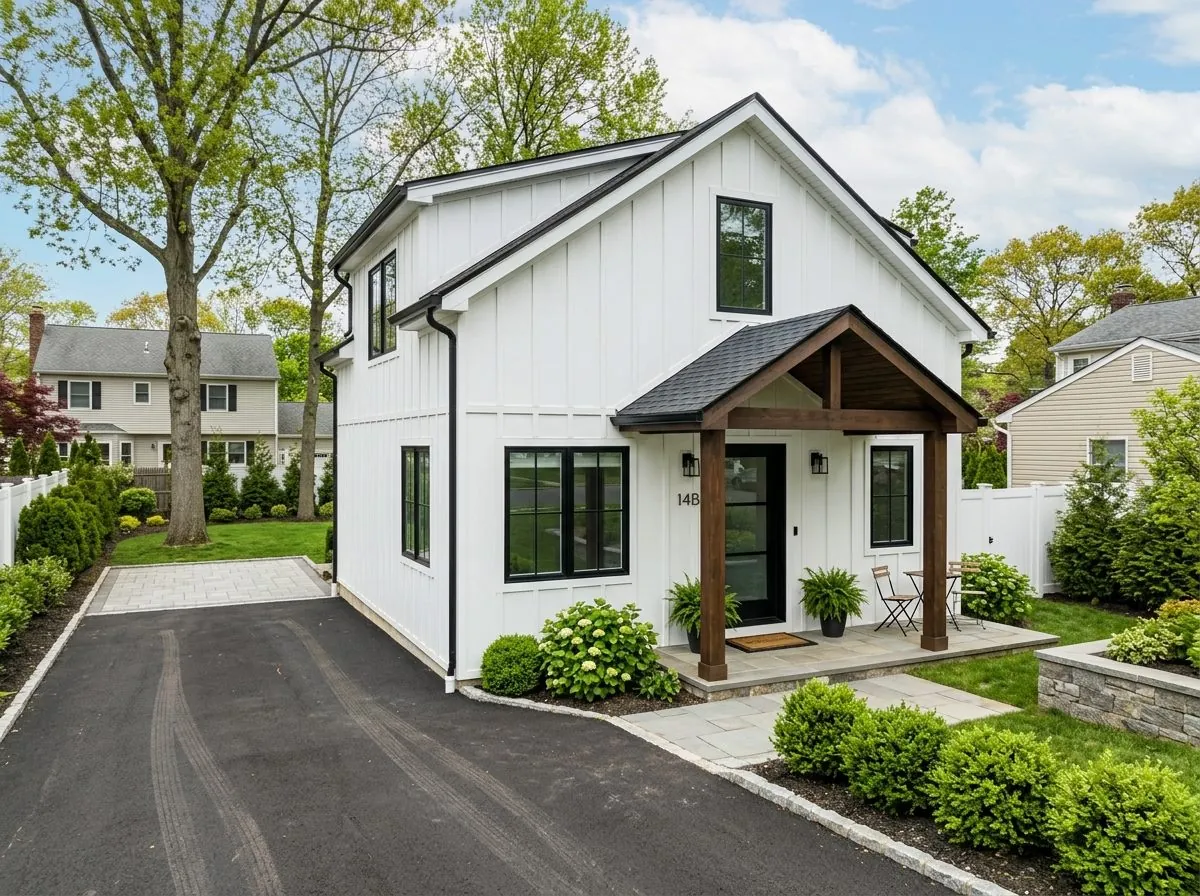
Zoning rules determine whether you can build an ADU at all — and if so, what size, where on the lot, and at what height. On Long Island, these rules vary by town and sometimes by zoning district within a town. Understanding setbacks, lot coverage, and height limits before you design is essential to avoiding costly redesigns or permit denials.
Setbacks: How Close Can an ADU Be to Property Lines?
A setback is the minimum required distance between a structure and a property line. For detached ADUs and accessory structures on Long Island, side and rear setbacks typically range from 5 to 15 feet depending on the town and the zoning district. Front yard setbacks for ADUs are generally the same as for the primary residence — usually 25–40 feet from the street line.
In Nassau County towns like Hempstead and Oyster Bay, typical residential setbacks for accessory structures are 5 feet from side and rear lines in standard residential zones. In Suffolk County towns like Huntington and Brookhaven, setbacks for detached accessory structures often run 10 feet from side lines and 5–10 feet from rear lines. Always verify with your specific town's zoning code, since rules vary not just by town but by the specific residential zoning district your property falls within.
Attached ADUs — basement units and interior additions — generally don't trigger setback issues unless they expand the building's footprint. Ground-floor additions must comply with the same setbacks as any building addition: the expanded structure cannot encroach into required setback areas.
Lot Coverage and Height Limits
Lot coverage is the percentage of your lot covered by all structures combined. Most residential zones on Long Island cap lot coverage at 20–35%. If your existing house, garage, and any sheds already cover 30% of a 7,500-square-foot lot and your zone caps coverage at 35%, you have 375 square feet of additional building coverage available — enough for a modest ADU footprint, but not a large one.
Height limits for detached ADUs typically cap at 15–20 feet at the peak, or one story with a possible loft. Attached additions must stay within the height limits of the primary residence zone, typically 30–35 feet for residential structures in most Long Island towns.
If your property doesn't meet the setback or lot coverage requirements as-of-right, you may apply for a variance from the Zoning Board of Appeals. Variance hearings add 3–9 months to the project timeline and are not guaranteed to succeed. Working with an experienced local contractor who can identify these issues early prevents wasted design fees.
Work With Alec's Construction
This guide is written by the crew that does the work. See Alec's ADUs service — accessory apartments, garage conversions and grant paperwork. Licensed and insured on Long Island, one crew start to finish, free walkthrough and a written estimate inside 48 hours.
Booking the cold months now: we also handle Additions & New Construction and Bathroom Remodeling.
Filing something yourself? Our Long Island building department directory lists the address, phone and counter hours for all 23 permit offices in Nassau and Suffolk.
Ready to Get Started?
Thinking about an ADU? Call Alec's Construction at (631) 312-7441 for a free estimate. We handle design coordination, permits, and construction across Nassau and Suffolk County.
Get a Free Consultation