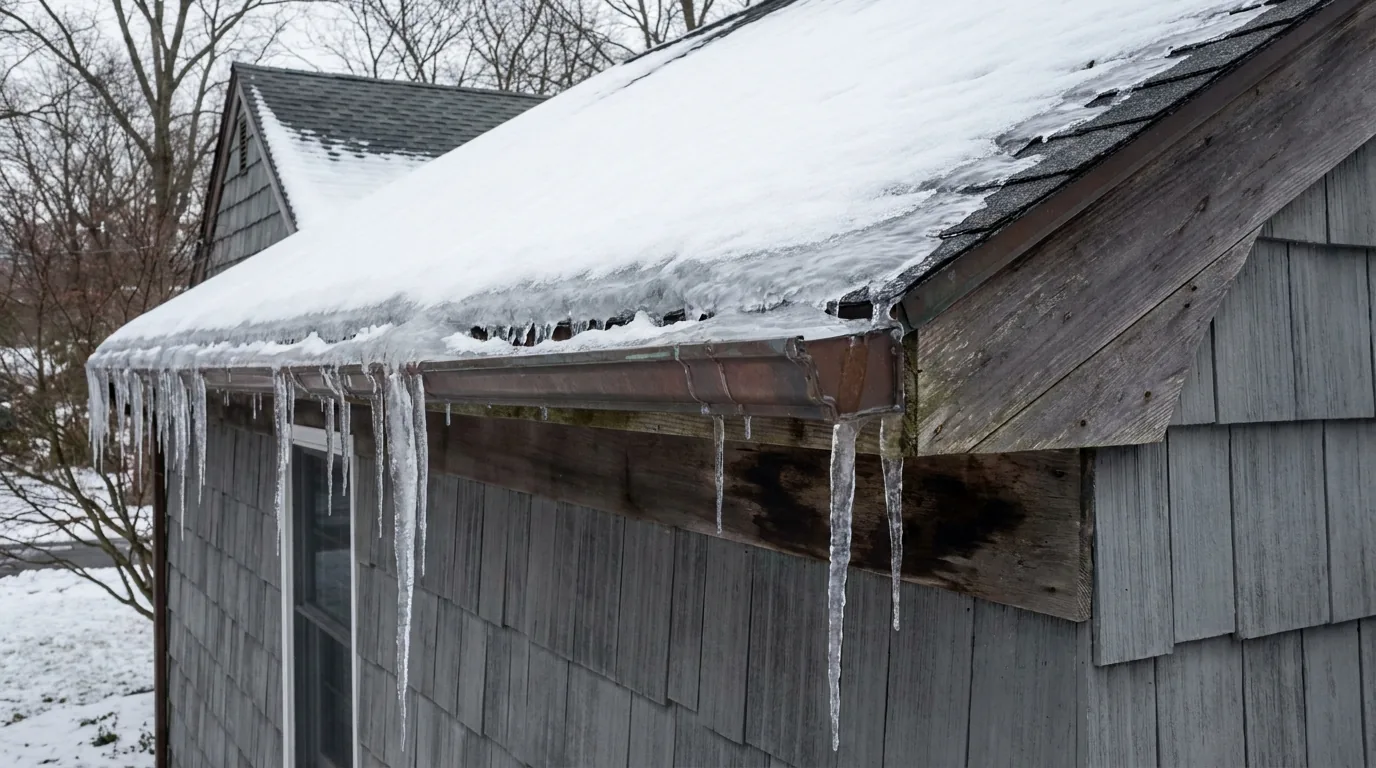
Every January I get the same call. A homeowner in Bohemia or Center Moriches notices a thick ridge of ice building up along the roof edge, water backing up under the shingles, and a stain spreading across the ceiling in the upstairs bedroom. By the time that call comes in, the damage is already done, and the fix during an active storm is a tarp and a space heater, not a real repair.
Ice dams are not a roofing problem first. They're an attic problem that shows up on the roof. Long Island runs through roughly 40 to 50 freeze-thaw cycles in a normal winter, which means the snow sitting on your roof melts and refreezes dozens of times between November and March. Every one of those cycles is another chance for water to find a gap in your insulation, your flashing, or your sheathing and work its way inside.
The warning signs show up weeks before the first real snow if you know where to look. Almost everything that causes an ice dam can be fixed in the attic, not on the roof, and that work is far easier to do in October than it is to undo in February with a leak already running down an interior wall.
What Actually Causes an Ice Dam
Heat escapes from the living space into the attic through gaps most homeowners never see: recessed lights, the attic hatch, plumbing stacks, a bathroom fan that dumps warm air into the attic instead of outside. That warm air rises and heats the underside of the roof deck near the ridge and mid-slope. Snow there melts, runs down the roof, and hits the eave, which sits over the cold, unheated soffit. It refreezes right there. Do that enough times in one storm and you get a solid ridge of ice at the gutter line that backs water up under the shingles instead of letting it drain off the roof.
Signs to Check Before the Snow Flies
Most of these show up on a clear, cold morning, not during a storm. Walk the perimeter of your house and look up.
- Icicles forming in a thick row along the eave rather than a few scattered ones
- Dark staining or a soft spot on the ceiling under an exterior wall or near a bathroom
- Shingles near the gutter line that look darker or wetter than the rest of the roof
- Gutters pulling away from the fascia board or sagging under old ice weight
- A musty smell in the attic on a warm fall day
- Frost on the underside of the roof deck or on exposed nail heads when you check the attic
Any one of these on its own isn't an emergency. Two or three together means your attic is losing heat somewhere specific, and winter will find it.
Read Your Own Roof From Last Winter
Your house already told you where the problem is, you just have to remember to look. If snow melted off in stripes that lined up with the ceiling joists or rafters while the rest of the roof stayed white, that's insulation thinning in those bays. If the snow disappeared fastest over a bump-out, a bathroom, or a room with recessed lighting, that's an air leak, not an insulation gap, and it needs sealing before any more insulation goes in. If ice built up worse on the north or shaded side of the house, that side is holding cold longer and will always be the first place to dam.
What's Actually Happening in Your Attic
On most Long Island homes built from the 60s through the 90s, the attic has three problems at once: insulation that's settled or was undersized to begin with, open chimney chases and plumbing penetrations that act like chimneys for warm air, and bathroom fans or kitchen vents that terminate inside the attic instead of through the roof or a gable wall. Any one of these alone will cause an ice dam. Together, they guarantee one. If you want the full picture of what gets sealed and why, see our attic air sealing guide, which walks through the exact penetrations we check on every job.
Air Sealing Comes Before Insulation, Not After
This is the mistake I see most often from homeowners who already tried to DIY it. They blow in more cellulose or fiberglass without sealing the leaks underneath it first. Insulation slows heat transfer, it doesn't stop moving air, so warm, moist household air keeps leaking straight through the new insulation and hits the cold roof deck anyway. Worse, you've now buried the leak under a foot of insulation, which makes it harder to find and fix later, and traps moisture against the roof sheathing. The order matters: seal the top plates, can lights, hatch, and chimney chase first, then bring the insulation up to a proper depth. For East Patchogue and the surrounding towns, our attic insulation page covers the depth and R-value targets we actually install, not just code minimums.
Why Long Island Makes This Worse
Salt air coming off three sides of the Island speeds up corrosion on gutter hangers, drip edge, and roofing nails faster than it would inland, so a marginal gutter system fails sooner here than the manufacturer's numbers suggest. Oak and pine leaf and needle load clogs gutters every fall, and a clogged gutter gives melt water nowhere to go but under the shingles, which turns a small ice dam into a bigger one fast. Keeping gutters clear going into a nor'easter matters as much as anything in the attic. If your gutters haven't been cleaned or checked since last spring, our gutter services page covers what we look for before the first storm. On the South Shore, from Islip and Babylon down toward Bay Shore and Southampton, sandy soil and a high water table mean a roof that's already dumping water poorly at grade compounds any basement moisture problem an ice dam leak creates upstairs.
The Roof Side of the Fix
Attic work solves most of this, but the roof still needs to do its part. Ice and water shield at the eaves, installed under the first few courses of shingle, gives you a backup membrane for the water that does make it that far. Balanced ridge and soffit ventilation keeps the whole roof deck closer to outdoor temperature instead of letting warm air pool at the ridge. None of that replaces air sealing and insulation, but on a roof that's close to needing new shingles anyway, it's worth doing at the same time rather than twice. Our roofing page has more on what we check during a fall roof inspection.
Permits and What Your Town Will Ask
Attic air sealing and insulation work is interior work and generally doesn't trigger a permit in most Long Island towns, since it isn't structural and doesn't change the building envelope. Rerouting a bathroom fan through the roof, adding new roof vents, or any work that changes roof structure can require a permit depending on scope. Brookhaven, Islip, Smithtown, Huntington, Babylon, Southampton, and the Nassau towns each handle this a little differently, so confirm with your local building department before work starts rather than assuming based on what a neighbor did.
What We Do
Alec's Construction has been doing attic air sealing, insulation upgrades, and roof work across Suffolk County since 2018, and we check the attic before we ever talk about the roof, because that's usually where the real problem lives. We're licensed and insured, and we'll tell you honestly if a job is a half-day air sealing fix or something bigger.
Call (631) 312-7441 or book a free walkthrough before the first snow.
Frequently Asked Questions
Are icicles always a sign of an ice dam?
Not always, but it depends on the pattern. A few icicles dripping clear water off the whole roofline usually just mean normal melt. A thick, continuous ridge of ice sitting right at the gutter line means water is backing up and refreezing at the eave, which is the start of an actual ice dam.
Can I just add more insulation without air sealing first?
No, and doing it in that order usually makes things worse. If the air leaks underneath aren't sealed first, warm moist air keeps moving through the new insulation to the roof deck, and you've buried the leak where it's harder to find and fix later.
Will cleaning my gutters stop ice dams on its own?
Clear gutters help melt water drain instead of backing up, but they don't fix a roof deck that's warm from attic air leaks. A clean gutter under a warm roof will still grow an ice dam, just a little slower.
Is this a roofing repair or an attic job?
It's almost always an attic job first, air sealing and insulation. A roofer only needs to get involved if the ice and water shield at the eaves or the ridge and soffit ventilation needs to be upgraded or repaired.
Does homeowner's insurance cover ice dam damage?
Many policies cover sudden interior water damage caused by an ice dam, but coverage and exclusions vary by carrier and policy, and some insurers ask for proof the attic was properly insulated and ventilated. Check your specific policy language rather than assuming.
How do I know if I need air sealing, more insulation, or both?
Frost on nail heads or the underside of the roof deck, a musty attic smell, and snow that melts unevenly in stripes or over specific rooms all point to air leaks, not just thin insulation. A visual attic inspection will usually tell you which one you're dealing with before any work starts.
Related Guides
- Attic Air Sealing on Long Island
- Attic Insulation in East Patchogue
- Gutter Services
- Roofing Services
Get a Free Estimate from Alec's Construction
Licensed and insured, working across Suffolk County since 2018. We come out, look at the actual job, and put a written number in your hand — no pressure, no obligation.
Or call (631) 312-7441