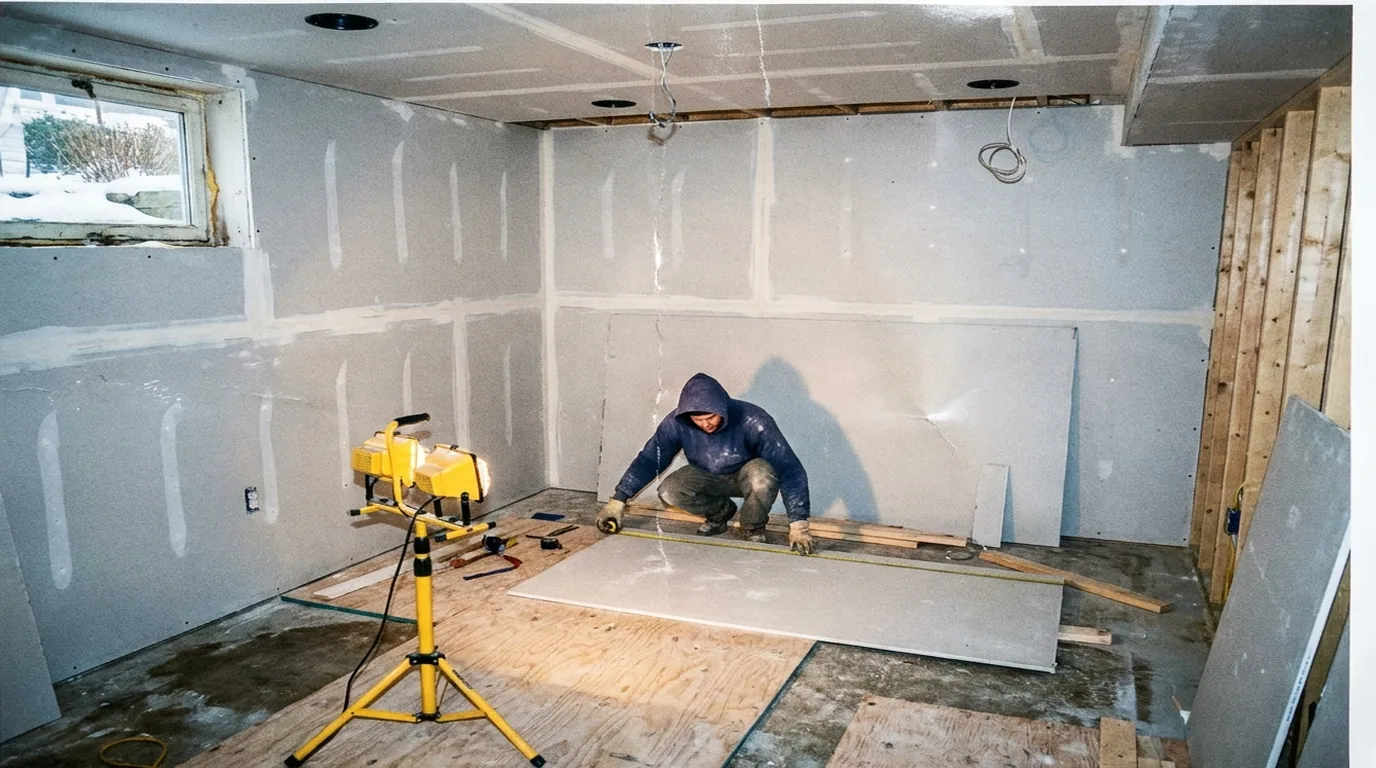
Every October I get the same call. A homeowner in Bay Shore or Huntington wants the basement turned into a family room, maybe a bar, somewhere to put the in-laws and the kids during the holidays, and they want it done before the first string of lights goes up. The intent is good. The timeline they have in their head is usually wrong, because they are thinking about the drywall and the paint, not about what has to happen under the slab and inside the walls first.
A basement on Long Island is not like a basement in Ohio. You are sitting on sandy soil with a water table that can sit a few feet under your footing on the South Shore, you get 40 to 50 freeze-thaw cycles a season that work on any crack in the foundation, and salt air off three sides of this Island finds its way into unsealed concrete and steel lally columns faster than people expect. Finish over a moisture problem you didn't know you had, and by February you are pulling out baseboards that have wicked water for two months.
So before you pick a flooring sample or a paint color, you need an honest look at what your basement actually is right now, and a realistic start date that works backward from Thanksgiving or Christmas instead of forward from "I want it done."
Why Your Start Date Matters More Than Your Finish Date
A basement finish is drywall, framing, electrical, maybe a bathroom, flooring, trim, paint. That part of the job is predictable once it starts, usually four to seven weeks depending on scope and how many trades are stacked. What is not predictable is everything before framing starts, moisture testing, foundation inspection, permit submission and review, and fixing anything the first two turn up. On Long Island that pre-work routinely takes longer than the finish work itself, especially in October and November when every contractor's schedule and every building department's queue fills up at once.
If you want a basement ready for guests by mid-December, you need to be signing a contract by mid-to-late October at the latest. Wait until after Thanksgiving to call, and you are looking at a late winter or spring finish, not because contractors are slow, but because moisture testing, permit review, and material lead times do not compress just because you have a date in mind.
What's Under Your Slab Decides Everything
Long Island basements fall into a few patterns I see constantly. North Shore towns like Huntington and Smithtown tend to sit on better-draining glacial soil, and dry basements are more common. South Shore towns, Babylon, Islip, parts of Southampton, sit closer to sea level with a higher water table and sandier soil that moves water fast when it does show up. I've opened basements in Babylon where the sump pump runs every storm and the homeowner never noticed because the pit was hidden behind a water heater.
Before any framing, I want to know three things, does the slab show efflorescence (that white mineral bloom means water has moved through the concrete at some point), does the perimeter have an active or dormant sump system, and are the lally columns and sill plate showing rust or rot. Any one of those changes the scope and the timeline. A basement that needs interior drainage tile or a new sump pit added isn't a cosmetic job anymore, and that work has to happen before a single stud goes up.
The Permit Reality
Basement finishing generally requires a permit on Long Island because you are adding egress requirements, electrical circuits, and often a bathroom with new plumbing. Most towns, Brookhaven, Islip, Smithtown, Huntington, Babylon, and the Nassau towns, also generally require an egress window if you're calling any room a bedroom, and some apply that standard more broadly. The specifics of what your town requires, how long review takes, and whether your basement needs a variance for ceiling height or egress, aren't something to assume. Call your town's building department directly or have your contractor pull that answer before you sign anything. Skipping the permit to save time is the single most common way I see a basement project turn into a problem at resale, because an unpermitted bathroom or finished space shows up on a home inspection and buyers' attorneys know exactly what to ask for.
Moisture Control Comes Before Drywall, Not After
This is where holiday timelines actually break. If your basement has any history of dampness, even a little musty smell after a nor'easter, you need to deal with it before you frame, not patch around it later. That means confirming grading and gutter discharge outside (a surprising number of "basement leaks" are actually a downspout dumping water four feet from the foundation), checking that any crack in the slab or wall is sealed and monitored, and in some cases installing a vapor barrier and interior drainage before the framing crew ever shows up.
Skip this step because you're in a hurry, and you're finishing over a wall that's going to get wet during the next big coastal storm. Drywall and insulation hold water against a foundation wall instead of letting it dry, which is worse than leaving it exposed. I've been called back to basements finished by other contractors in under three months where the owner was tearing out moldy drywall by February.
A Realistic Week by Week Timeline
- Weeks 1-2: walkthrough, moisture and foundation assessment, design and scope, contract signed
- Weeks 2-4: permit submission and town review, material ordering (egress windows, electrical panel upgrades, and custom trim all have lead times)
- Weeks 4-5: any moisture or drainage correction work, rough framing, rough electrical and plumbing
- Week 6: town rough inspection
- Weeks 6-8: insulation, drywall, taping, and finish electrical
- Weeks 8-9: flooring, trim, paint, final fixtures
- Weeks 9-10: final inspection and punch list
That's about two and a half months from signed contract to finished space, assuming no surprises in the walls and no permit delays. Build in a buffer, because one failed inspection or one supply delay on a window unit pushes everything behind it.
Where This Goes Wrong Every Year
The projects that miss the holiday deadline almost always share the same root cause, the homeowner called in November expecting a December finish, or the moisture problem wasn't caught until framing was already up. The fix for both is the same, start the conversation earlier than you think you need to, and get the honest assessment of the slab and walls before anyone talks about paint colors. If your basement has had any water history, it's also worth getting your attic and envelope checked while the house is already in project mode. A basement that stays dry because of good drainage, paired with an attic that isn't dumping warm, moist air where it shouldn't, keeps the whole house more stable through the freeze-thaw season. See our attic air sealing guide for how that connects.
What We Do
We handle the full scope on Long Island basement finishes, moisture assessment, permit coordination with your town, framing, electrical, and finish work, and we'll tell you straight if your timeline is realistic before you sign anything. If water damage from a past storm is part of what you're dealing with, our insurance restoration team works alongside the finish crew so it's one coordinated job, not two. Check our basement finishing services page for how we scope these, and if you're in East Patchogue we also handle attic insulation as part of whole-house moisture control.
Call (631) 312-7441 or book a free walkthrough.
Frequently Asked Questions
How long does it actually take to finish a basement on Long Island before the holidays?
Once permits are approved and any moisture issues are fixed, the framing-to-finish work usually runs four to seven weeks. The part people underestimate is everything before that, assessment, permit review, and material lead times, which is why starting in October gives you a real shot at a December finish.
Do I need a permit to finish my basement?
Generally yes, because finishing adds electrical circuits, often a bathroom, and in many cases egress requirements. The exact rules and review timeline vary by town, so confirm with your local building department before you plan a start date.
What if my basement has had water in it before, even just once?
That history has to be addressed before framing starts, not worked around. We check grading, gutter discharge, and existing cracks first, and in some cases that means interior drainage or a sump system before any stud goes up.
Can I skip the egress window if I'm not calling it a bedroom?
That depends on your town's code and how the space is used, and it's not something to assume either way. Ask your building department directly, because an egress requirement that gets missed at permit time can stall the whole project.
Will finishing my basement before winter cause problems with freeze-thaw cycles?
The finish itself isn't the risk, finishing over an unresolved moisture or foundation issue is. Long Island gets 40 to 50 freeze-thaw cycles a season that work on existing cracks, so any crack repair should happen before drywall goes up, not after.
Is it too late to start now if I want the basement ready for the holidays?
It depends on how clean your basement is to start with. If there's no moisture history and the scope is straightforward, a contract signed in mid-to-late October can still land before mid-December. Wait until after Thanksgiving and you're more realistically looking at a late winter finish.
Related Guides
- Basement Finishing Services
- Attic Air Sealing on Long Island
- Insurance Restoration Services
- Attic Insulation in East Patchogue, NY
Get a Free Estimate from Alec's Construction
Licensed and insured, working across Nassau and Suffolk County since 2018. We come out, look at the actual job, and put a written number in your hand — no pressure, no obligation.
Or call (631) 312-7441