You noticed the ceiling tile stain two weeks ago. It was the size of a dinner plate, now it's the size of a trash can lid, and the drip bucket in the stockroom needs emptying after every rain. You're telling yourself it can wait until the slow season, because a roof project sounds like a spring decision. On a flat commercial roof in Suffolk County, that's the wrong call, and I've been called in enough times after the first nor'easter to know why.
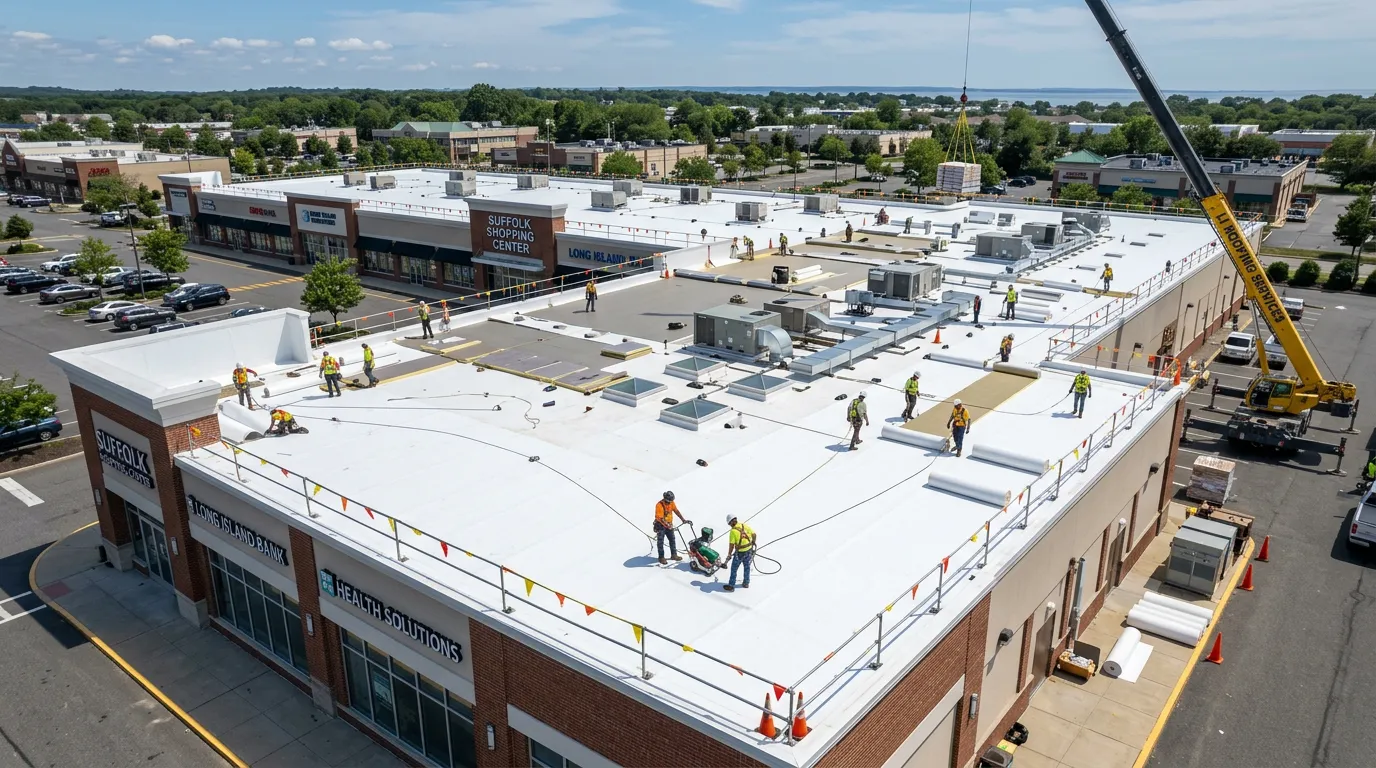
Flat and low-slope commercial roofs don't fail the way a pitched residential roof fails. There's no single missing shingle to blame. What you've got is a membrane, EPDM, TPO, or modified bitumen, lying over insulation board, with seams, flashing, and drains doing all the work of keeping water out. Every one of those components has a failure point, and on Long Island, the fall and winter conditions push on all of them at once.
The cost of waiting isn't abstract. It's wet polyiso insulation losing R-value every day it sits saturated, it's a steel deck starting to rust from underneath where you can't see it, and it's a small membrane split turning into a torn-open seam the first time wind gets under the edge during a coastal storm. None of that gets cheaper by waiting. It gets more invasive, and more of the building has to come apart to fix it right.
Why Your Roof Picked Now to Leak
Flat roofs don't leak randomly. They leak where water collects and where materials move against each other. Ponding water near a low spot or a clogged internal drain sits for days after a storm, and that constant saturation is what blisters a membrane and rots the cover board underneath it long before you see a drip inside. Oak and pine leaf litter is the usual culprit, it packs into scuppers and drain bowls every fall and nobody checks those until water has nowhere to go.
The other driver is thermal movement. Suffolk County runs somewhere around 40 to 50 freeze-thaw cycles in a typical winter, and every one of those cycles expands and contracts the membrane and the metal flashing around parapet walls, HVAC curbs, and pipe penetrations at a different rate. Seams that were fine in August start to pull apart by December. Add salt air coming off the Sound to the north and the Atlantic to the south, and any exposed fastener or flashing on an East Patchogue, Bay Shore, or Southampton building is corroding faster than the same part would inland.
Repair or Full Recover, How That Gets Decided
This is the question every owner asks me first, and the honest answer depends on what's under the membrane, not just what's on top of it. A clean puncture, a single blown seam, or a cracked piece of flashing at a curb is a repair. We isolate the wet insulation, dry or replace that section, reseal the seam or flashing, and you're watertight again in a day or two of actual roof time.
A full recover, tearing off the membrane and sometimes the insulation down to deck, gets triggered by widespread saturation, multiple failure points across the field, or a membrane that's simply aged out. I probe the roof in several spots with a moisture meter before I tell you which one you're looking at. Patching a roof that needs a recover buys you a few months and spends money that doesn't carry forward. Tearing off a roof that only needed a patch is money you didn't need to spend. I'll tell you straight which one it is.
How Fast This Can Actually Get Scheduled
A targeted repair on an active leak is usually a this-week or next-week job once we've seen it, weather permitting. A full recover is a different timeline, material lead time on TPO or EPDM rolls and insulation board, crew availability, and a weather window matter. Membrane adhesives and hot-air welds need a dry deck and a minimum temperature to cure properly, which is why late fall into early winter is the real deadline, not a marketing line. Push a recover into January in Smithtown or Huntington and you're waiting on a stretch of dry, above-freezing days that doesn't come often.
The practical move for most owners facing a leak in October or November is a same-week temporary repair to stop active water intrusion, followed by a scheduled recover before the ground freezes if the roof needs one. That sequence keeps your building dry now without rushing a full tear-off into bad weather.
What a Nor'easter Does to an Already Weak Roof
A roof that's marginal in September can fail outright in a coastal storm. Wind uplift finds every loose seam edge and lifts it further, and the same storm dumps enough rain to turn a slow drip into standing water on your sales floor or server room. I've gone out after nor'easters to parapet flashing that peeled back like a sardine can lid and membrane that tented up off the deck in sheets, on roofs that looked fine from the parking lot a month earlier. If your roof already has a known weak point, that's the failure mode you're racing against every time a storm is tracking up the coast.
Drains, Gutters, and Where the Water Actually Goes
Interior drains and scuppers do the same job on a commercial flat roof that gutters do on a pitched residential roof, they move water off before it sits and does damage. A roof that leaks every time it rains hard but is dry in between usually has a drainage problem more than a membrane problem. Clearing and screening drains before leaf drop finishes is one of the cheapest things you can do this fall, and it's the first thing I check before I ever talk about membrane work.
Insurance, Permits, and the Town's Building Department
If the leak caused interior damage, water-stained ceiling tile, damaged inventory, or electrical issues, that's often a conversation for your insurance restoration coverage, not just a roofing invoice. Document the damage with photos and dates as soon as you see it, before any repair work starts.
Permit requirements for commercial roof work vary by municipality. Brookhaven, Islip, Babylon, and the Nassau towns generally require a permit for a full recover or tear-off, and some have specific rules for flat roof assemblies and fire ratings on commercial buildings. A small, isolated repair can sometimes fall outside that requirement. Confirm the specifics with your town's building department before work starts, don't assume based on what a neighboring town requires.
What We Do
Alec's Construction inspects the roof, tells you straight whether you need a repair or a full recover, and gets active leaks stopped fast while a bigger job, if there is one, gets scheduled around real weather windows instead of guesswork.
Call (631) 312-7441 or book a free walkthrough before the next storm finds the weak spot for you.
Frequently Asked Questions
How do I know if my flat roof needs a repair or a full recover?
It depends on how widespread the moisture is under the membrane, not just where you see the leak inside. A contractor should probe several spots with a moisture meter to check if the insulation is saturated in one area or across the field before recommending either option.
Can a flat roof repair really be done in a day or two?
An isolated leak from a single blown seam, puncture, or damaged flashing section can often be dried out and resealed in one to two days of actual roof work, weather permitting. Multiple failure points or widespread saturation take longer and may point toward a recover instead.
Why does my roof leak more after a nor'easter than during regular rain?
Wind uplift during a coastal storm can lift an already weakened seam edge further, and the storm dumps more water faster than your drains and scuppers can move it, which exposes weak points that hold up fine during a normal rain.
Does clogged leaf debris actually cause roof leaks?
Yes. Oak and pine leaf litter packs into internal drains and scuppers every fall, and when water can't drain, it ponds and sits against the membrane for days, which is one of the most common causes of blistering and seam failure on Long Island flat roofs.
Is there a deadline for getting a commercial roof recover done before winter?
Membrane adhesives and seam welds need a dry deck and a minimum temperature to cure properly, so late fall is the practical cutoff in most years. Waiting into deep winter means waiting on scarce dry, above-freezing days to do the work right.
Do I need a permit to repair or replace a commercial flat roof in Suffolk County?
Requirements vary by town, and a full tear-off or recover generally needs a permit while a small isolated repair sometimes does not. Confirm the specifics with your town's building department before scheduling, since the rules differ from one municipality to the next.
Related Guides
Get a Free Estimate from Alec's Construction
Licensed and insured, working across Nassau and Suffolk County since 2018. We come out, look at the actual job, and put a written number in your hand — no pressure, no obligation.
Or call (631) 312-7441