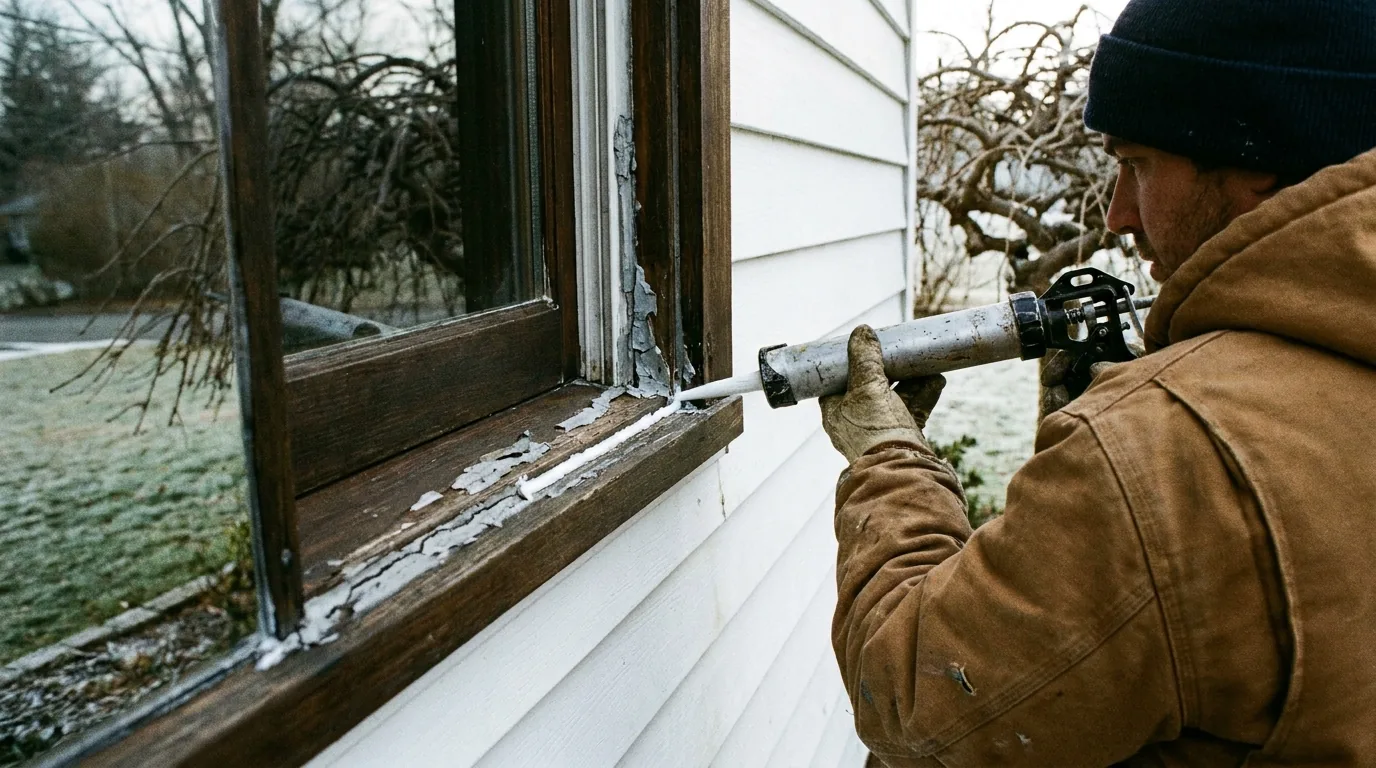
You feel it every time you walk past the front door in November, that thin line of cold air running up one side of the jamb, or the draft pooling around your ankles at the threshold no matter how high the thermostat is set. Before you grab a tube of caulk or call someone to swap the whole unit, you need to know which problem you actually have, because they cost completely different things to fix and one of them gets worse every winter you ignore it.
I've pulled enough doors off Long Island houses to know the pattern. A door that was installed tight in 2015 can be leaking like a screen door by year eight, not because the door failed, but because the house around it moved. We get roughly 40 to 50 freeze-thaw cycles a season out here, and every one of those cycles flexes the framing, the sill, and whatever shims are holding the jamb square. Add salt air coming off three sides of the Island and you get corrosion on hinge pins, strike plates, and the little compression springs inside weatherstripping that nobody thinks about until they stop working.
The decision between weatherstripping and replacement isn't about how old the door looks. It's about whether the problem is at the surface or in the structure behind it. Here's how I walk a homeowner through that before the first nor'easter of the season.
Where the Cold Air Is Actually Coming From
Most "my door leaks" calls aren't about the door panel at all. Run your hand around the perimeter on a windy day. If the draft is concentrated at specific points, the weatherstripping gasket, the sweep at the bottom, a gap where the deadbolt strike meets the jamb, that's wear and tear. Vinyl and foam weatherstripping breaks down from UV and salt exposure in five to eight years on an east- or south-facing entry here, faster than it would inland.
If instead you feel air moving along the entire perimeter at once, or you can see daylight between the door and the frame when it's closed and locked, the door isn't sealing against the frame the way it was built to. That's a fit problem, not a gasket problem, and new weatherstripping won't fix it because there's nothing solid for it to compress against.
When Weatherstripping Is the Right Fix
If the frame is square, the door closes with even resistance all the way around, and the leak is isolated to cracked or flattened gasket material, you're in the cheap and fast category. I replace the compression seal around the jamb, swap the door sweep at the bottom, and check the threshold cap for wear. On a lot of Long Island entries, especially anything facing the water or open exposure, I'll also add a storm door or at minimum reseal the exterior casing with a paintable, UV-stable sealant, because straight caulk breaks down fast out here.
This is the right call when the door itself still closes flush, latches without you having to lift or shoulder it, and the hardware isn't rusted through. Weatherstripping is maintenance. It buys you years, not decades, but it's the correct first move when the bones of the install are sound.
When the Door Itself Has to Go
Replacement becomes the real answer when the leak is coming from the structure, not the gasket. Signs I look for on a walkthrough: the door drags on the floor or sticks in summer humidity and gaps in winter cold, which means the frame has racked out of square. Daylight visible around the hinge side even with the door latched. A sill that's soft or spongy when you press on it, which usually means water has been getting past the threshold for a while and the subsill or header below it is starting to rot.
Sandy soil and a high water table, especially south of Sunrise Highway in towns like Babylon, Islip, and parts of Brookhaven, mean foundations and sills see more moisture movement than homes further north. That movement telegraphs up into door and window openings over time. If your entry faces prevailing wind off the Sound or the ocean, salt-laden moisture accelerates corrosion on steel door cores and hardware faster than a catalog spec sheet accounts for. When I see rust bleeding through paint on a steel slab, or the foam core feels soft when you tap it, that door isn't making it through another winter of nor'easters without getting worse.
Why Long Island Doors Fail Faster Than the Manual Says
Manufacturer warranties are written for average conditions, and nothing about our exposure is average. Forty to fifty freeze-thaw cycles work screws loose in jambs and open hairline gaps around trim that weren't there in October. Wind-driven rain during a nor'easter gets pushed sideways into any gap, not just straight down, so a threshold that's fine in a normal rainstorm can still take on water in a coastal storm. And if your house has mature oak or pine overhead, clogged gutters dumping water near the entry during leaf season adds another moisture source right where you're already fighting air infiltration. If you haven't had gutters cleaned since Labor Day, that's worth doing before you finalize any door work, since runoff hitting the threshold undoes a sealing job fast.
What a Proper Install Looks Like
A replacement door is only as good as the flashing and air sealing behind it. I install a sill pan flashing under every new exterior door regardless of brand, because that's the detail that actually stops water intrusion at the one spot every door eventually leaks from. The gap between the new jamb and the rough framing gets filled with low-expansion foam, not just stuffed with fiberglass, so you're sealing air movement and not just insulating it. If the opening itself has settled or racked, that gets corrected before the new unit goes in, or you'll be back to the same leak in a few years. This is also a good moment to check whether the air leak you're chasing is even bigger upstream, we often find the same rim joist and top plate gaps near entry doors during an attic air sealing visit, since both problems come from the same uncontrolled air paths.
Permits and What Your Town Actually Requires
Swapping a door in the same opening, same size, generally doesn't trigger a permit on Long Island, but that's a town-by-town call and I've been wrong assuming otherwise more than once. If you're widening the opening, changing from a swing to a slider, or the house is in a flood zone overlay near the South Shore, towns including Smithtown, Huntington, and Southampton can have different requirements. Confirm with your specific town's building department before work starts, not after, because an after-the-fact permit costs more in time than it would have up front.
What We Do
We'll walk the door with you, tell you straight whether it's a weatherstripping job or a replacement, and if it's the latter, we handle the sill pan flashing, air sealing, and trim work the right way the first time, along with siding repair around the opening if salt air or old caulk has taken a toll on the casing.
Call (631) 312-7441 or book a free walkthrough.
Frequently Asked Questions
Can I just add weatherstripping myself before winter, or do I need a contractor?
If the door still closes flush and the frame is square, DIY weatherstripping kits work fine and most homeowners can handle it in an afternoon. The issue comes when the leak is actually a frame or sill problem, in which case new weatherstripping just delays finding that out until the cold sets in.
How do I know if the leak is the door or the whole opening?
Check whether the door latches easily and closes with even pressure all the way around. If it drags, needs to be lifted to latch, or shows daylight on one side when closed, the opening itself has shifted and weatherstripping alone won't solve it.
Does salt air really affect how long a door lasts on Long Island?
Yes, especially on steel-core doors and exposed hardware facing the water or open wind. Salt accelerates corrosion on hinges, strike plates, and steel slabs well ahead of what a manufacturer's general warranty assumes.
Will a storm door help with the draft I'm feeling?
A storm door reduces wind-driven air hitting the primary door directly and can help on exposed entries, but it won't fix a frame that's out of square or a worn seal. Think of it as an added buffer, not a substitute for fixing the actual leak.
Do I need a permit to replace an exterior door?
Generally not if you're keeping the same size opening, but this varies by town and by whether your property falls in a flood zone overlay. Check with your town's building department before scheduling the work.
How long does a door replacement take once it's scheduled?
A single exterior door swap with proper flashing and trim work is usually a one-day job once the new unit is on site. Lead time on ordering the door itself is often the longer wait, especially heading into the busy fall season.
Related Guides
- Attic Air Sealing Long Island
- Siding Services
- Attic Insulation Babylon NY
- Insurance Restoration Services
Get a Free Estimate from Alec's Construction
Licensed and insured, working across Suffolk County since 2018. We come out, look at the actual job, and put a written number in your hand — no pressure, no obligation.
Or call (631) 312-7441