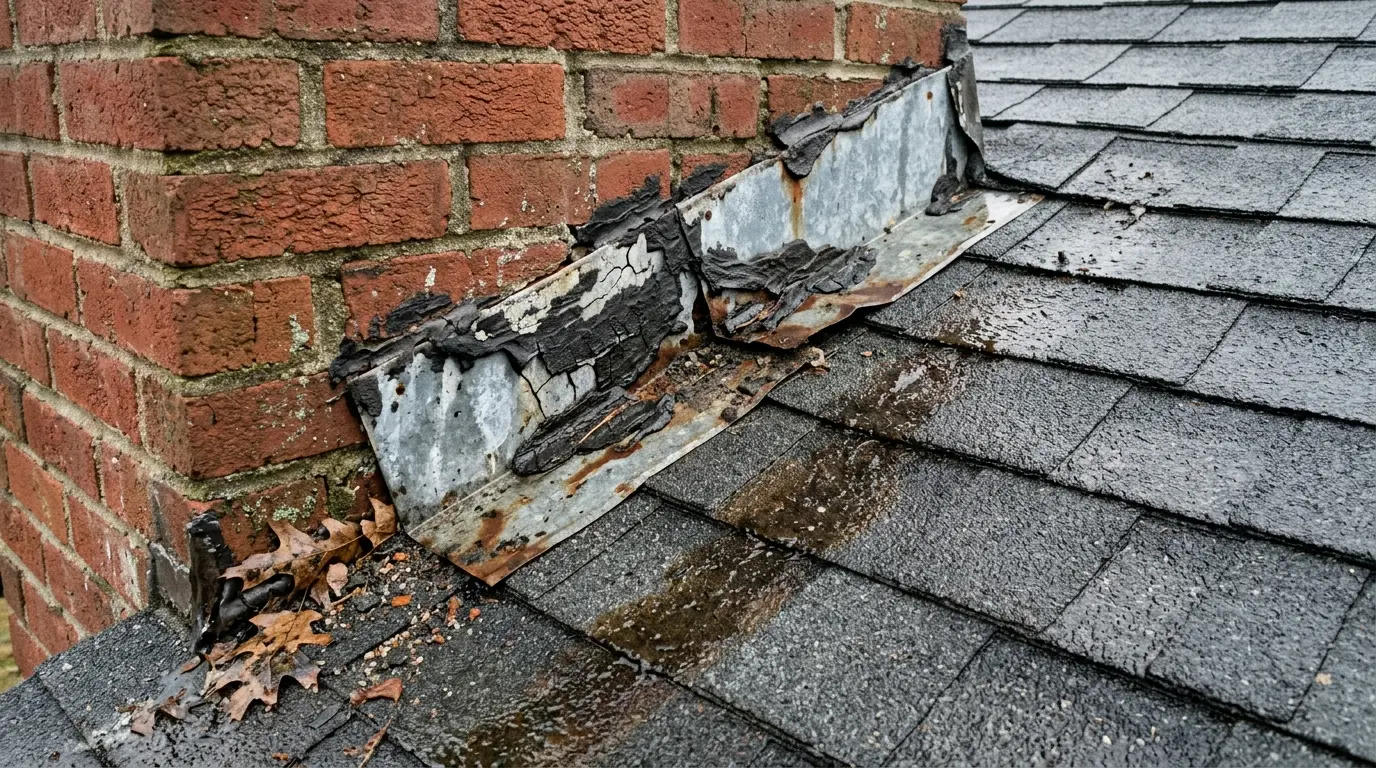
You open the mailbox and it's not a bill, it's a notice from your insurance carrier. Non-renewal, effective in 30 to 60 days, or a premium increase that doesn't match anything that actually happened on your property this year. Read the reason line and it says the same thing almost every time right now: roof age. Not storm damage, not a claim, just age.
This has become routine on Long Island over the past few years. Carriers got burned by payouts after Sandy, Isaias, and a string of nor'easters that tore into roofs already weakened by decades of freeze-thaw and salt air. Most of the major carriers writing in Nassau and Suffolk now run aerial imagery and drone scans on every policy at renewal, and a roof that scores as worn, regardless of whether it's actively leaking, gets flagged. You get a letter instead of a quote.
The question in front of you isn't whether the letter is fair. It's whether you can keep the coverage with documentation, or whether you're better off spending the money to replace the roof before winter instead of shopping for a non-standard carrier that'll charge you more to cover the same tired roof anyway.
Why Insurers Are Targeting Roof Age Now
Every major carrier writing property insurance on Long Island, Allstate, Liberty Mutual, Travelers, the regional names like Tower Hill and Mercury, now runs third-party aerial and satellite imagery analysis on renewal. Companies that sell this data to underwriters flag shingle wear, granule loss, moss, and visible patching from above, cross-reference it against permit history, and kick out a risk score. If that score crosses a threshold, a human doesn't even look at it before the non-renewal letter goes out.
This isn't unique to Long Island, but the exposure here makes it worse. Carriers that took heavy coastal wind and water losses over the last decade have gotten aggressive about underwriting anything within a few miles of the shoreline, which on this Island is most of it.
What "Old" Means to an Insurer Here
Most carriers set a soft threshold around 15 to 18 years on asphalt shingle roofs and a hard cutoff somewhere around 20 to 25, after which they generally won't write or renew a policy regardless of condition. A few will go further for architectural shingle with no claims history, but that's the exception.
Calendar age isn't the whole story. Underwriters increasingly ask for effective age, meaning actual wear versus years on the roof. A 12-year-old roof that took wind damage and was never properly repaired can score worse than a well-maintained 16-year-old roof. On Long Island, effective age runs ahead of the calendar fast. You're getting 40 to 50 freeze-thaw cycles a season, salt air working the shingles on whatever elevation faces the water, and oak and pine litter holding moisture against the surface through fall and winter. A roof here wears faster than the same roof would 100 miles inland.
What a Certification Letter Actually Requires
A roof certification letter is the one tool that can save your policy without a full replacement, but it only works within limits. The letter has to come from a licensed, insured roofing contractor, not a handyman and not the homeowner, and it has to state a remaining useful life, usually a minimum of three to five years, in writing. Carriers want specifics, not a one-line opinion: shingle material and manufacture date where known, condition of flashing at every penetration and valley, state of the decking underneath where visible, and photo documentation from the ground and from the roof surface itself.
Some carriers provide their own certification form and will only accept that exact document. Others want the inspection done by a licensed engineer rather than a contractor once the roof crosses a certain age. Before paying anyone to climb up there, call the carrier or your broker and ask exactly what format they require, because a letter that doesn't match their template gets rejected and you've burned the inspection for nothing. Our insurance restoration team handles this paperwork constantly and can tell you up front whether your roof is a realistic certification candidate before we send anyone up a ladder.
When a Letter Won't Save You
A certification letter can't fix a roof that's past saving. If there's a second or third layer of shingles underneath the top layer, if the decking flexes or feels soft anywhere when walked, if granule loss is uniform and heavy rather than patchy, or if the roof is past the carrier's hard age cutoff regardless of condition, no letter changes the underwriting decision. We've written honest letters that bought a roof an extra renewal cycle. We've also had to tell homeowners the letter would be a waste of money because the roof simply won't pass, and that's worth knowing before spending on an inspection instead of a tear-off.
Replacement or Non-Standard Coverage: What Actually Decides It
Once a letter is off the table, the real decision is between replacing the roof now and accepting whatever coverage is left, usually the state's FAIR Plan or a surplus lines carrier that'll write almost anyone at a steep price. Neither is cheap, and neither covers as much as a standard homeowner's policy.
Run the comparison honestly instead of guessing. A non-standard policy's premium gap over just two or three years frequently closes most of the distance to what a new roof costs, and that's before accounting for the fact that you still own an old roof that'll need replacing anyway. What actually drives the cost on the roof side: how many layers have to come off, how much decking underneath is compromised and needs replacing rather than just re-covering, the pitch and how much staging the crew needs, and whether you're matching existing gutters and flashing or upgrading those at the same time. None of that shows up until a contractor is actually on the roof, which is why we walk every job before quoting instead of pricing off a photo.
If your mortgage requires standard hazard coverage, which most do, dropping to FAIR Plan coverage can also trigger a lender notice, so factor that into the timeline before deciding to ride out the old roof another winter.
What a New Roof Buys You Beyond the Policy
A full replacement isn't just an insurance fix. It's the natural point to also address attic ventilation and insulation gaps that have quietly been costing you on heating bills, since a lot of the moss and granule wear we see up there traces back to poor airflow under the deck, not just age. If your attic hasn't been touched since the roof went on, this is the time to look at it. Our guide to attic air sealing covers what that overlap looks like before we're up there.
A new roof also resets your renewal cycle, gets you a transferable manufacturer warranty if you're thinking about selling in the next decade, and puts the strongest wind-rated material available on the house instead of leaving it as a maybe, which matters more here than almost anywhere else in the state.
What We Do
We handle the entire path from the insurer's letter to a finished roof: reading the carrier's exact certification requirements, telling you straight whether your roof will pass one, writing the documentation when it will, and quoting a full roofing replacement when it won't, all under one inspection instead of three separate visits from three separate companies.
Call (631) 312-7441 or book a free walkthrough and we'll tell you which side of that letter your roof is actually on.
Frequently Asked Questions
Why would my insurer drop me over roof age if there's no leak or active damage?
Most carriers now score every roof on renewal using aerial and satellite imagery rather than waiting for a claim or an inspector visit. That software flags wear, granule loss, and patching patterns from above and assigns a risk score, and a roof that crosses the threshold triggers a non-renewal or rate hike letter automatically, before any human looks at it. The absence of a leak doesn't factor into that score the way you'd expect.
How old does a roof have to be before Long Island insurers flag it?
Most carriers set a soft threshold around 15 to 18 years on asphalt shingle roofs and a hard cutoff around 20 to 25 years, after which they generally won't write or renew a policy regardless of condition. The exact number varies by carrier and by shingle type, so the cutoff on your letter may not match a neighbor's. Effective age, meaning actual wear versus years installed, matters as much as the calendar date.
What does a roof certification letter actually need to include?
It needs to come from a licensed, insured roofing contractor and state a remaining useful life, typically a minimum of three to five years, backed by specifics rather than an opinion. That means shingle material and condition, the state of flashing at every valley and penetration, visible decking condition, and photo documentation. Some carriers require their own specific form, so it's worth confirming the exact format before paying for the inspection.
Will a certification letter work if my roof already has two layers of shingles?
Generally no. Multiple layers, soft or flexing decking, or heavy uniform granule loss are the kinds of underlying conditions that make a roof uncertifiable no matter how it's written up, because the carrier is underwriting the actual risk, not the paperwork. In that situation the letter is usually a wasted inspection fee, and replacement becomes the only path to keeping standard coverage.
What happens if I just let the policy lapse and move to the state FAIR Plan instead?
FAIR Plan and surplus lines coverage will generally insure an older roof that a standard carrier won't, but at a higher premium and with narrower coverage. If you carry a mortgage, most lenders require standard hazard coverage, so a move to FAIR Plan can trigger a lender notice. Over just a couple of years the premium gap often closes a large part of the distance to what replacing the roof would have cost.
Does replacing the roof guarantee my premium drops back down?
Not automatically, and it's not guaranteed to go back to its old level, but it removes the non-renewal risk tied to roof age and often qualifies you for a wind-rated material discount depending on the carrier. You should still shop the policy once the new roof is documented, since not every carrier reprices existing customers the same way a new quote would.
Related Guides
- Roofing Services on Long Island
- Insurance Restoration Services
- Gutter Installation & Repair
- Attic Air Sealing on Long Island
Get a Free Estimate from Alec's Construction
Licensed and insured, working across Nassau and Suffolk County since 2018. We come out, look at the actual job, and put a written number in your hand — no pressure, no obligation.
Or call (631) 312-7441