You're three weeks from listing and the painter you called back in July still hasn't shown up. Now it's late October, nights are dropping into the 40s, and you're staring at chalky siding on the south wall and a front door that looks tired in every listing photo your agent mocked up. The real question isn't whether painting matters before you sell. It's which painting matters, because not every coat you put on a house before listing it earns its money back.
I've walked a lot of listings across Brookhaven, Islip, Smithtown, Huntington, Babylon, and Southampton in the fall, and the pattern repeats every time. Sellers spend money repainting rooms that were never going to be a problem, and they skip the exterior work that a home inspector is about to put in writing for the buyer's attorney. Paint on Long Island doesn't fail the way it does inland. You've got salt air pushing in off three sides of the Island, 40 to 50 freeze-thaw cycles a season working every joint and nail head, and nor'easters that drive wind-blown rain sideways into any gap in the film. A paint job that looked fine in September can be lifting by Thanksgiving if the surface underneath it was already compromised.
Before you hand a painter a blank check, figure out which surfaces are cosmetic and which ones are a maintenance problem wearing a fresh coat as a disguise. That distinction is what decides whether this spend shows up as resale value or just disappears into your closing costs.
What Actually Moves a Buyer's Offer
Buyers and their agents don't score a house line by line on who painted what. They react to two things walking through the door: does it feel cared for, and does the inspection report come back clean. Interior paint in neutral tones in the rooms a buyer actually lingers in, the kitchen, the primary bedroom, the main living space, changes how long they stand there and how they picture themselves in it. That's staging, and staging works.
But a freshly painted exterior over rotted trim doesn't fool an inspector running a moisture meter. On the South Shore, where the water table sits high in towns like Babylon and parts of Islip, moisture at the sill plate and the lowest siding course is common enough that inspectors check for it out of habit. A perfect paint job over a soft sill will get flagged, and now you're negotiating a credit instead of showing off a clean inspection.
Exterior Paint: The Nor'easter and Salt-Air Math
Three-sided salt exposure means exterior paint on Long Island loses years compared to the same product used inland. Salt works into hairline cracks in the film and corrodes the fastener heads underneath, so you get rust bleed-through before you get general fading. South and west elevations take the worst of it from UV and wind-driven rain during a nor'easter, so check those walls first.
Here's the test I use on a walkthrough. If the paint is chalking, meaning it rubs off as a dusty film on your hand, that's weathering and a repaint solves it. If the paint is lifting in sheets, bubbling, or the siding underneath is cupped or soft when you press on it, paint isn't the fix. That's a substrate problem, and painting over it just buys you a callback from the new owner's inspector six months later. If you're seeing that on more than a wall or two, get a siding assessment before you spend on paint at all.
Interior Paint: Where Buyers Actually Look
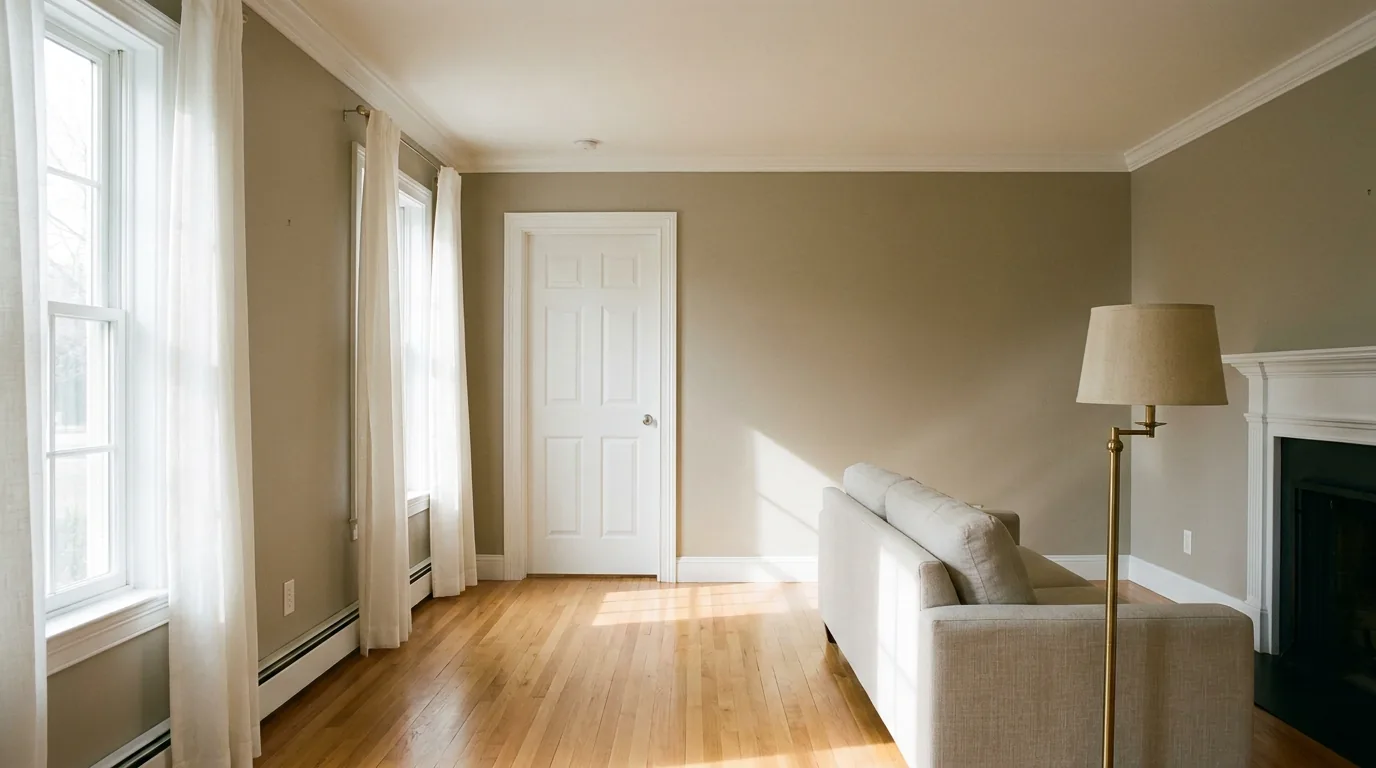
Kitchens, bathrooms, and the main living space carry the most weight per square foot of paint. A scuffed hallway matters less than a dated or stained kitchen wall in the listing photos. Stick to light neutrals, buyers can't picture their own furniture in a room painted a strong accent color, and that hesitation costs you showings.
One thing I always check before a client paints ceilings to cover a stain: a brown ring on a bedroom or bathroom ceiling is almost never just a cosmetic issue. It's usually a sign of a slow leak from the roof plane above it, and painting over it without finding the source means the stain comes back through the new paint within a season, right in front of a buyer who already has the inspection report in hand. If you've got ceiling staining anywhere in the house, get the roofing above it checked before you touch a brush to it.
Trim, Soffit, and Fascia Nobody Budgets For
This is the category that eats pre-sale painting budgets. Fascia boards behind gutters that overflow during a heavy nor'easter take on standing moisture that paint can't stop, and soffits near valleys and overhangs show the first signs of rot long before siding does. If your gutters have been overflowing at the corners or pulling away from the fascia, painting that trim is cosmetic theater. Get the gutters sorted first so the new paint has a dry surface to bond to and actually holds through winter.
What a Home Inspector Will Flag Before Paint Color Ever Comes Up
Inspectors don't care what color your trim is. They care about moisture intrusion, structural movement, and anything that signals deferred maintenance. A chimney chase with flaking paint over a visible crack in the crown is a classic one, buyers' inspectors photograph that every time, and a quick coat of paint over it just makes it look like you tried to hide something. If there's any cracking or separation under chipped paint around the chimney, handle the chimney repair first, then paint it once, correctly.
The same logic applies to window sills and door thresholds. If the wood is soft or the paint is peeling down to bare wood in sheets rather than a slow fade, that's water getting underneath the finish, not a cosmetic issue a new coat resolves.
Timing It Before Winter on Long Island
Latex exterior paint needs sustained temperatures above roughly 50 degrees for several days to cure properly, both during application and the curing window after. On Long Island, that window closes fast once you get into November, especially with an early nor'easter pushing damp, cold air in off the water. If you're planning exterior work, get it scheduled and done well before Thanksgiving, not squeezed in during a warm afternoon in December. A coat applied in marginal temperatures won't cure right and will show it, peeling or chalking prematurely right when a buyer is walking the property in early spring.
Interior painting has no weather deadline, but if you're listing before the holidays, give yourself at least a few days of dry time with windows cracked for ventilation before showings start.
What We Do
Before we recommend a repaint for a listing, we walk the exterior and flag anything that's a maintenance item hiding under old paint, soft trim, chimney chase cracking, gutter-driven fascia rot, roof leaks behind a ceiling stain, so you're not paying for paint over a problem the buyer's inspector will find anyway.
Call (631) 312-7441 or book a free walkthrough.
Frequently Asked Questions
Does painting the whole exterior before listing actually raise my sale price on Long Island?
It helps if the existing paint is faded or chalking, since curb appeal drives first impressions and listing photos. It won't help if the paint is lifting off soft trim, rotted siding, or a cracked chimney chase, because the buyer's inspector will find that regardless of the fresh coat. Fix the substrate issue first, then paint.
Should I repaint the whole interior or just the main rooms before listing?
Focus on the kitchen, bathrooms, and main living areas in light neutral tones, since those are the rooms buyers linger in during a showing. Bedrooms and hallways in decent condition rarely move the needle enough to justify the spend before a sale.
Why does exterior paint fail faster on Long Island than other places?
Salt air coming off the water on three sides of the Island accelerates fastener corrosion and works into hairline cracks in the paint film. On top of that, 40 to 50 freeze-thaw cycles a season stress every joint, and nor'easters drive wind-blown rain into any gap, so the same paint product simply doesn't last as long here as it would further inland.
Is it too late in the fall to paint the exterior before I list my house?
Latex exterior paint needs sustained temperatures above roughly 50 degrees for several days to cure properly, so you want exterior work finished well before Thanksgiving. Interior painting has no weather cutoff and can be done right up to your listing date.
A home inspector flagged peeling paint on my trim, does that mean I need all new trim?
Not necessarily. If the wood underneath is sound and dry, a scrape and repaint usually resolves it. If the trim is soft, cupped, or separating when you press on it, that's rot from trapped moisture, often tied to gutter overflow or a roof leak above it, and painting over it won't satisfy a re-inspection.
Will a realtor or appraiser actually give me credit for a fresh paint job?
Appraisers weigh condition broadly rather than line-iteming paint specifically, but a well-maintained exterior and neutral, fresh interior paint support a higher condition rating and faster offers. The bigger financial risk is skipping a paint job that's masking rot or a leak, since that shows up as a credit demand during negotiation instead.
Related Guides
- Siding Repair and Replacement Guide
- Gutter Repair and Replacement Guide
- Chimney Repair Guide
- Roofing Services Guide
Get a Free Estimate from Alec's Construction
Licensed and insured, working across Nassau and Suffolk County since 2018. We come out, look at the actual job, and put a written number in your hand — no pressure, no obligation.
Or call (631) 312-7441