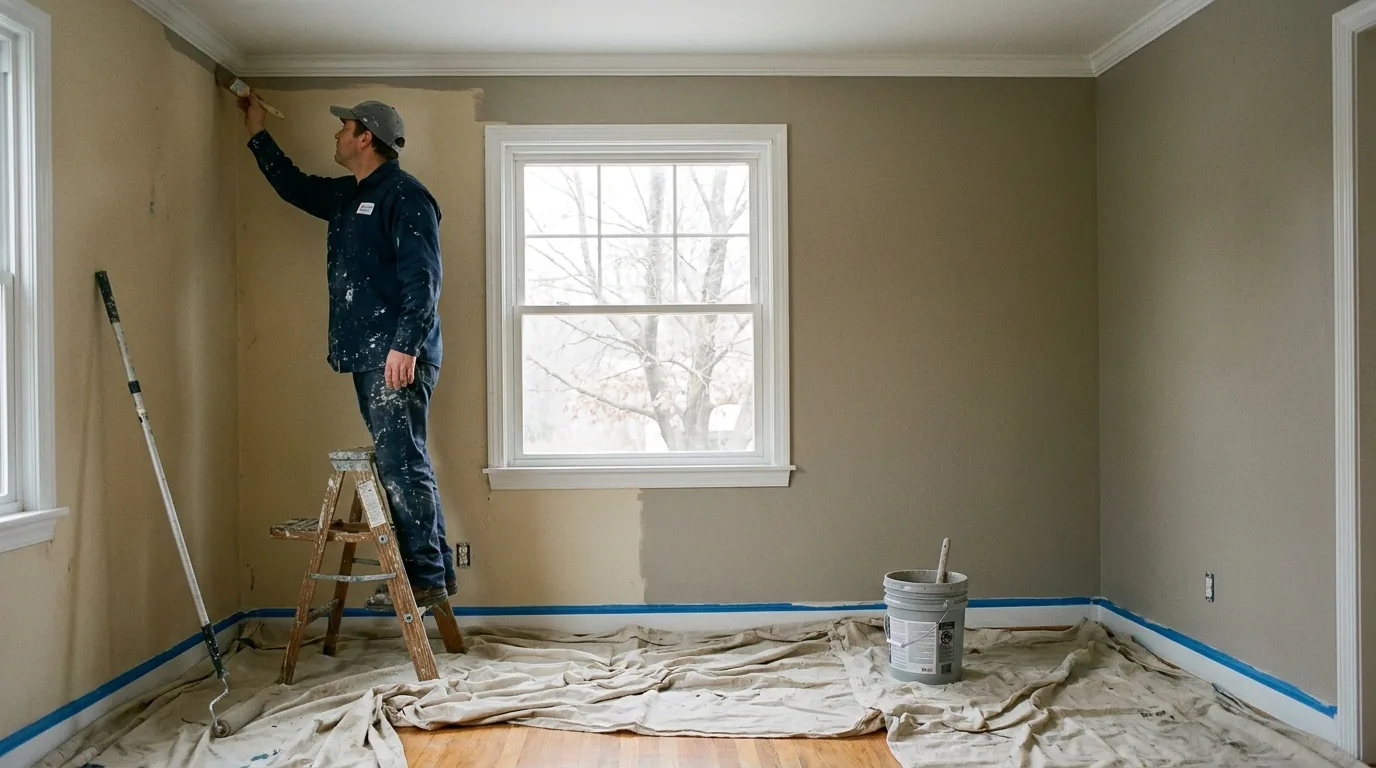
Every fall I get the same call around the second week of October. A homeowner looked at chalky, peeling paint on their cedar shake or clapboard all summer, kept putting it off, and now the leaves are coming down and they want to know if there's still time to get it painted before winter sets in. The honest answer is usually yes, but the window is shorter than most people think, and it closes based on temperature, not the calendar on your wall.
Paint doesn't dry the way people assume. It cures, which is a chemical process, and that process slows down and eventually stops as the temperature drops. Push a paint job into weather that's too cold and you don't get a job that just takes longer to dry, you get a film that never fully forms, cracks on the first hard freeze, and has to be stripped and redone in spring. I've seen it happen to homeowners who hired someone willing to paint in November because he needed the work, and I've had to be the contractor who comes back in April to scrape off what never bonded.
On Long Island specifically, this isn't a minor concern. Between the temperature swings, the salt air coming off the Sound and the Atlantic, and the moisture that rolls through ahead of every nor'easter, fall paint jobs have less margin for error here than almost anywhere else in the Northeast.
The Real Cutoff Isn't the Calendar, It's the Thermometer
Most exterior paints, latex and oil both, need the air temperature and the surface temperature to stay above 50°F for the paint to cure correctly, and some premium exterior formulas are rated down to 35°F or 40°F if you read the can closely. The number that matters isn't the daytime high, it's the overnight low for the next 24 to 48 hours after application. If you paint at 2pm when it's 58°F and the temperature drops into the low 40s overnight, the film can skin over on the surface while staying soft underneath, and that uncured layer is what cracks and peels the following spring.
On Long Island, that overnight low usually starts dropping below the safe range in mid to late November, but I've had years where a cold snap hit the first week of November and years where we painted comfortably into early December. There's no fixed date. You watch the ten-day forecast, you check both the daytime and nighttime numbers, and you build in a buffer because forecasts past five days are a guess.
Why Long Island's Fall Is Trickier Than a Weather App Suggests
Long Island gets somewhere around 40 to 50 freeze-thaw cycles a season, and a chunk of those start showing up in November, which means the swing between a sunny afternoon and a clear night can be 25 or 30 degrees. That swing matters more than the average temperature. A south-facing wall in Huntington or Smithtown might read 65°F in full sun at 1pm, which feels safe, but if that same wall drops to 38°F by 10pm, the paint hasn't had the thermal stability it needs to cure.
Humidity is the other piece people underestimate. Being surrounded by water on three sides means Long Island holds moisture in the air longer into fall than inland areas do, and damp air slows curing even when the temperature itself is fine. Add a nor'easter rolling through, which brings both a temperature drop and days of damp air behind it, and you can lose a usable painting window overnight. I plan around the storm track as much as the thermometer this time of year.
What Happens When Paint Cures Too Cold
A coat applied too late doesn't just look a little rough, it fails in specific, predictable ways:
- Blistering and cracking on the first hard freeze, because the film never fully cross-linked
- Poor adhesion, where the paint peels off in sheets rather than wearing down gradually
- Flat, chalky color that never develops full sheen because the resins didn't bind
- Lap marks and visible brush strokes that won't level out
- Mildew trapped under the film from moisture that got sealed in before the surface dried
Every one of these means stripping the wall back down and starting over, which ends up costing more than if you'd just waited for spring in the first place. I'd rather tell a homeowner in late October that we're out of window than take the job and hand them a problem in April.
Surface Prep Matters More in Fall Than Any Other Season
Paint failure in cold weather almost always traces back to moisture in the substrate, not just the air. Wood siding that spent the summer absorbing humidity needs real time to dry out before primer goes on, and in fall that drying happens slower because the sun angle is lower and the days are shorter. If leaves from your oaks or pines are piled against the base of the house, or packed into gutters and splashing water back onto the siding, that section of wall stays wet longer than the rest of the house, and paint applied over it fails first, usually right at the bottom courses. Clear that leaf load and confirm your gutters are actually carrying water away before any paint goes on, not after. If gutters are the reason the siding stays wet, gutter repair needs to happen first, not alongside the paint job.
If the siding itself is cracked, delaminated, or has rot hiding under old paint, no amount of good weather will make a new coat hold. Siding repair has to happen before painting, not after, because paint over rotten wood just hides the problem until it's worse and more expensive to fix.
Oil vs Latex: Which Holds Up to a Late-Season Schedule
Latex is what I use on most Long Island exterior jobs because it flexes with temperature swings better than oil once it's cured, but it's also less forgiving of marginal cold, it wants that 50-and-rising window more strictly. Oil-based paint tolerates slightly cooler application but takes much longer to cure fully, sometimes weeks, which means it can stay exposed to the next freeze before it's actually hardened even if it feels dry to the touch in a couple of days. For a late-fall job, I lean toward a latex formulated for cooler application. The better manufacturers make one rated down into the high 30s, which beats switching to oil just because the calendar says November.
Salt Air and the Three-Sided Exposure Problem
Houses near the Sound in Huntington or Smithtown, near the bays in Babylon or Islip, or anywhere close to the ocean in Southampton deal with salt in the air settling on siding and trim constantly. Salt residue left on a surface before painting interferes with adhesion the same way dust or chalk does, so proper fall prep includes a real wash down, not a quick rinse, especially after a summer of onshore wind. Combine that with a nor'easter's wind-driven rain finding every gap in flashing and trim, and you want the paint film fully cured before that first big storm hits, because wet weather on a soft film does far more damage than the same storm on a film that's already hardened.
Realistic Scheduling Window for Long Island Homeowners
In a normal year, I book exterior paint jobs across Brookhaven, Islip, Smithtown, Huntington, and Babylon through late October, with early November still workable if the ten-day forecast cooperates and the house gets morning sun to burn off dew before we start. By mid-November I'm telling most homeowners to wait for spring unless we get an unusual stretch of mild weather, because the risk of a cold snap undoing the work outweighs getting it done a couple months early.
Permit requirements for exterior painting are generally minimal to nonexistent across Nassau and Suffolk towns since it's not structural work, but if the job involves scaffolding setbacks or the house is in a historic district, confirm with your local building department before locking in a schedule, since that can affect timing too.
If you're not sure whether your siding and location still have a window this year, that's a five-minute phone call, not a guess.
What We Do
We handle exterior painting across Nassau and Suffolk, and in fall that means checking the ten-day forecast, the surface moisture, and the condition of the siding and gutters before we commit to a schedule, not after. If the weather's against it, we'll tell you straight that spring is the better call rather than rush a coat that won't hold.
Call us at (631) 312-7441 or book a free walkthrough.
Frequently Asked Questions
How late in the fall can you still paint the exterior of a house on Long Island?
It depends on the ten-day forecast more than the date on the calendar. As long as daytime highs stay above 50°F and overnight lows aren't dropping into the high 30s or lower for at least 24 to 48 hours after application, you're usually still in a workable window. Most years that holds through late October and often into early November, but a cold snap can close it early.
What actually happens if paint is applied too close to winter?
The paint film doesn't fully cure, which means it can crack, peel, or stay chalky once the first hard freeze hits. It often looks fine for a few weeks because the surface skins over while the layer underneath stays soft. By spring you're looking at scraping and repainting the same wall.
Does humidity matter as much as temperature for exterior paint?
Yes, and it's easy to overlook. Long Island's proximity to water keeps fall air damper longer than inland areas, and damp air slows curing even at an acceptable temperature. Painting right before or after a nor'easter is one of the riskier windows because the moisture lingers behind the storm.
Should I pick oil-based or latex paint for a late fall job?
Latex generally handles Long Island's temperature swings better once it's cured, but it wants a stricter minimum temperature to apply correctly. Oil tolerates slightly cooler application but takes much longer to fully cure, which can leave it exposed to a freeze before it's hardened. A cooler-rated latex formula is usually the safer call for late-season work.
Do I need a permit to paint the exterior of my house on Long Island?
Exterior painting generally doesn't require a permit since it's not structural work, but rules can vary by town and by whether scaffolding or lift equipment affects setbacks. Confirm directly with your local building department before scheduling, especially in towns with historic district review.
What should I check on my house before scheduling fall exterior painting?
Walk the perimeter and look for leaf buildup against the siding, gutters overflowing onto walls, and any soft or delaminated siding under the old paint. Any of those will cause the new paint to fail early no matter how good the weather is on application day. Clearing gutters and leaves, and addressing rot, needs to happen before the painter shows up, not after.
Related Guides
- Siding Repair and Replacement
- Gutter Repair and Installation
- Attic Air Sealing on Long Island
- Insurance Restoration Services
Get a Free Estimate from Alec's Construction
Licensed and insured, working across Nassau and Suffolk County since 2018. We come out, look at the actual job, and put a written number in your hand — no pressure, no obligation.
Or call (631) 312-7441