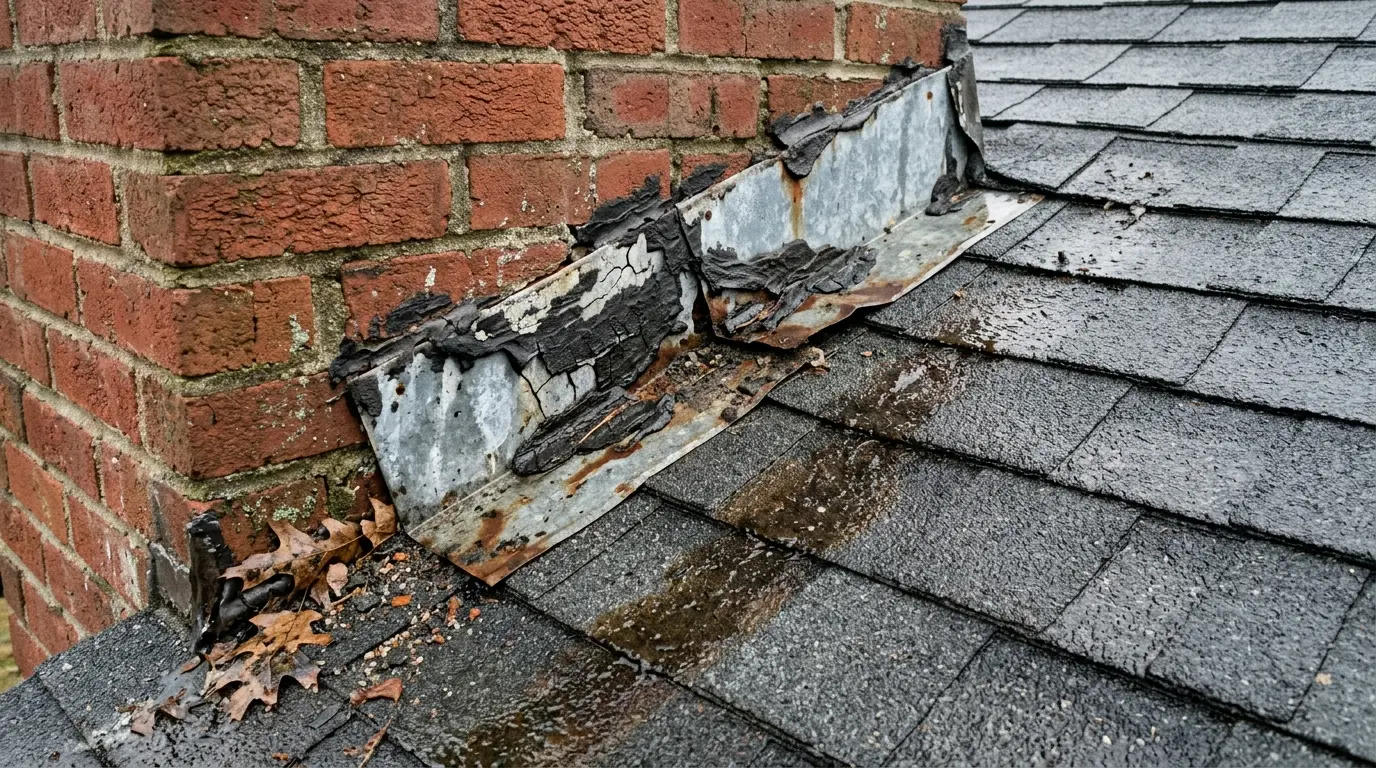
You walk out to get the mail and look up, and there they are, dark gray to black streaks running down from the ridge on the north-facing slope of your roof. Your first instinct is usually right, that's algae, not a structural problem. Your second question, whether it's actually hurting the shingles, is the one worth answering before you spend money either way this fall.
I get this call a lot in October and November, usually right after someone power washes the siding and the roof looks worse by comparison, or after a pre-sale home inspection flags 'biological growth' on the report. Most of the time the streaking by itself is cosmetic. The organism responsible, a blue-green algae called Gloeocapsa magma, feeds on the limestone filler in asphalt shingles and leaves a dark residue behind as colonies die off and new ones take hold. It doesn't chew through the shingle mat.
What changes the answer is what's happening under the streak. If the shingle surface is also shedding granules, curling at the tabs, or cracking where the staining is heaviest, you're not looking at a cleaning job anymore. You're looking at a roof telling you it's done, and fall is the window to make that call before the first nor'easter finds every weak spot.
What's Actually Growing on Your Shingles
Algae is the most common culprit and the least damaging one. It likes shade, humidity, and a food source, which describes most roofs on the North Shore and South Shore alike once oak and pine canopy sits over the house. It spreads by spore, which is why streaking often starts on the north-facing slope or the side next to a tall tree and works its way across the field over a few seasons.
Lichen is a different problem and a lot of homeowners can't tell the two apart from the ground. Lichen looks crusty and raised, often gray-green with a texture like dried paint flaking, and it anchors into the shingle with root-like structures called rhizines. Those rhizines grip the granules and the mat underneath, so scraping or pressure-washing lichen off takes a layer of shingle with it. Moss is the third growth pattern, usually on shaded, low-slope sections near a chimney or valley, and it holds water against the shingle surface long after the rest of the roof has dried, which is the real damage mechanism, not the moss itself.
Telling Streaking From Granule Loss
- Check the gutters and downspout splash areas after a rain. Black, gritty sand collecting there is shingle granule, not dirt, and it means the shingle surface is wearing thin.
- Look at the shingle tabs in the streaked area with binoculars. Curling edges, cracking, or any spot where the black asphalt mat shows through the granule layer is wear, not stain.
- Walk the attic on a bright day and check the decking under the streaked slope for daylight, water staining, or soft spots. Surface staining with a dry, tight attic underneath points to a problem you can clean.
- Note the roof's age. An architectural shingle roof generally runs in the 20 to 25 year range on Long Island given the freeze-thaw cycling, and streaking on a roof already past 18 years carries a different weight than the same streaking on a 6 year old roof.
Cleaning Options That Actually Work
A proper roof wash is a low-pressure, chemical soft-wash, not a pressure washer. The solution is usually a diluted sodium hypochlorite mix built for roofing, applied with a soft-wash rig and rinsed at low pressure from the ridge down with the water flow, not against it. Done right it kills the algae colonies and lifts the staining without touching the granule bond.
Pressure washing a roof is the one method I'd talk any homeowner out of. High PSI strips granules off the shingle surface, drives water up and under the laps on older three-tab shingles, and on most manufacturer warranties, pressure-washing the roof voids the shingle warranty outright. If a company shows up with a gas pressure washer and no soft-wash tank, that's your answer on whether to hire them.
Zinc or copper control strips under the ridge cap are worth adding while you're up there. Rain carrying trace metal ions downslope inhibits new algae growth, which buys you a few extra years before the streaking creeps back. It's not permanent. Given the humidity coming off the Sound on the North Shore and the bays and ocean on the South Shore, expect some regrowth within a handful of seasons regardless of how clean the wash was.
When It's Not a Cleaning Job Anymore
Cleaning solves a cosmetic problem. It does not put granules back on a shingle, and it does not fix cracking, curling, or a mat that's already showing through. If your inspection turns up lichen anchored into the field, active granule loss at the gutter line, or soft decking under the streaked slope, you're past the point where a wash makes sense, you'd be cleaning a roof that needs to come off within a season or two anyway.
The other trigger is storm history. A roof that's taken hail or wind damage and is now also streaking and shedding granules is usually two problems stacked on one slope, and it's worth getting that looked at through insurance restoration before you spend on a wash that a claim might end up paying to replace anyway. If the roof is sound and just needs a wash, we'll say so. If it's done, a full roofing replacement before winter beats a tarp in January every time.
Why Long Island Roofs Stain Hard and Fast
This part of New York sets up algae and moss growth about as well as any climate in the Northeast. You've got salt air pressing in from three sides, the Sound, the bays, and the Atlantic, which keeps relative humidity up even on dry-looking days. Oak and pine canopy across Brookhaven, Islip, Smithtown, Huntington, Babylon, Southampton, and most of the Nassau towns drops leaf litter into valleys and against chimneys every fall, and that litter holds moisture against the shingle well past the point where a sunnier roof would have dried out.
Then winter runs roughly 40 to 50 freeze-thaw cycles through the shingle mat before spring, and every cycle works at whatever bond is already weakened by algae or moss sitting on the surface. A roof that's merely stained in October can show real granule loss by March if that streaked section spent the winter holding snow and ice longer than the rest of the field. That's the sequence I see on inspections every spring, and it's the reason fall is the right time to sort out which one you're dealing with.
Timing This Before Winter
A soft-wash takes a day and can go on the schedule right up until it's regularly freezing overnight, since the chemical needs to dwell and rinse clean. A tear-off and replacement needs more lead time, both for material and crew scheduling, and most roofing crews on Long Island are booked solid by Thanksgiving. If the inspection points to replacement, don't wait for a leak to force the decision in January.
A full roof replacement generally requires a permit in most Long Island towns, while a cleaning does not. Permit timelines and requirements vary by municipality, so confirm the specifics with your town's building department before you lock in a contractor's schedule. Good attic ventilation also matters here. If your attic air sealing is poor, trapped heat and moisture age a new roof from underneath the same way algae ages it from above, so it's worth checking that system at the same time instead of separately.
What We Do
We send someone out, get on the roof, and tell you straight whether you're looking at a soft-wash or a tear-off, with photos of whatever granule loss or lichen we find so you're not taking our word for it. We've been doing roofing, gutters, and storm repair across Nassau and Suffolk since 2018, licensed and insured, and we'd rather turn down a wash-and-go job than oversell you a roof you don't need yet, or undersell one you do.
Call (631) 312-7441 or book a free walkthrough before the next nor'easter makes the decision for you.
Frequently Asked Questions
Is algae on my roof actually eating the shingles?
No, not directly. The algae itself feeds on limestone filler and leaves a dark stain as it dies off, it doesn't break down the shingle mat or granule bond on its own. The real damage comes from what the algae and any moss sitting with it trap underneath, which is moisture, and moisture held against a shingle long enough is what ages it early.
Can I clean the streaking myself with a hose and bleach?
You can for light staining if you use a diluted cleaner made for roofs and apply it with low pressure, rinsing from the ridge down. Skip the pressure washer entirely, it strips granules and can void your shingle manufacturer's warranty. If there's any lichen mixed in with the algae, leave that to a professional, scraping it yourself usually pulls granules with it.
Will a roof cleaning void my shingle warranty?
A soft-wash with a roof-rated cleaner generally doesn't, most manufacturers allow it as routine maintenance. Pressure washing almost always does, since it physically removes the granule layer the warranty is built around. Check your paperwork or ask your installer before anyone puts equipment on the roof.
How soon will the black streaks come back after cleaning?
That depends on how shaded the roof is and how close you are to the water. On a North Shore or South Shore property with mature oak or pine cover, expect some regrowth within a few seasons even after a thorough wash. Zinc or copper strips under the ridge cap slow it down but don't stop it permanently.
What's the difference between roof algae and roof moss?
Algae causes the dark streaking most people notice and sits flat on the shingle surface. Moss grows raised and cushiony, usually in shaded, low-slope spots like valleys and areas near a chimney, and it holds water against the shingle for days after a rain, which is a bigger problem than the staining itself.
How do I know if this fall's streaking means I need a new roof, not just a cleaning?
Check your gutters after a rain for gritty black granules, and look at the streaked shingles for curling, cracking, or spots where the black mat shows through. If you're seeing either one, especially on a roof already past the midpoint of its expected life, you're looking at replacement, not a wash. We'll tell you straight which one it is during an inspection.
Related Guides
Get a Free Estimate from Alec's Construction
Licensed and insured, working across Nassau and Suffolk County since 2018. We come out, look at the actual job, and put a written number in your hand — no pressure, no obligation.
Or call (631) 312-7441