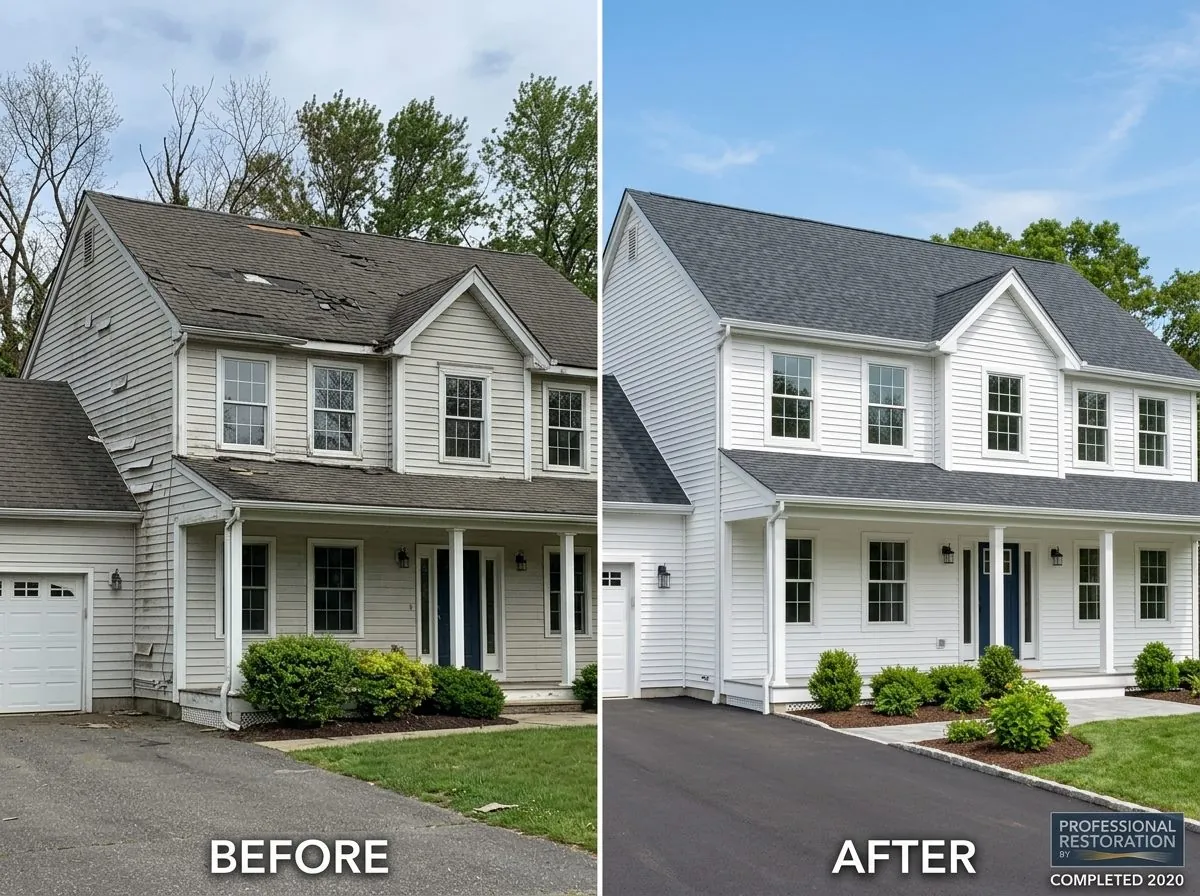
Filing a roof insurance claim is not something most Long Island homeowners have done before. When a storm tears shingles off your roof or a fallen tree punches a hole through your attic, you are suddenly dealing with a process that involves your insurance company, an adjuster, a contractor, building permits, and a series of deadlines that can cost you money if you miss them. The homeowners who come out ahead are the ones who understand how the process works before they start.
This guide walks you through every step of filing a roof insurance claim on Long Island in 2026, from the moment you discover the damage to the day your final check arrives.
Understanding Your Policy Before You Need It
The best time to understand your homeowner's insurance policy is before you have a claim. Here are the key terms every Long Island homeowner should know:
- Replacement Cost Value (RCV). This is the cost to replace your damaged roof with materials of similar kind and quality at current prices. Most Long Island policies provide RCV coverage, which is what you want.
- Actual Cash Value (ACV). This is the replacement cost minus depreciation. If your 15-year-old roof with a 25-year lifespan is damaged, the ACV reflects the remaining value. Some older or budget policies only provide ACV coverage, which means you pay the difference between the depreciated value and the actual repair cost out of pocket.
- Deductible. This is your out-of-pocket cost before insurance kicks in. Standard deductibles on Long Island range from $1,000 to $2,500. However, many policies now have separate wind/hail deductibles that are calculated as a percentage of your dwelling coverage — often 1% to 5%. On a home insured for $500,000, a 2% wind deductible means you pay the first $10,000.
- Covered perils. Standard policies cover wind, hail, fallen objects, lightning, and fire. They do not cover flooding (that requires a separate flood policy), gradual deterioration, or neglect.
Pull out your policy declarations page now and review these numbers. Knowing your deductible and coverage type before filing a claim prevents surprises.
Licensed & Insured
Full coverage on every project
Insurance Experts
Hundreds of claims handled
Free Inspections
No obligation, no pressure
Step 1: Document the Damage
The moment you discover roof damage, documentation becomes your most important task. The quality of your documentation directly affects the outcome of your claim.
What to Photograph
- Exterior damage: Missing, cracked, or curled shingles. Dented or detached gutters and downspouts. Damaged or displaced flashing around chimneys, vents, and dormers. Cracked or broken siding. Debris on the ground (shingle fragments, tree limbs). Damage to outbuildings, fences, or vehicles on the property.
- Interior damage: Water stains on ceilings and walls. Active dripping or wet spots. Peeling paint or bubbling drywall. Wet insulation visible in the attic. Damaged personal property (furniture, electronics, clothing).
- Wider context shots: Photos showing the overall condition of the roof from across the street. Photos of neighboring homes with similar damage (these establish that a storm event occurred).
Documentation Checklist
- Enable timestamps on your phone camera.
- Shoot a narrated video walkthrough of all damage, interior and exterior.
- Write down the date and time the storm occurred, approximate wind speed or hail size (check local weather reports), and the duration.
- Save weather alerts, news reports, or NOAA data about the storm event.
- Keep a log of all communications with your insurance company — date, time, person you spoke with, and what was discussed.
- Save receipts for any emergency repairs or materials you purchase.
Do all of this before making any temporary repairs. Once you tarp a roof or clean up debris, the original state of the damage cannot be recreated.
Need help documenting storm damage?
We provide free professional inspections with detailed reports.
Step 2: Make Emergency Repairs
Your policy requires you to mitigate further damage. This means if your roof has an active leak, you need to tarp it. If a window is broken, board it up. If water is coming in, protect your belongings.
Important: keep all receipts for emergency materials and temporary repairs. These costs are typically reimbursable under your claim. Common reimbursable expenses include:
- Tarps, plywood, and fasteners
- Professional emergency tarping services
- Wet/dry vacuum rental
- Dehumidifier or fan rental
- Temporary board-up for broken windows
For detailed guidance on emergency repairs, read our emergency roof repair guide for Long Island.
Step 3: File Your Claim
Contact your insurance company by phone to file the claim. Most insurers also have online portals and mobile apps, but a phone call creates a record and lets you ask questions in real time.
When you call, be prepared to provide:
- Your policy number
- Date of the loss (when the damage occurred)
- Description of the damage
- Whether anyone was injured
- Whether the home is habitable
- Whether you have made emergency repairs
The insurer will assign a claim number — write it down and reference it in all future communications. They will also assign an adjuster and provide an estimated timeline for the adjuster's visit.
Filing Timeline on Long Island
Under New York State Insurance Law, there is no specific statute of limitations for filing a property damage claim — but your individual policy has deadlines. Most policies require "prompt" or "timely" notice, which courts generally interpret as within 30 to 60 days. Some policies specify exact timeframes.
Our advice: file within 48 hours. The sooner you file, the stronger your claim. Late filing is one of the top reasons claims get denied or reduced.
Step 4: Get a Licensed Contractor Inspection
This step is where most homeowners either protect themselves or leave money on the table. Before the insurance adjuster visits, have a licensed contractor inspect your property and prepare a detailed report.
A quality contractor inspection includes:
- Full roof assessment — walking the roof (when safe) to identify every point of damage, including damage not visible from the ground.
- Photographic evidence — high-resolution photos of each damage point with measurements and annotations.
- Written scope of work — an itemized list of every repair needed, with material specifications and labor.
- Code compliance notes — identification of any current Suffolk County building code requirements that would apply when the roof is repaired or replaced, such as ice-and-water shield at eaves, proper ventilation, and updated fastener schedules.
At Alec's Construction, we provide this inspection at no cost. Our reports are written in a format that insurance adjusters recognize and respect, which leads to faster approvals and higher payouts.
Get a Free Claim Consultation
Tell us about your damage — we respond within 24 hours.
No spam. No obligation.
Step 5: The Adjuster Visit
The insurance adjuster's job is to assess the damage and determine what the insurance company will pay. This visit is one of the most critical moments in your claim. Here is how to prepare:
Before the Adjuster Arrives
- Have your contractor's inspection report printed and ready to hand over.
- Have your own photos and documentation organized chronologically.
- Clear access to the attic and any interior rooms with damage.
- If possible, have your contractor present during the adjuster's visit.
During the Visit
Walk the adjuster through every damage point. Do not assume they will find everything on their own. Adjusters handle dozens of claims simultaneously, and after major storms, they may be rushed. Your contractor can:
- Point out damage on the roof that the adjuster might miss from the ground.
- Explain the difference between cosmetic damage and functional damage — a distinction that matters for coverage determinations.
- Identify code upgrades that should be included in the estimate. For example, if your damaged roof had no ice-and-water shield but Suffolk County code now requires it, that upgrade cost belongs in the claim.
- Discuss material specifications and ensure the adjuster prices the correct products, not cheaper alternatives that do not match the existing installation.
After the Visit
The adjuster will produce a scope of loss and an estimate, usually within a few days. Review this document carefully with your contractor. If the adjuster's estimate is lower than the contractor's assessment, you have the right to negotiate through the supplement process.
Step 6: Understanding the Insurance Payout
Insurance payments for roof damage typically arrive in two installments:
- First payment: Actual Cash Value (ACV). Once your claim is approved, the insurer sends a check for the ACV of the repairs minus your deductible. For example, if the repair is estimated at $18,000, depreciation is $4,000, and your deductible is $2,500, your first check would be $11,500.
- Second payment: Recoverable depreciation. After repairs are completed and your contractor submits final documentation (photos, invoices, completion certificate), the insurer releases the withheld depreciation. In our example, that would be the remaining $4,000.
Critical: If your contractor does not submit proper completion documentation, you may never receive the second payment. This is one of the biggest reasons to work with a contractor who understands insurance restoration billing. At Alec's Construction, we handle all documentation and communication with your insurance company so you receive every dollar you are entitled to.
Ready to get started?
Free walkthrough — no obligation, no pressure.
Step 7: The Supplement Process
In many cases, the initial insurance estimate does not fully cover the cost of proper repairs. This is not necessarily the adjuster acting in bad faith — they often estimate from the ground, miss hidden damage, or do not account for code upgrades. The supplement process exists to address this.
Your contractor submits a supplement — a formal request for additional coverage — with supporting documentation that explains why the additional work is necessary. Common supplement items include:
- Rotted decking. You cannot see decking condition until the old shingles are removed. If 10 sheets of plywood need replacement, that cost is added via supplement.
- Code-required upgrades. Ice-and-water shield at eaves, proper ridge ventilation, upgraded fastener patterns, and drip edge installation are often required by current code but not included in the adjuster's original estimate.
- Flashing replacement. Step flashing along walls, chimney flashing, and pipe boot replacements are frequently undercounted.
- Gutter and downspout damage. Impact damage to gutters from falling debris or hail is sometimes missed during the initial inspection.
- Interior repairs. Water damage to drywall, insulation, and paint on upper floors is sometimes underestimated or excluded from the initial scope.
Supplements are standard practice in the insurance restoration industry. They are approved the majority of the time when properly documented. An experienced contractor knows exactly how to present a supplement so the insurance company approves it efficiently.
What to Do If Your Claim Is Denied
A denial is not the end of the road. If your claim is denied, you have several options:
- Request a written explanation. Under New York Insurance Law, the insurer must provide a written explanation of the denial, including the specific policy provisions they are citing.
- Review the denial with your contractor. Your contractor can assess whether the denial is based on legitimate policy exclusions or whether the adjuster missed or mischaracterized the damage.
- File an appeal. Submit additional documentation, contractor reports, and weather data that support your claim. Many initially denied claims are approved on appeal.
- Request a re-inspection. Ask the insurance company to send a different adjuster for a second look, preferably while your contractor is present.
- Contact the New York Department of Financial Services. If you believe your claim was improperly denied, you can file a complaint with the DFS, which regulates insurance companies in New York State.
- Consult a public adjuster or attorney. For large claims or persistent denials, an independent public adjuster or insurance attorney can advocate on your behalf.
7 Mistakes That Sink Long Island Roof Insurance Claims
Avoid these common errors that lead to denied, delayed, or underpaid claims:
- Waiting too long to file. Delays give the insurer grounds to question causation. File within 48 hours.
- Insufficient documentation. Blurry photos, missing timestamps, and vague descriptions weaken your claim.
- Making permanent repairs before the adjuster visits. Emergency tarping is fine and expected. Full repairs before the adjuster inspects can result in denial because the insurer cannot verify the damage.
- Using an unlicensed contractor. Insurance companies give more weight to estimates from licensed, insured contractors with verifiable credentials.
- Not being present for the adjuster visit. If no one is there to walk the adjuster through the damage and provide context, they may underestimate the scope.
- Accepting the first offer without review. The initial estimate is a starting point, not a final number. Have your contractor review it and submit supplements as needed.
- Neglecting to collect the depreciation holdback. Many homeowners accept the first check and never submit the documentation needed to receive the recoverable depreciation. This can leave thousands of dollars on the table.
Why Work with Alec's Construction on Your Insurance Claim
We are not just roofers — we are insurance restoration specialists. Here is what that means for you:
- Free storm damage inspections. We come to your property, inspect every inch of damage, and provide a detailed written report at no cost.
- Adjuster-ready estimates. We write our estimates in Xactimate, the same software insurance companies use, which eliminates formatting disputes and speeds approval.
- We attend the adjuster meeting. Alex Fuentes or a senior project manager walks the roof with your adjuster to ensure nothing is missed.
- We handle supplements. When the initial estimate falls short, we document the additional work needed and communicate directly with your insurance company.
- We submit completion documentation. After the job is done, we provide photos, invoices, and a completion certificate so you receive your full recoverable depreciation payment.
- We never ask you to pay out of pocket for covered work. You pay your deductible. Insurance covers the rest. That is how it should work.
As a Latinx-owned, licensed and insured contractor based in East Patchogue, we have deep roots in the Long Island community. We serve 36+ communities across Suffolk County. Call owner Alex Fuentes at (631) 312-7441 or email sales@alecsconstruction.com.
Frequently Asked Questions
How long do I have to file a roof insurance claim on Long Island?+
What does homeowner's insurance cover on a roof?+
Should I get a contractor inspection before the adjuster visits?+
What is a supplement in roofing insurance claims?+
Can my insurance company deny a roof claim on Long Island?+
Related Articles
Work With Alec's Construction
This guide is written by the crew that does the work. See Alec's Storm Damage & Insurance Restoration service — emergency tarping, documentation and the claim itself. Licensed and insured on Long Island, one crew start to finish, free walkthrough and a written estimate inside 48 hours.
Booking the cold months now: we also handle Roofing and Siding.
We pull the permits on our own jobs — if you need the building department for your town, we keep a current directory of all 23 Long Island permit offices.
Need Help with a Roof Insurance Claim?
Alec's Construction provides free storm damage inspections and handles the entire insurance claims process. Serving all of Suffolk County and Long Island.
Get a Free Inspection