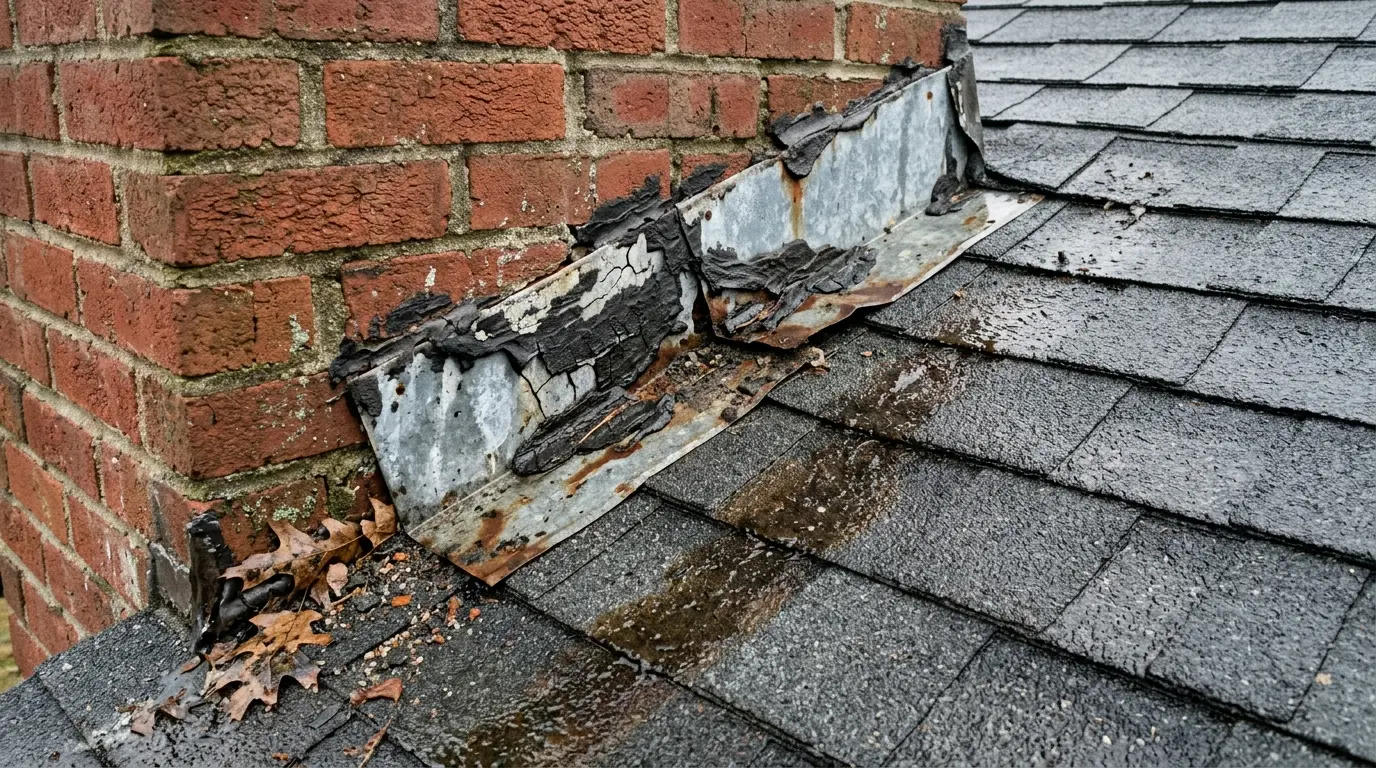
You're standing under a ceiling stain that showed up right after the last nor'easter blew through, and you're trying to figure out if this is a Saturday afternoon fix or the start of something a lot bigger. I get this call every October and November, usually the week after the wind really picks up off the Sound or the Atlantic side. The honest answer depends on where the water is actually coming from, not on how bad the stain looks from the floor.
A brown ring the size of a dinner plate with no active drip is a different problem than water coming through a light fixture during the storm itself. One of those is almost always a flashing issue you can fix before winter without much drama. The other can mean the roof deck underneath has been wet longer than you think, and that changes everything about what needs to happen next, and how fast.
Long Island weather doesn't go easy on roofs. You're looking at roughly 40 to 50 freeze-thaw cycles a season out here, salt air coming off two or three directions depending on where you sit between the Sound and the ocean, and nor'easters that drive rain sideways into places a straight-down storm never reaches. Whatever is leaking right now gets worse once that water starts freezing and expanding inside the roof assembly. That's the real deadline, not a date on a calendar.
Where the Water Is Actually Coming From
Water travels before it ever shows up on your ceiling. A stain near a chimney, a skylight, a dormer, or anywhere two roof planes meet almost always traces back to flashing, the metal that seals those transitions. A stain out in the open field of the ceiling, away from any penetration, usually points to failing shingles or an ice dam history from a prior winter that you never connected to this spot. The drywall tells you roughly where to look, not where the actual opening is. Water can run along a rafter or across the top of a sheet of plywood for several feet before it finds a seam and lets go into your living room.
Flashing Failures: The Easy Fix
Flashing failure is good news, relatively speaking. Step flashing around a chimney or sidewall goes in as short overlapping pieces, and on a lot of houses built here in the 80s and 90s, it was never woven into the shingle courses correctly to begin with. Add thirty-plus years of nor'easters pulling at the edges and salt air corroding the metal, and you end up with gaps. The fix is pulling back the surrounding shingles, installing new step flashing or continuous counter-flashing where it meets masonry, and resealing the transition properly. On most homes that's a half day to a full day of work and it doesn't touch the rest of the roof. If the roof is otherwise sound, flashing repair is the right move, and it's worth doing before the ground freezes so nobody's working a ladder in sleet come January.
When It's Not Flashing: Signs of a Failing Roof
If the leak shows up in more than one spot, or the same stain keeps coming back after a repair two winters running, you're past flashing. Check for granules collecting in the gutters, shingles curling at the edges or looking shinier and darker than the rest of the field, and soft spots you can feel underfoot when you walk the roof, that's usually deck rot underneath. An asphalt shingle roof on Long Island typically runs somewhere between 18 and 25 years depending on pitch, layers, and how much shade and moisture it takes from the trees around it. If your roof is in that range and leaking from more than one place, patching buys you a season at most. You'll likely end up paying for the patch and the replacement both within a year or two.
Why Long Island Falls Make This Worse
Oak and pine leaf load matters more here than people expect. Wet leaf mats sitting in valleys and behind chimneys hold moisture against the shingles for days after a storm, which speeds up granule loss and gives moss and algae somewhere to take hold. Add salt air working at every exposed nail and flashing seam, and a roof out here ages faster than the same roof thirty miles inland would. Once we're into the real freeze-thaw stretch, any water sitting in a compromised spot on the deck expands when it freezes and works that opening wider. That's how a hairline flashing gap in October turns into a soaked, sagging patch of drywall by February. Check your gutters while you're thinking about this. A clogged gutter backs water up under the first course of shingles, which looks exactly like a flashing leak from inside the house but isn't one. Our gutter guide covers what clean versus clogged actually looks like if you haven't had them cleared since Labor Day.
Attic Clues That Tell You More Than the Ceiling Does
Before you decide anything, grab a flashlight and get into the attic, ideally during or right after a rainstorm. Fresh water stains look dark and have a damp edge to them. Old stains are dry, crusty, and a lighter brown. Daylight visible around a pipe boot or chimney chase marks your entry point. Insulation that's matted down and smells musty under a stain means water has been getting in longer than one storm's worth. This is also where you'll see whether your attic ventilation is making the problem worse. Poor attic air sealing lets warm, moist house air leak into the attic, which feeds ice dam formation come January and February even on a roof that's otherwise fine. We go into this more in our attic air sealing guide if you want the longer version.
Insurance, Permits, and What to Expect
If the damage traces to a specific, identifiable storm, wind-driven rain that forced its way under shingles during a nor'easter, for example, homeowners insurance may cover it as storm damage rather than wear and tear. That distinction is worth sorting out before you commit to any work if the damage is significant, and we'll document the likely cause and extent for a claim either way. Permit requirements for roof work vary by town out here. Brookhaven, Islip, Smithtown, Huntington, Babylon, and Southampton each handle roofing permits a little differently depending on scope, and the Nassau towns have their own processes too. A simple flashing repair generally doesn't trigger a permit, a full tear-off and re-roof generally does, but confirm the specifics with your own town's building department before anyone starts work, don't take anyone's word for it, including mine.
What We Do
We get up on the roof, find the actual source instead of just patching the ceiling and hoping, and give you a straight answer on whether you're looking at a flashing repair or a roof that needs to come off before winter. If it's storm-related, we'll document it for your insurance claim too. Our roofing services and insurance restoration pages have more detail if you want to read ahead of the call.
Call (631) 312-7441 or book a free walkthrough.
Frequently Asked Questions
Is a ceiling stain always an active leak?
Not necessarily. A stain can be old water damage from a storm weeks or months ago that dried out, or it can mean water is still getting in every time it rains. Press on the stain, if it's soft or you see fresh dark edges after the next rain, you're dealing with an active leak that needs attention now, not just a cosmetic touch-up.
Can I caulk the flashing myself as a stopgap?
You can slow a small gap with roofing sealant for a week or two, but caulk over corroded or lifted flashing usually fails faster than people expect, especially once it gets cold and the sealant loses flexibility. Treat it as a temporary measure only, and get the actual flashing replaced before winter settles in.
How do I know if this needs a full roof replacement instead of a patch?
Look at how many spots are leaking, how old the roof is, and whether you can feel soft, spongy areas when you walk it. One leak near a chimney on a roof under 15 years old is usually a patch. Multiple leaks, visible granule loss, or a roof already past 18 to 20 years old usually means a patch is a short-term fix at best.
Will homeowners insurance cover a roof leak from a fall storm?
It depends on whether the damage can be tied to a specific storm event versus general wear and tear, insurers draw a hard line between the two. Wind-driven rain damage from a named storm has a better chance of coverage than a slow leak that's been building for years. Document the storm date and get an inspection soon after.
Do I need a town permit for a flashing repair?
A straightforward flashing repair generally doesn't require a permit on Long Island, since it's a repair rather than a structural or full roof replacement. Requirements vary by town, so confirm with your local building department before work starts, especially if the scope grows once we're up there.
How fast should I act once I spot a stain after a storm?
Don't wait for the next storm to see if it happens again. Get it looked at within a week or two if you can, especially going into late fall. Once we hit sustained freeze-thaw cycles, any unresolved opening gets worse fast, and a same-season fix is almost always less involved than a mid-winter emergency repair.
Related Guides
Get a Free Estimate from Alec's Construction
Licensed and insured, working across Nassau and Suffolk County since 2018. We come out, look at the actual job, and put a written number in your hand — no pressure, no obligation.
Or call (631) 312-7441