You're standing in the driveway looking up at shingles curling at the edges, asking the same question I get every October: will this roof make it through one more winter, or am I calling a contractor in February when water's coming through the ceiling. Fair question. The honest answer depends on what's actually happening under those shingles, not just how the roof looks from the ground.
A roof on Long Island doesn't fail all at once. It fails one freeze-thaw cycle at a time. We get somewhere around 40 to 50 of those cycles a season here, water works into a crack, freezes, expands, and widens that crack a little more. Do that 45 times between November and March and a roof that looked fine enough in October can be leaking into your attic insulation by President's Day. Add salt air coming off the Sound on the North Shore and the Atlantic on the South Shore, eating at nail heads and flashing from three sides of the house, and you've got a corrosion problem most mainland contractors never have to think about.
The other piece nobody tells homeowners: fall is also when every roofing crew on Long Island gets slammed. Everybody notices the same problem in October, and by mid-November good crews are booked into December or pushed to spring. If your roof needs to go before winter, the decision window is now, not after the first nor'easter.
Signs You're Looking At Replacement, Not Repair
- Granule loss heavy enough that you can see bare, shiny asphalt in patches, especially on south and west-facing slopes that take the most UV
- Shingles curling or cupping at the edges, a sign the asphalt has dried out and lost the flexibility it needs to handle freeze-thaw movement
- Soft or spongy decking when you walk the attic and press near valleys, chimneys, or the eaves, usually means water's already been getting in for a while
- Daylight visible through the roof deck from inside the attic
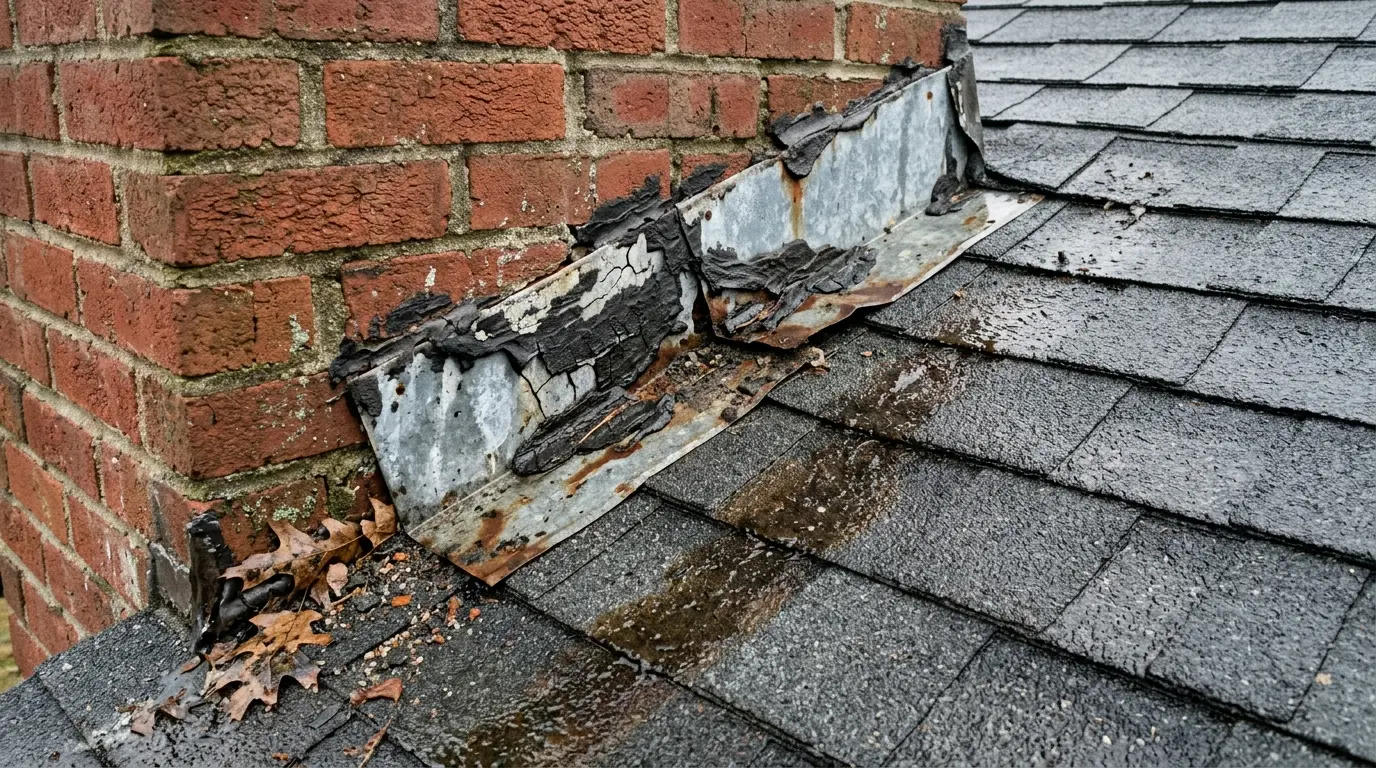
- Flashing that's lifted, rusted through, or was never step-flashed correctly around the chimney and sidewalls to begin with
- Multiple layers of shingles already on the roof, since a second layer traps heat and moisture against the deck and most towns won't let you add a third
What Another Winter Actually Does To A Bad Roof
If a roof is already showing the signs above, winter doesn't let it coast, it accelerates the damage. Ice dams form when heat escaping from the attic melts snow on the upper roof, that water runs down and refreezes at the cold eave, backing up under the shingles. On a roof that's already compromised, that backed-up water doesn't stop at the underlayment, it finds the nail holes and seams and gets into the deck. A nor'easter makes it worse in a different way, the wind drives rain sideways and up under ridge caps and starter courses that straight-down rain would never reach. On a roof where the seal strips have already lost their adhesion from age, that wind-driven rain gets in at the ridge and the rakes, not just the eaves. Oak and pine leaf litter sitting in the valleys and gutters from October through December adds to it, holding moisture against the shingles and clogging the path water needs to drain before it freezes. By the time you see a stain on a bedroom ceiling in January, the deck underneath has usually been wet for weeks.
The Fall Install Window On Long Island
Asphalt shingles need a minimum temperature to seal properly, the adhesive strip on the back of each shingle needs warmth and sun exposure to bond down. Once nighttime temps start dropping into the 30s consistently, usually by late November here, installers either hand-seal every tab with roofing cement or wait for a warm stretch, both of which slow the job and add labor. That's why the real window for a roof replacement on Long Island runs from Labor Day through about mid-November. After that, you're either paying for hand-sealing or you're waiting for spring with a tarp over the problem area through the worst months of the year, which is its own gamble with a nor'easter.
Repair vs Replace: How I Make The Call
I don't push a full replacement on a roof that doesn't need one. If the issue is isolated, a cracked pipe boot, a section of lifted flashing around the chimney, a few shingles damaged by a branch, that's a repair and I'll tell you that on the walkthrough. What changes my answer is the deck. Once I'm finding soft sheathing in more than one spot, or the felt underneath is brittle and torn from age rather than from one storm, patching one area just moves the leak to the next weak point next season. Age matters too. A 3-tab asphalt roof past 18 to 20 years on a house with heavy salt exposure has usually taken enough UV and corrosion that the whole field is at the same point in its life, so a repair in one spot buys you a year, maybe less, before you're back up there.
Permits and Towns
Roof replacement generally requires a building permit across Long Island. Brookhaven, Islip, Smithtown, Huntington, Babylon, and Southampton, along with the Nassau towns, each run their own permitting process with their own timelines, and requirements can shift with building code updates. We pull permits as part of the job, but the exact timeline and any specifics for your property, confirm directly with your town's building department before you lock in an install date, especially if you're pushing up against the fall deadline.
Decking, Ventilation, and What's Underneath
The shingles get the attention but the decking and ventilation underneath decide how long the new roof actually lasts. On the South Shore, where the water table runs high and sandy soil doesn't give a house much to work with for drainage, attic moisture that isn't venting properly condenses and sits, rotting decking from underneath even with a brand-new roof on top. If your attic runs hot in summer and you've got frost on the nail tips in winter, that's a ventilation balance problem, not a shingle problem, and it's worth fixing at the same time as the roof, not after. We cover that in more detail in our guide to attic ventilation on Long Island. While the roof's already open, it's also the cheapest time to deal with gutters that are pitched wrong or undersized for the leaf load off mature oaks and pines, see our gutter services page for what that involves.
What We Do
We handle roof replacement and repair across Nassau and Suffolk, full tear-offs, decking replacement, flashing done right around chimneys and valleys, and ventilation work to match. If a storm already got to your roof before you called us, we also work directly with insurance adjusters on the claim, see our insurance restoration page. For the full scope of what we install and the materials we use, visit our roofing services page.
Call (631) 312-7441 or book a free walkthrough before the fall window closes.
Frequently Asked Questions
How do I know if my roof needs replacing now or can wait until spring?
Walk your attic on a dry day and check the decking near valleys and the chimney for soft spots, and look at the shingles from the ground for curling or bare patches where granules are gone. If the deck is sound and the damage is isolated, it can usually wait. If you're finding soft sheathing in more than one place, don't wait for a nor'easter to make the decision for you.
Why does fall matter so much for a roof replacement on Long Island?
Asphalt shingles need warmth to seal down properly, and that window closes once nighttime temps drop consistently into the 30s, usually by mid-November here. Crews also book up fast once everyone notices roof problems at the same time in October, so the longer you wait, the fewer fall slots are left.
What do freeze-thaw cycles actually do to a roof?
Water gets into any small crack or seam, freezes, expands, and widens that opening. Long Island sees roughly 40 to 50 of these cycles a season, so a minor weak point in October can turn into an active leak path by late winter.
Can I just add a new layer of shingles over the old roof?
Sometimes, but most towns limit you to two layers total, and a lot of homes already have one. A second layer also traps heat and moisture against the deck, which works against you if ventilation isn't right. We'll tell you honestly whether your roof qualifies on the walkthrough.
Do I need a permit to replace my roof?
Generally yes, across Suffolk and Nassau towns. Each town, including Brookhaven, Islip, Smithtown, Huntington, Babylon, and Southampton, runs its own process and timeline, so confirm specifics with your local building department. We handle the permit filing as part of the job.
What's the connection between my gutters and my roof's lifespan?
Gutters clogged with oak and pine leaves hold water against the lower edge of the roof, which is exactly where ice dams form in winter. Pitching and sizing gutters correctly while the roof is open is far more effective than trying to fix drainage after the fact.
Related Guides
- Roofing Services
- Gutter Installation & Repair
- Attic Ventilation on Long Island
- Insurance Restoration
Get a Free Estimate from Alec's Construction
Licensed and insured, working across Nassau and Suffolk County since 2018. We come out, look at the actual job, and put a written number in your hand — no pressure, no obligation.
Or call (631) 312-7441