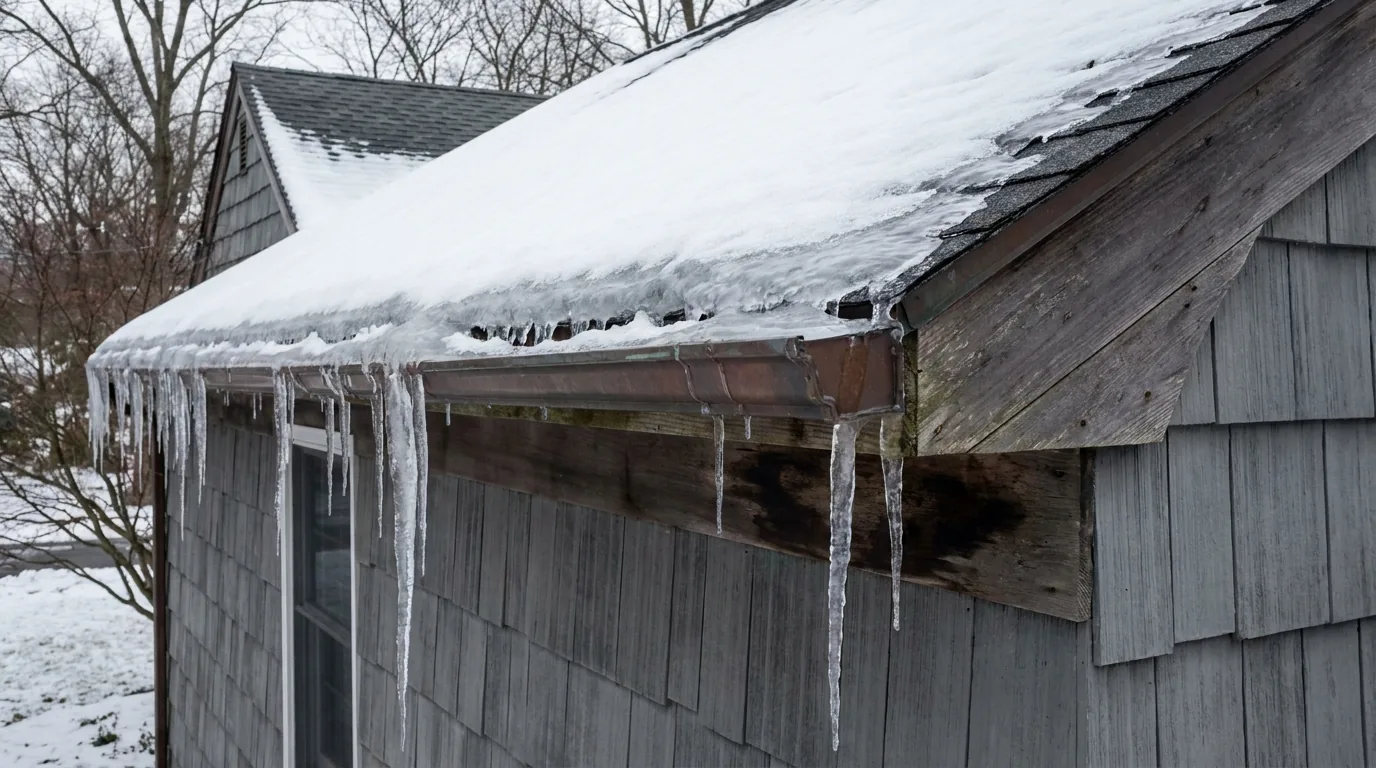
Every fall I get the same call. Homeowner had a ridge vent installed two summers ago because a roofer said it would fix the heat in the attic, and now there's frost on the underside of the roof deck, or ice damming at the eaves that never happened before. The ridge vent isn't broken. It's doing exactly what it's built to do, which is pull air. The problem is nobody gave it anywhere to pull air from.
Attic ventilation is not one component, it's a system with two halves that have to stay in balance. Exhaust at the ridge or gables lets warm, moist air out. Intake at the soffits lets cold, dry air in to replace it. When you add exhaust without matching intake, or when the intake path was already blocked before anyone touched the ridge, you don't get a well-vented attic. You get a vacuum that pulls air from wherever it can find it, and on Long Island that usually means your living space, your bath fans, or nothing at all.
This matters more here than in most parts of the country. We get roughly 40 to 50 freeze-thaw cycles a season between Nassau and eastern Suffolk, salt air working three sides of most properties, and nor'easters that drive wind-blown snow sideways into any gap that isn't baffled correctly. An attic that's out of balance doesn't just waste energy, it grows ice dams, rots roof decking, and rusts fasteners years before it should.
Intake and Exhaust Have to Match
Code and manufacturer specs both point to the same target, roughly equal net free area split between intake and exhaust, often expressed as a 1:300 attic floor to vent area ratio, tighter to 1:150 if you don't have a vapor barrier or you're running low-slope sections common on capes and ranches across Brookhaven and Islip. That's not a suggestion, it's how the physics of stack effect actually works. Warm air rises and needs to exit high. Cold air has to enter low to replace it, or the exhaust vent starts pulling from the only other opening it can find.
When I get on a roof and see a continuous ridge vent but the soffits underneath are original 1970s aluminum with half the holes painted shut, I already know what I'll find in the attic. Frost lines on the nail tips in January. Dark staining on the sheathing near the ridge from months of condensation. That's not a leak, that's an attic breathing bad air because it can't breathe good air.
What's Really Behind Those Soffits
I'd say close to half the homes I open up on the South Shore have soffit vents that look fine from the driveway and do almost nothing. Three things cause it every time. Paint and caulk sealing the perforations shut after a re-paint. Bird or wasp nesting material packed into the vent channel, common on houses near tree cover in Smithtown and Huntington. And the big one, insulation. When someone blows in cellulose or lays fiberglass batts without installing baffles first, the insulation slides down and buries the top of the exterior wall, blocking the soffit from the inside where you can't see it without climbing into the eaves.
That third one is the most common cause I run into, and it's invisible from a walk-through. You can stand in the attic, see open soffit vents through the gable end, and still have zero air movement because the last three feet of the attic floor near the eaves is choked with insulation. That's also the coldest, wettest part of the attic in winter, so it's the first place ice starts forming under the shingles.
Why Adding a Ridge Vent Alone Makes It Worse
A ridge vent has no fan, it relies entirely on the pressure differential created by intake air pushing through. Cut a ridge slot into a roof that already has blocked or undersized soffits and you haven't added ventilation, you've added a hole that pulls conditioned air out of your house instead. It'll draw through can lights, the attic hatch, bath fan housings that were never sealed to the drywall, anything with a path of less resistance than the sealed soffit line. That's warm, moist household air getting dumped straight onto the underside of a cold roof deck in February, which is the single fastest way to grow frost and eventually black mold on OSB sheathing.
I've also seen ridge vents installed without external baffles catch wind-driven snow directly during a nor'easter and dump it into the attic insulation. Once wet cellulose compresses, its R-value is gone for the season, right when you need it most.
The Ice Dam Connection
Every ice dam starts the same way. Warm air escaping into the attic warms the roof deck unevenly, snow melts over the heated section, runs down, and refreezes the moment it crosses over the cold, unheated overhang past the exterior wall. With 40 to 50 freeze-thaw cycles a season, that melt-refreeze pattern repeats constantly, and each cycle works water further up under the shingles. A balanced, cold attic keeps the entire roof deck at roughly the same temperature as the outside air, so snow doesn't melt unevenly in the first place. That's a bigger factor in ice damming than gutter size, though a gutter system that's already backing up water at the eaves makes it worse. If yours is clogged or undersized, it's worth pairing this work with a look at your downspout drainage.
What a Real Fix Looks Like
The fix is never just adding more exhaust. First we check every soffit bay for actual open air path, not just visible holes outside. Where insulation has migrated, we install rigid baffles, called wind or attic chutes, at every rafter bay so blown-in insulation can be added back without re-blocking the channel. Where soffits are painted shut or have paint-clogged perforations, we replace the vent strip rather than try to clean it, because on a coastal property that vent has probably corroded from the inside anyway.
Only after intake is confirmed open do we size the exhaust. Sometimes that means the ridge vent stays and gets more soffit area to match it. Sometimes it means pulling old gable vents that fight against a ridge vent by short-circuiting the airflow before it ever reaches the eaves, you generally want ridge and gable vents working, not both fighting for the same air. This is also the point where air sealing the attic floor pays off, because stopping warm air from ever reaching the attic reduces the load on the ventilation system entirely. We cover that separately in our attic air sealing guide, and if your insulation depth is part of the problem, check whether you qualify for a utility insulation rebate before winter locks in.
Permitting on this kind of work is usually straightforward across Nassau and Suffolk since it's not a structural change, but if we're combining it with roof deck repair or a full roofing replacement, that scope does need a permit pulled with the town, and inspectors here do check for baffles when they can see them at the eave.
What We Do
We get into the eaves, not just the attic floor, confirm actual net free intake area, install baffles and vent strips where they're missing, and balance exhaust to match before the first hard freeze hits.
Call (631) 312-7441 or book a free walkthrough.
Frequently Asked Questions
How do I know if my attic ventilation is out of balance?
Frost on the underside of your roof deck or nails in winter, musty smell in the attic, or ice dams that are new or getting worse are the clearest signs. A quick way to check is looking at your soffits from inside the attic near the eaves, if you can't see daylight or feel airflow at every rafter bay, intake is blocked.
Can I just add more roof vents to fix a hot or icy attic?
Only if intake at the soffits is already open and matched to it. Adding exhaust vents without confirming soffit airflow usually pulls conditioned air out of the house instead of venting the attic, which can make condensation and ice damming worse, not better.
Do ridge vents and gable vents work together?
Usually not well. A ridge vent depends on low soffit intake to work correctly, and an open gable vent nearby tends to short-circuit that airflow, pulling air across the attic instead of up from the eaves. Most systems perform better with one exhaust path, not two competing ones.
Will attic ventilation work fix my ice dams by itself?
It addresses one of the two causes. A balanced, cold attic stops the uneven melt-refreeze cycle at the roof deck, but if your gutters are already undersized or clogged, water still backs up at the eaves. Both need to be right before winter.
Is this something I can inspect myself before calling a contractor?
You can look for obvious blockages, painted-shut soffit vents, insulation piled against the eaves, or missing baffles, from inside the attic with a flashlight. Confirming actual net free area and sizing exhaust correctly is worth having someone experienced do, since undersizing either side causes real damage.
Does salt air or coastal exposure change how this work is done?
Yes. Vent screens and staples corrode faster on properties exposed to salt air, especially south-facing homes near the shore, so we spec corrosion-resistant hardware and vent strips rather than the standard-grade materials used further inland.
Related Guides
- Attic Air Sealing Long Island
- Attic Insulation Rebates Long Island
- Downspout Drainage Long Island
- Roofing Services
Get a Free Estimate from Alec's Construction
Licensed and insured, working across Nassau and Suffolk County since 2018. We come out, look at the actual job, and put a written number in your hand — no pressure, no obligation.
Book a Free WalkthroughOr call (631) 312-7441