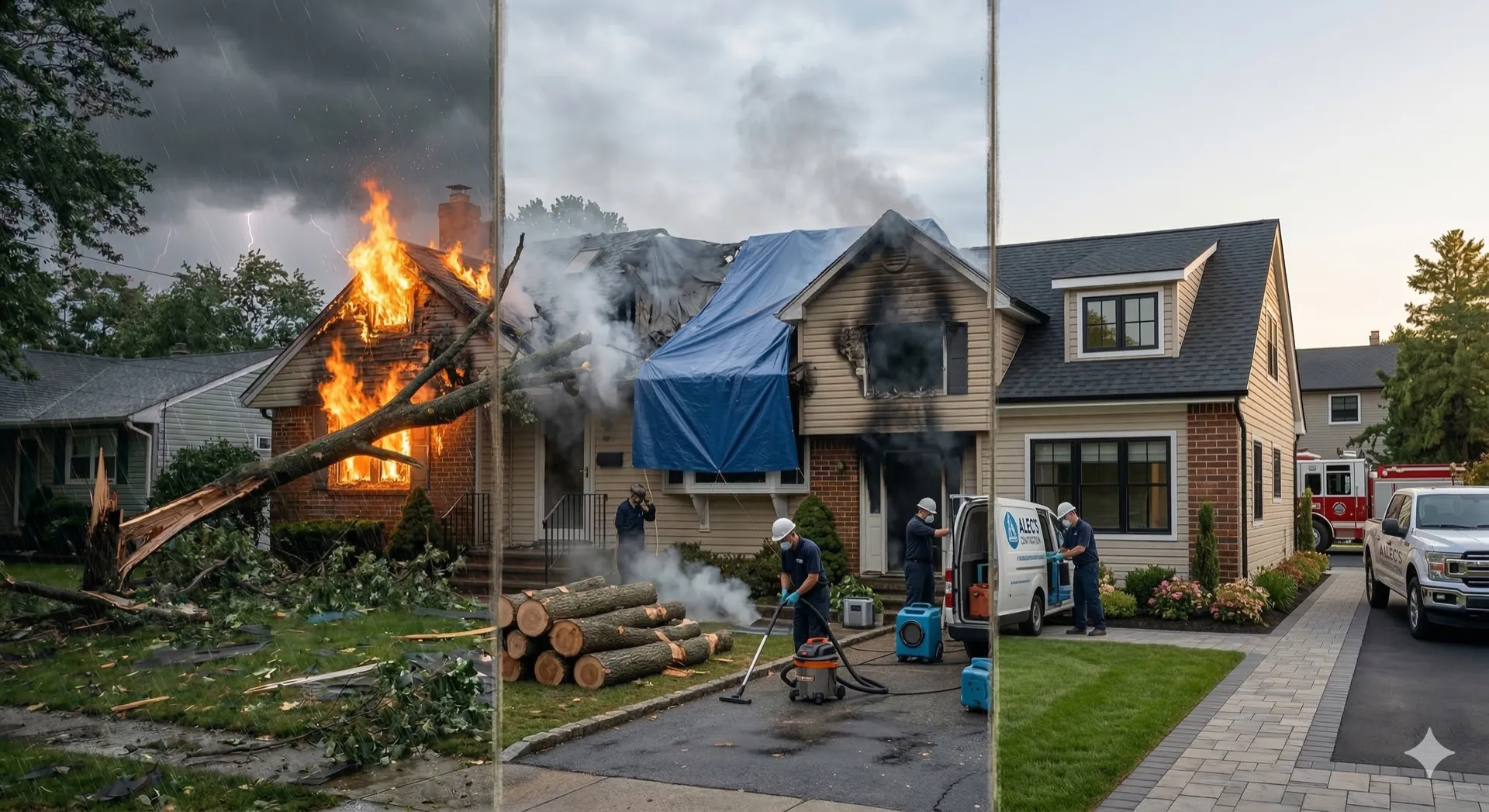
Your roof took a hit in the last storm, you filed the claim, and the adjuster came back with a check that barely covers the gutters, or a flat denial that calls the damage "wear and tear." You're not imagining the gap between what you saw on the roof and what the insurance company is willing to pay for. That gap is common on Long Island, where older roofs, salt air corrosion, and decades of freeze-thaw cycling all give an adjuster a reason to write "pre-existing condition" instead of "storm damage."
Here's the problem with treating that denial as the end of the conversation: winter does not wait for an appeal. Every week you spend going back and forth with the carrier is another week of wind, oak and pine debris, and overnight refreezing working on a roof that already failed once. In the South Shore towns I work in, Brookhaven, Islip, Babylon, a compromised roof deck that's still open in January usually means ice damming, soaked insulation, and a ceiling leak you didn't have in October.
You do not need the insurance company's permission to fix your roof. You need a way to pay for it that doesn't depend on their timeline. That's financing, and there are more workable paths than most homeowners realize once a claim goes sideways.
Why Long Island Roof Claims Get Denied or Lowballed
Adjusters work off a checklist, and that checklist favors the carrier. The most common denial reasons I see on Suffolk County roofs: the damage gets called "cumulative wear" instead of storm-caused, the granule loss on an asphalt roof gets blamed on age rather than hail or wind, or the adjuster only approves a patch repair on one slope instead of the full replacement the matching requirement should trigger. Salt air is its own problem. A roof with three sides of coastal exposure corrodes fasteners and flashing faster than an inland roof of the same age, and that accelerated wear gives an adjuster an easy argument that your roof was already failing before the storm ever hit.
None of that means the denial is correct. It means the carrier found language that lets them pay less or pay nothing. Knowing that is useful, but it doesn't put a roof over your head before the next nor'easter.
What Waiting Through a Suffolk County Winter Actually Costs You
Long Island runs somewhere around 40 to 50 freeze-thaw cycles in a normal season. Every one of those cycles works water deeper into a cracked shingle, an open seam, or exposed decking. Snow melts during the day, refreezes overnight at the eave where there's no heat loss from the house, and backs up under the shingles above it. That's an ice dam, and it doesn't care whether your claim is denied or approved. If you want to know what that looks like before it becomes a ceiling stain, read our attic ice dam warning signs guide.
Oak and pine debris adds to it. Wet leaves pack into valleys and behind chimneys, hold moisture against the shingles, and keep that section of roof from ever fully drying between storms. A roof that limps through one more winter on a denied claim usually comes out the other side needing deck repair it didn't need in the fall, plus insulation and drywall work inside. That's a bigger job than the one you're trying to avoid paying for now.
Financing Paths That Don't Depend on Your Insurer
You have options that move on your schedule, not the carrier's.
- Contractor in-house payment plans. Many roofing contractors, including us, offer structured payment plans tied to project milestones, so you're not paying the full job cost before a single shingle goes down.
- Home improvement or personal loans. Unsecured loans through a bank or credit union close faster than a HELOC and don't require home equity paperwork, which matters when you're racing the weather.
- Home equity line of credit or cash-out refinance. Slower to close but can carry a lower rate if you have equity and time to wait a few weeks for underwriting.
- Manufacturer-backed promotional financing. Some shingle and roofing material manufacturers offer financing programs through their network of installing contractors, often with an introductory period.
Each of these gets the roof done this fall and leaves the insurance dispute as a separate track you can keep fighting without your house sitting open to the weather in the meantime.
Keep the Appeal Open, Don't Let It Hold Up the Roof
A denial or lowball offer is not automatically final. Most homeowners' policies have an appraisal clause that lets you demand a neutral third-party appraisal if you disagree with the carrier's number, and a public adjuster can push back on the carrier's scope using the same photos and documentation your contractor already pulled. Run that process in parallel with the financed install, not instead of it. Document everything before the old roof comes off, keep every estimate and adjuster communication, and loop in whoever is handling your claim so the paper trail supports a later reimbursement if the appeal succeeds. If you want a contractor who's done this fight before, that's what our insurance restoration work is built around.
What a Roof Replacement Before Winter Actually Looks Like Here
Once financing is in place, timeline is the next question. Permit requirements, inspection scheduling, and lead time all vary by town, Brookhaven, Islip, Smithtown, Huntington, Babylon, and Southampton can each run differently, so confirm current permit and inspection timing directly with that town's building department before you lock a date. What's consistent across all of them is that crews get booked solid once the first hard frost warning goes out, so the sooner financing is sorted, the more likely you land a dry weather window instead of installing shingles in the cold, where sealant strips don't activate properly. Full roof replacement work also includes checking the drip edge and gutter attachment, since a roof that sheds water onto undersized or clogged gutters just moves the water problem instead of solving it.
Questions to Ask Before You Sign Any Financing Agreement
Don't sign the first offer a salesperson hands you without reading past the monthly payment line.
- Is the rate fixed for the full term, or does it step up after an introductory period.
- Does the loan place a lien on your home, and what happens to that lien if you sell.
- Is there a prepayment penalty if the insurance appeal pays out and you want to pay the balance down early.
- Who actually holds and services the loan, the contractor, a bank, or a third-party finance company.
- Is the contractor paid in full upfront, or in draws tied to completed work.
A straight answer to all five tells you a lot about whether the financing partner is solid or just closing a sale.
What We Do
We build roof replacement timelines around your financing and your insurance fight, not the other way around, and we document the job thoroughly enough to back up an appeal if you're still pursuing one.
Call (631) 312-7441 or book a free walkthrough.
Frequently Asked Questions
My insurance company denied my roof claim after a storm. Can I still get a new roof before winter?
Yes. A denial doesn't stop you from financing the job yourself through a contractor payment plan or a home improvement loan. You can keep appealing the claim on a separate track while the roof work moves forward on your own timeline.
What's the difference between a contractor payment plan and a personal loan?
A contractor payment plan is financing arranged through the roofing company itself, usually tied to project milestones. A personal loan comes from a bank or credit union and gives you the funds directly, independent of the contractor you hire.
Should I hire a public adjuster to fight the denial?
A public adjuster can be worth it if the gap between your estimate and the carrier's offer is significant, since they negotiate the claim on your behalf using the same documentation your roofer provides. It's a separate process from getting the roof replaced and doesn't need to delay the install.
Will waiting until spring to deal with my insurer cause more damage?
Likely yes. Long Island's freeze-thaw cycles and nor'easter season put ongoing stress on an already compromised roof, and a winter of ice damming and moisture intrusion can turn a roof-only repair into a roof-plus-interior repair.
Can I start a roof replacement while my appeal is still open?
Yes. The appeal and the install don't have to happen in sequence. Keep every photo, estimate, and piece of correspondence from before the new roof goes on so your appraisal or appeal has what it needs, then let the financed job proceed on its own schedule.
What should I watch for in a financing agreement from a roofing contractor?
Check whether the rate is fixed or can step up later, whether the loan places a lien on your home, whether there's a prepayment penalty, and whether payment is released in draws tied to completed work rather than paid in full upfront.
Related Guides
- Insurance Restoration Services
- Roof Replacement Services
- Gutter Installation Long Island
- Attic Ice Dam Warning Signs
Get a Free Estimate from Alec's Construction
Licensed and insured, working across Nassau and Suffolk County since 2018. We come out, look at the actual job, and put a written number in your hand — no pressure, no obligation.
Or call (631) 312-7441