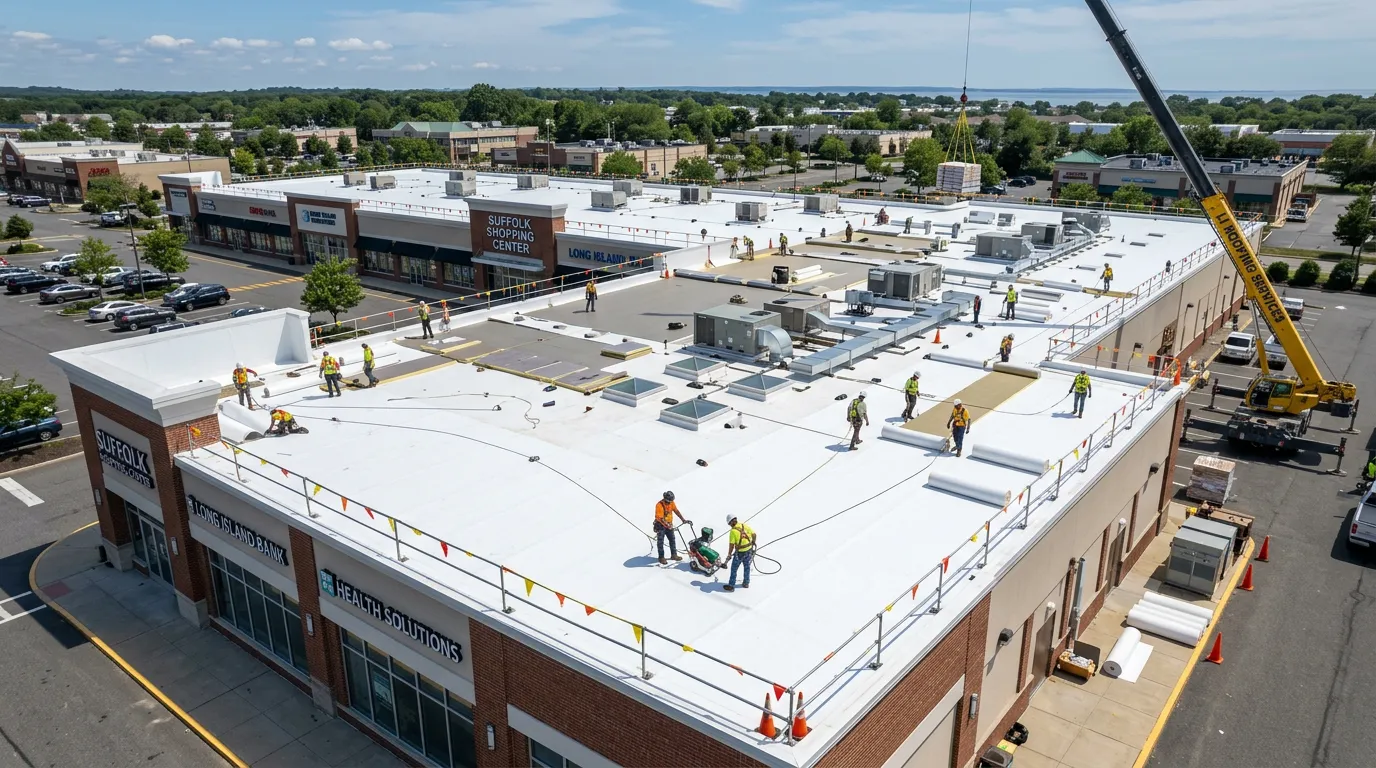
You just got the quote back and your roofer told you the deck is soft in two spots, the flashing around the chimney is shot, and you've got maybe one more season left on those shingles if you're lucky. The problem is you weren't planning to drop a lump sum on a roof this year. Maybe the car needs work, maybe you just did the kitchen, maybe the money's just not sitting there liquid right now.
I get this call every October. Homeowners who know they need the roof done, who've seen the granules piling up in the gutters or the stain spreading across a bedroom ceiling, but who freeze up on the payment side and end up pushing the decision into January. On Long Island that's the wrong month to push it into. We run somewhere around 40 to 50 freeze-thaw cycles a season out here, and every one of them works water deeper into whatever gap already exists. A roof that could've been a clean tear-off and reshingle in November turns into deck replacement and interior drywall work by March because nobody wanted to talk about financing in the fall.
So let's talk about financing, because that's usually the actual blocker, not the roof itself.
Why Waiting Costs More Than the Roof
A failing roof on Long Island doesn't fail gracefully. Salt air off the Sound and the Atlantic hits most properties from at least two sides, and it accelerates corrosion on flashing, fasteners, and exposed metal faster than it would inland. Add oak and pine leaf and needle load sitting wet in valleys all fall, and you've got organic debris holding moisture against the shingle line right when temperatures start swinging below freezing at night and above it by midday. That cycle is what splits shingles and pries up nail heads. Once water gets under the membrane, it travels, and it usually shows up somewhere you didn't expect, like a soffit on the opposite side of the house or a stain above a closet. Waiting through one more winter on a roof that's already compromised is how a roofing job becomes a roofing-plus-insulation-plus-drywall job. If you're already seeing moisture signs in the attic, it's worth reading about attic air sealing too, since a leaking roof and a poorly sealed attic tend to compound each other.
What Actually Drives the Cost
I won't give you a number, but I'll tell you what moves the estimate so you know what you're financing. Roof pitch and complexity matter a lot, a simple ranch roof is a different job than a Cape or colonial with multiple valleys and dormers. Deck condition is the wildcard, you don't know what's under the old shingles until tear-off starts, and sandy soil areas with high water tables, especially South Shore towns like Babylon and parts of Islip and Southampton, see more humidity wicking up into framing over time, which can mean more deck replacement than a homeowner expects. Layers of old roofing, chimney and skylight flashing detail work, and ventilation upgrades all add labor. The material tier you choose (architectural shingle versus standard three-tab, or a step up to a higher wind-rated product given our nor'easter exposure) changes the number too. Ask your contractor to walk you through the estimate line by line before you sign anything, not just the bottom line.
Financing and Payment Plan Options
Most roofing contractors, us included, work with third-party financing companies that specialize in home improvement loans. These typically run as unsecured personal loans underwritten same-day or next-day, with terms that let you spread payment over a number of months or years instead of writing one check. Some offer promotional no-interest windows if you pay off the balance within a set period, which can work well if you've got a bonus or tax refund coming but need the roof done now, before winter, not after it arrives. A home equity line of credit is another path if you've got equity built up, usually a lower rate than unsecured financing but it puts your house up as collateral and takes longer to close, so it's not always realistic on a tight fall timeline. Some manufacturers also run seasonal promotions through certified contractors, ask specifically whether your contractor is certified for anything like that, since it can affect warranty terms as well as payment terms. Whatever option you pick, read the contract for what happens if a payment is missed and whether there's a prepayment penalty before you sign.
Insurance: When It Pays for Part of the Job
If your roof damage traces back to a specific storm event, wind-driven shingle loss, a tree limb strike, hail, that's a different conversation than routine wear and should go through your homeowners insurance claim first, not your wallet. We document storm damage with photos and a written scope specifically for adjuster review, and we'll meet the adjuster on-site if your carrier schedules an inspection. Age-related wear, granule loss from UV and salt exposure, or a roof that's simply past its service life generally isn't a covered claim, insurance treats that as maintenance, not damage. If you're not sure which bucket your roof falls into, that's worth figuring out before you commit to financing the whole job yourself. More on how that claims process actually works is on our insurance restoration page.
Building a Realistic Budget Before the Freeze
Get your written estimate broken into phases if the full scope feels like too much at once: tear-off and deck repair as phase one if deck damage is found, then flashing, ventilation, and final shingle install. Ask about combining the roof with gutter work in the same mobilization, since staging a crew once instead of twice saves on labor overhead, and failing gutters dump water right back against your fascia and roof edge anyway. We cover what that pairing looks like on our gutters page. Get a firm start date in writing, not a season, a date, because once your name is on a fall roofing schedule here, slots fill fast as every contractor on the Island races the same freeze window.
Permits and Timing on Long Island
Most towns across Nassau and Suffolk require a building permit for a full roof replacement, and the review timeline and fee structure vary by municipality. Brookhaven, Islip, Smithtown, Huntington, and the Nassau towns each run their own building department process, so don't assume your neighbor's timeline applies to your address. We pull permits as part of our contract and handle the inspection scheduling, but you should confirm current turnaround times with your specific town's building department before locking in a start date, especially heading into the busy fall filing season when departments get backed up.
What We Do
We handle the roof replacement itself and the financing conversation before you sign anything, walking through line-item estimates, connecting you with financing partners if you need to spread the payment, and documenting storm damage for insurance when that's the right path. We pull the permits, manage the inspection schedule, and keep you updated on your actual start date so you're not guessing whether you'll have a roof before the first hard freeze.
Call (631) 312-7441 or book a free walkthrough.
Frequently Asked Questions
Can I finance a roof replacement without using my home equity?
Yes. Most contractors including us work with unsecured home improvement loan partners that don't require collateral. These are underwritten quickly, often same-day, and some carry promotional no-interest periods if the balance is paid within a set window.
Will my homeowners insurance cover a roof that's just old?
Generally no. Insurance covers sudden damage from a specific event like wind, hail, or a fallen limb, not gradual wear from age or sun and salt exposure. If your roof failed from a storm, document it and file a claim before paying out of pocket.
How fast can a roof replacement actually get scheduled before winter?
It depends on your contractor's fall backlog and whether your town's permit office is backed up, which is common this time of year. Ask for a written start date, not a seasonal estimate, and lock it in as early as you can once you've decided to move forward.
What happens if hidden deck damage is found after tear-off starts?
A good contract should spell out how that's priced before work begins, usually as a per-sheet or per-section rate so there are no surprises mid-job. Ask to see that line item in your estimate and confirm it in writing.
Does combining roof and gutter work save money?
It can, mainly on labor and mobilization since the crew is staged once instead of twice. It also protects the new roof, since failing gutters send water back up under the roof edge and fascia even on a brand-new installation.
Is a no-interest financing promotion actually a good idea?
It can be, if you're confident you can pay the balance off within the promotional window, since missing that deadline usually triggers retroactive interest on the full amount. Read the terms closely before counting on it as free money.
Related Guides
Get a Free Estimate from Alec's Construction
Licensed and insured, working across Nassau and Suffolk County since 2018. We come out, look at the actual job, and put a written number in your hand — no pressure, no obligation.
Or call (631) 312-7441