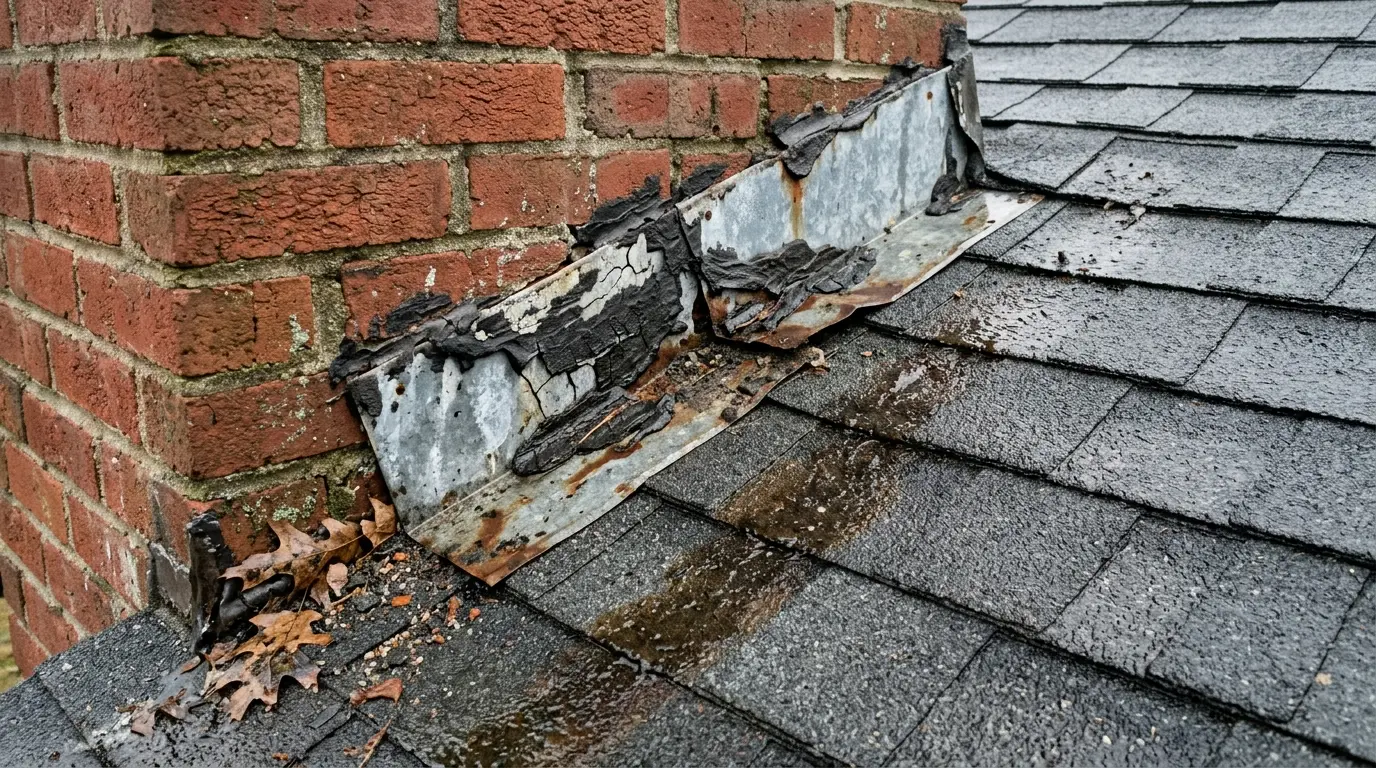
You've got shingles in the yard, a soft spot near the chimney flashing, or a brown ring spreading across a bedroom ceiling after the last round of fall nor'easters came through. Now you're standing in the driveway trying to decide if a repair gets you through winter or if you're about to sink money into a roof that's going to fail anyway by February.
I've been doing this work in Suffolk County since 2018, and the honest answer is that the storm damage you can see is almost never the whole story. Wind doesn't just rip off a few shingles, it drives water sideways under the courses above the damage, and that water can travel two or three feet before it finds a nail hole or a seam to drop through. So the question isn't just "how bad does it look," it's how old the roof is, what the decking underneath is doing, and whether the damage is isolated or spread across multiple slopes.
This is the same walk-through I do on every storm call on the South Shore and up through the North Shore towns. It won't give you a number, but it'll tell you which side of the repair-or-replace line you're actually standing on.
Start With the Age of the Roof
Asphalt shingles on Long Island run a shorter real-world life than the bag says, because we put them through 40 to 50 freeze-thaw cycles a season on top of salt air coming off three sides of the Island. A 20-year shingle here often acts like a 15-year shingle. If your roof is under 10 years old and the storm took a clean bite out of one slope, repair is usually the right call. If it's past 15 years and this storm just found the first weak spot in a mat that's already gone brittle, a repair is a bandage. You'll be back up on that roof again next fall, and probably again the fall after.
What the Decking Tells You
Shingles are the part everyone looks at. The decking underneath is what actually matters. If a contractor pulls back damaged shingles and finds plywood that's soft, delaminating, or stained black with mold, that's not a shingle repair anymore, that's a structural issue. Sandy soil and a high water table on the South Shore mean a lot of homes already fight moisture from below. When a roof leak adds moisture from above on top of that, the deck rots faster than homeowners expect. Any contractor who quotes you a repair without pulling shingles to check the deck first is guessing, not inspecting.
How Much of the Roof Is Actually Damaged
One slope with lifted shingles from wind uplift is a repair. Damage scattered across two or three slopes, or granule loss and cracking showing up on the whole roof once you get up close, means the storm just exposed age that was already there. I tell homeowners to think in terms of percentage of total roof area affected, not just the spot that's obviously leaking. Past a certain point, patching one section while the rest of the roof is a season or two from the same failure doesn't save you money, it just spreads the same spend over two jobs instead of one.
Read the Insurance Angle Correctly
Wind and storm damage is often covered, age-related wear is not, and insurance adjusters know the difference. If a nor'easter lifted shingles on an otherwise sound roof, that's a clean claim. If the same storm found a weak point on a roof that was already failing, the adjuster is going to document it as pre-existing wear, and you'll be covering the gap yourself. Get your own contractor's inspection and photos before the adjuster shows up, matched against the adjuster's report line by line. We walk clients through this on every storm claim, and it's covered in more detail on our insurance restoration page.
Don't Let a Patched Roof Fool You Through Winter
A repair can look fine in October and fail in January. Ice that forms at a patched seam expands with every freeze-thaw cycle and works the patch loose faster than it would on original material, because the patch and the surrounding shingle age at different rates. Oak and pine leaf load sitting in valleys and behind chimneys holds moisture against the patch all winter. If your attic is already running warm and uneven, you're also setting up ice dams on top of a roof that's already compromised. Worth checking the attic side of this too, we cover the early warning signs in attic ice dam signs before first snow.
Gutters and Flashing Change the Math Too
A roof repair means nothing if the gutters dumping water off that slope are pulling away from the fascia or clogged with leaf litter, because the water just backs up under the edge you just fixed. Same goes for chimney flashing. If the flashing around a chimney or sidewall is the actual source of the leak and not the shingles themselves, replacing shingles solves nothing. Check gutters and flashing condition as part of the same decision, not as a separate project after the fact.
The Suffolk County Permit Reality
A roof repair under a certain scope generally doesn't need a permit in most Suffolk towns, including Brookhaven, Islip, Smithtown, Huntington, Babylon, and Southampton. A full tear-off and replacement generally does. Requirements, fees, and inspection timing vary by town and change, so confirm directly with that town's building department before you sign a contract, and make sure whoever you hire is pulling the permit, not skipping it to save time.
What We Do
We inspect the deck before we quote anything, document damage for your insurance claim if it applies, and give you a straight repair-or-replace recommendation based on what we actually find up there, not a guess from the ground. If you've got active damage and winter is coming, don't sit on it.
Call (631) 312-7441 or book a free walkthrough.
Frequently Asked Questions
How do I know if my roof damage is from this storm or just old age catching up?
A contractor should pull back shingles at the damage site and check the nail pattern and granule loss on surrounding areas, not just the spot that's leaking. Fresh wind damage usually shows torn or lifted shingles with intact granule coating nearby. Widespread granule loss and brittle shingles across the whole roof point to age, not the storm.
Can a roof repair actually make it through a Long Island winter?
A repair can hold through winter if the rest of the roof is sound and the deck underneath the damage is dry and solid. It won't hold as well if it's patched onto a roof that's already past 15 years old, because the surrounding material is failing at a different rate than the patch. That mismatch is usually where the next leak shows up.
Will my homeowners insurance cover a full roof replacement after storm damage?
It depends on whether the damage is classified as storm-related or as pre-existing wear, and the adjuster makes that call based on what they can see and document. Getting your own contractor's inspection and photos before the adjuster's visit gives you something to compare their report against. We walk through this on every storm claim we handle.
How much of my roof needs to be damaged before replacement makes more sense than repair?
There's no fixed percentage, but once damage is scattered across two or more slopes, or the shingles elsewhere on the roof are showing the same age-related wear, patching one area stops being cost-effective. At that point you're likely paying for a repair now and a replacement within a year or two anyway.
Do I need a permit to repair or replace my roof in Suffolk County?
Smaller repairs generally don't require a permit in most Suffolk towns, while a full tear-off and replacement generally does. Rules and fees vary by town and do change, so confirm directly with your town's building department before signing a contract.
What's the biggest mistake homeowners make after storm roof damage?
Waiting too long to get it inspected, or accepting a quote that never checked the condition of the decking underneath the shingles. A roof can look fine from the driveway while the deck underneath is already soft from a slow leak that predates the storm. That's the part that determines whether you're looking at a repair or a full replacement.
Related Guides
- Insurance Restoration Services
- Attic Ice Dam Signs Before First Snow
- Gutter Services on Long Island
- Roofing Services
Get a Free Estimate from Alec's Construction
Licensed and insured, working across Nassau and Suffolk County since 2018. We come out, look at the actual job, and put a written number in your hand — no pressure, no obligation.
Or call (631) 312-7441