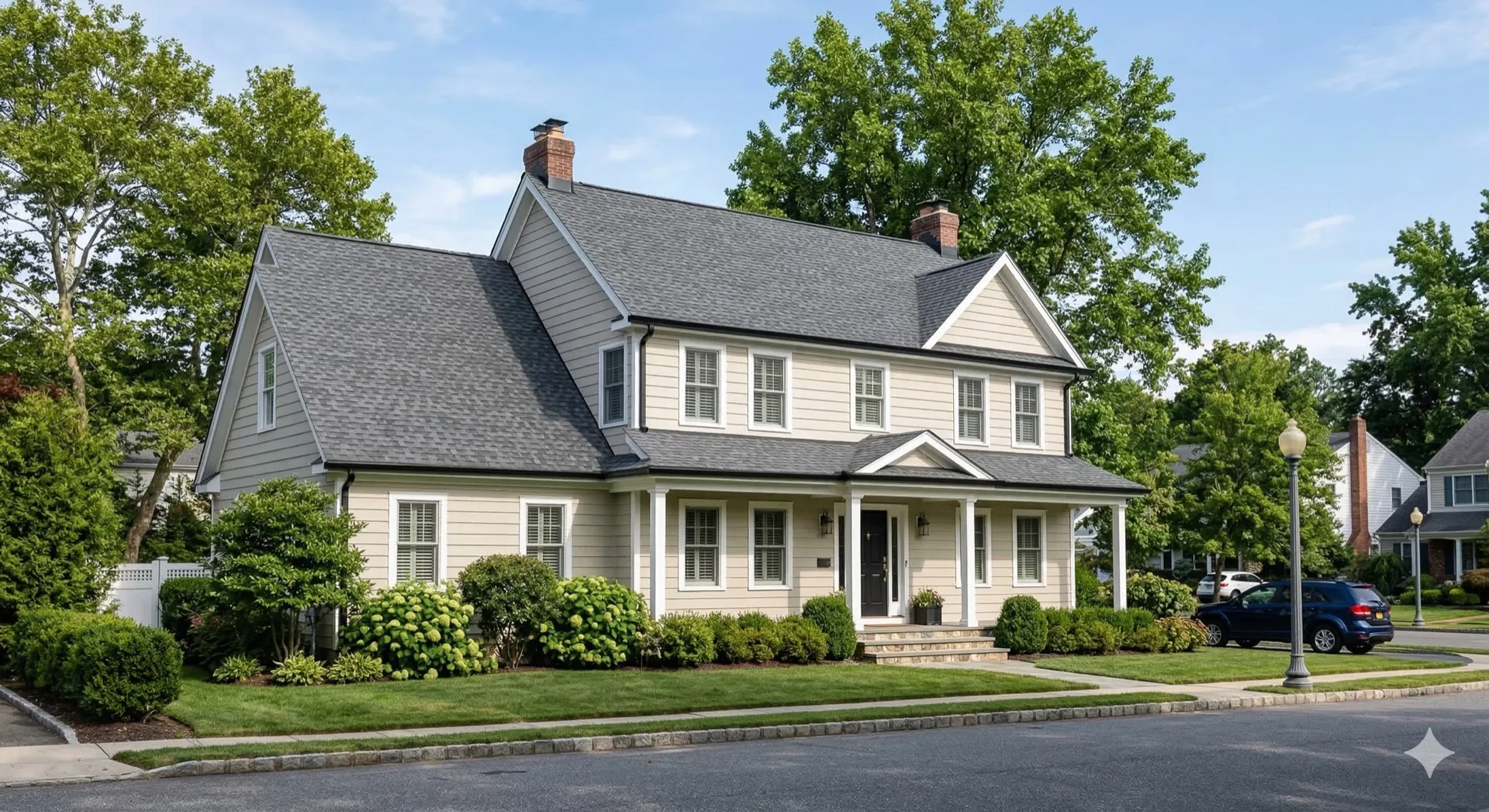
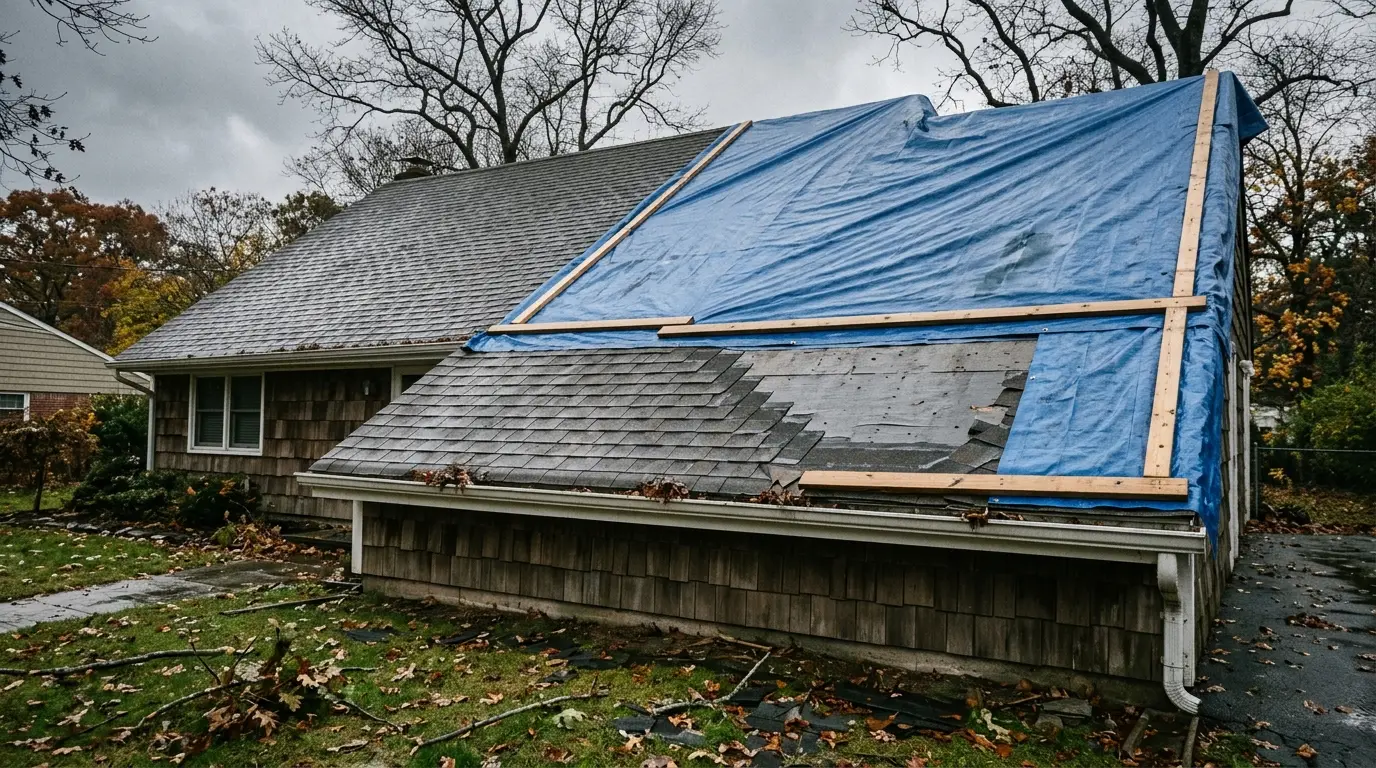
Wind takes a Deer Park roof apart from the edges — the eaves, the ridge, the gable ends, the flashing — and takes siding off the face that took the gusts, and then the rain that follows goes into the sheathing and the wall behind. Alec's Construction tarps and boards the same day where we can reach you, finds the wet sheathing that a cosmetic patch would cover up, and rebuilds the roof, the siding and the gutters on one scope with the interior, working out of the yard on Barton Avenue in East Patchogue.
What a Storm Does in Deer Park
Deer Park is the north end of the Town of Babylon, inland on flat sandy ground with no tidal water anywhere near it, so a nor'easter here is a wind and tree event. The hamlet is mostly 1950s and 60s ranches, capes and splits on small lots, with the street trees planted at the same time now standing over the roofs, and the older houses along Deer Park Avenue and Carlls Path under bigger oaks. The industrial and commercial strips along Commack Road and Grand Boulevard take the wind on big flat roofs and rooftop units. Basements are common here and a long rain after a wind event fills the ones whose sumps lost power.
Limbs Through Roofs and Siding
Inland the wind damage to a roof here is usually what a pine limb did on the way down — a hole through the sheathing, a run of shingles ripped, a gutter torn off with the fascia — and the siding damage is where the trunk landed against the wall. The repair starts with the hole, not the shingles.
What Wind Does to a Roof Here
Shingles lift at the eaves and the ridge first, where the wind gets under them. Once a course goes, the ones above it follow, and the rain that comes after the wind goes through the exposed underlayment into the sheathing, the attic insulation and the ceilings below. Flashing at chimneys and sidewalls pulls loose. Gutters and fascia peel off the eaves and take the drip edge with them. A roof that "just lost a few shingles" is usually wet under a wider area than the missing shingles show.
What Wind Does to Siding
Vinyl unlocks and sails off in panels from the windward face and from the corners. The housewrap behind it tears, and the sheathing behind that takes rain until the panels are back. Cedar and clapboard split at the fasteners. The repair is not the panels; it is the wrap and the sheathing behind them, dried and checked before anything goes back on.
The Order of Work
Photographs as found. Tarp and board the same day where we can reach you. Wet insulation and sheetrock out from under the leak. Sheathing opened where it is wet and replaced where it has to be. Then the roof, the flashing, the siding, the gutters and the interior on one scope, the cause corrected so the new work stays dry.
The Claim
Wind damage to a roof or siding is a homeowners claim. Storm damage is separated from wear on the scope — the carrier pays for what the wind did, not for a roof that was at the end of its life — and where a roof is more storm than wear, the scope says so with the photographs to show it. We meet the adjuster at the house. Many coastal New York policies carry a separate deductible for named storms; the figure is on your declarations page.
Building Department in Deer Park
Deer Park files with the Town of Babylon at Town Hall in Lindenhurst. Emergency work to make the house safe and dry does not wait for a permit; the permanent repair is filed once the scope is agreed.
Free walkthrough in Deer Park. Call or text (631) 312-7441. Tell us whether the roof is open, whether a tree is on the structure and whether there is water inside, and we bring the right equipment on the first trip.
Frequently Asked Questions
My Deer Park basement flooded when the power went out. Is that covered?
Usually not under a standard homeowners policy unless it carries a sump-pump or water-backup endorsement, and it is not flood insurance either because the water did not rise from outside. What is covered is what came in through the roof or the wall the wind opened. We separate the two on the scope, and the drying and cleanup happen either way because a wet basement grows mould whoever is paying.
Can you tarp the roof today?
Where we can reach you safely and the roof can be walked, yes, that is what the first visit is for. A tarp is a temporary measure to stop the water while the damage is documented and the permanent repair is scoped.
Will insurance pay to replace the whole roof or just the missing shingles?
It depends on what the wind did and what the adjuster sees. Where the damage is scattered across the roof, or the shingles that are left cannot be matched or will not seal, a full replacement is often the right scope and often the approved one. Where the damage is one section, it is a section. We write the scope from the photographs and meet the adjuster at the house.
The siding is gone on one side. Can you match it?
Sometimes, and when we can we do. Vinyl profiles and colours go out of production, and a house that lost a full face often gets that face re-sided in the closest match rather than patched with panels that do not match. What is behind the panels matters more: the wrap and the sheathing get dried and checked before anything goes back on.
Related Guides
- Fallen Tree Removal & Roof Repair in Deer Park, NY
- Flood & Water Damage Cleanup in Deer Park, NY
- Storm Debris Removal & Cleanup in Deer Park, NY
- Storm Roof & Siding Repair in Central Islip, NY
- Storm Roof & Siding Repair in Hauppauge, NY
- Hurricane & Storm Damage Repair in Deer Park, NY
- Hurricane & Storm Damage Repair — our service page
Also Serving Deer Park
- Attic Insulation in Deer Park — air sealing, baffles and R-49 depth
- Basement Finishing in Deer Park — egress, ceiling height and moisture
- Bathroom Remodeling in Deer Park — full gut renovations
- Fallen Tree Removal & Roof Repair in Deer Park — tree off the house, roof supported and repaired
- Flood & Water Damage Cleanup in Deer Park — wet material out, drying metered
- Gutter Installation in Deer Park — seamless gutters, fascia and drainage
- Hurricane & Storm Damage Repair in Deer Park — trees, flooding, cleanup and repairs
- Interior Painting in Deer Park — the right work for the cold months
- Kitchen Remodeling in Deer Park — cabinets, counters and layout
- Roofing in Deer Park — tear-offs, repairs and storm damage
- Storm Debris Removal & Cleanup in Deer Park — trees, building debris and hauling
Work With Alec's Construction
This guide is written by the crew that does the work. See Alec's Hurricane & Storm Damage Repair service — fallen trees, flooding, roof and siding damage, cleanup and the rebuild. Licensed and insured on Long Island, one crew start to finish, free walkthrough and a written estimate inside 48 hours.
Booking the cold months now: we also handle Roofing and Storm Damage & Insurance Restoration.
Get a Free Estimate from Alec's Construction
Licensed and insured, working across Nassau and Suffolk County since 2018. We come out, look at the actual job, and put a written number in your hand — no pressure, no obligation.
Or call (631) 312-7441