$800 OFF All Projects◆Free Walkthrough — No Obligation◆Licensed & Insured · 125+ Projects◆ADU Grants Up To $125K◆$800 OFF All Projects◆Free Walkthrough — No Obligation◆Licensed & Insured · 125+ Projects◆ADU Grants Up To $125K◆
Storm Response — Suffolk County
Hurricane / Storm Damage? We Can Help.
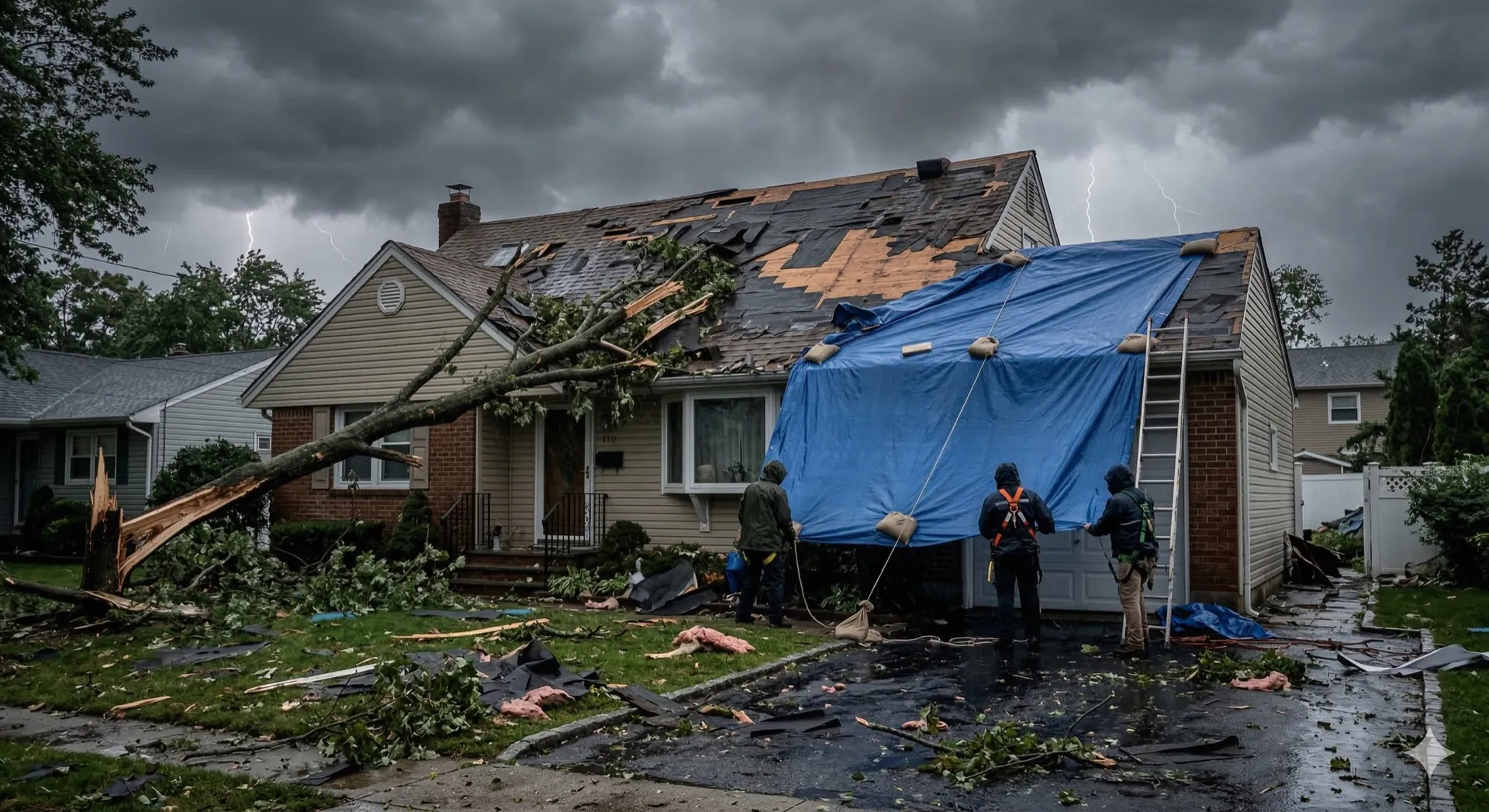
Fallen trees, flooding and water damage, roofs and siding torn open, debris everywhere. One local crew from the first tarp to the finished repair, and the documentation your claim needs. Call or text, day or night.
A hurricane or nor'easter does five kinds of damage to a Long Island house, and most homeowners end up calling five companies to deal with them. We do all five, in the right order, on one scope your insurance adjuster can read.
We are based on Barton Avenue in East Patchogue and cover Suffolk County. After a storm we run the list in the order the calls came in, roof-open houses first.
Storm Damage Services
Fallen or damaged trees — structural check, removal in the right order, repair
Flooding & water damage — wet material out, drying equipment in, moisture measured
Where we can reach you safely, the roof is covered and the openings boarded on the first visit. Tell us on the phone whether the roof is open, whether there is a tree on the house and whether there is water inside, and we bring the right equipment the first time.
We Are Actually Here
Storm chasers arrive after a hurricane and leave before the roof leaks again. We are on Barton Avenue in East Patchogue, we have worked Suffolk County since 2018, and we will still be here when you have a question in two years.
Documented for the Claim
Everything photographed as found, before a branch is cut or a carpet is pulled. Wind damage kept separate from flood damage, storm damage kept separate from wear. A scope the adjuster can read line by line.
What a Storm Does Here
Long Island Storm Damage
Trees on the House
Oaks and pitch pines over 1960s roofs
Surge and Flooding
South Shore canals and bay streets
Roofs and Siding
Eaves, ridges and gable ends in the wind
Storm Protocol
The Order of Work
How a Storm Job Gets Done
PROTOCOL_REV: 3.0.0 ENV: SUFFOLK_STORM
Step 01 // Secure
Make It Safe, Stop the Water
STRUCTURE_CHECKFIRST
PHOTOS_AS_FOUNDBEFORE_ANY_CUT
TARP_BOARD_UPSAME_DAY
WET_MATERIALOUT
Step 02 // Document
Dry, Measure, Scope
DRYINGEQUIPMENT_METERED
WIND_VS_FLOODSEPARATED
SCOPELINE_BY_LINE
ADJUSTER_MEETINGON_SITE
Step 03 // Rebuild
Repair and Correct the Cause
PERMITFILED
CREWONE_CREW
CAUSECORRECTED
CONTACTONE_PERSON
Your Questions, Answered
Hurricane & Storm Damage FAQ
Stay out of anything that is not obviously safe — under a tree on the roof, in a room with a sagging ceiling, near a downed line or in standing water near electrical. Call the utility for lines and gas. Then photograph everything as it is, before anyone cuts a branch or pulls a wet carpet. Then call us. We tarp and board the same day where we can reach you, and the photographs are what your claim rests on.
Photograph first, then make both calls. Notify your carrier promptly — policies require it — and get a contractor out to stop the water and document the damage properly. What you should not do is start permanent repairs or throw damaged material away before it has been photographed and, ideally, before the adjuster has seen it. Emergency measures to prevent further damage are expected of you; the permanent rebuild waits for the scope.
After a storm we run the list in the order the calls came in, roof-open houses first. We are based in East Patchogue and cover Suffolk County, so the South Shore hamlets around us are the fastest. Tell us on the phone whether the roof is open, whether there is a tree on the structure and whether there is water inside, and we bring the right equipment on the first trip rather than coming back for it.
A tree that falls on a covered structure — the house, the garage, a fence in some policies — is the classic covered peril under a standard homeowners policy, and most policies also pay something toward removing that tree, up to a limit that varies from policy to policy. A tree that fell in the yard and hit nothing is usually not covered. A neighbour's tree on your house is generally your claim, not theirs, unless negligence can be shown. We photograph the tree where it lies before anyone cuts it.
Generally not. Water that rose from the bay, a canal, a creek or the ground is flood damage, and a standard homeowners policy excludes it. Flood is covered by a separate flood policy — National Flood Insurance Program or private — and a new flood policy usually has a waiting period before it takes effect, so it cannot be bought when the storm is on the map. Rain that came in through wind damage to the roof or siding is different: that is a homeowners claim.
Many coastal New York homeowners policies carry a separate deductible for named hurricanes that is a percentage of the dwelling coverage — often several percent — rather than the flat deductible that applies to other claims. It applies only when the policy's trigger is met, typically a hurricane warning or a hurricane-force wind measurement in the state. Check your declarations page; the figure is there. It changes what a claim is worth filing for.
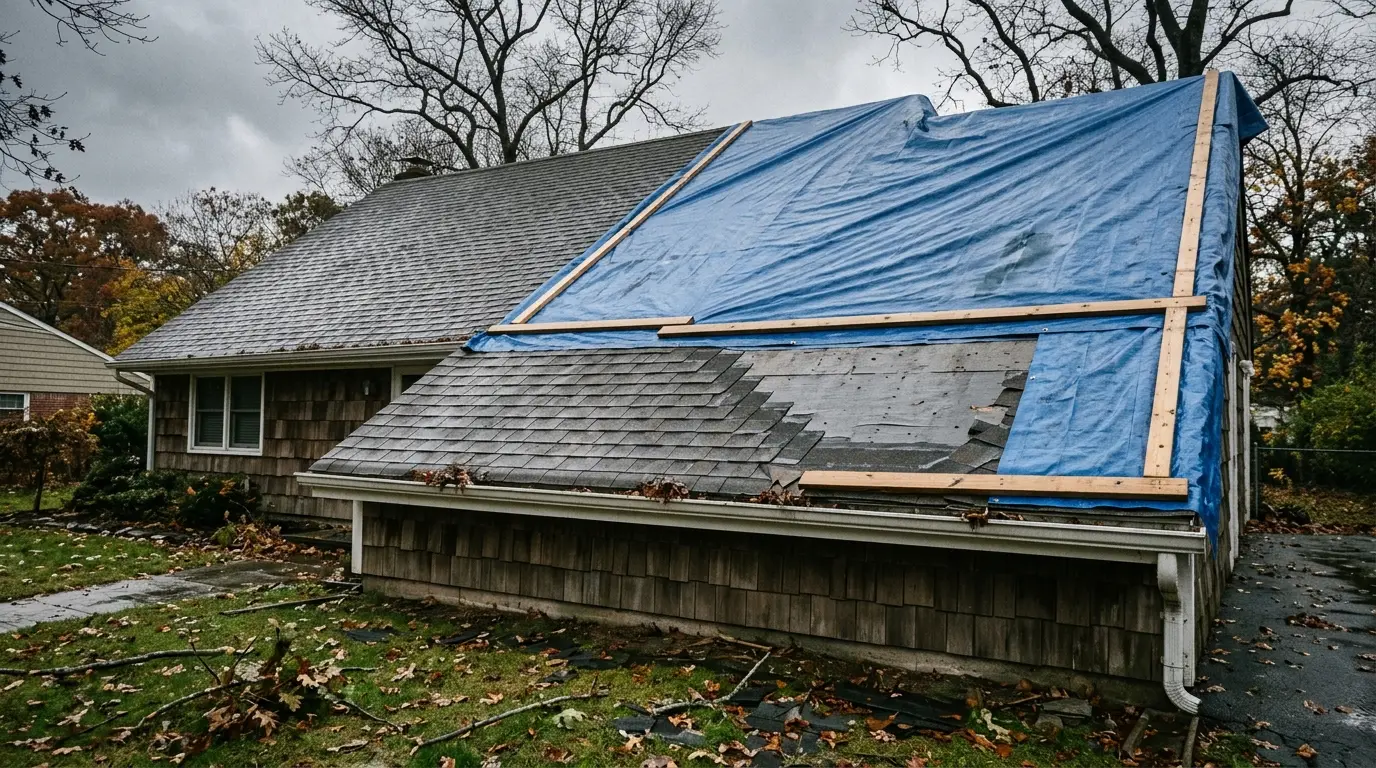
If we can reach you safely and the roof can be walked, yes, that is what the first visit is for. A tarp is a temporary measure to stop the water while the claim is documented and the permanent repair is scoped; it is not a repair. Where a tree is on the roof, the tree comes off first, in the right order, and the tarp goes on after.
It depends on three things: how quickly the house is dried and stabilised, how quickly the carrier approves the scope, and what has to be ordered. Emergency tarping and drying start immediately. The claim process takes as long as the adjuster takes. The rebuild itself — a roof, a room, a re-side — is a matter of days to weeks once approved and once materials are on site. The variable is almost always the claim, not the construction.
Not for the emergency work. Tarping, boarding, shoring, pumping and drying are done to make the house safe and they do not wait for a permit anywhere in Suffolk. The permanent repair that follows — structural work, re-roofing, electrical, anything that changes the building — is permitted work like any other job, and we file it with your town or village once the scope is agreed.
Storm chasers arrive after a hurricane from out of state, knock on doors, ask you to sign an assignment of your claim or pay a deposit, and are gone before the work is finished or the roof leaks again. Ask for a local address and a local phone number, ask how long they have worked on Long Island, and do not sign anything at the door. We are on Barton Avenue in East Patchogue, we have been here since 2018, and we will still be here when you have a question in two years.
Often yes, sometimes no, and the answer depends on three things: whether the structure is sound, whether the electrical is safe, and whether the water is out. A house with a tarped roof and a dry interior is fine. A house that took surge water into the electrical, or has a tree on the structure, or has wet sheetrock and insulation through the living floor, is not somewhere to sleep until those are dealt with. We tell you honestly on the first visit.
Mould can begin growing on wet building materials within a day or two. That is why the wet material comes out and the drying starts immediately, before the adjuster has come and before the claim is approved — emergency measures to prevent further damage are expected under the policy, and photographs of what was removed protect the claim. Drying is done with equipment and measured with meters, not judged by touch.
One call. Where a tree is on a structure the removal and the repair are the same job — the tree has to come off in an order that does not drop the roof, and the roof has to be supported and covered as the weight comes off. We coordinate the removal, do the structural repair, the roofing and the interior, and write it as one scope for the carrier.
Cutting and hauling fallen trees and limbs, clearing the debris the storm left on the property, removing damaged roofing, siding, fencing and wet building material, and getting it off the site so the repair crew can work. What we do not do is touch anything near a downed line — that is the utility's job first. Towns generally run brush pickup after major storms; we tell you what your town is doing and take what they will not.
Get what you can out from under it and catch the water — a bucket, a tarp on the floor. If a ceiling is bellying with water, a small hole at the low point lets it drain into a bucket rather than bringing the whole sheet down. Do not go on the roof. Photograph the leak and the ceiling. Call, and tell us the roof is open so we come with the tarps.
Yes. We write the scope the way the adjuster reads one — line by line, with the photographs attached — and we meet them at the house if it helps. We do not adjust the claim; that is your carrier's job or a public adjuster's. A scope that matches what the adjuster sees is what gets a claim settled without a second visit and without a fight over a supplement.
If the roof is open, a tree is on the house or there is water inside, call rather than fill in the form. Tell us what you are looking at and we come with the right equipment.