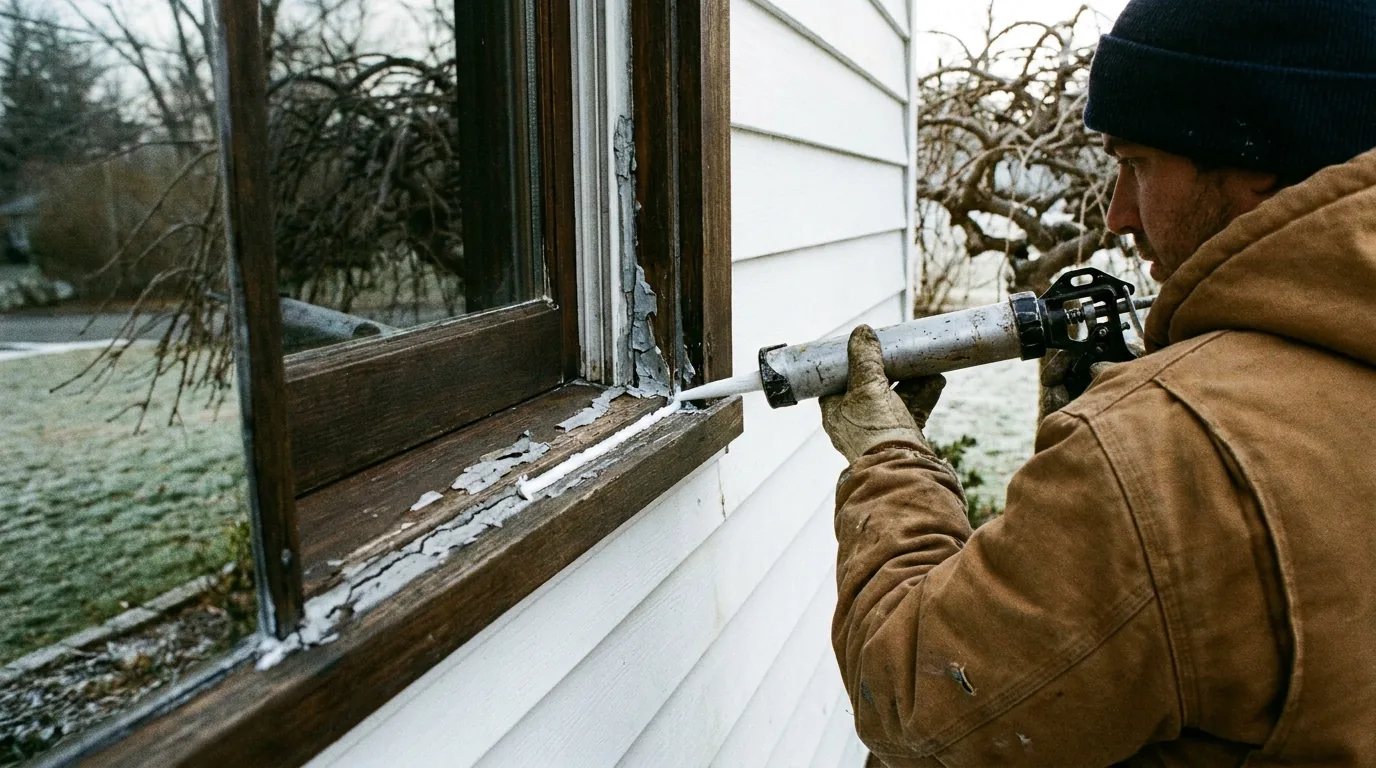
You walk past the living room window in October and feel it before you see anything, a thin cold stream of air brushing your ankle at the sill. You already know what's coming. The oil or gas bill is about to climb, and you're standing there trying to decide whether that draft is coming from the window itself or from somewhere you can't see.
I get this call every fall, usually right after the first real cold snap, from Babylon to Southampton. Most homeowners assume the fix is new windows, because the window is where they feel the cold. Sometimes that's right. Just as often the window is innocent and the real leak is in the wall cavity around it, or up in the attic where warm air escaping is pulling cold air in behind it.
Before you spend money on either option, you need to know which failure you actually have. Sealing an air leak and replacing a sash solve two different problems, and only one of them might apply to your house. Guessing wrong means you pay for a job that doesn't fix the draft.
Where the Draft Is Actually Coming From
Run your hand slowly around the window on a cold or windy day, starting at the casing where it meets the drywall or the wall trim, then moving to the sash itself and the lock where the two halves meet. A steady cold line right at the trim or at the baseboard below the window almost always means the insulation packed around the frame during the original install has settled, compressed, or was never there to begin with. That's a framing and air sealing problem, not a window problem.
A draft you feel specifically at the meeting rail, the lock, or right along the edge of the glass is a different animal. That's the window unit itself failing to seal, and no amount of caulking the trim will fix it.
Old Windows: What's Really Failing
On older wood double-hungs I see the same failures over and over on Long Island houses. The bottom rail rots from decades of condensation sitting on the sill. Sash cords snap or the balance springs give out, so the upper sash drops a hair and leaves a gap you can't see but can absolutely feel. Glazing putty holding the glass in the sash dries out and pulls away, usually on the side that takes the most sun and weather.
On vinyl replacement windows from the 90s and 2000s, the common failure is the insulated glass unit itself. If you see fog or a milky haze between the panes, the seal on that unit let go and the inert gas fill is gone. The frame can be perfectly tight and you'll still feel cold radiating off that glass, because conduction through a failed unit isn't the same thing as air leakage.
Salt air works against hardware on both window types. Aluminum balances, cranks, and weep holes corrode and clog faster within a mile or two of the Sound or the Atlantic, which is most of this island. If your house sits on three exposed sides to salt-bearing wind, expect hardware failure sooner than the glass itself fails.
Air Sealing First, Replacement Second
If I'm being straight with you about where to spend money first, it's rarely the windows. Most Long Island houses lose more heat through attic bypasses, top plate penetrations, recessed lights, and a loose attic hatch than through the actual glass area of the windows. That work is faster, cheaper per degree of comfort gained, and it can usually get done before the ground freezes. We cover the diagnostic and the fix in detail on our attic air sealing page.
Seal the attic bypasses and the perimeter gaps around the window frames first. If the draft at the sash itself is still there after that work, now you have a real answer: the window needs attention, not the house around it.
What Actually Moves Your Heating Bill
Moving air costs you more than glass does. A house that's tight everywhere except for one old single-pane window will often burn less fuel than a house with brand-new windows but open bypasses in the attic and gaps behind the siding. That's why I don't let a homeowner replace windows as the first move without checking the rest of the envelope.
If you need to buy time before a bigger decision, storm windows or a weatherstripping kit on a sound wood sash will cut a real amount of the draft for one winter. They won't fix a rotted rail or a failed glass seal, so treat that as a bridge, not the answer.
The Long Island Factor
We get 40 to 50 freeze-thaw cycles in a typical season here, and that cycling is hard on caulk and glazing putty specifically. A seal that looked fine when you checked it in October can crack open by January just from the material expanding and contracting that many times. Salt air accelerates the breakdown of hardware and finishes on top of that, and a nor'easter will find any gap and drive wind-blown rain straight into it, which is why the flashing behind your siding and trim around the window opening matters as much as the sash does. If the siding around a window is original and never had proper flashing, that's often where the real water and air problem sits, and it's worth checking when you're already looking at the window. We handle that tie-in on the siding side of the job when it comes up.
Permits and What a Town Actually Requires
Replacing a window in the same size opening generally does not trigger a permit in most Long Island towns, but that's not a guarantee everywhere, and it changes the moment you enlarge an opening, change an egress bedroom window, or work on a house in a historic district. Brookhaven, Islip, Smithtown, Huntington, Babylon, Southampton, and the Nassau towns each have their own building department with their own current rules. Confirm with them directly before you schedule anything, because permit requirements change and I'm not going to state one as fact here.
What We Do
We start with a walk-through of the attic and the windows together, because treating them as one envelope problem instead of two separate jobs is what actually tells you where the draft is coming from and what it will take to stop it before winter. If you're in East Patchogue or a town nearby, see our attic insulation page for what that diagnostic looks like on a house like yours.
Call (631) 312-7441 or book a free walkthrough and we'll find out whether it's the windows, the attic, or both.
Frequently Asked Questions
How do I tell if the draft is coming from my windows or from the attic?
Run your hand around the perimeter of the window casing where it meets the wall, then around the sash and lock itself, on a cold or windy day. A steady cold line right at the trim or baseboard below the window usually means the insulation around the frame has settled, which is an air sealing problem. A draft you feel right where the two sashes meet, or at the lock, points to the window itself.
Is it worth air sealing before I decide on new windows?
Yes, because air sealing the attic and the gaps around the window frame costs far less than a window job and it often removes most of the draft you're feeling. If you still feel a specific cold spot right at the sash after that work, you know the window itself needs attention rather than the whole house.
Why do my windows feel worse every winter even though nothing changed?
Caulk and glazing putty are flexible when new, and 40 to 50 freeze-thaw cycles a season on Long Island shrink and crack that material a little more each year. A seal that looked fine in October can be open by January. Salt air speeds this up too, especially on hardware and aluminum balances.
Do foggy double-pane windows mean I need full replacement?
Fog or haze between the panes means the seal on that insulated glass unit has failed and the gas fill is gone, so that unit is no longer doing its job no matter how tight the frame is. Some manufacturers allow replacing just the glass unit in a sound frame. Whether that's realistic depends on the window's age and brand.
Will I need a permit to replace windows on my house?
Replacing a window in the same size opening generally does not require a permit in most Long Island towns, but that changes if you're enlarging the opening, changing an egress bedroom window, or working in a historic district. Confirm directly with your town's building department before scheduling anything.
Should I just add storm windows instead of replacing everything this year?
Storm windows or interior weatherstripping kits can meaningfully cut the draft for one winter while you plan a bigger job, and they're a reasonable stopgap on older wood windows that are otherwise sound. They won't fix a rotted sash or a failed seal, so treat them as a bridge, not a permanent fix.
Related Guides
- Attic Air Sealing Long Island
- Siding Services
- Attic Insulation East Patchogue NY
- Attic Insulation Bay Shore NY
Get a Free Estimate from Alec's Construction
Licensed and insured, working across Nassau and Suffolk County since 2018. We come out, look at the actual job, and put a written number in your hand — no pressure, no obligation.
Or call (631) 312-7441