You felt it before you thought about it. You're standing near the living room window and there's a cold line of air moving across your arm even though the window is shut. The thermostat's been creeping up a degree or two every week since September and the heating bill already looks like a January bill. So you start wondering if it's the windows, and you're not wrong to wonder, but you're also not automatically right.
I get this call every October and November on the South Shore and up through the North Shore towns. Homeowner feels a draft, assumes new windows, and sometimes that's exactly the fix. Other times the windows are fine and the real leak is in the attic hatch, the rim joist in the basement, or old can lights punched through the ceiling. The window gets blamed because you can feel it with your hand. The attic leak you never feel, you just pay for.
So before you spend money, let's separate what's actually failing in an old window from what just feels cold, and talk about whether this is a now job or a spring job once you know which one you've got.
What a Failing Window Actually Looks Like
A window that's genuinely done isn't just "old," it's showing specific failure. On double-pane units, look for fog or a hazy ring between the panes, that's the seal gone and the argon or air gap compromised, and no amount of weatherstripping fixes it because the insulating gas is already gone. On older single-pane wood windows, look for soft or delaminating sash wood, especially at the bottom rail where condensation sits all winter, and glazing putty that's cracked and pulling away from the glass. Run your hand around the frame on a windy day. A thin whistle or a steady cold stream at the meeting rail or the bottom sash is air moving through a worn weatherstrip or a warped frame, not through the glass itself.
Why It's Not Always the Window
Heat loss through an opening doesn't mean the window is the opening. On a lot of the Capes and raised ranches I work on out here, the bigger leak is where the attic floor meets the top of the exterior wall, or around a whole-house fan cover that's been painted shut for twenty years. If your attic insulation is thin or compressed, you'll get the same "drafty house, rising bill" feeling with perfectly good windows. Before you commit to a full window job, it's worth having someone check the attic plane, and attic air sealing is usually the cheaper first move if that's where the air is actually escaping.
Why Long Island Weather Is Hard on Windows Specifically
We're not dealing with a generic cold climate. Between Nassau and Suffolk you're getting somewhere in the neighborhood of 40 to 50 freeze-thaw cycles a season, and that cycling is what splits old glazing putty and works wood sashes loose at the joints year after year. Add salt air coming off three sides of the Island, and aluminum hardware and steel fasteners in older window frames corrode faster than they would forty miles inland. Nor'easters push wind-driven rain sideways into any gap that's already opened up, so a window that was just drafty in November can be letting water into the wall cavity by February. On the South Shore, the high water table doesn't touch your windows directly, but it does mean basement humidity runs higher most of the year, and that moisture migrates up and finds the weakest seals in the house first.
Replace Now or Wait for Spring
If the glass seal is failed or the sash is rotting, waiting until spring doesn't save you anything, it just gives one more winter's worth of freeze-thaw cycles to work on wood that's already compromised, and it's one more heating season paying to condition outdoor air. Fall and even early winter installs are routine for us, sealant and foam products rated for cold-weather application exist for exactly this reason, and a one-day or two-day install doesn't leave your house open to the elements the way people picture. The one real argument for spring is if you're doing a bigger exterior project at the same time, like siding replacement, where it makes sense to sequence the window install with the wall work so you're not paying for staging twice.
What Actually Drives the Cost
I won't put a number on this because every house is different, but the variables that move the price are consistent: whether you're doing a direct replacement in the existing frame or a full frame-out tear-to-the-studs job, the window material and glass package, how many openings, whether there's rot in the sheathing or header once we open things up, and access, meaning second-story work versus ground floor. Water damage hiding behind an old window, especially one that's been leaking slowly for a season or two, is the thing that turns a straightforward swap into a bigger repair, and if a storm event caused that damage rather than age alone, that's worth a conversation with your insurer before you sign a contract. We can help document that if it applies, see our insurance restoration work.
Permits and Your Town
Most Long Island towns treat a like-for-like window replacement, same size opening, same rough location, as work that generally doesn't need a full building permit, but that is not universal and it is not something to assume. Brookhaven, Islip, Smithtown, Huntington, Babylon, Southampton, and the Nassau towns each run their own building department with their own current rules, and those rules change. If you're changing the size of the opening, adding a window, or doing structural work around a header, that generally does trigger a permit. Confirm directly with your town's building department before work starts, not after.
What We Do
We walk the house, check every window you're worried about by hand, and tell you straight which ones are cosmetic-old and which ones are actually failing, then handle the install, the trim, and the insulation detail around each new unit so it performs the way it's supposed to through the winter.
Call (631) 312-7441 or book a free walkthrough.
Frequently Asked Questions
How do I know if it's really the windows and not the attic or insulation?
Check for fogging between panes, soft wood at the bottom sash, or a steady cold draft you can feel with your hand right at the frame. If you feel cold air generally in the room but nothing specific at the window itself, the leak is often somewhere else, like the attic plane or an old exterior penetration, and worth checking before you replace glass that's actually fine.
Can I just caulk and weatherstrip instead of replacing the whole window?
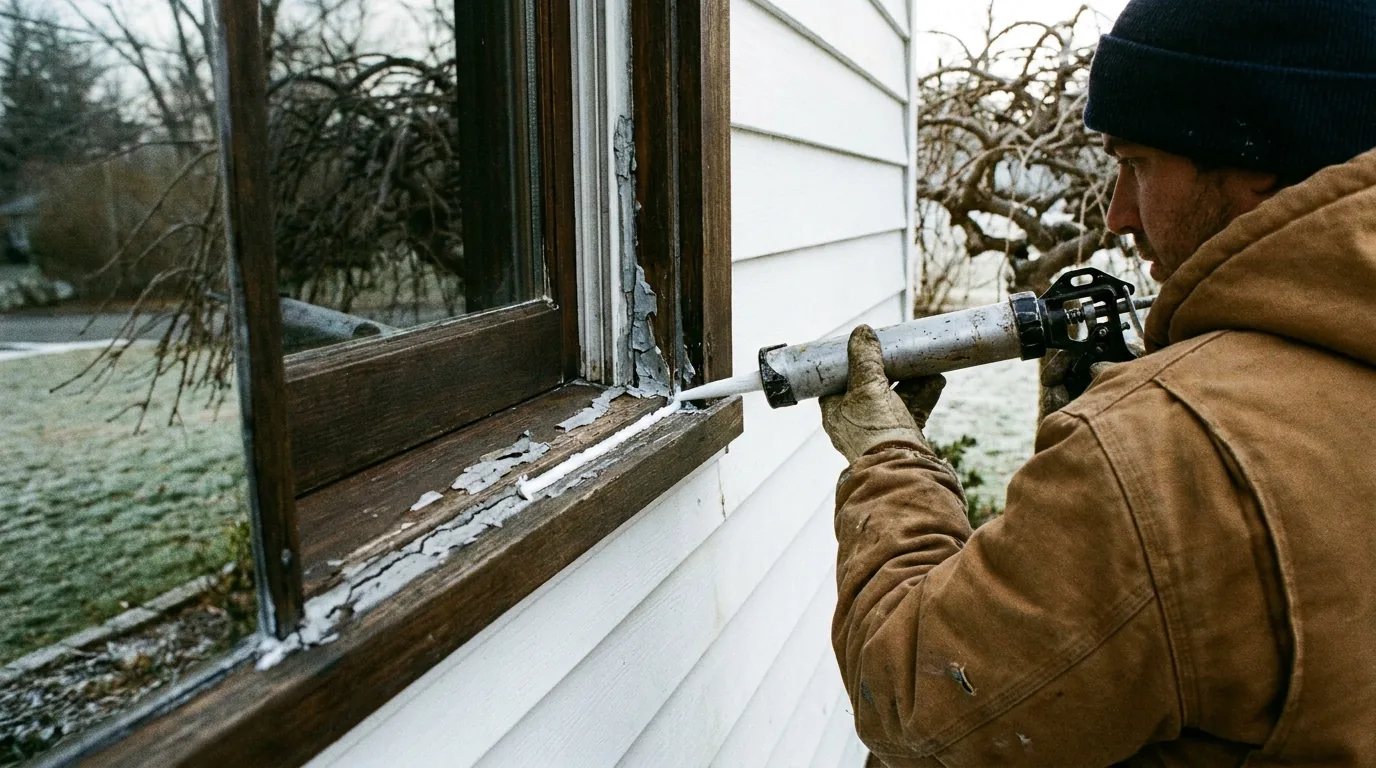
If the seal between the panes is intact and the sash wood is solid, fresh weatherstripping and caulk can genuinely fix a draft and it's the right first move. Once the insulating gas seal between panes has failed or the sash is rotting, caulk only hides the problem for a season, it doesn't restore the insulating value.
Is fall or winter actually a bad time to install new windows on Long Island?
No, it's one of our busiest install seasons for exactly this reason. We use cold-weather-rated sealants and foam, and a typical opening is only exposed for a short window during the swap, so the house isn't sitting open to the weather the way people assume.
Will new windows stop my heating bill from going up this winter?
They'll stop the air leakage and heat loss specific to that opening, which matters a lot if the old units were genuinely failed. They won't fix a heating bill problem that's actually coming from thin attic insulation or basement air leaks, which is why it's worth confirming where the loss is coming from first.
Do I need a permit to replace windows in my town?
Many Long Island towns treat a like-for-like replacement, same opening size and location, as not requiring a full permit, but every town's building department sets its own current rules and those rules do change. Confirm with your specific town's building department before work starts, especially if you're resizing an opening.
How long does a full house window replacement actually take?
A straightforward direct-replacement job on a typical Long Island house usually runs one to two days depending on the number of openings and access. If we find rot or water damage once a window is pulled, that single opening takes longer while we address the wall structure underneath it.
Related Guides
Get a Free Estimate from Alec's Construction
Licensed and insured, working across Nassau and Suffolk County since 2018. We come out, look at the actual job, and put a written number in your hand — no pressure, no obligation.
Or call (631) 312-7441