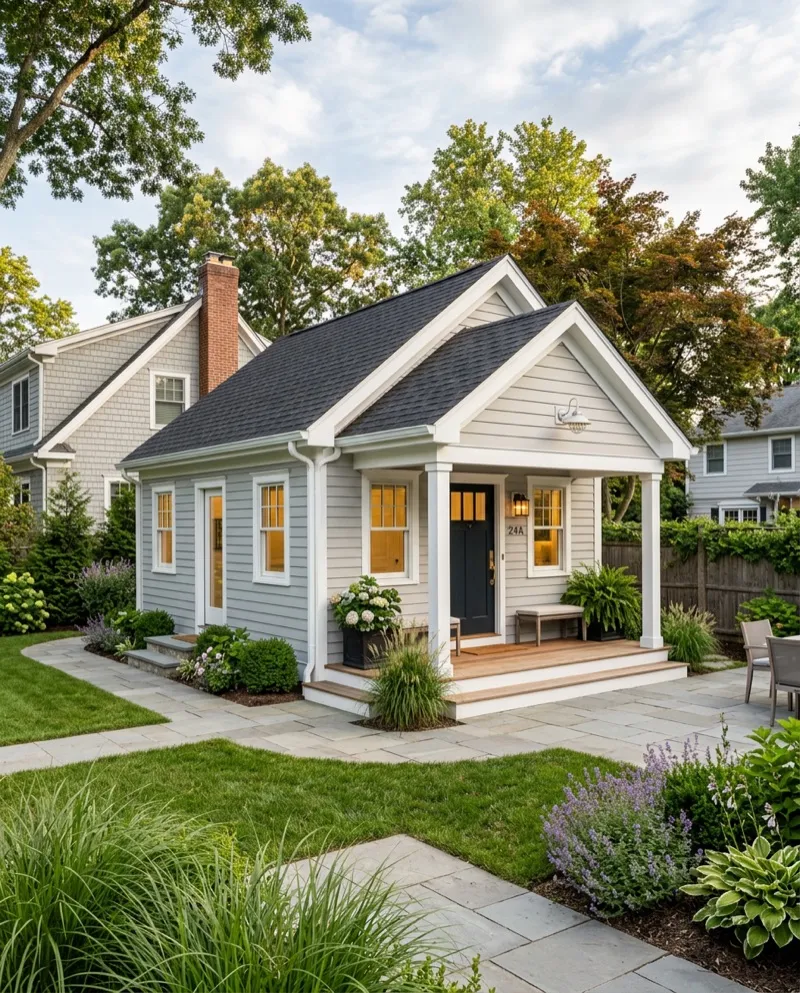
Choosing the wrong contractor for your ADU project is the single most expensive mistake a Long Island homeowner can make. A bad contractor does not just cost you extra money — they cost you months of your life, compromise the structural integrity of the build, create permitting nightmares that follow you for years, and potentially leave you with an unfinished structure and no legal recourse. The ADU construction market on Long Island has exploded since New York State expanded accessory dwelling unit regulations, and that growth has attracted both skilled builders and opportunists who saw a hot market and decided to jump in.
This guide is designed to help you separate the qualified ADU builders from the ones who will cause problems. We will cover licensing requirements, insurance verification, red flags, the questions you should ask every contractor, how to compare bids, realistic timelines, and what makes a specialized ADU contractor different from a general handyman. We are obviously biased — Alec's Construction has been building ADUs across Long Island for over eight years — but the criteria in this guide apply whether you hire us or someone else.
Licensing Requirements for ADU Builders in New York
New York State does not issue a single statewide general contractor license. Instead, licensing requirements are set at the county and municipal level. On Long Island, here is what you need to verify:
- Suffolk County Home Improvement Contractor License. Any contractor performing residential work exceeding $500 in Suffolk County must hold a Suffolk County Home Improvement Contractor (HIC) license. This is a legal requirement, not a suggestion. Operating without this license is a misdemeanor in New York. Your contractor's HIC number should be printed on their contract, business card, and marketing materials.
- Nassau County Home Improvement Contractor License. Nassau County has its own separate licensing requirement. If your property is in Nassau County, the contractor must hold a Nassau HIC license. A Suffolk license does not cover Nassau, and vice versa.
- Town-level business registrations. Some Long Island towns require contractors to register or obtain a local business permit in addition to the county license. Your contractor should know whether the town where your property is located has this requirement.
- Specialty licenses. ADU construction involves plumbing, electrical, and sometimes HVAC work. These trades require their own licenses in New York. Your general contractor should either hold these licenses or use licensed subcontractors for specialty work. Ask specifically who will perform plumbing and electrical work and verify their license numbers independently.
To verify a Suffolk County HIC license, you can contact the Suffolk County Department of Consumer Affairs. For Nassau County, contact the Nassau County Office of Consumer Affairs. Do not take the contractor's word for it — look them up yourself. A legitimate contractor will not mind you verifying their credentials.
Insurance Requirements You Must Verify
Licensing proves the contractor is authorized to work. Insurance protects you when something goes wrong. An ADU project involves heavy equipment, elevated work, electrical and plumbing installations, and workers on your property for weeks or months. Without proper insurance, you are personally liable for any accident, injury, or property damage that occurs during construction.
- General liability insurance. This covers damage to your property or a third party's property during construction. A minimum of $1 million per occurrence is standard for residential construction on Long Island. Ask for a Certificate of Insurance (COI) naming you as additionally insured.
- Workers' compensation insurance. This is required by New York State law for any contractor with employees. It covers medical expenses and lost wages if a worker is injured on your property. If a contractor does not carry workers' comp and a worker gets hurt on your property, you can be held liable. No exceptions.
- Completed operations coverage. This covers defects or failures that are discovered after the project is finished. Not all general liability policies include this, so ask specifically.
- Auto insurance. If the contractor brings vehicles and equipment onto your property, their commercial auto policy should cover any damage.
Request a Certificate of Insurance directly from the contractor's insurance carrier, not from the contractor. A COI from the carrier is current and verified. A document from the contractor could be outdated or fabricated. Call the insurance company's number on the certificate and confirm the policy is active.
Alec's Construction: Licensed, insured, verified.
8+ years, 125+ projects, full documentation on request.
Red Flags That Should Disqualify a Contractor
In our eight-plus years of building on Long Island, we have seen homeowners come to us mid-project after firing another contractor. The warning signs were almost always present from the beginning but were overlooked. Here are the red flags you should never ignore:
- No written contract. Any contractor who wants to start work on a handshake is not someone you should trust with a five- or six-figure project. New York law requires a written contract for home improvement work over $500. The contract must include the contractor's HIC license number, a detailed scope of work, payment schedule, estimated start and completion dates, and cancellation rights.
- Requests for large upfront payment. A reasonable deposit for an ADU project is 10 to 20 percent of the total contract value. If a contractor asks for 50 percent or more upfront, that is a major warning sign. Progress payments tied to completed milestones — foundation complete, framing complete, rough-ins complete — protect both parties.
- No physical business address. A contractor working out of a P.O. box or with no verifiable business address is harder to hold accountable if problems arise. Look for a real office or shop location.
- Cannot provide references for similar work. An ADU is not a deck or a bathroom remodel. If the contractor has never built an ADU on Long Island, they may not understand the permitting process, zoning requirements, utility connections, or Health Department approvals specific to accessory dwelling units. Ask for references from past ADU clients specifically, and call them.
- Pressure to skip permits. Any contractor who suggests building without permits is putting your investment at risk. An unpermitted ADU can result in fines, forced demolition, insurance complications, and serious problems when you sell the property. Walk away immediately from anyone who suggests this.
- Vague or missing timeline. A professional contractor can provide a realistic construction schedule with milestones. If the contractor cannot tell you approximately when the project will start, reach key milestones, and finish, they either have not thought through the project or have too many other commitments to give you a reliable schedule.
- Unwillingness to pull permits themselves. Some contractors want the homeowner to pull the building permit. This is a tactic that shifts liability and can indicate the contractor does not have the credentials needed to pull permits in that jurisdiction. Your contractor should handle permitting as part of their scope.
General Contractor vs. Specialized ADU Builder
There is an important distinction between a general contractor who can build an ADU and a contractor who specializes in ADU construction. Both can produce a quality result, but the experience differs significantly:
- Permitting knowledge. A specialized ADU builder has navigated the permitting process in multiple Long Island towns and knows the specific requirements, timelines, and potential obstacles in each jurisdiction. A general contractor building their first ADU may not anticipate the Health Department review, the zoning variance process, or the fire separation requirements that apply specifically to accessory dwelling units.
- Design efficiency. Contractors experienced in ADU work have refined their floor plans and design approaches over dozens of projects. They know which layouts maximize space, which materials perform best in compact units, and how to position the ADU on your lot to satisfy setback requirements while preserving usable yard space.
- Utility coordination. ADUs require independent or shared utility connections — water, sewer or septic, electric, and sometimes gas. An experienced ADU builder understands the utility connection process, knows the costs involved, and can identify potential complications early. A general contractor may underestimate this phase of the project.
- Grant and funding knowledge. Programs like the Plus One ADU Program provide grants up to $125,000, but the application requires specific documentation including construction estimates and project plans. An ADU specialist has helped clients apply for these grants before and knows what the administering agencies expect.
- Code compliance. ADUs have specific code requirements around fire separation, egress, ceiling heights, ventilation, and sound transmission that differ from standard residential construction. A builder who has done dozens of ADUs knows these requirements without having to look them up.
Licensed & Insured
Full coverage on every project
36+ Cities Served
Suffolk County & Long Island
Free Walkthrough
No obligation, no pressure
Questions to Ask Every ADU Contractor
Before signing a contract, ask these questions and evaluate the answers carefully. The quality of the response tells you as much as the content:
- What is your Suffolk County (or Nassau County) HIC license number? Verify it independently. If they hesitate or cannot provide it immediately, end the conversation.
- Can you provide a Certificate of Insurance from your carrier? Not a copy they hand you — a certificate sent directly from the insurance company. Confirm general liability, workers' comp, and completed operations coverage.
- How many ADUs have you built on Long Island? Ask for specifics — what type of ADU, in which town, and how long ago. Ask if you can speak with those clients or visit a completed project.
- Who will pull the building permits? The contractor should handle all permitting. If they expect you to pull permits, ask why.
- What is your experience with the town my property is in? Each Long Island town has its own zoning code, building department procedures, and approval timelines. Experience in your specific town matters.
- How do you handle the Suffolk County Health Department review? For properties on septic systems, Health Department approval is required for an ADU. This step can add weeks or months to the timeline and may require septic system upgrades. An experienced ADU builder knows this process inside and out.
- What is the payment schedule? Look for milestone-based payments tied to completed work, not calendar dates. A typical structure is 10-15% deposit, followed by payments at foundation, framing, rough-ins, and final completion.
- What is included in the contract price and what is excluded? Get clarity on whether the price includes design, permits, site work, utility connections, landscaping restoration, and final inspections. Hidden costs in these areas can add 15 to 25 percent to a project that seemed competitively priced.
- What is the warranty? New York requires a minimum one-year warranty on residential construction. Many quality contractors offer longer warranties on structural work. Get the warranty terms in writing as part of the contract.
- Are you familiar with the Plus One ADU grant program? A contractor experienced in ADU construction on Long Island should know about the Plus One program and be able to help you prepare your application with accurate construction estimates.
Get a Free Estimate
Tell us about your project — we respond within 24 hours.
No spam. No obligation.
How to Compare ADU Bids
When you receive bids from multiple ADU contractors, comparing them is not as simple as looking at the bottom-line number. A lower bid is not necessarily a better deal. Here is how to evaluate bids accurately:
- Scope alignment. Make sure each bid covers the same scope of work. If one contractor includes utility connections and another does not, the bids are not comparable. Create a written scope description and give it to every contractor you are considering.
- Material specifications. A bid that says "vinyl flooring" without specifying the brand, thickness, and wear layer is incomplete. Quality materials cost more but last longer and perform better. Ask each contractor to specify exact products or equivalent quality levels.
- Permit and design costs. Some bids include architectural design and permit fees. Others list them as additional costs. Make sure you know what is and is not included before comparing totals.
- Timeline. A contractor who bids lower but takes twice as long to complete the project may not be the better value, especially if you are losing potential rental income during the construction period.
- Payment terms. Compare the payment schedules. A contractor who wants 50% upfront is a higher risk than one who uses milestone-based payments, even if the total price is slightly higher.
- Warranty terms. A lower-priced contractor with a one-year warranty may cost more in the long run than a slightly higher-priced contractor offering a five-year structural warranty.
In our experience, the bid spread for a typical Long Island ADU project ranges from 15 to 30 percent between the highest and lowest proposals. The lowest bid is rarely the best choice. The middle of the range usually represents the best combination of fair pricing, quality materials, and reliable execution.
ADU Construction Timeline Expectations
One of the most common sources of frustration in ADU construction is unrealistic timeline expectations. Here is what a realistic ADU construction timeline looks like on Long Island in 2026:
- Design and planning: 2 to 4 weeks. This includes the initial property assessment, architectural design, and engineering if needed.
- Permitting: 4 to 12 weeks. Timeline varies dramatically by town. Some Long Island municipalities process ADU permits in a month. Others take three months or longer, especially if a variance or special exception is required.
- Health Department review: 2 to 6 weeks for properties on septic systems. This runs concurrently with building permit review in some cases, sequentially in others.
- Construction — garage conversion: 6 to 10 weeks.
- Construction — basement conversion: 8 to 12 weeks.
- Construction — detached new build: 12 to 24 weeks, depending on size and complexity.
- Final inspections and certificate of occupancy: 1 to 3 weeks after construction completion.
Total time from first consultation to move-in ready ADU typically ranges from 5 months for a simple conversion to 12 months for a complex new build. Any contractor who promises significantly faster timelines is either cutting corners or not accounting for permitting realities on Long Island.
Cost Comparison: What ADU Builders Charge on Long Island
ADU construction costs on Long Island in 2026 fall into these general ranges:
- Garage conversion: $55,000 to $130,000
- Basement conversion: $65,000 to $155,000
- Above-garage apartment: $100,000 to $195,000
- Detached new construction: $150,000 to $375,000+
These ranges reflect the full project cost including design, permits, construction, and finishes. Costs at the higher end of each range reflect Hamptons-area pricing, premium finishes, and complex site conditions. The Plus One ADU Program offers grants up to $125,000 that can substantially reduce out-of-pocket costs for qualifying projects — homeowners commit to renting the ADU at affordable rates to tenants earning at or below 80% of Area Median Income.
Program status — verified September 2026
Plus One ADU is a New York State program (an $85 million allocation through the Housing Trust Fund Corporation) but it is run town by town, and each town's intake opens and closes on its own schedule. As of September 2026 on Long Island: Huntington and Riverhead are accepting applications; Brookhaven, Islip and Southold are closed. Babylon, East Hampton, Shelter Island and Southampton run their programs through Community Development Long Island rather than the Long Island Housing Partnership.
The $125,000 is a cap, not an amount every applicant receives, and it is awarded as a grant. Huntington's published guidelines cap household income at 100% of Nassau/Suffolk area median income (2023 HUD limits: $109,400 for a one-person household, $156,300 for four) and require that you have owned and lived in the home for at least one year. Applications go on a first-come waitlist and are then re-ranked on priority points, including whether the unit will be affordable at or below 80% AMI and whether it can be permitted without a zoning variance. Municipal code always overrides the program guidelines. Verify your town's status before you budget around a grant: LIHP (631) 435-4710. We also check it for you on the walkthrough — see our Plus One ADU grant page for the eligibility checklist and what the build costs if your town's round is closed.
Be wary of any contractor who quotes significantly below these ranges. Low-ball bids often lead to change orders, cut corners, or an abandoned project when the contractor realizes they underbid.
Why Alec's Construction for Your ADU
We are not shy about making the case for our own company. Here is what we bring to your ADU project:
- 8+ years of construction experience on Long Island. We have been building across Suffolk County since the beginning, through regulation changes, material shortages, and market cycles. We know what works here.
- 125+ completed projects. Our portfolio includes roofing, siding, decks, new construction, and ADUs. We are not a one-trade operation — we understand every system in a home.
- 20+ Long Island cities served. From East Patchogue to East Hampton, Medford to Montauk, we have built in communities across Suffolk County and understand the permitting and design requirements in each.
- Licensed and fully insured. We carry general liability, workers' compensation, and completed operations coverage. We provide Certificates of Insurance to every client without being asked.
- Full-service ADU construction. We handle design, permitting, construction, inspections, and certificate of occupancy. You deal with one company, one point of contact, from start to finish.
- Plus One grant experience. We have helped homeowners prepare applications for the Plus One ADU Program and understand what the administering agencies need to approve funding.
- Free property walkthrough. We assess your property, discuss your goals, evaluate zoning requirements, and provide a detailed estimate before you commit to anything. No cost, no obligation, no pressure.
Stop searching. Start building.
Licensed, insured, experienced. Get your free ADU consultation today.
Frequently Asked Questions
Do I need a licensed contractor to build an ADU on Long Island?+
How much should I pay upfront for an ADU project?+
What happens if my contractor abandons the project?+
Should I get multiple bids for my ADU project?+
Can an ADU builder help me apply for the Plus One grant?+
Related Articles
ADU Guides by Town
Accessory dwelling rules change from town to town, and inside Nassau County they change again from village to village. These town-by-town guides cover the zoning, permit process and costs where you actually live.
Suffolk County: Amagansett · Babylon · Bay Shore · Bridgehampton · Brookhaven · Cold Spring Harbor · East Hampton · Huntington · Islip · Medford · Montauk · Northport · Patchogue · Port Jefferson · Quogue · Riverhead · Sag Harbor · Sayville · Shelter Island · Smithtown · Southampton · Southold · Water Mill · Westhampton Beach
Nassau County: Hempstead · North Hempstead · Oyster Bay
Work With Alec's Construction
This guide is written by the crew that does the work. See Alec's ADUs service — accessory apartments, garage conversions and grant paperwork. Licensed and insured on Long Island, one crew start to finish, free walkthrough and a written estimate inside 48 hours.
Booking the cold months now: we also handle Additions & New Construction and Bathroom Remodeling.
Every town here has villages inside it running their own building department. Our directory sorts out which counter your address actually files at.
Ready to Build Your ADU with a Trusted Contractor?
Contact Alec's Construction for a free property walkthrough. We will assess your property, discuss your ADU goals, and provide a transparent, detailed estimate with no obligation.
Get a Free Consultation