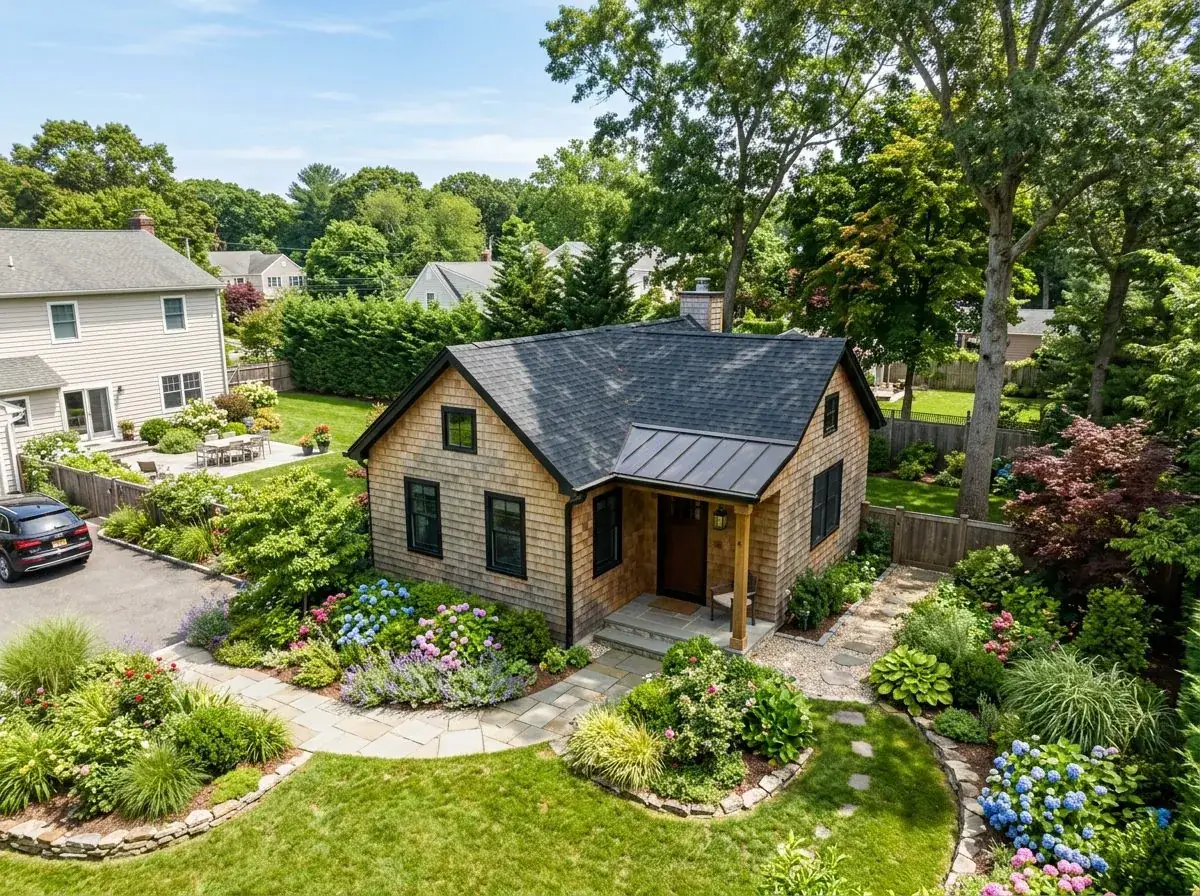
If you are planning to build an ADU in Suffolk County, the conversation about septic needs to happen before the conversation about kitchen cabinets, floor plans, or paint colors. While most ADU guides focus on zoning and construction, the single biggest technical and financial hurdle for Suffolk County homeowners is something that sits underground and rarely gets discussed: your septic system.
Here is the reality that many contractors gloss over. The vast majority of Suffolk County properties are not connected to municipal sewer. They rely on private septic systems. When you add a dwelling unit to a property served by septic, the Suffolk County Department of Health Services must approve the project. If your existing system cannot handle the additional wastewater load, you will need to upgrade it before you can get a building permit. That upgrade can add $5,000 to $30,000 to your project cost, and in some cases, it can determine whether your ADU project is financially viable at all.
This guide is the most thorough resource available on navigating septic requirements for ADU construction in Suffolk County. If you get this right, the rest of the project is straightforward. If you get it wrong, you could face months of delays and tens of thousands in unexpected costs.
Why Septic Matters for ADUs
Suffolk County's groundwater is the sole source of drinking water for its 1.5 million residents. The county sits on top of an aquifer system that supplies water to every home, school, and business. Because of this, the Suffolk County Department of Health Services takes wastewater management extremely seriously. Every septic system must be designed to handle the flow it receives without contaminating the groundwater.
When you apply for a building permit to construct an ADU, your town's building department will not issue the permit until the health department confirms that your septic system is adequate for the increased load. This is not optional. There is no workaround, no variance, and no exception. The health department must sign off before any ADU construction can begin on a property with a septic system.
This requirement exists because an ADU adds plumbing fixtures that generate wastewater: a bathroom, a kitchen, potentially a washing machine. Each of these fixtures increases the daily flow that your septic system must process. If the system was designed for a three-bedroom home and you are effectively adding a fourth or fifth bedroom through your ADU, the math may not work without an upgrade.
Worried about your septic situation?
We evaluate your septic as part of our free walkthrough.
Memorandum #19 and Bedroom Counting
The health department's septic requirements are governed primarily by Memorandum #19, an internal policy document that establishes the rules for onsite wastewater treatment systems in Suffolk County. Understanding how this memorandum works is critical to planning your ADU project.
The core concept is bedroom counting. The health department does not calculate septic capacity based on the number of people living in a home or the number of bathrooms. Instead, they calculate it based on the number of bedrooms. Each bedroom is assigned a specific daily wastewater flow rate, typically 150 gallons per day per bedroom for residential properties.
Here is where it gets important for ADU construction: when you apply for a permit, the health department looks at the total number of bedrooms on the property, including the main house and the proposed ADU. If your existing three-bedroom home has a septic system designed for three bedrooms (450 gallons per day) and you want to add a one-bedroom ADU, the total becomes four bedrooms (600 gallons per day). Your existing system must have been designed and approved for at least four bedrooms of capacity. If it was not, you need an upgrade.
What counts as a bedroom? The health department uses building code definitions. Any room that can reasonably function as a sleeping area, with a closet and a window that meets egress requirements, counts as a bedroom. Dens, offices, and bonus rooms can be counted as bedrooms if they meet these physical criteria, regardless of what you call them. This is where design strategy becomes critical.
The Three Septic Scenarios for ADU Construction
Every ADU project in Suffolk County falls into one of three septic scenarios. Understanding which one applies to your property determines your cost, timeline, and complexity:
Scenario 1: Converting Existing Space Without Adding Bedrooms
This is the best-case scenario. If you are converting an existing finished space, such as a basement, a portion of the main house, or a garage, and you do not increase the total bedroom count on the property, you may be able to avoid a septic upgrade entirely.
For example, say you have a four-bedroom home with a septic system designed for four bedrooms. You want to convert the basement into an ADU with a living area, kitchen, and bathroom, but no space that qualifies as a bedroom (the tenant uses the living area as a studio-style sleeping space). The bedroom count stays at four. Your existing septic system may be adequate as-is, provided it is in good working condition and was originally approved for the correct capacity.
Even in this scenario, the health department still reviews the application. They may require a septic inspection to verify the system is functioning properly. But you avoid the major expense of a system upgrade. This is why thoughtful design at the ADU planning stage, specifically around room designations, is so valuable.
Scenario 2: Adding Bedrooms to the Property
If your ADU includes one or more spaces that qualify as bedrooms, the total bedroom count increases, and the health department will require your septic system to accommodate the higher flow. This is the most common scenario for ADU projects.
The required action depends on your existing system. If your system was originally designed with excess capacity (for example, a system approved for four bedrooms on a three-bedroom home), the additional bedroom may fall within the existing capacity. This sometimes happens when previous owners upgraded the septic during a renovation or when the original system was oversized. See also the full list of Long Island towns we serve.
If the existing system does not have excess capacity, you will need to upgrade. The upgrade might involve expanding the leaching field, replacing the septic tank with a larger one, or installing a completely new system. In many parts of Suffolk County, the health department now requires upgraded systems to be I/A-OWTS (innovative/alternative onsite wastewater treatment systems) that provide advanced nitrogen removal.
Scenario 3: Detached ADU Requiring a Separate System
A detached ADU built away from the main house may require its own dedicated septic system, depending on the distance from the existing system, the lot size, and site conditions. Running plumbing connections from a detached structure to the existing septic system is sometimes feasible, but the health department may require a separate system, especially if the ADU is a significant distance from the main home or if the existing system is already at capacity.
A separate system for a detached ADU is the most expensive septic scenario, potentially adding $15,000 to $30,000 or more to the project. However, it also provides the cleanest separation between the two dwelling units and ensures that neither unit's plumbing affects the other.
Licensed & Insured
Full coverage on every project
36+ Cities Served
Suffolk County & Long Island
Free Walkthrough
No obligation, no pressure
What Is an I/A-OWTS System?
If you spend any time researching septic requirements in Suffolk County, you will encounter the acronym I/A-OWTS, which stands for Innovative/Alternative Onsite Wastewater Treatment System. These systems represent the next generation of septic technology, and Suffolk County has been at the forefront of requiring them.
Traditional septic systems use a tank to separate solids from liquids, then distribute the liquid effluent into a leaching field where it percolates through the soil. This process removes some contaminants, but it does a poor job of removing nitrogen. Excess nitrogen in groundwater is a major environmental concern in Suffolk County, contributing to algal blooms, fish kills, and degradation of the bays and estuaries that define the Long Island coastline.
I/A-OWTS systems add an additional treatment step that significantly reduces nitrogen levels in the effluent before it reaches the groundwater. Different technologies achieve this in different ways, including aerobic treatment, denitrification, and membrane filtration. The county maintains a list of approved I/A-OWTS technologies that have been tested and certified for use in Suffolk County.
The practical implications for ADU construction: if the health department determines that your property requires a new or upgraded septic system, they may require an I/A-OWTS rather than a conventional system. This is increasingly common, especially in areas near sensitive water bodies, in groundwater management zones, and on smaller lots. I/A-OWTS systems cost more upfront ($15,000 to $30,000 versus $10,000 to $25,000 for conventional) and require ongoing maintenance contracts, but they provide superior environmental protection.
Septic Upgrade Costs
Understanding the cost range for different septic scenarios helps you budget accurately for your ADU project:
- Septic inspection and certification ($500-$1,500). Even in the best-case scenario, the health department requires verification that your existing system is functioning properly. A licensed septic inspector pumps and inspects the tank, checks the leaching field, and provides a report.
- Conventional system repair or minor expansion ($5,000-$15,000). If your existing system needs repairs (cracked tank, failing leaching pool) but has adequate capacity for the ADU, the fix may be relatively affordable. Adding a leaching pool or extending a leaching field falls in this range.
- New conventional septic system ($10,000-$25,000). A complete replacement of your septic system with a new conventional design. This includes a new tank, distribution box, and leaching field. The cost depends on system size, soil conditions, and the complexity of the installation.
- I/A-OWTS system ($15,000-$30,000). An innovative/alternative system with nitrogen-reducing technology. Higher upfront cost than conventional, but may be required by the health department. Annual maintenance contracts add $200 to $500 per year. Some I/A-OWTS systems qualify for county rebates that can offset a portion of the cost.
- Separate system for detached ADU ($15,000-$30,000+). If a detached ADU requires its own independent septic system, expect to pay for a complete system installation including excavation, tank, treatment unit, and leaching field. Site conditions heavily influence the final cost.
Get a Free Estimate
Tell us about your project — we respond within 24 hours.
No spam. No obligation.
The Health Department Application Process
Navigating the Suffolk County Health Department approval is a multi-step process. Here is what to expect:
- Gather existing records. Before applying, obtain your property's existing septic system records from the health department. This includes the original system design, the approved bedroom count, and any modifications or repairs on file. Your contractor or engineer can request these records on your behalf.
- Complete Form WWM-105. This is the official application for wastewater management review. It requires information about your property, the existing septic system, the proposed construction, and the total bedroom count after the ADU is complete.
- Submit supporting documents. The application must include a current property survey, the proposed ADU plans showing all plumbing fixtures, the existing septic system layout, and soil testing results if a new or expanded system is proposed.
- Engineering review. The health department's engineers review the application to determine whether the existing system has adequate capacity or whether an upgrade is required. They calculate total flow based on the bedroom count and compare it to the system's approved capacity.
- Site inspection. A health department inspector may visit the property to verify the existing system's condition and location, confirm the proposed ADU layout, and assess site conditions that affect wastewater management.
- Approval or upgrade requirement. The department either approves the project with the existing system or issues requirements for an upgrade. If an upgrade is required, you must submit plans for the new system, have them approved, and complete the installation before receiving a building permit for the ADU.
- Final inspection. After any septic work is completed, the health department inspects the installation before it is covered. This ensures the system was installed according to the approved plans.
The review timeline is typically 4 to 8 weeks from application submission to decision. During peak periods, it can stretch longer. Starting the health department process as early as possible in your ADU planning is essential to avoiding delays.
Smart Strategies to Minimize Septic Costs
An experienced ADU contractor can help you design your project to minimize or eliminate septic upgrade costs. Here are the key strategies:
- Keep the bedroom count the same. This is the most powerful strategy. If your ADU design does not add bedrooms to the property's total count, you may avoid a septic upgrade entirely. Design the ADU as an open-concept studio or one-room living space without a separate room that qualifies as a bedroom under building code. A room without a closet, or one that does not meet minimum size requirements for a bedroom, may not count.
- Convert existing space. Basement conversions and garage conversions are less likely to trigger septic issues than detached new construction, because you are working within the existing building footprint. If you repurpose an existing bedroom in the main house as part of the ADU, you may even reduce the main house's bedroom count, offsetting the ADU's bedroom.
- Check your existing system's capacity. Before assuming you need an upgrade, research your property's septic records. Some homes have systems that were approved for more bedrooms than currently exist. If a previous owner built a system for a five-bedroom home and you have three bedrooms, you may have capacity for two additional bedrooms without any system changes.
- Plan plumbing layout around existing connections. Locating the ADU's kitchen and bathroom as close as possible to existing sewer lines minimizes the length and complexity of new plumbing runs. For conversions, this often means positioning the ADU's wet wall adjacent to the main house's plumbing stack.
- Consider water-saving fixtures. While the health department bases capacity on bedroom count rather than actual water usage, low-flow toilets, faucets, and showerheads reduce the actual load on your septic system. Some jurisdictions are beginning to consider actual flow reduction in their capacity calculations.
We handle the septic paperwork for you.
Health department applications, inspections, and approvals included.
What Areas of Suffolk County Have Municipal Sewer?
Not all of Suffolk County relies on septic systems. If your property is connected to municipal sewer, the septic requirements described in this guide do not apply to you. Municipal sewer connections handle wastewater through a centralized treatment plant, and adding an ADU simply requires confirmation that the sewer connection can handle the additional flow, which it almost always can.
Areas of Suffolk County with municipal sewer service include portions of the following:
- Southwest Suffolk sewer districts covering parts of Babylon, including Lindenhurst, West Babylon, North Babylon, and Deer Park
- Port Jefferson village and surrounding areas
- Patchogue village (limited areas)
- Long Island MacArthur Airport area in Islip
- Various smaller sewer districts scattered throughout the county, often serving commercial areas and higher-density residential zones
If you are unsure whether your property is on sewer or septic, check your tax bill (sewer district charges appear as a separate line item), contact your town's water or sewer department, or ask your contractor. Properties on municipal sewer have a significant ADU advantage, as they eliminate the most complex and costly hurdle in the permitting process.
For a broader understanding of how zoning and regulations work across all ten Suffolk County towns, read our comprehensive guide to Suffolk County ADU laws. And for a realistic picture of what your ADU project will cost, including septic expenses, see our 2026 ADU cost guide for Long Island.
Frequently Asked Questions
Can I build an ADU without upgrading my septic system?+
How long does health department septic approval take?+
What is the difference between a conventional septic system and an I/A-OWTS?+
Does a den or office count as a bedroom for septic calculations?+
Work With Alec's Construction
This guide is written by the crew that does the work. See Alec's ADUs service — accessory apartments, garage conversions and grant paperwork. Licensed and insured on Long Island, one crew start to finish, free walkthrough and a written estimate inside 48 hours.
Booking the cold months now: we also handle Additions & New Construction and Bathroom Remodeling.
Filing something yourself? Our Long Island building department directory lists the address, phone and counter hours for all 23 permit offices in Nassau and Suffolk.
Ready to Plan Your ADU Around Your Septic?
Contact Alec's Construction for a free on-site assessment. We evaluate your septic situation, research your property's records, and design your ADU to minimize costs and maximize approval speed.
Get a Free Consultation