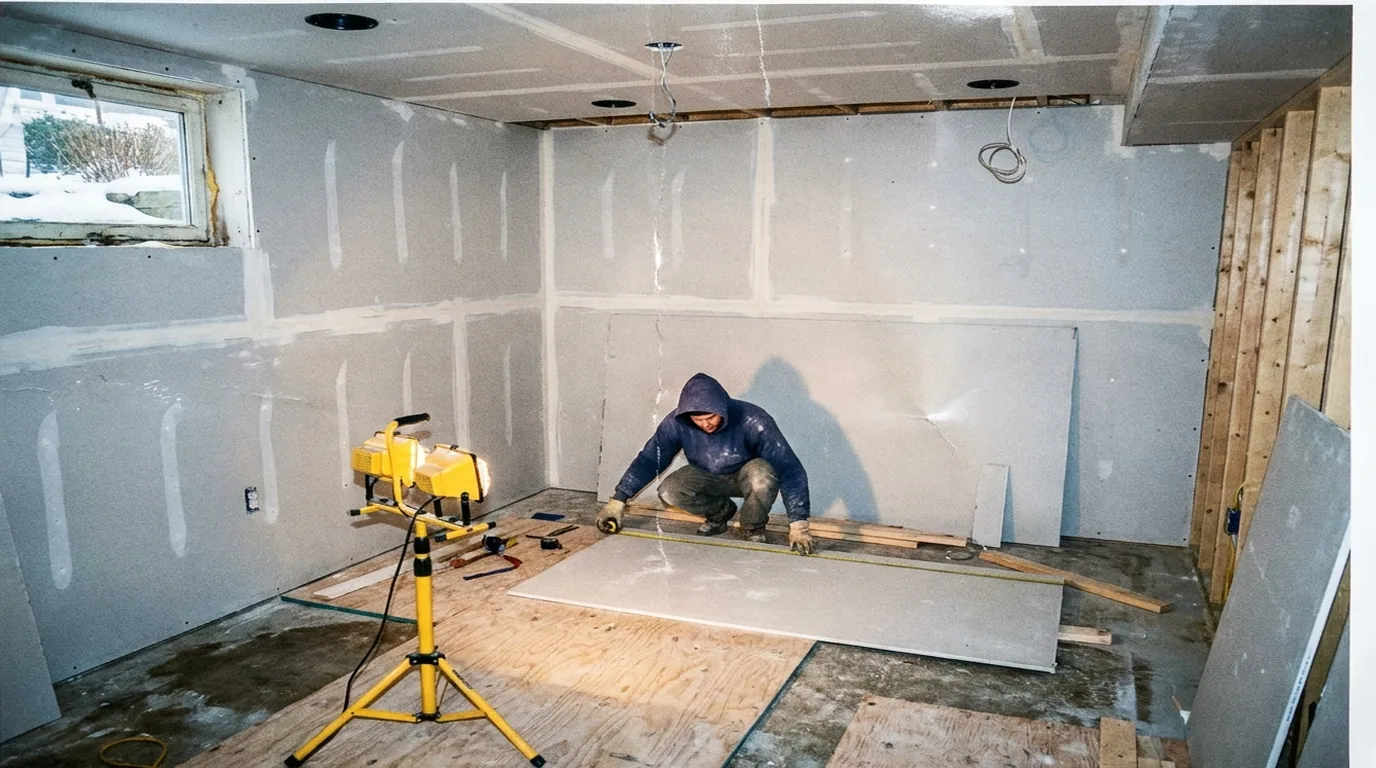
Alec's Construction finishes basements and lower levels in Copiague (11726), working out of the yard in East Patchogue. It is interior work that runs straight through the winter, and it starts with three questions answered honestly — is it dry, is it tall enough, and can someone get out of it in a fire — before anyone talks about finishes.
Basement Finishing in Copiague
Copiague's south side is one of the biggest canal grids in the Town of Babylon, and it is the part of the hamlet where we are most careful with the word basement. The streets off Oak Neck Lane and around Great Neck Road run down to the Great South Bay on filled marsh, lined with 1950s and 60s capes, ranches and high ranches built at grade. Many have no basement, and on a high ranch the lower level sits at the height the surge reaches — Copiague took some of the worst of it in 2012. That whole grid is in the mapped flood zone, and finishing or re-finishing the lowest level there is a question for the Town of Babylon and the flood map first. North of Montauk Highway toward the train station the hamlet is older and dry, and the basements under the older houses there are worth a proper look.
What We Look at First in Copiague
On a south-side high ranch, the first thing we check is whether the house was raised after 2012 and where the lowest floor now sits against the flood elevation. That decides what the ground level can hold. On the north side the older houses get the usual read: water lines on the walls, the condition of the slab, the clear height under the beam, and whether the stairs meet code for a room people use daily. Then foam, framing and electrical.
Canal Grids: Check the Elevation Before Anything Else
On the canal streets of Copiague the houses were built at grade on filled ground a few feet above the water, and most sit on slabs or crawl spaces rather than full basements. Where a below-grade room does exist inside the mapped flood zone, finishing it as living space runs into the flood rules, and habitable space below the flood elevation is generally not allowed. Houses that were raised after 2012 often have an enclosed area below the living floor that has to stay unfinished for the same reason.
That is the honest starting point, and it saves people from paying for a finish that a flood or an inspector would undo. The useful projects on these streets are usually the opposite of a basement: a sealed, dry crawl space, utilities lifted above the flood line, and the extra room found elsewhere.
Away from the canals, on the higher streets of the same hamlet, full basements are more common and the work runs the normal way — water, height, egress, then framing.
Dry, Measure, Then Frame
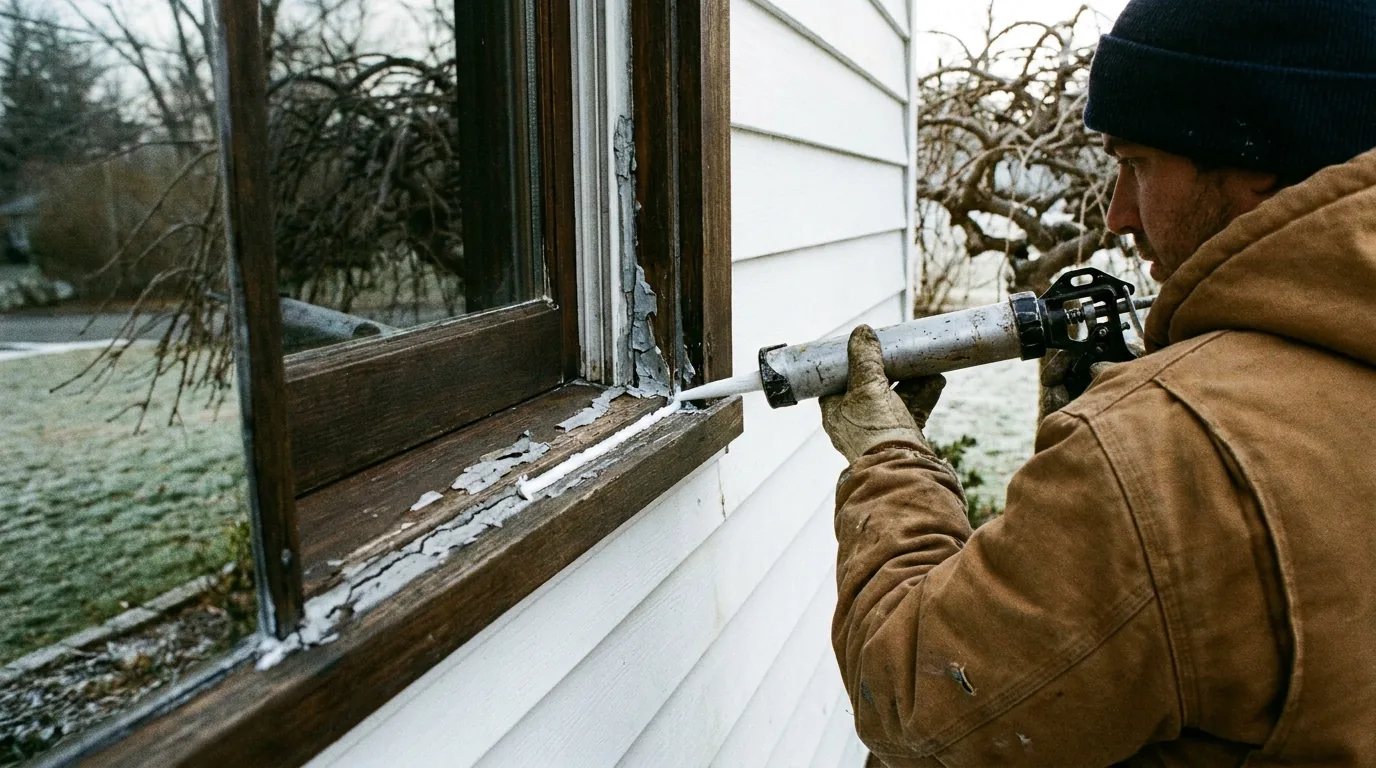
The order of a basement finish does not change. First the water: gutters and grading outside, any seepage traced and fixed, and humidity brought under control. Then the measurements: ceiling height below the beams and ducts, egress for any room that could be a bedroom, and where the bathroom plumbing can go.
Then the build. Foundation walls are insulated with rigid foam against the concrete and framed in front of it, so the wall stays warm and dry. The floor gets a system that tolerates a cool slab. Electrical, heat, and the bathroom go in, the permit inspections are passed at each stage, and the finishes go on last.
Permits in Copiague
Copiague files with the Town of Babylon at Town Hall in Lindenhurst. Everything south of Montauk Highway along the canals and the Great South Bay is in the mapped flood zone. Finishing a basement is permitted work — framing, electrical, plumbing and any egress opening are inspected — and where a house is in the mapped flood zone the floodplain rules can decide whether the space can be finished at all. We file before we frame.
Alex walks the house in Copiague, photographs what he finds and gives you a written scope in the order the work has to happen — whether or not you hire us. Call (631) 312-7441 to set up a time.
Frequently Asked Questions
Can I turn the ground floor of my Copiague high ranch on the canal into living space?
On the canal streets that ground floor is in the mapped flood zone, and habitable space below the flood elevation is generally not allowed, so the Town of Babylon and the flood map decide this before we do. If your house was raised and the lowest living floor is now above the flood elevation, the ground level is usually limited to parking, storage and access. If it was not raised, we talk honestly about what flood-resistant materials can and cannot do.
Can every basement in Copiague be finished?
No, and it is better to know early. A basement needs enough clear height, a way to keep it dry, and an emergency exit for any room that could be slept in. Inside the mapped flood zone there is a further question about the flood elevation. We answer all of those on the walkthrough before anything is priced.
Can a basement in Copiague be finished in winter?
Yes — it is a natural winter project. The work is all indoors, the framing and insulation do not care about the weather, and a cold, wet season shows exactly how the foundation behaves before anything is closed in.
Who issues the permit for basement finishing work in Copiague?
Copiague files with the Town of Babylon at Town Hall in Lindenhurst. Everything south of Montauk Highway along the canals and the Great South Bay is in the mapped flood zone. Finishing a basement is permitted work — framing, electrical, plumbing and any egress opening are inspected — and where a house is in the mapped flood zone the floodplain rules can decide whether the space can be finished at all. We file before we frame.
Related Guides
- Basement Finishing in Amityville, NY
- Basement Finishing in West Babylon, NY
- Basement Finishing on Long Island
- Egress Windows for Long Island Basements
- Basement Insulation Code on Long Island
Work With Alec's Construction
This page is written by the crew that does the work. See Alec's Basement Finishing service — height, water and egress answered before anything is framed. One crew from the first walkthrough to the last inspection.
Also in Copiague through the cold months: ADUs and Bathroom Remodeling.
Also Serving Copiague
- Attic Insulation in Copiague — air sealing, baffles and R-49 depth
- Bathroom Remodeling in Copiague — full gut renovations
- Fallen Tree Removal & Roof Repair in Copiague — tree off the house, roof supported and repaired
- Flood & Water Damage Cleanup in Copiague — wet material out, drying metered
- Gutter Installation in Copiague — seamless gutters, fascia and drainage
- Hurricane & Storm Damage Repair in Copiague — trees, flooding, cleanup and repairs
- Interior Painting in Copiague — the right work for the cold months
- Kitchen Remodeling in Copiague — cabinets, counters and layout
- Roofing in Copiague — tear-offs, repairs and storm damage
- Storm Debris Removal & Cleanup in Copiague — trees, building debris and hauling
- Storm Roof & Siding Repair in Copiague — wind damage, tarped and rebuilt
Talk to Alec's Construction About Basement Finishing in Copiague
We come out, look at the house, photograph what we find and put a written scope in your hand. No pressure, no obligation. Working across Suffolk County since 2018.
Or call (631) 312-7441