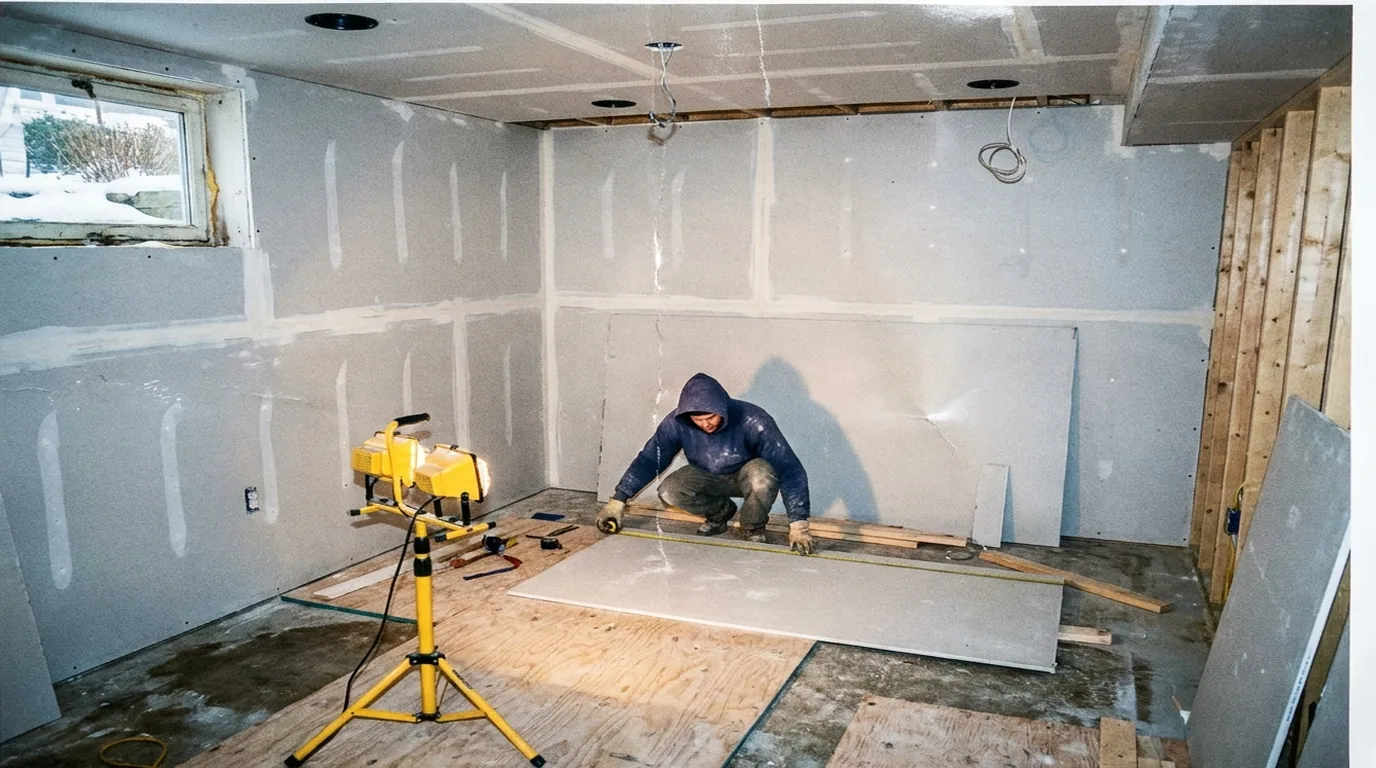
Alec's Construction finishes basements and lower levels in St. James (11780), working out of the yard in East Patchogue. It is interior work that runs straight through the winter, and it starts with three questions answered honestly — is it dry, is it tall enough, and can someone get out of it in a fire — before anyone talks about finishes.
Basement Finishing in St. James
St. James is old estate country, and its basements come in two generations. The houses from the 1900s to 30s along Lake Avenue and the streets off Moriches Road sit under trees planted with them a century ago, and their basements typically have older masonry foundations, lower ceilings, heavy beams and decades of plumbing and heating changes overhead. They can often be finished, but carefully. The 1960s and 70s colonials on the streets south toward Route 25 are more typically on full basements with good height, under oaks saved when the lots were cut. The ground is high and drains, and the harbour water at Stony Brook and the Nissequogue stops short of the hamlet, so the water a St. James basement sees comes from roofs, gutters and big roots near the walls. The villages of Head of the Harbor and Nissequogue on the north edge run their own building departments.
What We Look at First in St. James
On one of the older Lake Avenue houses, we spend the first visit on what is overhead: old steam or hot water pipes, abandoned flues, wiring from several eras, and beams that set the real ceiling height. What can be removed or rerouted decides the room. On a 1960s colonial south toward Route 25 the order is outside drainage, rim joist, foam on the walls, framing, then the egress cut on the side with room for a well.
Full Basements Under Big Colonials
The colonials and splits on the wooded lots in St. James usually have full basements, and those are the projects where the three questions matter most. Ceiling height first: the ductwork, beams and plumbing hang below the joists, and what is left after a finished floor and ceiling has to meet the code minimum for a habitable room. Measured early, it decides the layout.
Egress second. Any room that could be used for sleeping needs an emergency escape opening — on a buried basement that means an egress window cut into the foundation with a proper well and drainage, planned before the walls are framed.
Moisture third, and not least. The moraine ground in this part of Suffolk mixes sand with denser layers that can perch water against a wall after heavy rain. The gutters and grading get checked first, then the walls are insulated and framed in a way that lets them dry, with no plastic sheeting trapped behind drywall.
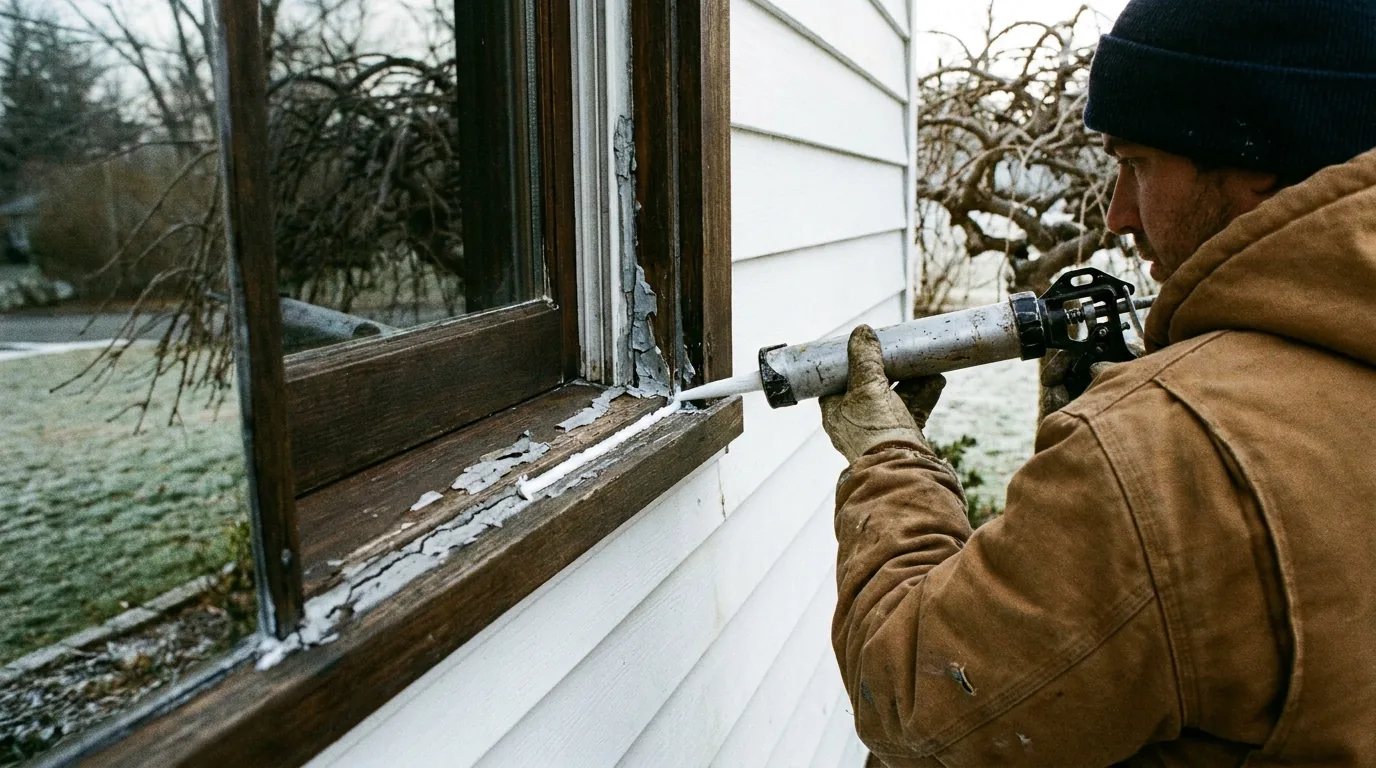
Dry, Measure, Then Frame
The order of a basement finish does not change. First the water: gutters and grading outside, any seepage traced and fixed, and humidity brought under control. Then the measurements: ceiling height below the beams and ducts, egress for any room that could be a bedroom, and where the bathroom plumbing can go.
Then the build. Foundation walls are insulated with rigid foam against the concrete and framed in front of it, so the wall stays warm and dry. The floor gets a system that tolerates a cool slab. Electrical, heat, and the bathroom go in, the permit inspections are passed at each stage, and the finishes go on last.
Permits in St. James
St. James files with the Town of Smithtown at Town Hall on Main Street in Smithtown; the Village of Head of the Harbor on its north side and the Village of Nissequogue run their own building departments. Finishing a basement is permitted work — framing, electrical, plumbing and any egress opening are inspected — and where a house is in the mapped flood zone the floodplain rules can decide whether the space can be finished at all. We file before we frame.
Alex walks the house in St. James, photographs what he finds and gives you a written scope in the order the work has to happen — whether or not you hire us. Call (631) 312-7441 to set up a time.
Frequently Asked Questions
My St. James address is in Head of the Harbor. Who issues the basement permit?
The village. Head of the Harbor and Nissequogue are incorporated villages on the north edge of St. James and run their own building departments, while the rest of St. James files with the Town of Smithtown at Town Hall on Main Street. A St. James mailing address does not settle it; the property's location does. We confirm which governs before drawing plans, because the inspections and the final sign-off all come from that office.
Can a basement in St. James be finished in winter?
Yes — it is a natural winter project. The work is all indoors, the framing and insulation do not care about the weather, and a cold, wet season shows exactly how the foundation behaves before anything is closed in.
Do I need a permit to finish my basement in St. James?
Yes. Finishing a basement is permitted work in Suffolk — the framing, electrical, plumbing and any egress opening are inspected. An unpermitted finished basement can cause problems when the house is sold or insured. We file the permit before we frame.
Who issues the permit for basement finishing work in St. James?
St. James files with the Town of Smithtown at Town Hall on Main Street in Smithtown; the Village of Head of the Harbor on its north side and the Village of Nissequogue run their own building departments. Finishing a basement is permitted work — framing, electrical, plumbing and any egress opening are inspected — and where a house is in the mapped flood zone the floodplain rules can decide whether the space can be finished at all. We file before we frame.
Related Guides
- Basement Finishing in Huntington Station, NY
- Basement Finishing in Dix Hills, NY
- Basement Finishing on Long Island
- Dry It Before You Finish It
- Basement Ceiling Height and the 7-Foot Rule
Work With Alec's Construction
This page is written by the crew that does the work. See Alec's Basement Finishing service — height, water and egress answered before anything is framed. One crew from the first walkthrough to the last inspection.
Also in St. James through the cold months: ADUs and Bathroom Remodeling.
Also Serving St James
- Attic Insulation in St James — air sealing, baffles and R-49 depth
- Bathroom Remodeling in St James — full gut renovations
- Fallen Tree Removal & Roof Repair in St James — tree off the house, roof supported and repaired
- Flood & Water Damage Cleanup in St James — wet material out, drying metered
- Gutter Installation in St James — seamless gutters, fascia and drainage
- Hurricane & Storm Damage Repair in St James — trees, flooding, cleanup and repairs
- Interior Painting in St James — the right work for the cold months
- Kitchen Remodeling in St James — cabinets, counters and layout
- Roofing in St James — tear-offs, repairs and storm damage
- Storm Debris Removal & Cleanup in St James — trees, building debris and hauling
- Storm Roof & Siding Repair in St James — wind damage, tarped and rebuilt
Talk to Alec's Construction About Basement Finishing in St. James
We come out, look at the house, photograph what we find and put a written scope in your hand. No pressure, no obligation. Working across Suffolk County since 2018.
Or call (631) 312-7441