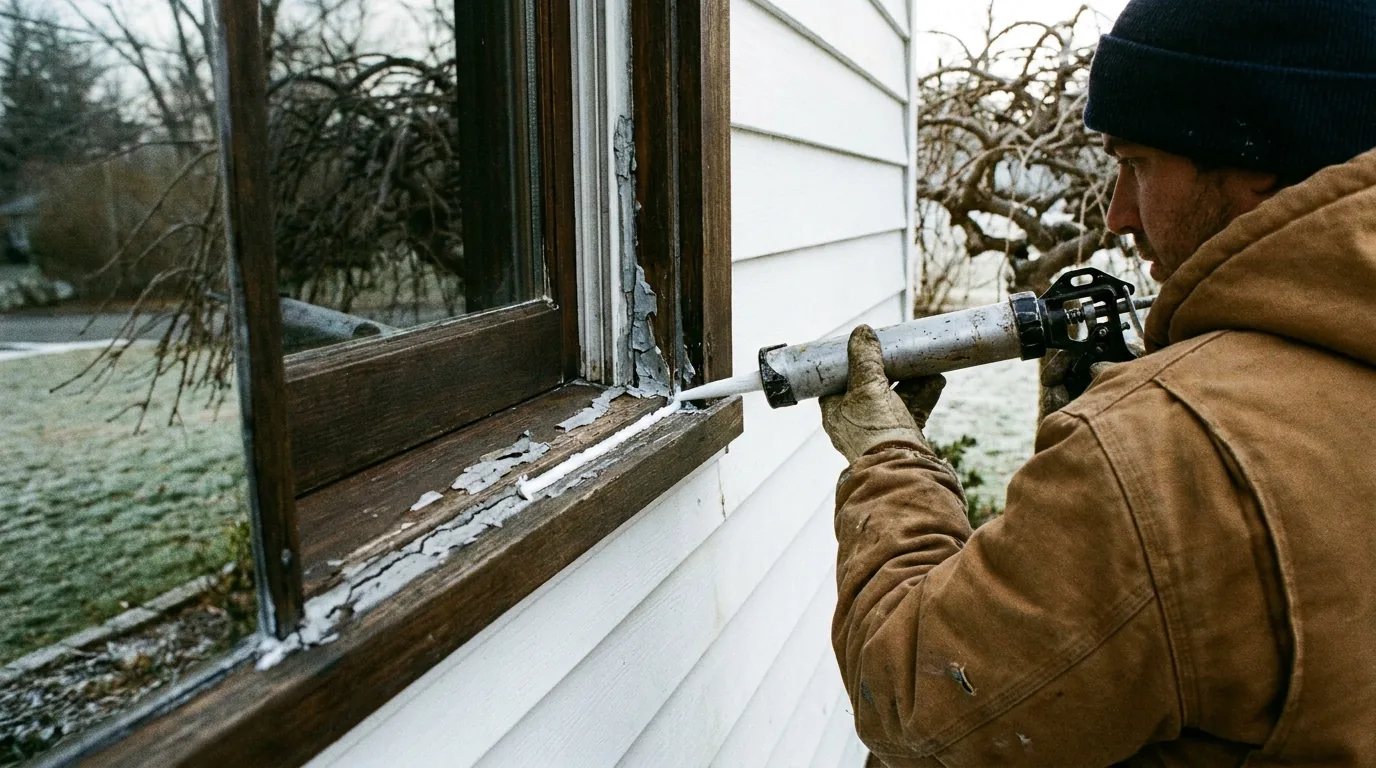
The most expensive mistake in basement finishing is finishing over water. New drywall, new insulation and new flooring all hide the problem for about eighteen months, and then it comes out of the wall as mould and the whole job gets torn back out.
The fix is not a product. It is figuring out which of three completely different problems you actually have.
Three Problems That Look The Same
1. Surface water — the most common, the cheapest to fix
Water off the roof landing next to the foundation and running down the loose backfill ring to the footing.
One inch of rain on a 2,000 square foot roof is about 1,250 gallons. A three-inch nor'easter is roughly 3,700 gallons. If the downspouts end in splash blocks, all of that lands within three feet of the wall over a few hours.
The backfill around a foundation is looser than undisturbed ground — it was dug out and put back — so it takes water preferentially and delivers it straight to the footing and the cold joint where the slab meets the wall.
Tells: wet only after heavy rain; damp concentrated near one corner or below a specific downspout; a negative grade sloping toward the house.
The fix: extend downspouts well clear of the foundation — six feet minimum, ten if the lot allows — or tie them into a properly sized drywell. Regrade so the ground falls away from the house. This is the cheapest fix in the entire building and it solves the majority of Long Island "leaks."
2. Condensation — the most misdiagnosed
Warm humid air meeting a cool foundation wall or a cold slab and giving up its moisture on the surface.
This is what most "damp basements" in dry inland Suffolk actually are. Medford, Holbrook, Coram and Farmingville sit on sandy outwash with a deep water table; the ground is not the source.
Tells: worst in humid summer weather rather than after rain; even film across a whole wall or the slab rather than concentrated in one place; cold water pipes sweating at the same time.
The classic test: tape a two-foot square of plastic sheet tightly to the foundation wall and leave it a few days. Moisture on the *room side* of the plastic is condensation. Moisture *behind* it, against the concrete, is coming through the wall.
The fix: a properly sized dehumidifier with a condensate pump, and air sealing at the rim joist so humid outside air stops being pulled in. Mechanical problem, mechanical solution.
3. Groundwater — the real one
A water table high enough to put a head of water against the wall or under the slab.
This is the south shore story: Lindenhurst, Massapequa, Merrick, Bay Shore, Babylon, Shirley, the canal blocks, and the low ground near the bays. It is seasonal — a basement that was bone dry in August starts seeping in March.
Tells: seepage at the cold joint where slab meets wall; damp coming up through the middle of the slab; timing that tracks the season rather than individual storms; efflorescence, the white mineral bloom left where water evaporated out of concrete.
The fix: an interior perimeter drain cut into the slab edge, piped to a sump basin, with a proper pump and a battery backup — because the storm that floods the basement is the storm that takes the power out. Exterior excavation and membrane is the more thorough version and costs accordingly.
What does not work: waterproof paint on the inside of a wall with a head of water behind it. It fails, and it fails invisibly behind whatever you built in front of it.
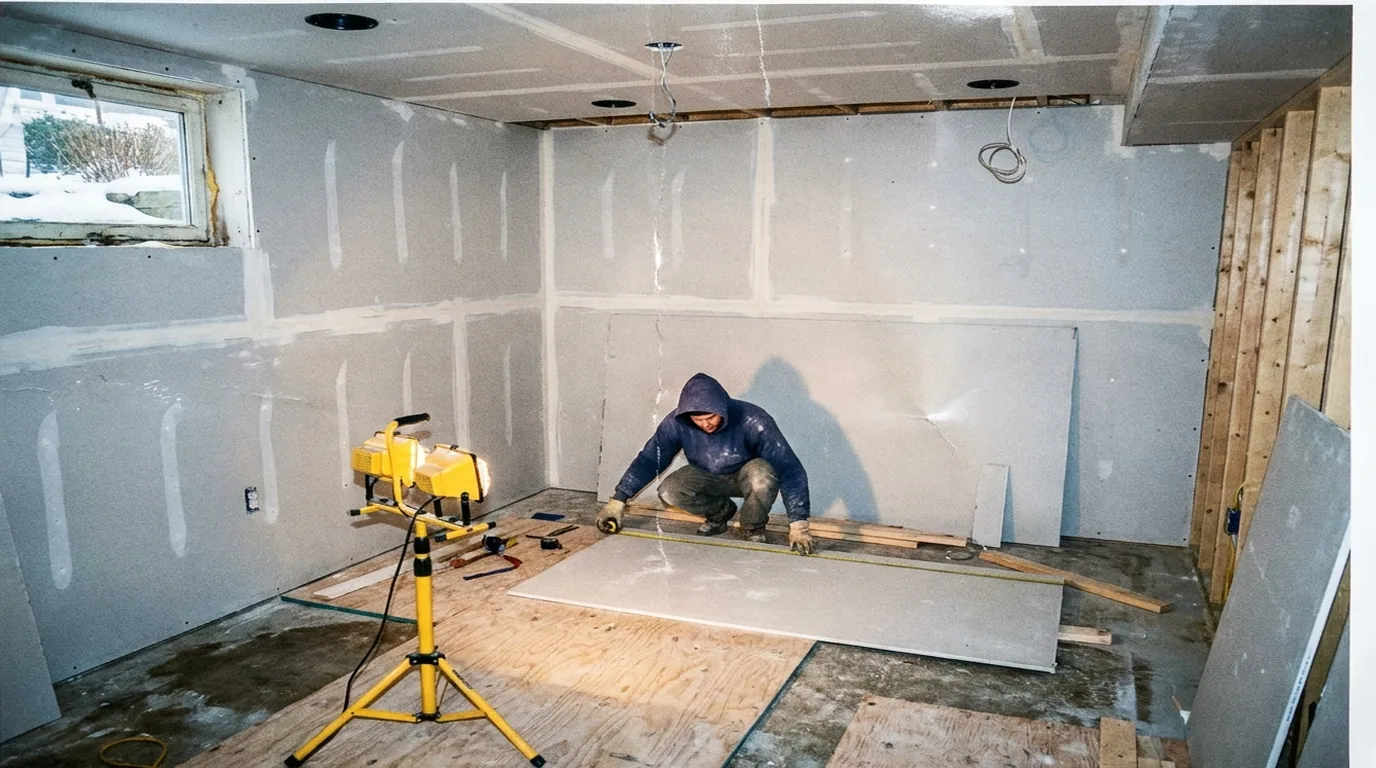
The Test That Costs Nothing
Watch it through one wet spring.
Long Island's water table peaks in late winter and early spring. A basement judged in August tells you very little. Before committing to a finish, look at the walls and the slab edge in March, after a few days of rain, and take photos.
While you are down there, look for the evidence of previous water even if it is dry now: a tide line of staining low on the wall, efflorescence, rust at the base of the steel columns or the water heater, and buckled or cupped material along the wall line if it was ever finished before.
What We Look For on a Walkthrough
- Grade and downspout discharge outside, first, before anything else
- Staining and efflorescence patterns, and whether they are concentrated or general
- Rust lines at the base of columns and appliances
- Whether an existing sump ever runs, and whether it has a backup
- Whether previous work used fibreglass batts against the foundation — the single most common defect we tear out, because batts hold the moisture concrete gives off and grow mould behind the drywall
- Cracks, and whether they are the ordinary shrinkage kind or something moving
Then, and Only Then
Once the water question is answered honestly, the finish is straightforward: seal and insulate the rim joist with closed-cell foam, put continuous rigid or closed-cell against the foundation wall as Climate Zone 4A requires, frame off the wall on a treated bottom plate, and build.
Do it in that order and a Long Island basement stays dry for the life of the house. Do it out of order and you pay for the same room twice.
Free walkthrough across Nassau and Suffolk — call (631) 312-7441.
Frequently Asked Questions
How do I tell if my basement dampness is condensation or a leak?
Tape a two-foot square of plastic sheet tightly to the foundation wall and leave it several days. Moisture on the room side of the plastic is condensation from humid air. Moisture behind it, against the concrete, is coming through the wall. Condensation is also worst in humid summer weather and spread evenly, while groundwater tracks the season and concentrates at the cold joint.
Do I need to waterproof a basement before finishing it on Long Island?
You need to diagnose it first. Many Long Island basements — particularly on the sandy inland ground of Medford, Holbrook and Coram — need nothing more than downspouts extended away from the house and a properly sized dehumidifier. South shore basements with a seasonally high water table often need an interior perimeter drain to a sump with a battery backup before anything gets closed in.
Does waterproof paint work on basement walls?
Not against a real head of water. Applied to the inside face of a wall with groundwater behind it, it fails — and it fails invisibly behind whatever you built in front of it. It has a place as a finish on an already-dry wall. It is not a substitute for solving where the water is coming from.
Why is fibreglass insulation against a foundation wall a problem?
Concrete gives off moisture, and fibreglass holds it. Batts installed straight against a foundation wall stay damp and grow mould behind the drywall where nobody sees it. It is the most common defect we tear out of previously finished Long Island basements. Continuous rigid foam or closed-cell spray foam against the concrete is what belongs there.
When is the best time to judge whether a basement is dry?
Late winter and early spring, when Long Island's water table peaks and after a few days of rain. A basement judged in August tells you very little. If you are planning a finish, watch it through one wet spring and photograph what you see.
Related Guides
- Basement Ceiling Height and the 7-Foot Rule
- What Finishing a Basement Costs on Long Island
- Egress Windows for Long Island Basements
- Adding a Bathroom to a Long Island Basement
- Insulating a Basement to Code on Long Island
- Legalize a Basement Apartment on Long Island
Work With Alec's Construction
This guide is written by the crew that does the work. See Alec's Basement Finishing service — height, water and egress answered before a dollar is spent. Licensed and insured on Long Island, one crew start to finish, free walkthrough and a written estimate inside 48 hours.
Booking the cold months now: we also handle ADUs and Bathroom Remodeling.
Get a Free Estimate from Alec's Construction
Licensed and insured, working across Nassau and Suffolk County since 2018. We come out, look at the actual job, and put a written number in your hand — no pressure, no obligation.
Book a Free WalkthroughOr call (631) 312-7441