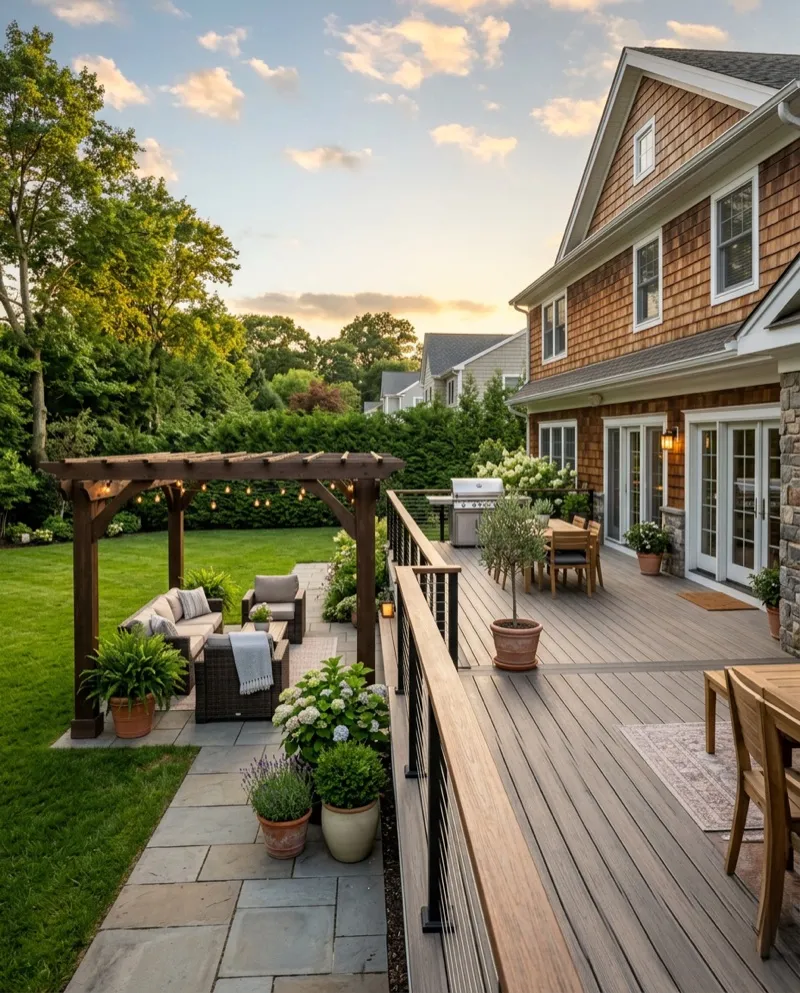
Why Long Island's Climate Is Hard on Decks
Long Island's climate is genuinely challenging for outdoor structures. Summers bring high humidity, intense UV exposure, and frequent rain. The South Shore communities from Long Beach to Montauk add salt air to the equation, which accelerates corrosion and oxidation of metal fasteners and surface degradation of wood. Winters bring freeze-thaw cycles that stress wood fibers, cause composite boards to expand and contract, and create ice loads that put pressure on railings and joists. Spring brings wet conditions that test drainage details. And fall dumps debris that traps moisture if left unaddressed.
Properly maintained decks on Long Island last 15–30 years depending on materials. Neglected decks — particularly wood decks that miss multiple maintenance cycles — can deteriorate in 5–10 years to the point of requiring replacement. The investment in annual maintenance is always less expensive than premature replacement.
Spring maintenance is the most important season for Long Island decks. After winter, you need to: inspect all fasteners and connectors for rust or loosening (especially important after freeze-thaw cycles); check the ledger board connection to the house for separation or water intrusion; clean the deck surface thoroughly to remove mold and mildew that accumulated over winter; check decking boards for splitting, cracking, or rot; inspect railings for looseness or damage; and look at stairs for loose treads or stringers. For wood decks, spring is typically when staining and sealing happens once the wood has dried.
Summer, Fall, and Winter Deck Care
Summer maintenance focuses on keeping the deck clean and protecting its surface. Sweep or blow off debris regularly — wet leaves sitting on composite boards can leave tannin stains, and on wood decks they accelerate decay. Clean up spills promptly, especially oils, wine, and food residue. For wood decks in coastal communities, inspect metal fasteners mid-summer for rust development and address any developing rust before it spreads. Keep planters and furniture with rubber feet — plastic or metal bottoms that trap moisture against the deck surface cause premature wear.
Fall maintenance is critical for Long Island decks. Clear all debris from between deck boards before winter — leaves and organic matter packed between boards create moisture traps that cause rot in wood and can stain composite. Inspect the area under the deck for debris accumulation and clear it. Remove planters and store outdoor furniture or cover it properly. For elevated decks, check that drainage under the deck isn't blocked by years of accumulated debris. If you have a wood deck that needs staining, fall is actually a good time to do it in Long Island's climate — cooler temperatures are better for stain application than summer heat.
Winter maintenance means being careful about snow and ice removal. Never use metal shovels or ice picks on composite decking — they will scratch the surface permanently. Use a plastic shovel and push snow off rather than scraping. Avoid calcium chloride ice melters on composite decking — they can damage the surface. Sodium chloride (rock salt) in moderation is generally acceptable. For wood decks, ice melters can accelerate cracking and should be avoided entirely. The best approach for Long Island decks in winter is keeping drainage clear so ice doesn't accumulate in pools on the surface.
Composite decks require far less maintenance than wood but are not maintenance-free. Annual cleaning with a composite deck cleaner (not bleach) and periodic inspection of fasteners and railings keeps them looking their best for decades.
Related Reading
- Winterizing Patios and Driveways — the hardscape version of this checklist
Work With Alec's Construction
This guide is written by the crew that does the work. See Alec's Decks service — framing, composite and pressure-treated builds and repairs. Licensed and insured on Long Island, one crew start to finish, free walkthrough and a written estimate inside 48 hours.
Booking the cold months now: we also handle Roofing and Painting.
We pull the permits on our own jobs — if you need the building department for your town, we keep a current directory of all 23 Long Island permit offices.
Ready to Get Started?
Ready to build your dream deck? Call Alec's Construction at (631) 312-7441 for a free on-site estimate. We serve all of Nassau and Suffolk County.
Get a Free Consultation