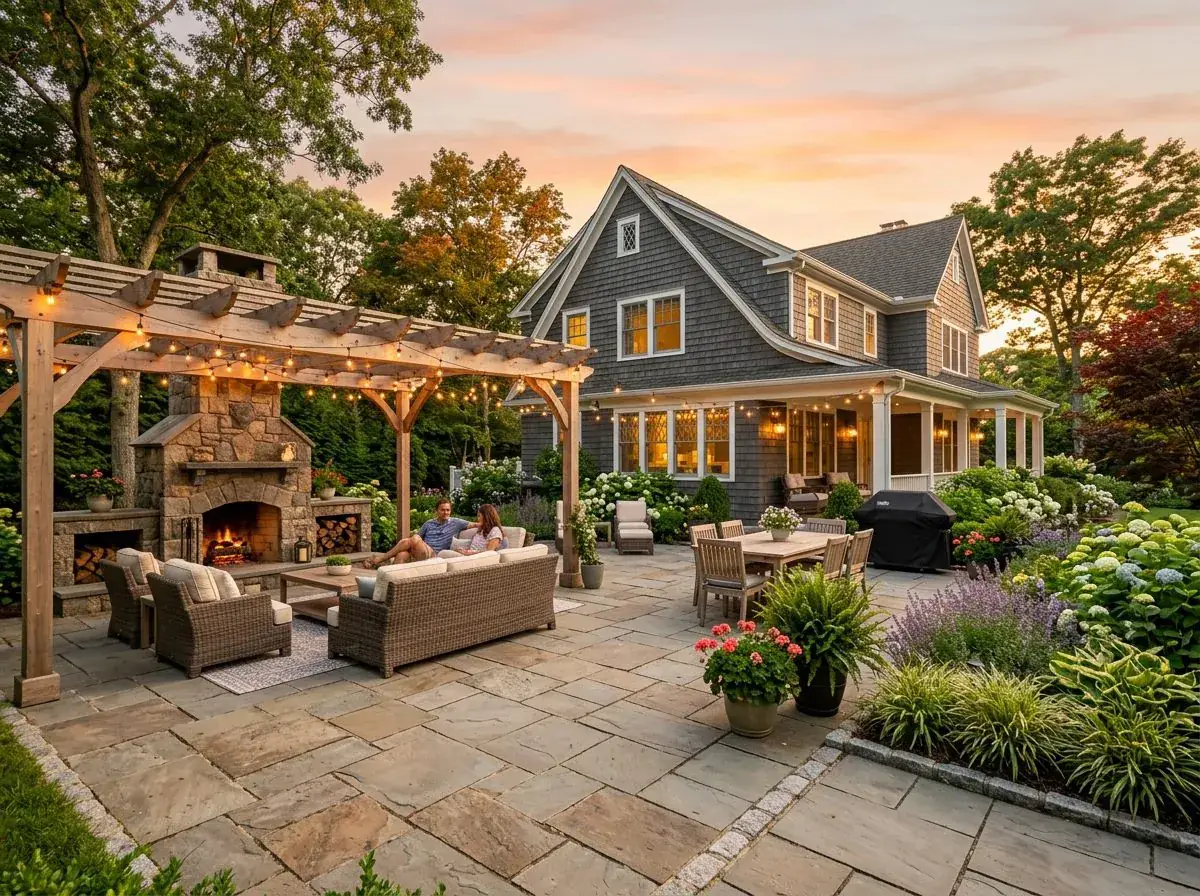
Start with How You'll Use the Space
The biggest mistake Long Island homeowners make when planning a deck is starting with a size and working backward instead of starting with how they'll actually use the space. A deck that's too small for your entertaining habits will frustrate you from day one. A deck that's oversized for a small yard will overwhelm the space and leave you with maintenance costs that don't match the value you're getting.
Think through your typical use cases. Do you host summer barbecues for 20 people? You need space for a grill, an outdoor dining table, and seating for a crowd — that pushes you toward 400–600 square feet minimum. Do you mostly want a quiet outdoor retreat for morning coffee and reading? A 150–200 square foot deck off the master bedroom might be perfect. Are you envisioning a dedicated outdoor kitchen zone plus a lounge area? Plan for 500–700 square feet and consider a multi-zone or L-shaped design.
Standard outdoor furniture footprints to plan around: a 6-person dining table needs a 12 x 12 foot zone minimum. A conversation seating set (couch, two chairs, coffee table) needs roughly 10 x 12 feet. A gas grill with clearance and prep space needs 6 x 8 feet. If you want a hot tub, a standard 7-foot model needs a 12 x 12 foot platform plus perimeter clearance.
Long Island Lot Constraints and Setback Requirements
Long Island lots vary enormously — from the quarter-acre typical suburban lots in towns like Levittown and Commack to the large parcels in areas like Old Westbury and Lloyd Harbor. Your lot size, shape, and setback requirements directly constrain what you can build.
Setbacks are the required distances between your structure and property lines, and they vary by town. Most Long Island municipalities require decks to be set back 10–20 feet from rear property lines and 5–15 feet from side property lines. Wetlands and floodplain overlays, common in waterfront communities from Babylon to East Hampton, add additional restrictions. Before getting excited about a large deck design, have your contractor pull your survey and verify the buildable area.
A practical rule of thumb for most Long Island suburban lots: your deck footprint should not exceed 15–20% of your total yard square footage. A deck that dominates the yard leaves no green space and can actually hurt resale value by eliminating what buyers perceive as usable lawn. The sweet spot for most Nassau and Suffolk County homes is a deck that occupies one functional zone of the yard — typically the area immediately adjacent to the kitchen or living room — while leaving the majority of the yard open.
For most Long Island homes with standard lots, a deck in the 300–450 square foot range serves most entertaining needs without overwhelming the property. Larger lots in communities like Dix Hills, Syosset, or Jericho can accommodate 500–700 square feet comfortably. Work with your contractor to model the footprint on your specific property before committing to a size.
Work With Alec's Construction
This guide is written by the crew that does the work. See Alec's Decks service — framing, composite and pressure-treated builds and repairs. Licensed and insured on Long Island, one crew start to finish, free walkthrough and a written estimate inside 48 hours.
Booking the cold months now: we also handle Roofing and Painting.
Every town here has villages inside it running their own building department. Our directory sorts out which counter your address actually files at.
Ready to Get Started?
Ready to build your dream deck? Call Alec's Construction at (631) 312-7441 for a free on-site estimate. We serve all of Nassau and Suffolk County.
Get a Free Consultation