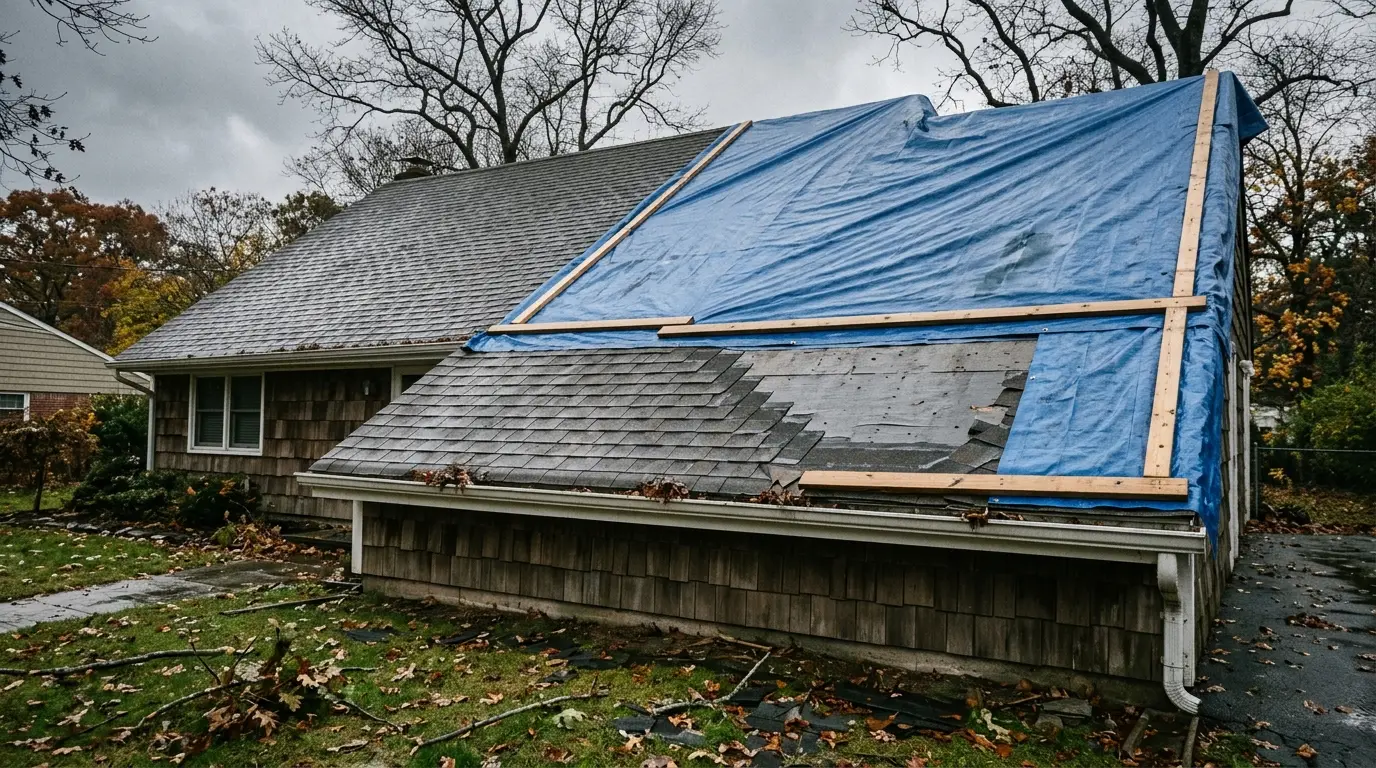
Alec's Construction handles hurricane and storm damage in Amityville, Suffolk County — fallen trees, flooding and water damage, roofs and siding torn open, the cleanup and the rebuild — as one job from the first tarp to the finished repair, working out of the yard in East Patchogue. If the roof is open, a tree is on the house or there is water inside, call or text (631) 312-7441 rather than fill in the form, and tell us what you are looking at.
What a Hurricane Does in Amityville
Amityville is the westernmost of Suffolk's South Shore villages, sitting on the Amityville River and a grid of canals that open into the Great South Bay. South of Merrick Road the streets run down to the water lined with 1950s and 60s capes and ranches on filled ground, and a surge on a south wind comes up the river and fills every canal at once. The village has an older core north of the water — big shingle and clapboard houses from the 1800s along the avenues, with the trees to match — and the damage there is wind and trees rather than water. The village runs its own building department. It shares a border with Nassau County and a lot of its trades come from the west.
Canal Houses: Water Below, Wind Above
The canal grids here are 1950s and 60s capes and ranches built at grade a few feet above the water, and a surge fills every canal and every one of those crawl spaces, dens and garages at the same time. A lot of them were rebuilt quickly after 2012, and a second wetting finds the walls that were closed before the framing was dry. The houses that were elevated afterward take the storm differently: the surge goes under them and the damage moves up to the siding, windows and roof edge on the exposed face, and to the enclosure and stairs below. Water damage is the flood claim; wind damage is the homeowners claim; both get their own scope.
What We Handle After a Storm
- Fallen or damaged trees — the tree on the roof, the limb through the porch, the leaner against the wall. Structural check first, then removal in the right order, then the repair.
- Flooding and water damage — surge, rain that came in through the roof, the basement that filled. Wet material out, real drying equipment in, moisture measured before anything is closed.
- Interior and exterior storm damage — roofing, siding, windows, soffits, gutters, ceilings, walls, floors and insulation.
- Storm cleanup and debris removal — cut, haul and clear, so the repair crew can get to the house.
- Repairs to damaged areas — from a tarp on the first day to the finished rebuild, one crew, one scope, one point of contact.
The Order of Work
- Make it safe. Nobody goes under a tree on a roof or into a room with a sagging ceiling until it has been looked at. Downed lines are the utility's, and they get called first.
- Photograph everything as found. Before a limb is cut or a wet carpet is pulled. This is what both claims rest on.
- Stop the water. Tarp the roof, board the openings, pump and pull the wet material that will grow mould if it stays.
- Dry and document. Drying equipment in, moisture readings taken and kept.
- Write the scope line by line with the photographs attached, storm damage kept separate from wear, wind damage kept separate from flood damage.
- Rebuild to the agreed scope, and correct what let the storm in so it does not repeat.
Homeowners Policy, Flood Policy and the Hurricane Deductible
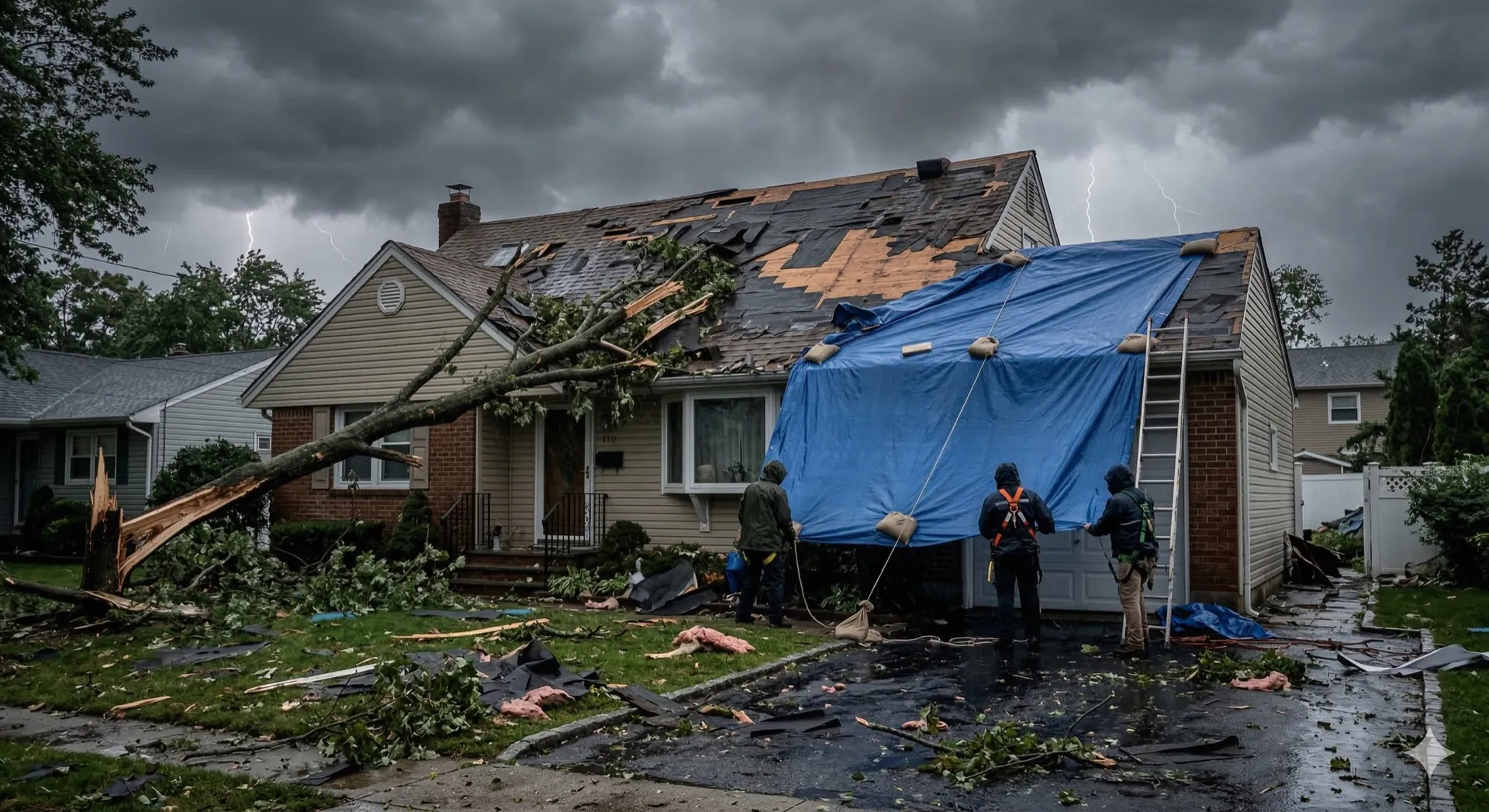
Wind damage, and the rain that came in through it, is a homeowners claim. A tree on the house is a homeowners claim, and most policies pay something toward removing that tree, up to a limit that varies by policy. Water that rose — from the bay, a canal, a creek or a river — is a flood claim under a separate flood policy, whether National Flood Insurance Program or private, and the homeowners policy generally excludes it. Many coastal New York policies also carry a hurricane deductible that is a percentage of the dwelling coverage rather than a flat figure, and it applies when a named hurricane triggers it. We do not adjust claims; we document and scope the damage so the adjuster sees what the storm did, and we tell you which of the three buckets each item belongs in before you file.
Building Department in Amityville
The Village of Amityville runs its own building department at Village Hall on Greene Avenue; the streets south of Merrick Road along the canals and the Amityville River are in the mapped flood zone. The parts of Amityville outside the village file with the Town of Babylon. Emergency repairs to make the house safe and dry do not wait for a permit. The permanent repair that follows — structural work, re-roofing, electrical — is permitted work like any other, and we file it once the scope is agreed.
Free walkthrough in Amityville. Call or text (631) 312-7441.
By the job in Amityville: Tree Removal · Flood Cleanup · Storm Debris · Storm Roof & Siding
Frequently Asked Questions
Is my house in the Village of Amityville or the Town of Babylon for the permit?
It depends on the address, not the mailing name. The incorporated village runs its own building department on Greene Avenue; the parts of Amityville outside the village line — North Amityville and some of East Amityville — file with the Town of Babylon in Lindenhurst. We settle which one governs before the permanent repair is filed. Emergency work does not wait for either.
Can you tarp my roof the same day?
Where we can reach you safely and the roof can be walked, yes — that is what the first visit is for. A tarp is a temporary measure to stop the water while the damage is documented and the permanent repair is scoped. Where a tree is on the roof, the tree comes off first, in the right order, and the tarp goes on after.
Do you remove the tree and repair the house, or do I need two companies?
One call. Where a tree is on a structure the removal and the repair are the same job — the tree has to come off in an order that does not drop the roof, and the roof has to be supported and covered as the weight comes off. We coordinate the removal, do the structural repair, the roofing, the interior and the cleanup, and write it as one scope.
What should I do first after storm damage?
Stay away from anything that could still fail — a tree on the roof, a sagging ceiling, a downed line, water near electrical — and call the utility for lines and gas. Photograph everything as it is before anyone moves a branch or pulls a carpet. Then call us. We tarp and board the same day where we can reach you, and the photographs are what your claim rests on.
Related Guides
- Hurricane & Storm Damage Repair in West Babylon, NY
- Hurricane & Storm Damage Repair in North Babylon, NY
- Hurricane & Storm Damage Repair — our service page
- Hurricane Damage Repair on Long Island
- What to Do in the First 48 Hours After Hurricane Damage
Also Serving Amityville
- Attic Insulation in Amityville — air sealing, baffles and R-49 depth
- Basement Finishing in Amityville — egress, ceiling height and moisture
- Bathroom Remodeling in Amityville — full gut renovations
- Fallen Tree Removal & Roof Repair in Amityville — tree off the house, roof supported and repaired
- Flood & Water Damage Cleanup in Amityville — wet material out, drying metered
- Gutter Installation in Amityville — seamless gutters, fascia and drainage
- Interior Painting in Amityville — the right work for the cold months
- Kitchen Remodeling in Amityville — cabinets, counters and layout
- Roofing in Amityville — tear-offs, repairs and storm damage
- Storm Debris Removal & Cleanup in Amityville — trees, building debris and hauling
- Storm Roof & Siding Repair in Amityville — wind damage, tarped and rebuilt
Work With Alec's Construction
This guide is written by the crew that does the work. See Alec's Hurricane & Storm Damage Repair service — fallen trees, flooding, roof and siding damage, cleanup and the rebuild. Licensed and insured on Long Island, one crew start to finish, free walkthrough and a written estimate inside 48 hours.
Booking the cold months now: we also handle Roofing and Storm Damage & Insurance Restoration.
Get a Free Estimate from Alec's Construction
Licensed and insured, working across Nassau and Suffolk County since 2018. We come out, look at the actual job, and put a written number in your hand — no pressure, no obligation.
Or call (631) 312-7441