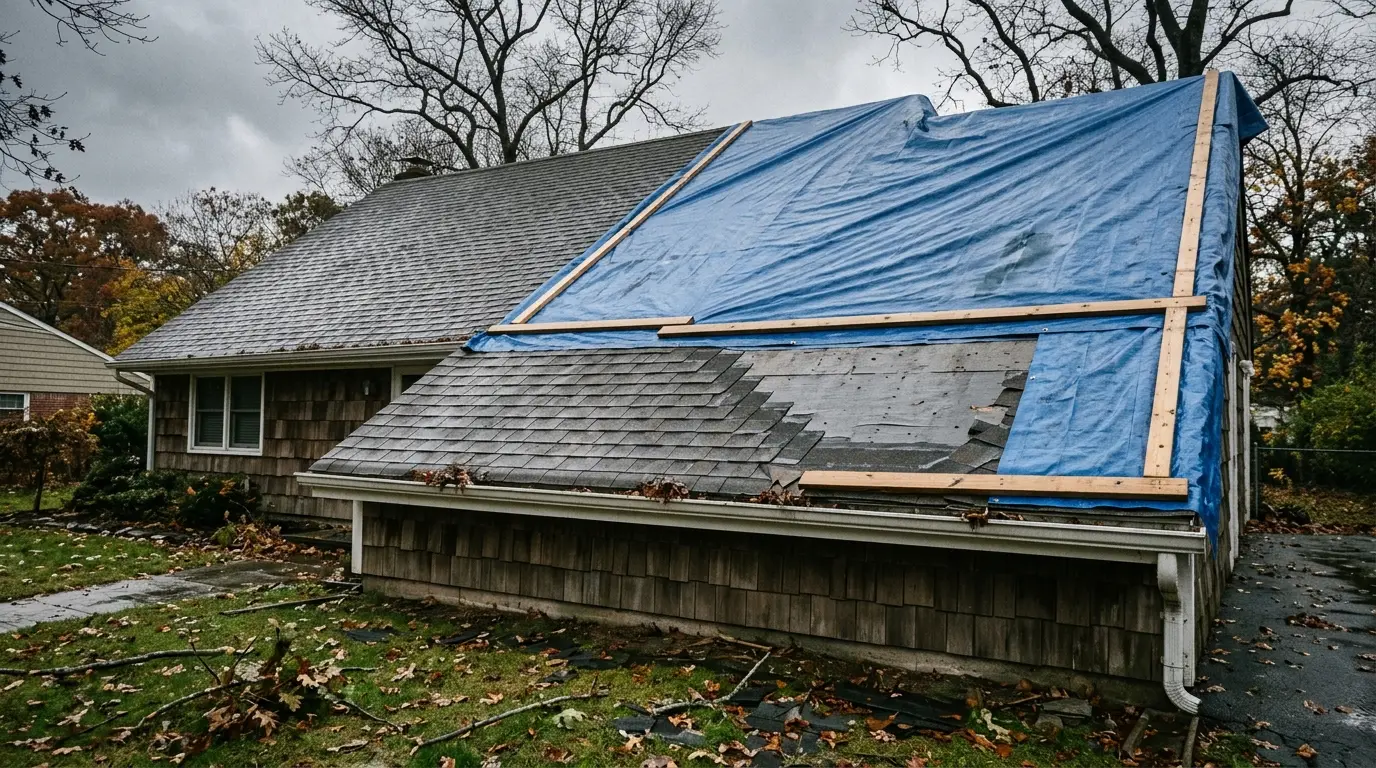
The first two days after a hurricane decide how well the next two months go. What gets photographed, what gets dried and what gets thrown away in that window sets up the insurance claim and decides whether the house grows mould. This is the order we walk homeowners through on the phone, written down.
Hour One: Safety
- Do not go under a tree that is on the roof, into a room with a ceiling that is bellying or sagging, or near a downed line — assume every wire on the ground is live and call the utility. PSEG Long Island handles electric across Long Island; National Grid handles gas.
- If you smell gas, leave the house and call from outside.
- If water reached the electrical panel, outlets or the boiler, do not turn anything back on. Salt water in particular is not something to dry and reuse.
- If the house is not safe to stay in, leave. Everything else can wait for daylight.
Hours One to Six: Photograph Everything
Before anyone cuts a branch, pulls a carpet or throws away a wet couch, photograph the house as the storm left it. Wide shots of every elevation, the roof from the ground, the tree where it lies, the water line on the walls, the crawl space or basement, the mechanicals, the yard. Video walking through the house works too. Both the homeowners adjuster and the flood adjuster will want to see the house as found, and once material is gone it cannot be documented. Keep the photographs somewhere that is not the phone alone.
Hours One to Twelve: Stop the Water
- Get a contractor to tarp the roof and board the openings. This is a temporary measure to prevent further damage, and every policy expects you to take it — it does not wait for the adjuster.
- Move what you can out from under leaks and off wet floors.
- If a ceiling is holding water, a small hole at the low point lets it drain into a bucket rather than bringing the whole sheet down.
- Pump standing water out of the basement or crawl space once it is safe to do so — after the outside water has gone down, or the walls can be pushed in by the pressure difference.
Hours Six to Twenty-Four: The Two Calls
Notify your homeowners carrier and, if water rose into the house, your flood carrier. These are two separate claims for two different kinds of damage — wind and the rain it let in on one side; water that rose from the bay, a canal, a creek or the ground on the other. Tell each what happened, get a claim number, and ask when an adjuster will come. Do not describe the cause of anything you are not sure about. Do not agree to a scope or a number on the phone.
Day One to Two: Get the Wet Material Out
Mould can begin on wet building material within a day or two, and a house left wet while it waits for an adjuster is a mould job on top of a storm job. Wet carpet and pad, wet insulation, wet sheetrock that has lost its strength, soaked contents that cannot be dried — out, photographed as they go, and kept where the adjuster can see them if there is anywhere to keep them. Then real drying equipment, and moisture readings before anything is closed back up. Emergency mitigation is expected under the policy; permanent repairs before the adjuster has seen the damage are what you avoid.
What Not to Do
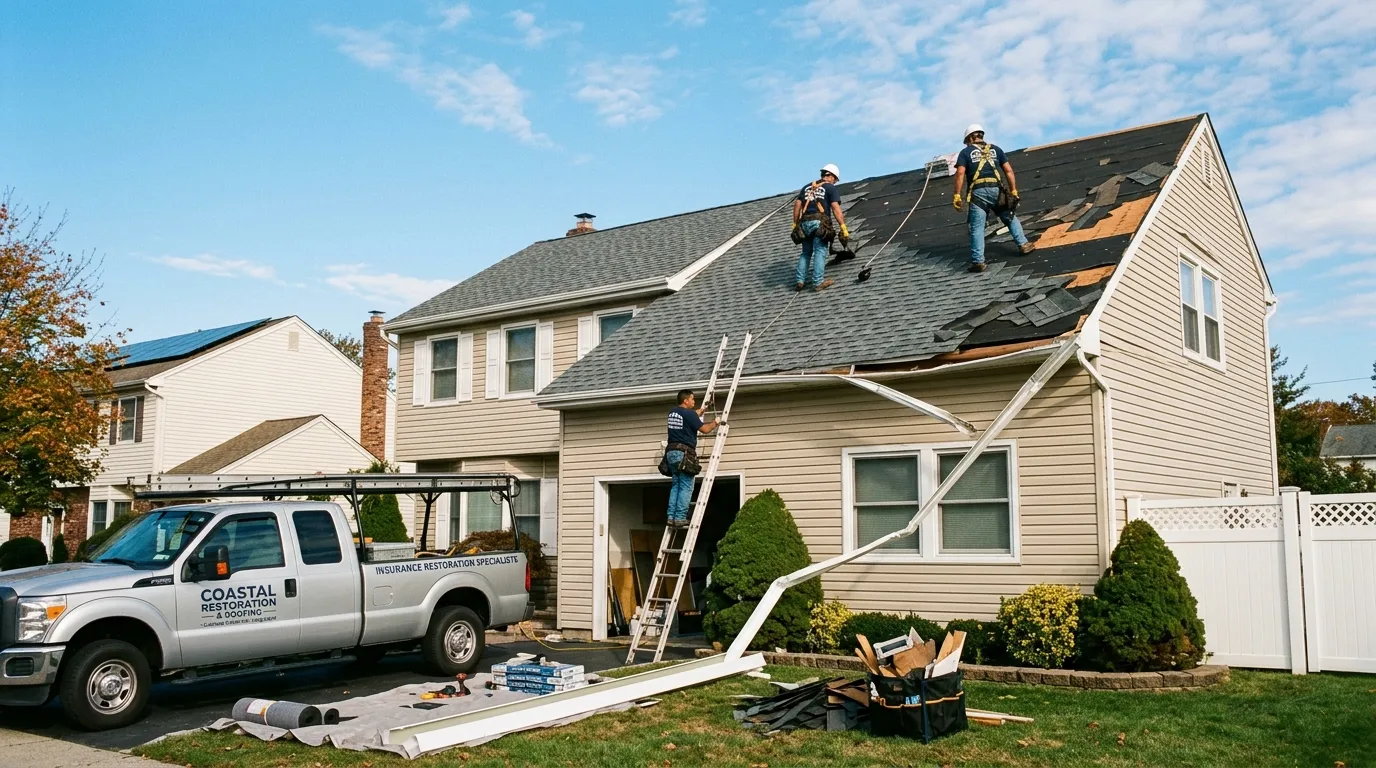
- Do not sign anything at the door. Assignments of benefits, deposits to out-of-state crews, and contracts with a company that arrived after the storm and has no local address are how homeowners lose control of their own claim.
- Do not throw damaged material away before it has been photographed.
- Do not start the permanent repair before the scope is agreed, unless the carrier has told you to.
- Do not go on the roof.
- Do not run a generator indoors or in an attached garage.
Days Two to Fourteen: Scope and Adjuster
A contractor who does storm work writes the scope line by line with the photographs attached — storm damage separated from wear, wind separated from flood — and meets the adjuster at the house. What the adjuster sees on that visit is most of the claim. What was already thrown away or already fixed is the hard part of it. Read our guide to storm damage claims for what the adjuster is actually looking for.
We are on Barton Avenue in East Patchogue and cover Suffolk County. Call or text (631) 312-7441 — tell us whether the roof is open, whether a tree is on the house and whether there is water inside, and we come with the right equipment.
Frequently Asked Questions
Should I clean up before the insurance adjuster comes?
Photograph first, then remove what will cause further damage if it stays — wet carpet, wet insulation, soaked contents — and keep the photographs and, where possible, the material itself. That is emergency mitigation and the policy expects it of you. What you do not do is make permanent repairs or dispose of everything before it has been documented; once it is gone it cannot be adjusted.
Can I tarp the roof myself?
We would rather you did not. Roofs after a storm are wet, often damaged in ways that are not visible from the ladder, and sometimes carrying a tree; falls from roofs are the injury that follows every hurricane. Get what you can out from under the leak, catch the water, photograph it, and get a contractor out. Tarping is what the first visit is for.
How do I know if the water was wind-driven rain or flooding?
Where it came from. Water that came down — through a hole in the roof, around a window the wind broke, behind siding that peeled — is wind-driven rain and a homeowners claim. Water that came up — from the bay, a canal, a creek, the ground, or a river — is flooding and a flood-policy claim. A water line on the walls at the same height in every room is flooding. A stain spreading from the ceiling is rain. Many bay-front houses have both, and the two get scoped separately.
Who do I call about a downed power line on Long Island?
The utility, before anyone else — PSEG Long Island handles electric service across Long Island and treats downed lines as an emergency; for gas it is National Grid. Assume every line on the ground is live, including cable and phone lines that may be tangled with power. Nothing near a downed line is touched — not the tree it is in, not the branch it is under — until the utility has made it safe.
Related Guides
- Hurricane Damage Repair on Long Island
- Storm Cleanup and Debris Removal on Long Island
- Flood Cleanup After a Hurricane on Long Island
- Hurricane & Storm Damage Repair — our service page
- A Tree Fell on Your House
- Storm Damage Insurance Claims on Long Island
- Water Damage Restoration on Long Island
Work With Alec's Construction
This guide is written by the crew that does the work. See Alec's Hurricane & Storm Damage Repair service — fallen trees, flooding, roof and siding damage, cleanup and the rebuild. One crew start to finish, free walkthrough and a written estimate inside 48 hours.
Booking the cold months now: we also handle Roofing and Storm Damage & Insurance Restoration.
Get a Free Estimate from Alec's Construction
Working across Suffolk County since 2018, one crew from start to finish. We come out, look at the actual job, and put a written number in your hand — no pressure, no obligation.
Or call (631) 312-7441