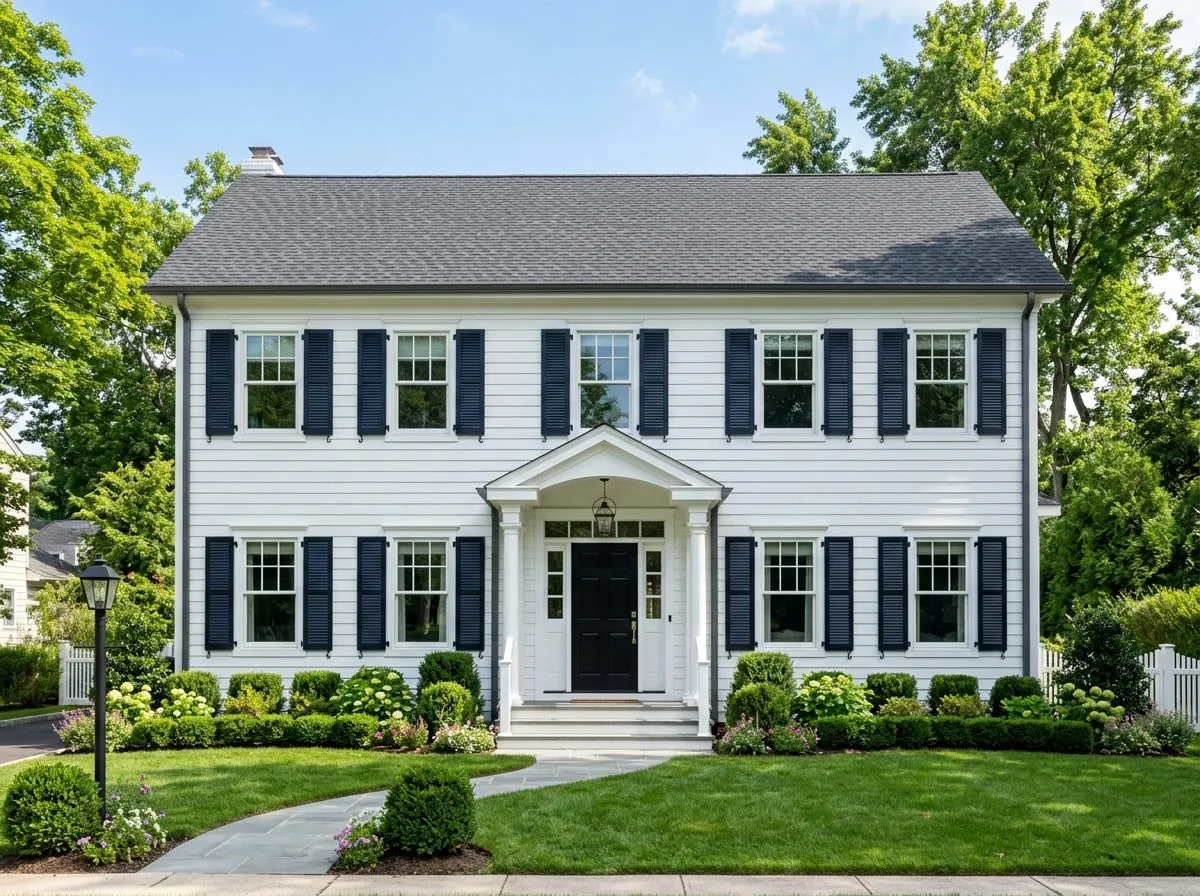
James Hardie fiber cement is the product homeowners ask about when they have decided vinyl is not what they want. It is a cement, sand and cellulose composite — it does not melt, it holds paint far longer than wood, insects have no interest in it, and it does not soften or warp in sun.
It is also heavier, slower to install and more expensive than vinyl. Whether that trade is worth it depends on your house and how long you intend to own it.
HZ5 is the spec that matters here
James Hardie manufactures to two climate specifications. HZ10 is formulated for hot, humid regions. HZ5 is formulated for freeze-thaw climates, and that is what belongs on a Long Island house.
HZ5 boards are engineered for moisture resistance through repeated freeze-thaw cycling and shrink-swell movement. Long Island runs dozens of freeze-thaw cycles a season — the temperature crosses 32 degrees constantly from December through March. Confirm HZ5 appears on your proposal. Any contractor working here should be specifying it without being asked.
Coastal performance
On a barrier-adjacent or bayfront property, fiber cement holds up to salt air well. It does not corrode and salt does not degrade the cement matrix.
The vulnerability on a coastal job is the fastening and the flashing, not the board. Salt air attacks fasteners, and a nail that corrodes leaves a stain running down the face of the siding and eventually loses its hold. Stainless fasteners on coastal exposures are not an upsell; they are the correct specification. Ask what is being used.
What it costs installed
James Hardie lap siding installed on Long Island generally runs $14 to $22 per square foot, and a typical house lands between $25,000 and $45,000. Vinyl on the same house typically runs $9 to $15 per square foot.
The gap is mostly labor. Fiber cement is heavy, it requires specific cutting equipment and dust control, and it is a slower install. Anyone quoting fiber cement at vinyl labor rates has either not installed much of it or is planning to cut corners on the parts you cannot see.
ColorPlus versus field painting
- ColorPlus — factory-applied finish, baked on under controlled conditions. More consistent than any field paint job and it carries a finish warranty. Costs more up front.
- Primed and field painted — cheaper initially, any color you want, and the finish depends entirely on the painter and the weather that week.
- Over a 15-year horizon ColorPlus usually wins on total cost, because it defers the first repaint substantially.
Where vinyl is still the right answer
We install both, so this is not a sales position. Vinyl makes sense when you are selling within a few years and want the exterior refreshed without the spend, when the budget genuinely does not reach fiber cement, or on a rental property where lowest lifecycle cost beats appearance.
Fiber cement makes sense when you are staying, when the house has architectural character worth the material, on coastal exposures where you want maximum durability, or when you want the exterior to still look right in twenty years.
Installation details that decide the outcome
- HZ5 boards specified for this climate
- Correct fastener type and spacing — stainless on coastal exposures
- Manufacturer-specified clearance to roofing, decking and grade
- Kick-out flashing wherever a roof edge meets a wall, which is the single most common source of hidden water damage on any siding job
- Proper joint treatment and a weather-resistive barrier behind the board
Fiber cement installed to the manufacturer specification lasts decades. Installed carelessly it traps water against the sheathing, and because the board itself does not rot, the damage stays hidden until it is expensive.
Frequently Asked Questions
What is HZ5 and do I need it on Long Island?
HZ5 is James Hardie's product specification engineered for freeze-thaw climates, versus HZ10 for hot and humid regions. Long Island runs dozens of freeze-thaw cycles each winter, so HZ5 is the correct spec here. Confirm it appears on your proposal.
What does James Hardie siding cost on Long Island?
Generally $14 to $22 per square foot installed, with a typical house landing between $25,000 and $45,000. Vinyl on the same house runs about $9 to $15 per square foot. Most of the difference is labor — fiber cement is heavy, needs specific cutting and dust control, and installs more slowly.
Is fiber cement good for a waterfront house?
Yes. It does not corrode and salt air does not degrade the cement matrix. The weak point on a coastal job is the fasteners and flashing, not the board — corroding nails stain the face and eventually lose their hold. Stainless fasteners are the correct spec on coastal exposures.
Should I get ColorPlus or paint it myself?
ColorPlus is a factory-baked finish, more consistent than any field paint job, and it carries a finish warranty. Field painting is cheaper up front and gives you unlimited color choice. Over roughly fifteen years ColorPlus usually costs less in total because it pushes the first repaint out substantially.
Related Reading
- Siding Replacement Cost on Long Island — what drives the number on a real house
- Storm Damage Roofs on Long Island — wind, siding and the insurance path
- Roofing on the North Shore — pairing a roof and siding replacement
- Insurance Restoration — when the carrier pays for the exterior
Work With Alec's Construction
This guide is written by the crew that does the work. See Alec's Siding service — James Hardie, vinyl and cedar with the rot behind it repaired first. Licensed and insured on Long Island, one crew start to finish, free walkthrough and a written estimate inside 48 hours.
Booking the cold months now: we also handle Roofing and Painting.
Every town here has villages inside it running their own building department. Our directory sorts out which counter your address actually files at.
Ready to Get Started?
Free exterior walkthrough and a written proposal listing board spec, fastener type and flashing details. James Hardie and vinyl installed across Nassau and Suffolk.