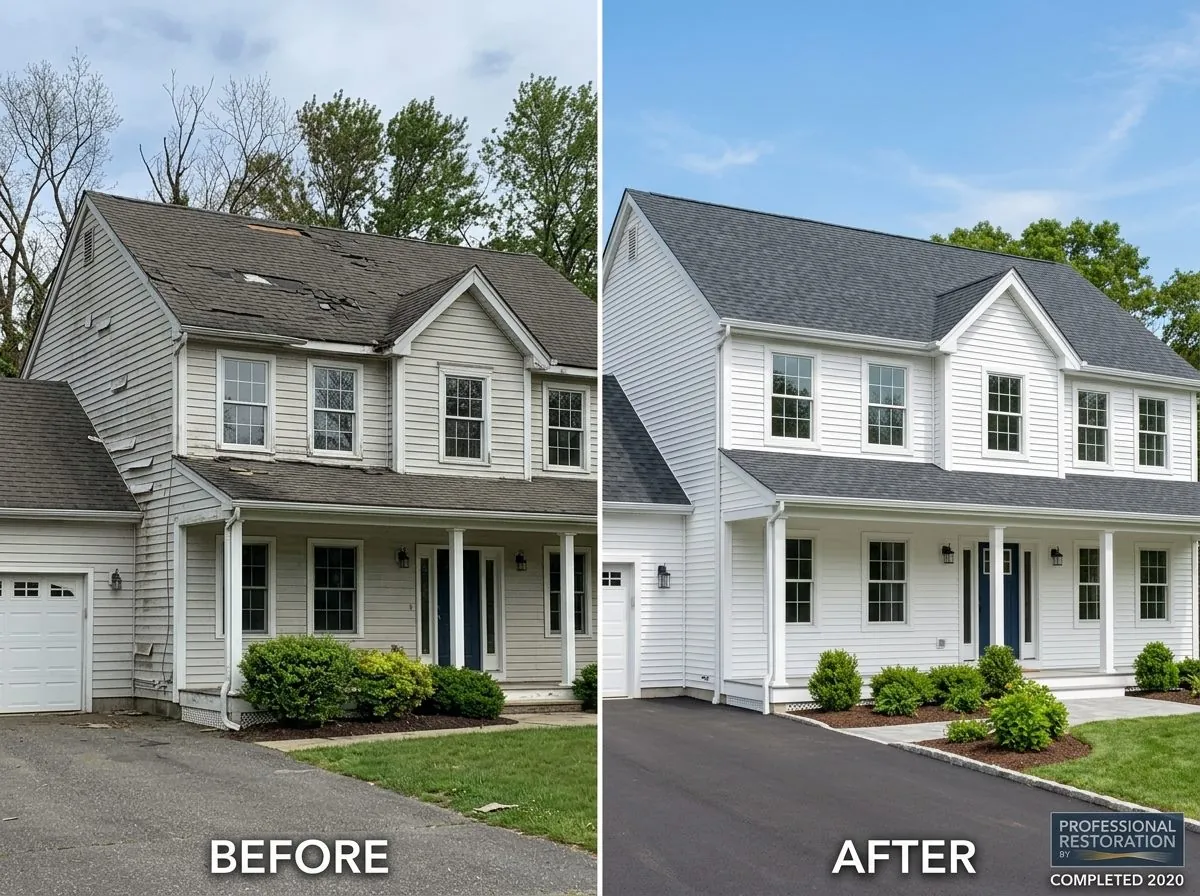
Nor'easter season on Long Island runs September through April, and the difference between a storm that costs you a weekend and one that costs you a winter is mostly decided before the first system forms. This is the checklist we run on our own houses in late August, in the order that matters.
1. Walk the roof edges — or have someone who climbs do it
Wind takes edges first: rakes, eaves, ridge. What to find now instead of in November — lifted or unsealed shingles (the invisible-from-the-driveway failure every storm page on this site describes), loose ridge caps, flashing pulling at the chimney, and gutters whose fasteners have quit. A free inspection now beats a tarp queue later, and every legitimate roofer's fall calendar fills by October.
2. Deal with the trees while arborists are bookable
- Deadwood over the roof, the driveway and the service drop comes down now — a dead limb IS coming down this winter, the only question is what it lands on
- Leaning trees near structures, especially after wet stretches when root plates loosen, deserve a professional look
- Notify neighbors in writing about their visibly dead trees overhanging your property — that letter is what turns a storm loss into their negligence question instead of your act-of-God claim
- The canopy cut back off the roof does double duty: fewer abrasion scars, fewer gutter loads
3. Gutters, leaders, drains — the boring system that decides basements
Clean after leaf-fall and before the first hard freeze, verify leaders actually discharge away from the foundation, and probe the fascia behind any sagging run. Ice dams tear off more Long Island gutters than wind; a clean, pitched run into working leaders is most of the defense. Our gutters guide covers the capacity-versus-clog diagnosis.
4. Read two paragraphs of your policy — now, not after
The hurricane/windstorm deductible paragraph: many coastal policies carry a percentage deductible that triggers on named storms — 5 percent of a $600,000 dwelling limit is $30,000 before the carrier pays. And the water paragraphs: flood is a separate policy, surface runoff is excluded, sewer backup is an endorsement, and each of our town storm pages explains the local version. Every one of these is an August conversation with your agent; none of them help in the parking lot after the storm.
5. Build the ten-minute evidence file
Walk the house with your phone: every elevation, the roof from each corner, each ceiling, the major systems. Timestamped pre-storm photos are the cheapest insurance document that exists — they end every "pre-existing damage" argument before it starts. Store them off the property (cloud counts).
6. Know your first three calls
Carrier claim line, your contractor, your arborist — saved now. After a real event the triage queues form in hours, and existing customers ride ahead of cold calls at every legitimate outfit, ours included. The photograph-first, tarp-same-day, receipts-for-everything sequence is on every storm page of this site; the version you remember at 2 AM is the one you read in August.
Frequently Asked Questions
When is nor'easter season on Long Island?
September through April, with the serious wind-and-water systems clustering October through March. Preparation is an August job: contractor calendars fill by October, arborists book out, and the policy conversations — deductibles, flood, sewer backup — only help if they happen before a named storm is on the map.
What is the single highest-value prep item?
The pre-storm photo file. Ten minutes walking the house with your phone — every elevation, roof corners, ceilings — timestamped and stored in the cloud. It costs nothing and it ends every 'pre-existing damage' argument an adjuster will ever raise. Second place: deadwood over the roof, because that limb is coming down this winter regardless.
Should I have my roof checked even if it isn't leaking?
Before storm season, yes — the most common wind vulnerability is a shingle whose seal broke in a past blow and looks perfect from the driveway. The next driving rain finds it. A pre-season inspection finds it first, while it is a maintenance item instead of an interior claim.
Related Reading
- Storm Damage Roofs on Long Island — what wind actually does
- Emergency Roof Repair — the first 24 hours
- Roof Insurance Claims — how the process really runs
- Gutters, Leaders & Fascia — the system that decides basements
- Winterizing Patios and Driveways — the hardscape half of the checklist
Ready to Get Started?
Free pre-season roof and exterior inspection, with photos — August and September slots go first. Nassau and Suffolk County.