Retaining walls fail slowly, then all at once. For years a wall leans a little more each season, a few blocks shift, and soil starts to show in the joints. Then a wet stretch followed by a hard freeze pushes it past the point where it can hold.
Late fall is a good time to take an honest look at any wall on your property, because the season ahead is the hardest one it will face. Here is what to look for, why winter makes it worse, and how to decide between a repair and a rebuild.
The Warning Signs
Walk the length of the wall and look at it from the end, sighting down the face. You are looking for:
- Leaning. A wall that tips forward at the top, away from the soil it holds. Some segmental block walls are built with a slight backward lean on purpose. A forward lean is the problem.
- Bulging. A belly in the middle of the wall, where the face pushes out between the ends.
- Cracks. Stepped cracks in a mortared wall, or blocks that have split.
- Gaps and offsets. Blocks that have slid forward of the course below, or joints that have opened.
- Soil or sand in the joints or at the base. That means soil is washing through the wall instead of being held behind it.
- Water stains, wet spots, or standing water behind the wall. Water that cannot get out is the most common reason a wall fails.
- Sinking or tilting at the top of the slope. Patios, fences or driveways above the wall that are dropping can mean the soil behind it is moving.
One sign by itself may be minor. Two or three together, especially leaning plus water, means the wall is under more pressure than it was built to hold.
Why Winter Makes It Worse
The soil behind a retaining wall pushes on it all the time. When that soil is saturated, it pushes much harder, because the wall is holding back the weight of the water too. When that wet soil freezes, it expands and pushes again. A wall without good drainage takes both hits every time the ground freezes and thaws.
That is why the retaining wall guide puts drainage first. A well-built wall has free-draining gravel behind it and a way for water to get out, usually a perforated pipe at the base or weep holes. Many older walls were built with ordinary soil backfill right up against the back of the wall and nothing to let water out. They hold fine in a dry year and move in a wet winter.
Different Walls Fail Differently
Timber walls, built from railroad ties or pressure-treated lumber, were common on Long Island properties for decades. Wood in contact with wet soil eventually rots, and once the tiebacks or bottom course go soft, the wall leans. Poking a screwdriver into the lower timbers tells you a lot. If it sinks in easily, the wall is near the end of its life.
Mortared block or brick walls are rigid. They do not flex, so when soil pressure builds they crack, often in a stair-step pattern along the joints. Without drainage openings, water stays trapped behind them.
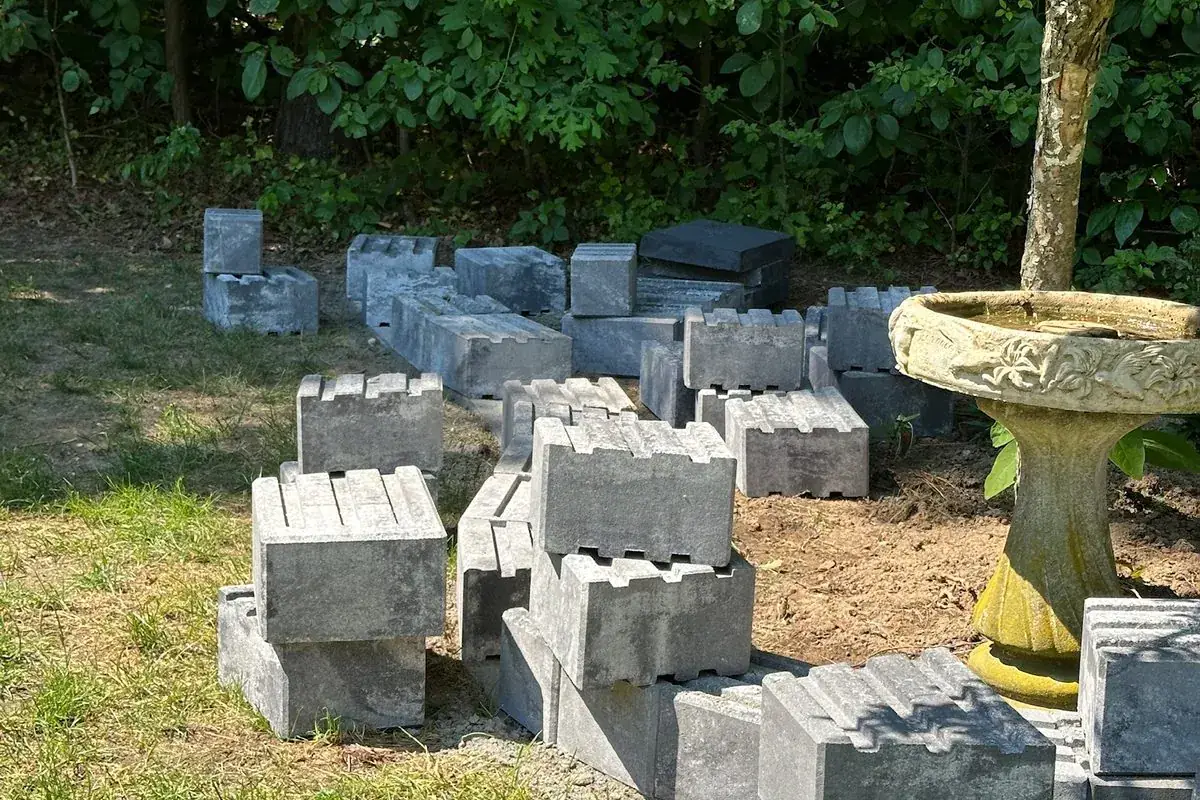
Segmental block walls, the interlocking concrete units most new walls use, are more forgiving because they can drain through the joints and move a little without cracking. When they fail, it is usually a base or drainage problem, and individual blocks can be reused in a rebuild.
What You Can Do Right Now
These do not fix a failing wall, but they can take pressure off it until it is repaired:
- Move downspouts so roof water is not dumping into the soil right behind the wall.
- Do not pile plowed or shoveled snow on top of or directly behind the wall. Snow adds weight and melts into the soil behind it.
- Keep vehicles back from the top of the wall, especially a wall below a driveway or parking area.
- Clear any weep holes or drain outlets that are clogged with soil or leaves.
- Keep people, especially kids, away from a wall that is clearly leaning.
Repair or Rebuild?
When a Repair Can Work. If the problem is limited to a section, the wall is not leaning badly, and the cause can be corrected, a repair can be reasonable. For segmental block walls that often means taking down the affected section, fixing the base and the drainage behind it, and rebuilding it with the same blocks. For a mortared wall with surface cracking but no real movement, repointing may be enough.
When It Needs to Be Rebuilt. If the whole wall is leaning or bulging, there is no drainage behind it, the base was never right, or old timber is rotting, patching it usually just postpones a rebuild. A proper rebuild means excavating behind the wall, a compacted gravel base, drainage stone and pipe, and for taller walls, reinforcement that ties the wall back into the soil.
Height Changes the Rules. Taller walls carry much more load, and many towns treat walls above a certain height, often around four feet, differently, with engineering and permit requirements. Rules vary by town and by situation, so check with your town building department or ask us to look into it for your address before work starts.
Is Winter a Bad Time to Rebuild?
Excavation and block work can continue into late fall as long as the ground is not frozen. Once the ground freezes hard, most wall work waits for spring. If your wall is failing now, stabilize it with the steps above and get a walkthrough on the calendar so you are first in line when the ground thaws.
What We Do
Alec's Construction repairs and rebuilds retaining walls across Long Island, from low garden walls to walls along driveways. We start with where the water goes, because that is almost always why a wall moves.
Call (631) 312-7441 or book a free walkthrough.
Frequently Asked Questions
Is a leaning retaining wall dangerous?
It can be. A wall that leans forward is being pushed harder than it can hold, and a wet freeze can push it further. Keep people and vehicles away from it and have it looked at, especially if it is also bulging or shedding soil.
Why do retaining walls fail?
Most failures come down to water. Saturated soil pushes much harder than dry soil, and freezing adds more pressure. Walls built without gravel backfill and a way for water to drain out are the ones that lean and bulge.
Can a leaning retaining wall be straightened?
Sometimes a section of a segmental block wall can be taken down and rebuilt with the same blocks once the base and drainage are corrected. If the whole wall is moving or has no drainage at all, a rebuild is usually the lasting fix.
Do I need a permit to rebuild a retaining wall on Long Island?
It depends on the town, the height, and what the wall supports. Taller walls often need engineering and a permit. Check with your town building department, or ask your contractor to confirm for your property before work starts.
Can retaining walls be built in winter?
Work can continue in late fall while the ground is not frozen. Once it freezes hard, excavation and base work usually wait for spring, so it pays to schedule a walkthrough now.
Related Guides
- Retaining Walls on Long Island
- French Drain Installation
- Winter Freeze-Thaw and Masonry
- Masonry Contractor on Long Island
- Masonry and Pavers Services
Get a Free Estimate from Alec's Construction
Serving homeowners across Long Island. We come out, look at the actual job, and put a written number in your hand — no pressure, no obligation.
Or call (631) 312-7441