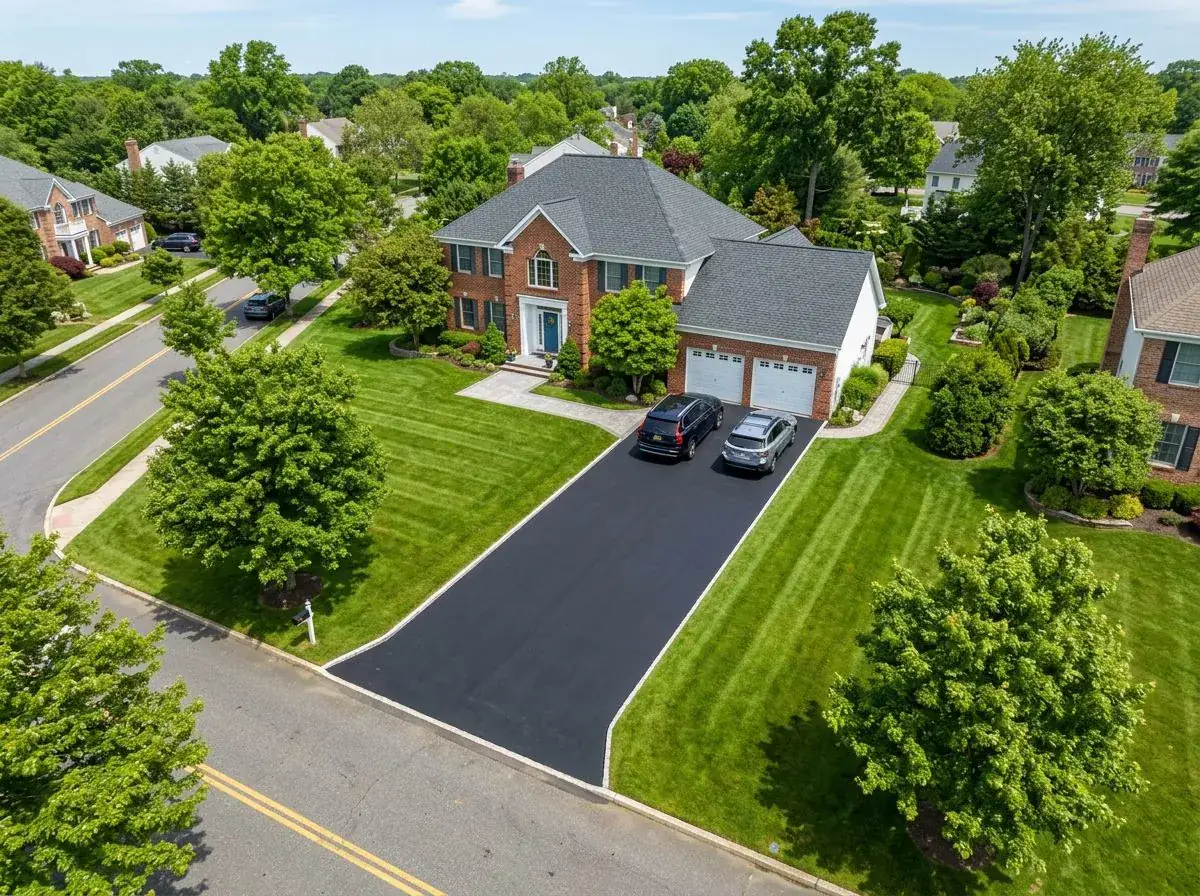
Masonry is the one trade on your property where the mistakes do not show up for two or three years. A patio laid on a thin, poorly compacted base looks identical on day one to a patio laid on twelve inches of properly compacted stone. You find out which one you paid for the first spring after a hard winter, when one of them has heaved, settled, and opened joints you can fit a finger into.
That delay is why masonry attracts so many low bids on Long Island. The contractor who skips the base work is gone long before the failure appears. This guide covers what actually determines whether stonework lasts on Long Island soil and weather, what fair pricing looks like in Nassau and Suffolk County, and the specific questions that separate a real mason from someone with a plate compactor and a truck.
Why Long Island Is Hard on Masonry
Freeze-thaw is the main enemy. Long Island does not get the deep, stable freeze that upstate New York gets. Instead we cycle — a stretch of nights below freezing, then a thaw, then another freeze. Every one of those cycles is a chance for water that soaked into a joint, a crack, or an unsealed paver to expand roughly nine percent as it turns to ice. Repeat that thirty or forty times a winter and it lifts, cracks, and spalls anything that holds water.
Soil varies enormously across the island. Much of central and eastern Suffolk sits on sandy, well-draining outwash that is genuinely good to build on. Parts of Nassau and the North Shore have clay-heavy subsoil that holds water and moves seasonally. A base detail that is perfectly adequate in Medford can be underbuilt in parts of Manhasset. Any mason who quotes you the same base spec regardless of where your house sits is not thinking about your property.
Salt air accelerates everything near the water. South Shore and East End properties deal with airborne salt that attacks mortar joints and steel reinforcement. It is a real factor in material selection, not a sales pitch.
Frost depth drives footings. Anything with a footing — steps, columns, a wall that has to stay plumb — needs to bear below the frost line, which on Long Island is generally taken as about 36 inches. A stoop poured on a shallow pad will move. This is the single most common shortcut in residential masonry, and it is invisible until it is not.
The Base Is the Job
For any paver or flagstone installation, roughly two thirds of the labor happens before a single stone is set. Excavation, geotextile fabric where soil conditions call for it, then compacted crushed stone in lifts — meaning the stone goes in a few inches at a time and gets compacted between each lift, not dumped twelve inches deep and rolled once. Then a screeded bedding layer, then the stone.
A patio in a well-draining sandy area might be fine on six to eight inches of compacted base. A driveway that will carry vehicle loads needs substantially more, often ten to twelve inches. If you are getting bids and one is dramatically cheaper, ask each contractor to write the base depth and the number of compaction lifts on the proposal. The cheap bid usually gets quiet at that point.
What Masonry Work Costs on Long Island
These are realistic 2026 ranges for Nassau and Suffolk County. Your actual number depends on access, existing conditions, material choice, and how much demolition and disposal is involved.
- Paver patio: roughly $28–55 per square foot installed, depending on paver line and pattern complexity
- Natural stone patio (bluestone): roughly $45–75 per square foot installed
- Paver walkway: roughly $30–60 per square foot — higher per foot than a patio because of the cutting and edge work
- Segmental retaining wall: roughly $45–90 per face foot, rising sharply once engineering and geogrid are required
- Brick or stone front steps and stoop: roughly $5,000–15,000 depending on size, railing, and whether the existing structure can be reused
- Repointing existing brick: roughly $12–25 per square foot of wall face
Be skeptical of anything dramatically below these ranges. On a 400 square foot patio, the difference between a proper base and a shortcut base is a few thousand dollars in stone and machine time. That is exactly the gap you see between the low bid and the honest one.
Questions That Separate Real Masons From the Rest
- How deep is the base, and how many compaction lifts? You want a specific number in writing, not "we build it right."
- What are you doing about drainage? Every hardscape changes where water goes. A mason who has not thought about where the runoff lands has not finished designing the job.
- Do the steps and any walls have footings below frost depth? For anything structural the answer should be immediate and specific.
- What edge restraint are you using? Pavers without proper edge restraint spread outward and open joints, no matter how good the base is.
- Polymeric sand or standard joint sand? Polymeric costs more and matters, especially for weed and washout resistance.
- Are you pulling a permit? Many Long Island towns and villages require permits for retaining walls over a certain height, and some regulate total impervious surface. Get this answered before work starts, not after a stop-work order.
- Can I see a job you did four or more years ago? Anyone can show you a patio from last month. The four-year-old job tells you everything.
Timing Your Project
Masonry season on Long Island runs roughly from April through November. Mortar and concrete need temperatures consistently above about 40°F to cure properly, and polymeric sand needs dry conditions to set. Work can extend later with cold-weather methods, but it adds cost and risk.
The practical consequence is that everyone wants the same twenty weeks. Homeowners who call in February and March get their pick of dates and often better pricing. Homeowners who call in June for a Fourth of July patio are usually disappointed. If you are planning a patio for next season, the smart move is to get designed and under contract during the winter.
Frequently Asked Questions
How long should a paver patio last on Long Island?
A properly installed paver patio with an adequate compacted base should last 25 to 40 years, with occasional joint sand refresh and possible re-leveling of a section after a decade or two. The pavers themselves outlast the installation; when a patio fails early, it is almost always the base, not the stone.
Do I need a permit for a patio on Long Island?
A ground-level patio usually does not require a building permit, but many towns and villages regulate total impervious surface coverage on a lot, and retaining walls above a certain height almost always require a permit and often engineered drawings. Requirements vary by town and by village, so confirm with your local building department before work starts.
Is a paver patio or a poured concrete patio better here?
Pavers generally perform better through Long Island freeze-thaw cycles because the individual units and flexible joints accommodate movement, and a settled section can be lifted and reset. Poured concrete cracks in place and repairs are always visible. Concrete can be cheaper up front.
Can masonry work be done in winter?
Limited work can be done with cold-weather practices such as heated enclosures and admixtures, but it costs more and carries more risk. Most Long Island masonry runs April through November. Winter is the right time to design, permit, and get on the spring schedule.
Masonry by Town
Local conditions vary more across Long Island than most homeowners expect. These break down what changes town by town:
- Patchogue, NY — village jurisdiction, older stock, and the projects that fit
- Medford, NY — sandy soil, bigger yards, and room to build
- Huntington, NY — north shore terrain, clay pockets and retaining walls
- Bay Shore, NY — south shore salt exposure and material selection
- Sayville, NY — historic district rules and older brick
- Smithtown, NY — mixed terrain, mixed jurisdictions, larger lots
- Port Jefferson, NY — steep grade, harbor exposure and serious wall work
- Southampton, NY — east end review, high-end finishes, tight season
Related Reading
- Paver Patio Cost on Long Island — a full line-item breakdown of where the money goes
- Retaining Walls on Long Island — when a wall needs engineering and a permit
- Repointing and Masonry Repair — how to tell repair from replacement
- Pavers vs. Poured Concrete — which one actually survives our winters
- Deck vs. Patio — choosing between the two for your yard
- Best Time to Install Pavers — why winter is when smart homeowners book
- Front Walkway Construction — the smallest job that changes the most
- Hiring a Patio Contractor — patio pricing and what to ask
For a full breakdown of what we build and how we price it, see our masonry and pavers service page.
Work With Alec's Construction
This guide is written by the crew that does the work. See Alec's Masonry & Pavers service — patios, walkways, steps, stoops and retaining walls. Licensed and insured on Long Island, one crew start to finish, free walkthrough and a written estimate inside 48 hours.
Booking the cold months now: we also handle Chimney Repair and Driveways & Blacktop.
We pull the permits on our own jobs — if you need the building department for your town, we keep a current directory of all 23 Long Island permit offices.
Ready to Get Started?
Planning masonry work? Call Alec's Construction at (631) 312-7441 for a free walkthrough. We will show you the base spec in writing before you sign anything — Nassau and Suffolk County.