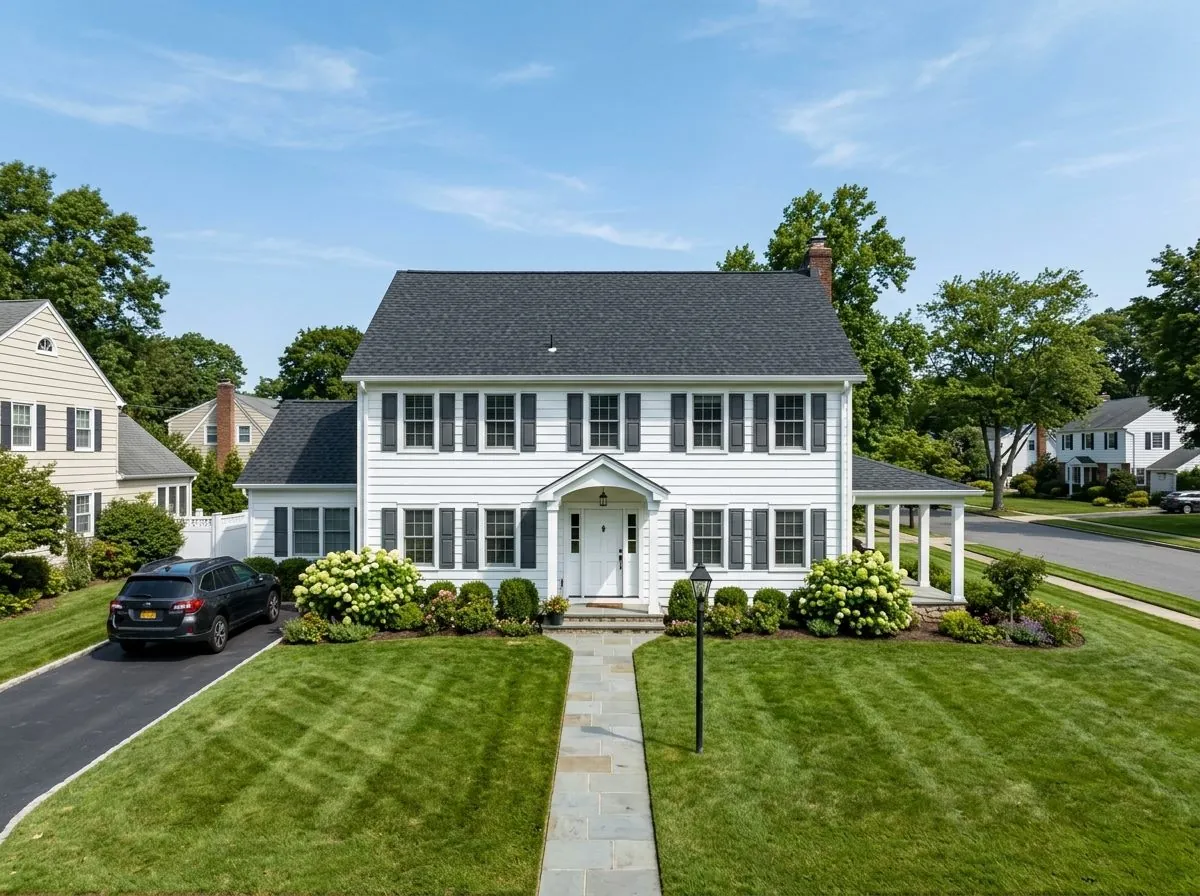
Bellmore is unincorporated Town of Hempstead, and like its neighbors it divides at Sunrise Highway. South Bellmore runs to the canals and carries flood and wind exposure. North Bellmore is inland suburbia. Same hamlet name, two different jobs.
The 1950s cape is the local roof
Bellmore is dense with postwar capes, and the cape roof has a specific weak point: the dormer cheek, where a shed or gable dormer's side wall meets the main roof plane. It needs step flashing woven into the shingle courses and a kick-out flashing at the bottom to throw water clear of the wall.
On houses of this age it was frequently done poorly the first time, then re-roofed over two or three times without anyone opening the junction. When we tear off a cape here, the dormer cheeks are the first thing we inspect, and the rot we find is usually in the wall behind them rather than the roof.
Layers, and why they matter
- Two or three layers add real dead load the framing was not designed for
- Layers trap moisture between them, which rots decking invisibly
- You cannot inspect or repair sheathing under a layered roof
- A tear-off is the only way to find out what the deck is actually doing
- Nails through multiple layers hold less well than nails into clean deck
Roofing over rather than tearing off saves money on the day and costs more over the life of the roof. On a sixty-year-old Bellmore cape that has already been layered once, it is not a decision we would make.
South Bellmore exposure
Below Merrick Road the canals put houses in direct onshore wind and, in places, mapped flood zones. Increased fastener count at the perimeter, an upgraded starter course and ridge, and corrosion-resistant hardware are the spec differences. Many policies down there carry a percentage-based hurricane deductible worth reading before a storm rather than after.
Ventilation on a cape is genuinely hard
Cape attics are small, frequently partly finished, and often have knee-wall spaces sealed off from the main attic volume. A single ridge vent does nothing for a sealed-off knee-wall space, and that space is where shingles cook and fail early.
We map the attic spaces before quoting and put the intake and exhaust numbers for each one on the proposal. It is the most commonly skipped part of a cape re-roof and the most common reason a new roof underperforms its rating.
Frequently Asked Questions
Can you roof over my existing shingles instead of tearing off?
It is possible and we advise against it on this housing stock. Layers add dead load the framing was not designed for, trap moisture that rots decking invisibly, and make it impossible to inspect or repair sheathing. On a sixty-year-old cape that has already been layered once, tear-off is the right call.
Why do cape roofs need special ventilation attention?
Cape attics are small, often partly finished, and frequently have knee-wall spaces sealed off from the main attic volume. A single ridge vent does nothing for a sealed space, and that is where shingles cook and fail early. We map the attic spaces and put intake and exhaust numbers for each on the proposal.
How long does a roof replacement take?
One to two days for a typical Long Island house. Tear-off and dry-in happen the same day — we never leave a roof open overnight.
Do you work in Nassau County?
Yes. We are based in East Patchogue and work across both Nassau and Suffolk. On Nassau jobs we confirm village versus town jurisdiction from the parcel before quoting, because Nassau has a far higher density of incorporated villages than Suffolk does.
Related Reading
- Roof Ventilation — the thing that quietly kills roofs early
- What a Real Roof Inspection Covers — versus what a sales call covers
- Storm Damage to Long Island Roofs — what wind actually does
- Roofing in Nassau County — the county-wide guide
- Hiring a Roofing Contractor — the questions that separate bids
Work With Alec's Construction
This guide is written by the crew that does the work. See Alec's Roofing service — tear-offs, repairs, flashing and storm damage across Suffolk and Nassau. Licensed and insured on Long Island, one crew start to finish, free walkthrough and a written estimate inside 48 hours.
Booking the cold months now: we also handle Seamless Gutters and Storm Damage & Insurance Restoration.
Not sure whether the town or village files your permit? That question trips up more Long Island projects than any other — the directory sorts it out.
Ready to Get Started?
Free roof inspection with photos of what we find and a written scope listing underlayment, ice-and-water coverage and ventilation. Nassau and Suffolk County.