Alec's Construction repairs and replaces roofs in East Islip (11730) — leaks traced to the cause, flashings and valleys, wind and ice-dam damage, and full tear-off replacements — working out of the yard in East Patchogue. Repairs and sheet-metal work run straight through the winter; replacements go on with the warm days.
Roofs in East Islip
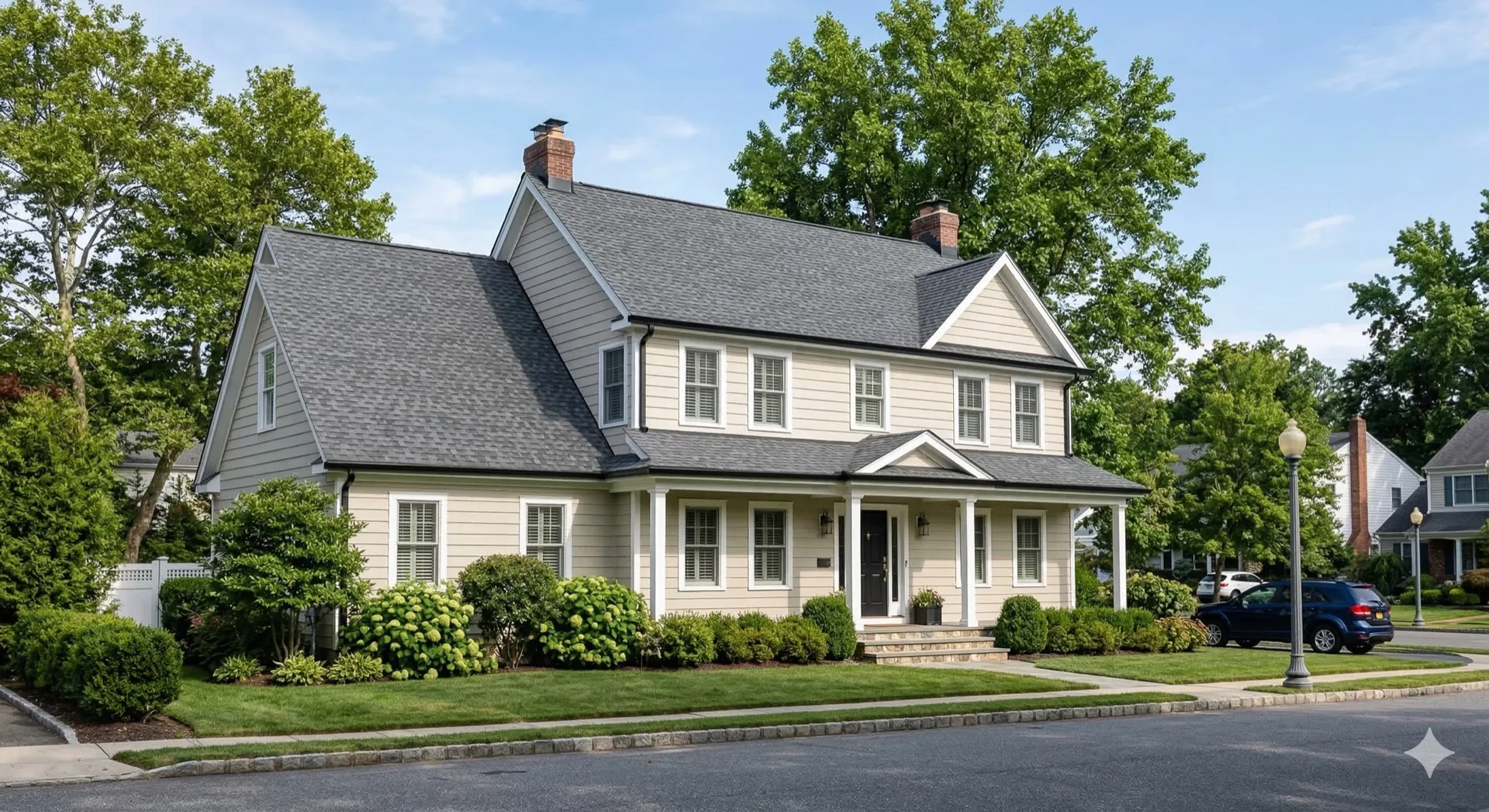
East Islip has two roof stories. South of Montauk Highway, the canal grids around Bayview and Suffolk Lane are 1950s and 60s ranches and capes on filled ground, close to Champlin Creek and the Great South Bay, and a lot of them were re-roofed after 2012 along with the siding. Those roofs are now well into their life, and the edges facing the bay take every south wind. North of the highway, the streets along Carleton Avenue are older and drier, with big colonials under the trees that grew up with them — two-storey roofs with wide overhangs, multiple valleys and heavy shade. On those, the threats are oak limbs rubbing the shingles, leaves packed into valleys and gutters, and moss on the north side. Toward the Heckscher State Park shoreline the exposure opens up again. Same hamlet, but a canal ranch and a Carleton Avenue colonial need very different roof work.
What We Look at First in East Islip
For a Carleton Avenue colonial in East Islip we start in the trees: which limbs hang over the roof, which ones rub, where debris collects. Then we look at the valleys and gutters they feed. On the canal ranches we start at the bay-facing edges and the vent boots, which go brittle in sun and salt. Both get an attic check for stains and ventilation. Permits file with the Town of Islip on Main Street in Islip hamlet.
Canal-Street Roofs: Rebuilt Fast, Re-Roofed Over
A lot of the canal-grid houses in East Islip were repaired in a hurry after 2012, and some of those roofs went on over an older layer rather than down to the deck. A roof laid over another one hides the sheathing, carries more weight and gives the new shingles less life, and it is the first thing we check when a canal-street roof leaks.
The houses on these grids are 1950s and 60s ranches and capes, close together, with simple gable roofs and the occasional low-slope addition at the back. The low-slope section is where water sits, and where shingles were used on a pitch too shallow for them it is where the leak is.
The wind comes off the bay over open water and the canals, and it finds the rake edges and the ridge first. A replacement here goes down to the deck, the sheathing gets checked and renewed where it is soft, the eaves and valleys get ice-and-water membrane, and the edges get fastened for the wind they actually see.
Leaks Are Flashing Problems Until Proven Otherwise
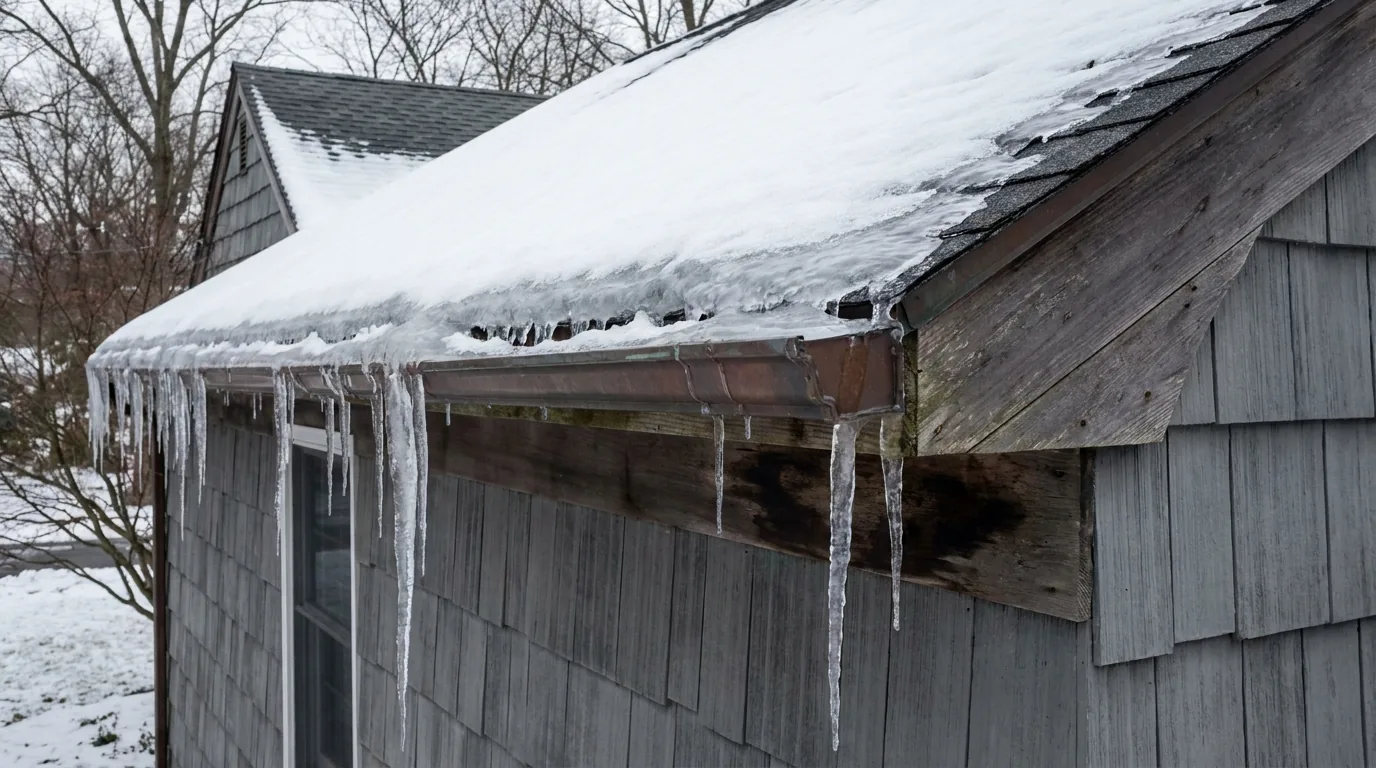
The open field of a roof almost never leaks. Water gets in where the roof meets something else — a chimney, a wall, a dormer, a valley, a vent pipe, a skylight — and on a great many Long Island roofs that flashing was done once, failed, and has been covered in roof cement ever since. Roof cement goes brittle within a few winters and hides the failure while the water keeps getting in.
So a repair starts by finding where the water actually enters, which is often several feet from where the stain shows, and fixing the flashing there. Repairs, flashing and sheet-metal work run all winter. Full asphalt replacements go on the warmer days, and shingles laid in the cold are hand-sealed so they hold in the first wind.
Permits in East Islip
East Islip files with the Town of Islip on Main Street in Islip hamlet, a few minutes away; the bayfront and canal streets south of Montauk Highway are in the mapped flood zone. Roof replacement is permitted work in most of Suffolk, and the limit on shingle layers decides whether the old roof has to come off — on our jobs it comes off regardless. We file the permit.
Alex walks the house in East Islip, photographs what he finds and gives you a written scope in the order the work has to happen — whether or not you hire us. Call (631) 312-7441 to set up a time.
Frequently Asked Questions
A big oak hangs over the back slope of my East Islip colonial. What is it doing to the roof?
Three things, usually. Its limbs rub the shingles in wind and scrub off the granules, which shortens their life. Its leaves pack into the valleys and gutters and hold water where the roof is most vulnerable. And its shade keeps that slope damp, so moss and algae take hold. Having the limbs over the roof cut back, keeping the valleys clear and checking that slope after storms buys that roof years.
Should I repair or replace my roof in East Islip?
If the roof is sound and the leak is a flashing or a valley, repair it. If the shingles are curling, losing granules and on a second layer, a repair buys a season and replacement is the honest answer. Alex photographs the whole roof and tells you which it is.
Do you tear off the old roof in East Islip or go over it?
We tear off to the deck. A roof laid over an old layer hides soft sheathing, adds weight and shortens the life of the new shingles, and layer limits in most Suffolk towns decide it anyway. Tear-off lets us renew the sheathing, flashings and membrane properly.
Who issues the permit for roofing work in East Islip?
East Islip files with the Town of Islip on Main Street in Islip hamlet, a few minutes away; the bayfront and canal streets south of Montauk Highway are in the mapped flood zone. Roof replacement is permitted work in most of Suffolk, and the limit on shingle layers decides whether the old roof has to come off — on our jobs it comes off regardless. We file the permit.
Related Guides
- Roofing Contractors in Brightwaters, NY
- Roofing Contractors in Copiague, NY
- Roofing on Long Island
- Winter Roofing on Long Island
- Roof Flashing Repair on Long Island
Work With Alec's Construction
This page is written by the crew that does the work. See Alec's Roofing service — tear-offs, repairs, flashing and storm damage across Suffolk County. One crew from the first walkthrough to the last inspection.
Also in East Islip through the cold months: Seamless Gutters and Attic Insulation.
Also Serving East Islip
- Attic Insulation in East Islip — air sealing, baffles and R-49 depth
- Basement Finishing in East Islip — egress, ceiling height and moisture
- Bathroom Remodeling in East Islip — full gut renovations
- Fallen Tree Removal & Roof Repair in East Islip — tree off the house, roof supported and repaired
- Flood & Water Damage Cleanup in East Islip — wet material out, drying metered
- Gutter Installation in East Islip — seamless gutters, fascia and drainage
- Hurricane & Storm Damage Repair in East Islip — trees, flooding, cleanup and repairs
- Interior Painting in East Islip — the right work for the cold months
- Kitchen Remodeling in East Islip — cabinets, counters and layout
- Storm Debris Removal & Cleanup in East Islip — trees, building debris and hauling
- Storm Roof & Siding Repair in East Islip — wind damage, tarped and rebuilt
Talk to Alec's Construction About Roofing in East Islip
We come out, look at the house, photograph what we find and put a written scope in your hand. No pressure, no obligation. Working across Suffolk County since 2018.
Or call (631) 312-7441